
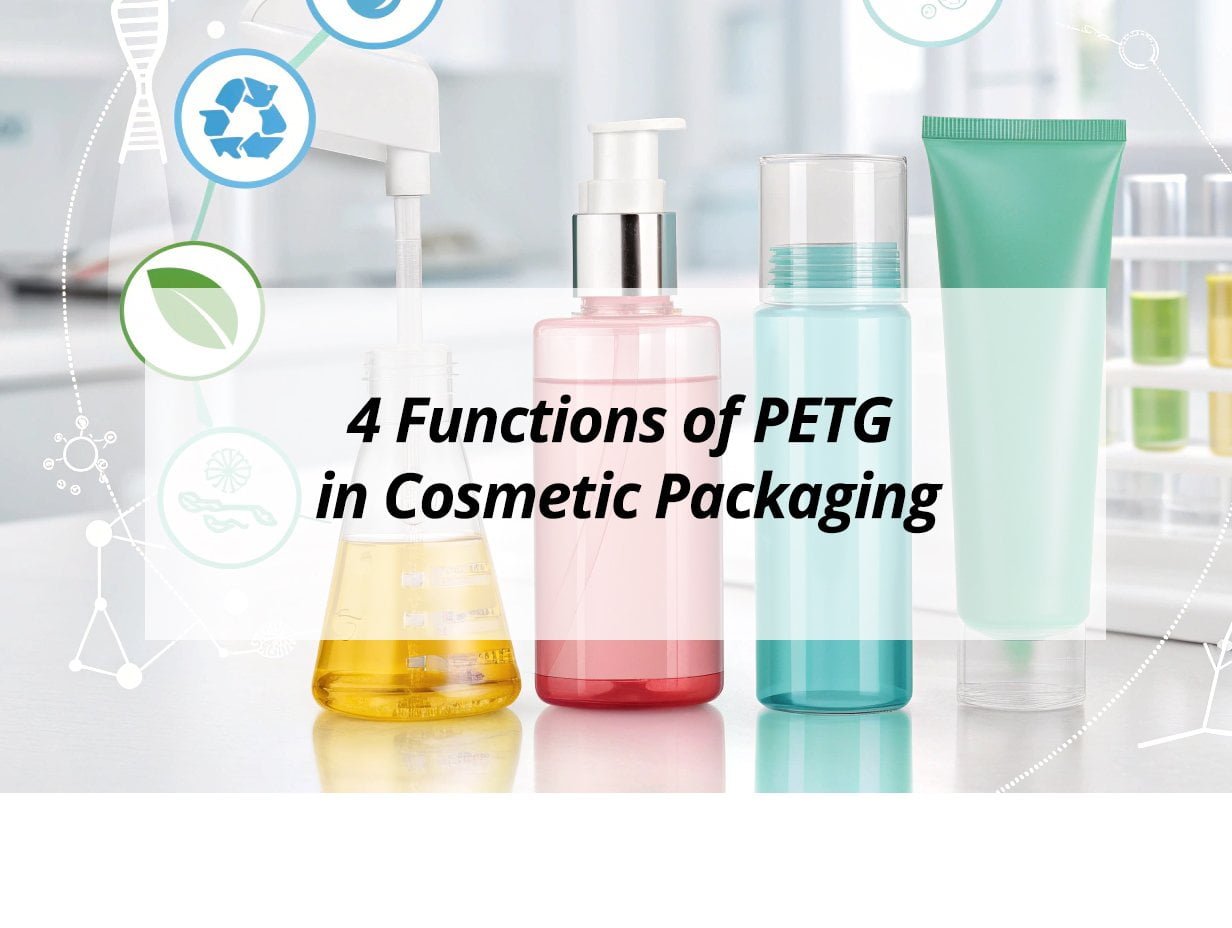
I worry about packaging that looks premium but breaks in shipping. I want a material that keeps product safe and looks great. PETG often solves that problem.
PETG is ideal for cosmetic packaging due to its glass-like clarity, robust impact protection, and chemical compatibility. Its easy formability supports complex designs, making it versatile for sophisticated cosmetic needs. Combining durability with aesthetic appeal, PETG is a strong choice for high-quality, innovative packaging solutions.
I will walk through four practical functions of PETG. I will use short sentences. I will give tables and clear guidance. Read on to see how PETG fits real product needs.
What is PETG packaging?
I see this question from buyers and designers. They confuse PETG with PET or acrylic. I clarify it early.
PETG packaging refers to parts made from glycol-modified PET that give clarity, toughness, and easy shaping for bottles, jars, shells, and displays.
I choose PETG when I need a glass look that survives handling.
Definition, common formats, and why brands pick PETG
PETG stands for polyethylene terephthalate glycol-modified. It is not the same as PET. The glycol makes PETG easier to form and less prone to haze. The result is a clear, glossy part that resists cracking. I use PETG for clear caps, display shells, clamshells, and thick-walled jars. Brands like it because it looks premium and ships safer than glass.
Common PETG formats
- Bottles and jars for serums and creams.
- Thermoformed trays and clamshells for palettes.
- Rigid shells for airless systems.
- Display windows and promotional boxes.
Why choose PETG
PETG keeps clarity after thermoforming. It takes print and coatings well. It tolerates many cosmetic formulas1. It reduces breakage compared to glass. For these reasons, I often specify PETG for visible parts that must survive retail and transit.
PETG packaging2 snapshot
| Format | Benefit | Typical use |
|---|---|---|
| Thermoformed shell | Low tooling, clear | Palettes, displays |
| Thick-wall jar | Glass look, lighter | Premium creams |
| Clear bottle | Visibility + impact resistance | Serums, toners |
| Airless shell | Durable outer | Active ingredient lines |
I always test sample parts. I check optical clarity and surface finish. I also test fill and seal compatibility before mass orders.
What is PETG used for?
People ask me where PETG fits in a product line. The uses span display to protection.
PETG is used for clear product bodies, display components, protective shells, and molded inserts that need clarity, toughness, and design freedom.
I select PETG when the visual effect and durability are both crucial.
Eight practical applications and how PETG adds value
PETG serves many roles in cosmetic packaging. It works where the product must be shown and protected. I use PETG for bottles that show serum color. I use it for palettes where pigments must be visible. I also use PETG for travel jars that need drop resistance. Its thermoformability lets me create custom display trays that hold inserts snugly. I often choose PETG for outer shells on airless bottles. The shell looks clear while the internal pump can be another resin.
Functional benefits in use
- Visibility: Consumers see the product. This builds trust.
- Protection: PETG resists impacts and reduces returns.
- Design: Thermoforming allows creative shapes without heavy tooling.
- Decoration: PETG accepts printing, hot stamp, and coatings.
PETG applications and benefits
| Application | Benefit | Why I recommend it |
|---|---|---|
| Serum bottle | Show color, protect | Good for premium lines |
| Palette clamshell | Clear display | Low tooling cost |
| Thick-wall jar | Glass feel, safer | Luxury creams |
| Airless outer shell | Durable clarity | Protects internal pump |
I always match PETG thickness to the use case. Thicker walls boost feel and impact strength. Thinner walls save cost and weight.
Is PETG safe plastic?
Safety is always the first filter for cosmetics. I check regulations and tests.
PETG is generally safe for cosmetic contact. It is chemically stable, can be food-grade, and tolerates common sterilization methods when specified correctly.
I never assume safety. I verify supplier data and do migration tests with the actual formula.
Regulatory status, chemical resistance, and testing needs
PETG often passes food-contact and cosmetic-contact regulations. It resists many oils, fragrances, and alcohol-based formulas. That makes it suitable for lotions, serums, and some perfumes. However, a few solvent-heavy formulas can interact with plastic. I always request a certificate of compliance and a technical data sheet from the resin supplier. I also run migration tests, stability tests, and an accelerated aging test with the finished product. These steps confirm that no odor, haze, or leaching occurs.
Sterilization and processing
PETG tolerates common sterilization methods3 like gamma irradiation in many cases. It also withstands typical filling temperatures. Still, high-temperature fills or long hot-fill cycles need validation.
Best practice checklist
- Ask for FDA/EC compliance certificates.
- Run migration and odor tests with the real formula.
- Verify sterilization method with supplier.
- Validate printing and coating adhesion under real conditions.
Safety checklist
| Test | Purpose | My action |
|---|---|---|
| Migration test | Check leachables | Lab test with formula |
| Odor test | Ensure no smell | Sensory evaluation |
| Sterilization test | Validate process | Supplier data + lab check |
| Compatibility test | Check for haze/swell | Pilot run evaluation |
I treat PETG as a safe option when the test results and supplier data match the product needs. I document every test for customer audits.
What common items are made from PETG?
I see PETG in many common pieces on my factory floor. It is a versatile material.
Common PETG items include clear bottles and jars, clamshells, display windows, palette trays, airless shells, and protective covers.
I list typical items and why PETG fits each.
Typical product list, decoration, and supply tips
PETG makes many visible parts in cosmetic packs. I often specify it for:
- Serum and toner bottles where clarity is important.
- Thick-walled jars that mimic glass but weigh less.
- Thermoformed clamshells for palettes and kits.
- Display windows on cartons for retail presentation.
- Outer shells for airless pumps that need a clear, durable cover.
Decoration and finishing
PETG accepts silk-screen printing, UV digital print, hot stamp foil, and soft-touch coatings. For a premium look, I combine a clear PETG body with a printed sleeve or a foiled cap. PETG can be frosted for a softer look while keeping parts recyclable.
Sourcing tips
- Request pre-production samples with actual finishes.
- Confirm resin grade and certificate for cosmetic contact.
- Test print adhesion and coating compatibility.
- Ask about rPETG options if recycled content is important.
Sourcing checklist for PETG items
| Item | Supplier ask | Test to run |
|---|---|---|
| Bottle | Resin grade, clarity spec | Drop test, fill test |
| Jar | Wall thickness spec | Seal and abrasion test |
| Clamshell | Forming quality | Hinge fatigue test |
| Shell | Surface finish | Print adhesion test |
I often recommend PETG as a smart mix of beauty and function. It helps reduce breakage and keeps the product visible on shelf. I always back the choice with tests.
My Insights: The 4 Essential Functions of PETG in Cosmetic Packaging
PETG transforms cosmetic packaging with clarity, durability, recyclability, and versatility, enhancing product appeal and functionality. Discover how these attributes set PETG apart in beauty applications.
PETG provides exceptional clarity, making products visually appealing and easy to showcase. Its durability ensures resistance to impact and breakage, while recyclability aligns with eco-friendly practices. Versatility allows for creative design innovations, supporting diverse brand aesthetics.
PETG Functions
Clarity and Visual Appeal
PETG combines glass-like transparency with plastic toughness, showcasing product quality and ingredients. This visibility enhances brand perception.
Durability and Impact Resistance
PETG's strength protects against drops and handling, crucial for packaging components frequently used by consumers.
Recyclability
Environmentally friendly, PETG is easily recyclable, supporting sustainable packaging goals and reducing environmental footprints.
Design Flexibility
This versatile material allows for complex shapes and intricate designs. Brands can create unique silhouettes and tactile experiences, emphasizing storytelling through innovative packaging.
| Function | Benefits | Applications |
|---|---|---|
| Clarity | Enhances product visibility | Outer bottles and transparent packaging |
| Durability | Reduces breakage and product loss | Caps, applicator components |
| Recyclability | Supports eco-friendly initiatives | Sustainable product lines |
| Design Flexibility | Enables creative designs | Custom closures, specialty packaging |
Conclusion
I use PETG for clear, durable, and design-flexible packaging where product visibility and transport toughness matter most.