
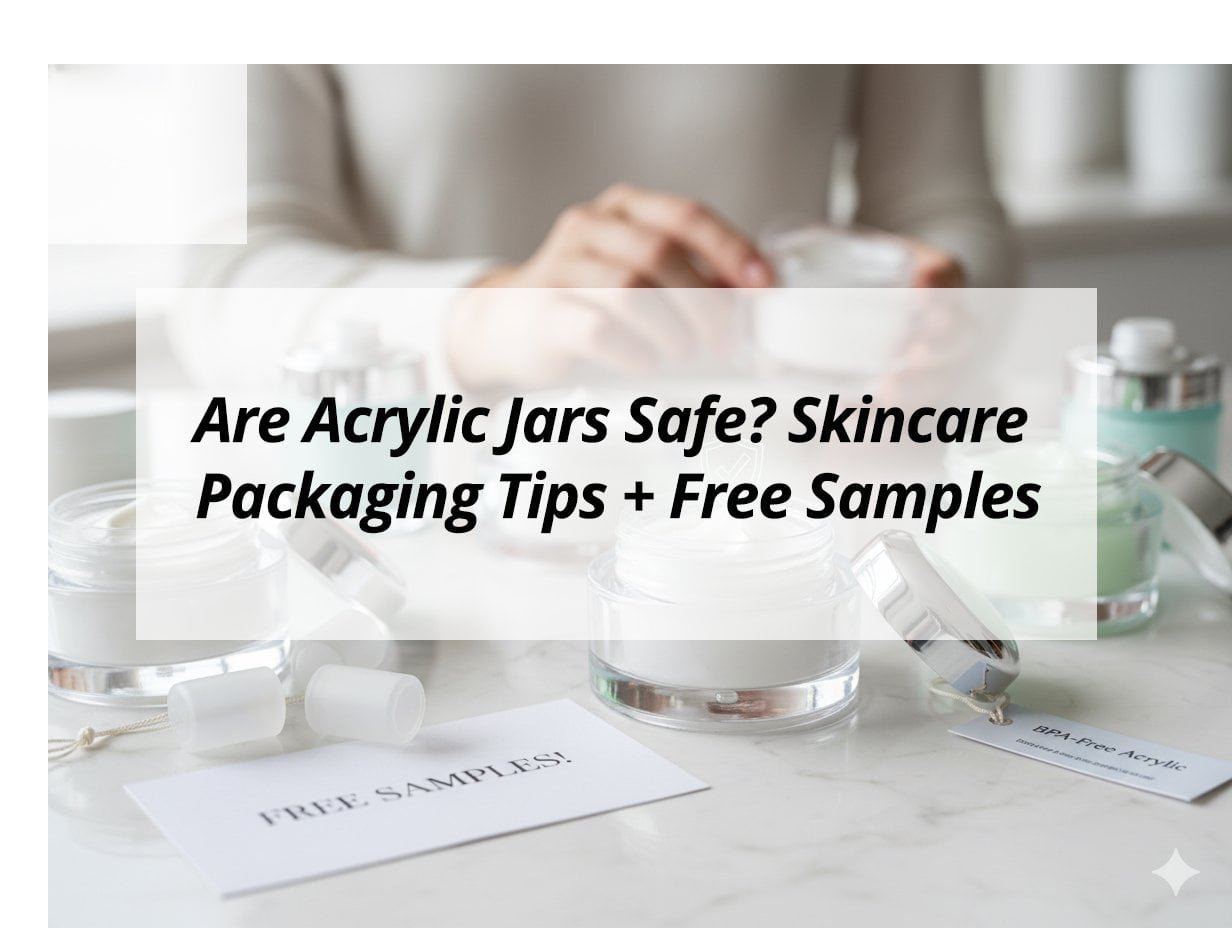
Are you wondering about the safety of acrylic jars for your skincare products? Choosing the right packaging material is crucial. It impacts product integrity and consumer trust.
Yes, acrylic jars are generally safe for skincare. They are a non-toxic plastic known for their clarity and luxurious feel. However, safety also depends on the specific formula's compatibility with acrylic. It also depends on the manufacturing quality. Always ensure proper testing and sourcing for cosmetic packaging products to guarantee product safety and stability.
I know that material safety is a top concern for cosmetic brands. Customers want to feel confident in the products they buy. Acrylic offers a premium look while being a stable choice for many formulations.
Are Acrylic Jars Safe?
Do you question if acrylic jars are truly safe for skincare? Many people hear "plastic" and worry. But not all plastics are the same.
Yes, acrylic jars are safe for most skincare applications. Acrylic, also known as PMMA, is a stable, non-toxic polymer. It does not typically leach harmful chemicals into cosmetic products. Its clarity and resistance to impact make it a popular choice. However, compatibility testing with specific product formulas is always recommended to ensure long-term safety and stability of cosmetic packaging products.
I have worked with many brands using acrylic jars. They choose them for their high-end feel. These jars hold creams and balms well. The key is ensuring the product formula does not react with the acrylic over time. This is part of responsible material selection.
Understanding Acrylic (PMMA) Safety
Acrylic, or PMMA (polymethyl methacrylate), is a widely used plastic.
- Non-toxic Nature: PMMA is considered inert. It does not easily react with substances. This means it is unlikely to leach chemicals into skincare products.
- Stability: Acrylic is a stable plastic. It does not degrade easily under normal conditions. This helps maintain product integrity.
- Regulatory Approval: Acrylic is approved for use in various applications. These include medical devices and food contact items (though often with specific grades). This shows its general safety profile.
- Barrier Properties: Acrylic provides a good barrier against external contaminants. It helps protect the product inside.
Compatibility with Skincare Formulas
While acrylic is safe, specific product formulas need consideration.
- Alcohol Content: High alcohol content in a formula can sometimes cause acrylic to craze or crack over time.
- Essential Oils: Some essential oils can also affect acrylic. Testing is crucial.
- pH Levels: Extremely acidic or alkaline products should be tested for compatibility.
- UV Protection: Clear acrylic does not offer UV protection. For light-sensitive ingredients, opaque acrylic or an inner lining is needed.
| Aspect of Safety | Acrylic Jars | Considerations for Skincare Packaging Products |
|---|---|---|
| Toxicity | Generally non-toxic, inert. | Confirm food-grade or cosmetic-grade acrylic. |
| Leaching Risk | Very low risk of leaching harmful chemicals. | Ensure no reaction with specific formula over time (compatibility testing). |
| Product Stability | Stable material, does not easily degrade. | Avoid formulas with high alcohol or certain essential oils that might react. |
| Barrier Property | Good barrier against air and contaminants. | Does not block UV light unless opaque or coated. |
| Durability | Shatter-resistant compared to glass, good impact strength. | Can scratch more easily than some other plastics. |
When you purchase cosmetic packaging products, ask suppliers for material safety data sheets. Always conduct compatibility tests for your unique skincare formulation. This ensures the acrylic jars are truly safe for your product.
Are Acrylic Containers Non-Toxic?
Do you worry about toxic chemicals in packaging? The question "Are acrylic containers non-toxic?" is very important for consumer health.
Yes, acrylic containers are non-toxic. Acrylic, or PMMA, is a stable and inert polymer. It does not release harmful substances under normal use. This makes it a safe choice for storing a wide range of cosmetic and personal care products. Its non-toxic nature contributes to consumer confidence in cosmetic packaging products.
I have often assured clients about acrylic's safety. It is a common misconception that all plastics are harmful. Acrylic is a good example of a safe and stable plastic material. It gives a luxurious feel without toxicity concerns.
What Non-Toxic Means for Packaging
For packaging, "non-toxic" means the material will not harm the product or the user.
- No Leaching: The material does not transfer harmful chemicals into the product.
- Inert: It does not react chemically with the product it contains.
- Safe for Contact: It is safe for human skin contact and incidental ingestion (though not for eating).
- No BPA/Phthalates: Acrylic is naturally BPA and phthalate-free. These are chemicals sometimes found in other plastics that cause concern.
Acrylic's Composition
Acrylic (PMMA) is a type of thermoplastic.
- Monomer: Its basic building block is methyl methacrylate.
- Polymerization: Many methyl methacrylate units link together to form PMMA. This long chain is very stable.
- Absence of Harmful Additives: Unlike some other plastics, acrylic does not typically require plasticizers (like phthalates) to make it flexible. It is also not made with bisphenol A (BPA).
| Material Property | Acrylic Containers | Why it is Non-Toxic | Implications for Cosmetic Packaging Products1 |
|---|---|---|---|
| Chemical Stability | Highly stable polymer structure. | Does not break down easily to release monomers. | Product formulation remains uncontaminated. |
| Inertness | Low reactivity with most common cosmetic ingredients. | Prevents chemical changes in product over time. | Ensures product efficacy and safety throughout shelf life. |
| Composition | Naturally BPA-free and phthalate-free. | Avoids chemicals of concern found in some other plastics. | Supports "clean beauty" claims and consumer trust. |
| Barrier Quality | Good barrier properties against external elements. | Protects product from environmental degradation. | Helps maintain freshness and prevents spoilage. |
When you choose cosmetic packaging products, understanding material safety is key. Acrylic containers offer a non-toxic option. This gives both brands and consumers peace of mind.
What Is the Most Eco-Friendly Packaging for Cosmetics?
Are you striving for sustainable cosmetic products? Finding the most eco-friendly packaging for cosmetics is complex. It involves many considerations beyond just the material.
The most eco-friendly packaging for cosmetics often combines several strategies. These include using post-consumer recycled (PCR) materials, glass, aluminum, or designing for refillability. Key factors are minimizing material use, ensuring easy recyclability, and sourcing locally. The goal is to reduce waste, lower carbon footprint, and support a circular economy for cosmetic packaging products.
I constantly help brands navigate this. One brand wanted to use bioplastics. But the local recycling infrastructure could not handle it. We then focused on PCR content and refillable systems. This showed that "eco-friendly" is not always a single answer.
Pillars of Eco-Friendly Packaging
Sustainability involves a holistic approach.
- Reduce: Use less material. Lightweight designs save resources and shipping fuel.
- Reuse: Implement refillable systems. Encourage consumers to reuse outer packaging.
- Recycle: Use materials that are widely accepted in recycling programs. Design for monomaterial to simplify recycling.
- Renewable: Choose materials from sustainable sources, like bamboo or plant-based plastics (bioplastics).
- Circular Economy: Design packaging to be collected, recycled, and made into new packaging.
Top Eco-Friendly Options
Here are some of the leading choices for sustainable cosmetic packaging products.
- Post-Consumer Recycled (PCR) Materials2:
- Why: Reduces demand for new plastic, diverts waste from landfills.
- Use for: Bottles, jars, tubes, and closures.
- Glass:
- Why: Highly recyclable (infinitely), inert, gives a premium feel.
- Use for: Serums, creams, fragrances.
- Aluminum:
- Why: Infinitely recyclable, lightweight, good barrier, durable.
- Use for: Tubes, tins, spray bottles.
- Refillable Systems:
- Why: Dramatically reduces material use over the product's lifetime.
- Use for: Jars, compacts, lipstick cases with replaceable inner units.
- Monomaterial Design:
- Why: Simplifies sorting and processing in recycling facilities.
- Use for: Tubes (PE tube with PE cap), bottles, jars.
| Eco-Friendly Strategy | Impact on Environmental Concerns | Suitability for Jars/Containers | Role in Cosmetic Packaging Products |
|---|---|---|---|
| PCR Content | Less virgin plastic, lower carbon footprint, reduced landfill waste. | High | Common for plastic jars and bottles. |
| Refillable Design | Significant reduction in material use per product over time. | High (for outer component) | Growing trend for high-end and mass market. |
| Glass | High recyclability, inert, low leaching. | High | Classic choice for premium jars. |
| Aluminum | High recyclability, lightweight, good barrier. | Medium (for tins/jars) | Often used for tins or as caps. |
| Monomaterial | Improves efficiency of recycling process. | High (if engineered correctly) | Emerging for plastic jars/caps. |
When you purchase cosmetic packaging products, assess the full lifecycle. The most eco-friendly choice often combines several of these elements.
Are Acrylic Containers Better Than Plastic?
Are you debating between acrylic and other plastic containers? It is not a simple "better or worse" answer. It depends on your needs.
Acrylic containers offer a more premium, glass-like aesthetic and feel compared to standard plastics like PET or PP. They are more impact-resistant than glass but can be more prone to scratching than some plastics. Acrylic is non-toxic and stable. However, "better" depends on factors like cost, product compatibility, and desired durability for specific cosmetic packaging products.
I often guide brands through this decision. If a luxury feel is paramount, acrylic is often preferred. If cost-effectiveness and extreme durability are key, other plastics might be better. It is about matching the material to the product and brand.
Acrylic vs. Other Common Plastics
Let us compare acrylic with other widely used plastics in cosmetic packaging.
- Aesthetic Appeal:
- Acrylic: High clarity, often heavy feel, mimics glass. Looks luxurious.
- PET/PP: Can be clear or opaque. Lighter weight. More "plastic" feel.
- Durability and Impact Resistance:
- Acrylic: Good impact resistance, less prone to shattering than glass. Can scratch.
- HDPE/PP: Very durable, resistant to cracking. Can be flexible (LDPE).
- PET: Strong, but can be brittle in thin forms.
- Chemical Resistance:
- Acrylic: Generally good, but susceptible to high alcohol concentrations and some essential oils.
- PP/HDPE: Excellent chemical resistance.
- PET: Good, but less than PP/HDPE.
- Cost:
- Acrylic: Generally higher cost due to material and manufacturing complexity.
- PET/PP/HDPE: More cost-effective.
- Recyclability:
- Acrylic: Can be recycled, but not as widely accepted as PET or HDPE in many curbside programs. Often needs specialized recycling.
- PET/HDPE/PP: Widely recyclable (codes #1, #2, #5).
When to Choose Acrylic
Acrylic shines in specific applications.
- Luxury Brands: Its glass-like appearance and weight convey prestige.
- High-End Skincare: For creams and serums where visual appeal is crucial.
- Products Needing Clarity: When you want the product itself to be visible.
| Feature | Acrylic Containers | Standard Plastic Containers (PET, PP, HDPE) | Decision Point for Cosmetic Packaging Products |
|---|---|---|---|
| Aesthetics | High clarity, glass-like weight, premium look. | Varies from clear to opaque, generally lighter. | Luxury vs. Functionality: What brand image? |
| Durability | Shatter-resistant, but can scratch. | Very durable, impact-resistant, less scratch-prone. | Handling & Longevity: How will consumers use it? |
| Cost | Higher cost. | Lower cost. | Budget: What are your financial constraints? |
| Chemical Resistance | Good, but avoid high alcohol/some oils. | Excellent for PP/HDPE, good for PET. | Formula Compatibility: What are your ingredients? |
| Recyclability | Specialized recycling (Code #7). | Widely recyclable (Codes #1, #2, #5). | Sustainability Goals: How important is widespread recycling? |
| Weight | Heavier feel. | Lighter weight. | Shipping & Perception: How does weight impact? |
When you purchase cosmetic packaging products, weigh these factors. Acrylic offers distinct benefits for certain brands and products.
My Insights: Assessing Acrylic Jars for Safe and Sustainable Skincare Packaging
Worried about safety in skincare packaging? Discover how acrylic jars offer durability and aesthetic appeal while safeguarding your products.
Acrylic jars are generally safe for skincare when made from high-quality, non-toxic materials like PMMA. They resist UV light and provide visibility but require careful selection and handling to avoid contamination risks. Consider lining materials and sustainable options for enhanced safety.
Key Considerations for Acrylic Jar Usage
Safety Factors:
-
Material Quality: Opt for high-grade PMMA that meets FDA standards to ensure non-reactivity and chemical stability.
-
Avoid Extreme Conditions: While stable at room temperature, extreme heat may cause acrylic warping.
Packaging Tips:
-
Alternative Designs: Consider airless pumps or tubes to minimize contamination from direct contact.
-
Protection: Use UV-protective finishes for light-sensitive formulations, and ensure designs are shatter-resistant for shipping.
-
Sustainability: Choose recyclable or refillable acrylic options to appeal to eco-conscious users.
Material Alternatives Table:
| Material | Pros | Cons | Best For |
|---|---|---|---|
| Glass | Non-reactive, premium look, recyclable | Heavy, breakable | Serums, oils |
| PET/PP Plastic | Lightweight, chemical-resistant, affordable | Less premium perception | Lotions, tubes |
| Acrylic | Clear, durable, shatterproof | Potential contamination in jars | Creams, masks |
Acrylic jars are a viable packaging solution when used thoughtfully, with attention to material quality and design features that support both product integrity and sustainability.
Conclusion
Acrylic jars are generally safe and non-toxic for skincare. They offer a premium look. However, "better" than other plastics depends on specific needs. Choose wisely for your cosmetic packaging products.