
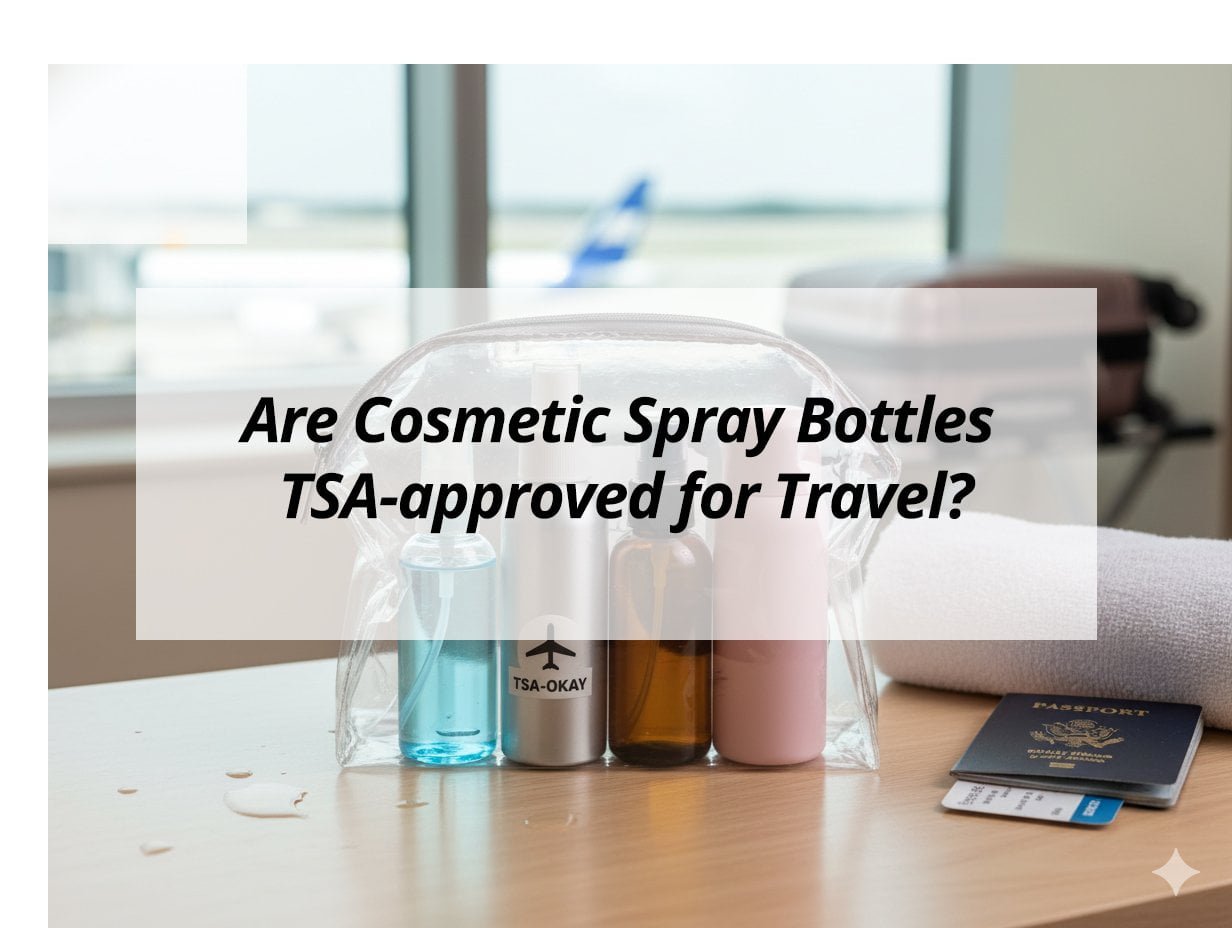
In the realm of seamless travel planning, packing woes often rise. Understanding TSA rules on spray bottles is crucial for avoiding travel hiccups.
Cosmetic spray bottles are subject to TSA's liquid restrictions for carry-ons. Travelers can pack containers up to 3.4 ounces (100 milliliters) in a clear, quart-sized bag. Understanding these guidelines helps ensure compliance and smooth passage through airport security, reducing stress and avoiding potential delays.
Navigating TSA guidelines is essential for ensuring stress-free air travel. Let's explore these regulations in detail and discover practical ways to comply.
Are spray bottles TSA approved?
Chaos can erupt at airport checkpoints if you're unprepared. Grasping the TSA's approach to spray bottles can save time and hassle.
Spray bottles intended for cosmetics are subject to TSA’s liquid rule, allowing carry-on containers up to 3.4 ounces stored in a transparent quart-sized bag. Exceeding this limit usually requires the product to be placed in checked luggage.
When it comes to spray bottles, TSA's regulations focus on ensuring safe transit. Here, we'll break down the specifics of organizing your travel supplies:
TSA Liquid Guidelines: Quick Facts
| Rule Description | Limitation Details |
|---|---|
| Size Limit | Maximum 3.4 ounces per container |
| Packaging Requirement | Clear quart-sized zip-top bag |
| Bag Limit | One bag per traveler |
The 3-1-1 rule governs container size, zipped storage, and aggregate volume, enforcing compliance while prioritizing safety. Knowledge of these guidelines enables smooth navigation through security.
Can I bring aerosols if I check it while flying?
A lack of clarity can lead to packing blunders on travel day. Checking aerosols demands awareness of airline-specific rules.
Yes, aerosol products, including sprays, may be transported in checked luggage. TSA regulations permit larger containers in checked baggage, but they must be securely sealed and comply with airline-specific requirements.
Understanding the scope of TSA regulations can ease packing stresses and ensure compliance with airline protocols:
Aerosol Guidelines for Checked Baggage
- Container Capacity: Ensure aerosol containers meet airline regulations regarding size and weight limits.
- Sealing Requirement: Securely seal sprays and aerosols to prevent leakage during transit.
- Airline Rules: Check airline policies for additional restrictions on aerosol quantities and types.
Prioritizing safety and policy adherence protects both passengers and crew. Familiarity with these guidelines allows hassle-free preparation for air travel.
Where do I put my aerosols when flying?
Misplaced aerosols can cause delays and frustration. Strategically placing products ensures compliance and easy access.
Carry-on baggage should contain aerosols within a quart-sized bag, adhering to size restrictions. Checked luggage allows a broader range of products, freeing up carry-on space for essential items.
Proper organization and compliance with TSA rules boost security efficiency and alleviate travel tensions:
Convenient Aerosol Storage Techniques
- Carry-on Compliance: Limit aerosols to travel-sized containers in the quart bag.
- Checked Luggage: Store larger aerosols, avoiding potential penalties at security checks.
- Accessibility Factor: Place essentials at the top for easy retrieval.
Efficiently packed aerosols, placed in accordance with TSA guidelines, optimize travel experiences and reduce checkpoints stress.
Which aerosols are not allowed on planes?
The anxiety of misjudging allowed items at security checks is palpable. Knowing banned items prevents fines and delays.
Certain aerosols, such as those labeled hazardous, pose risks and are prohibited. This includes spray paints, certain pressurized cans, and tear gas sprays. Review airline and TSA guidelines for specifics.
Understanding prohibited aerosols protects passengers from unintended security violations and ensures smooth travels:
Banned Aerosols Overview
- Hazardous Materials: Avoid aerosols labeled as flammable or dangerous.
- Pressurized Limitations: Specific gases may not be compliant with airline safety standards.
- Security Compliance: Consult airline and TSA regulations before packing uncertain items.
Proactive awareness of banned items minimizes airport complications and fosters a safe flying environment for all.
My insights: Cosmetic Spray Bottles TSA-approved for Travel
Worried about packing cosmetic sprays for your flight? Ensure your bottles meet TSA regulations to breeze through security without hassle.
Cosmetic spray bottles are TSA-approved for travel if they comply with the 3-1-1 liquids rule, holding no more than 3.4 ounces (100 milliliters), fitting within a quart-sized, clear zip-top bag. Secure mechanisms prevent discharge, ensuring compliance during security checks.
Navigating TSA Rules for Cosmetic Spray Bottles
Understanding the TSA 3-1-1 Rule:
The Transportation Security Administration (TSA) enforces the 3-1-1 rule for liquids in carry-on luggage. Cosmetic sprays must be in containers not exceeding 3.4 ounces (100 ml) and fit within a quart-sized, clear zip-top bag. Ensuring bottles are transparent can expedite security screening.
Packing Tips for Carry-ons and Checked Bags:
For hand luggage, opt for spray bottles between 15-50 ml and ensure they are well-sealed to prevent leakage. Larger bottles must be packed in checked luggage. Airlines might impose additional restrictions, so verify specific airline policies before travel.
Practical Guidance for Travelers:
- Use refillable, TSA-compliant bottles for transferring personal products.
- Securely seal sprays and label contents clearly.
- Opt for non-flammable, travel-size bottles to enhance compliance and ease security checks.
| Aspect | Details and Considerations |
|---|---|
| Compliance Requirements | Must meet TSA 3-1-1 rule; under 3.4 ounces, fit in a clear plastic bag. |
| Packing Strategy | Smaller bottles for carry-on; larger for checked; secure and label items. |
| Security Screening Tips | Transparent, well-sealed bottles simplify and speed up the process. |
Conforming to TSA guidelines ensures a smoother travel experience, reduces security check stress, and facilitates compliance with international travel requirements.
Conclusion
Understanding TSA guidelines for aerosols maximizes your travel efficiency, ensuring a stress-free journey.