
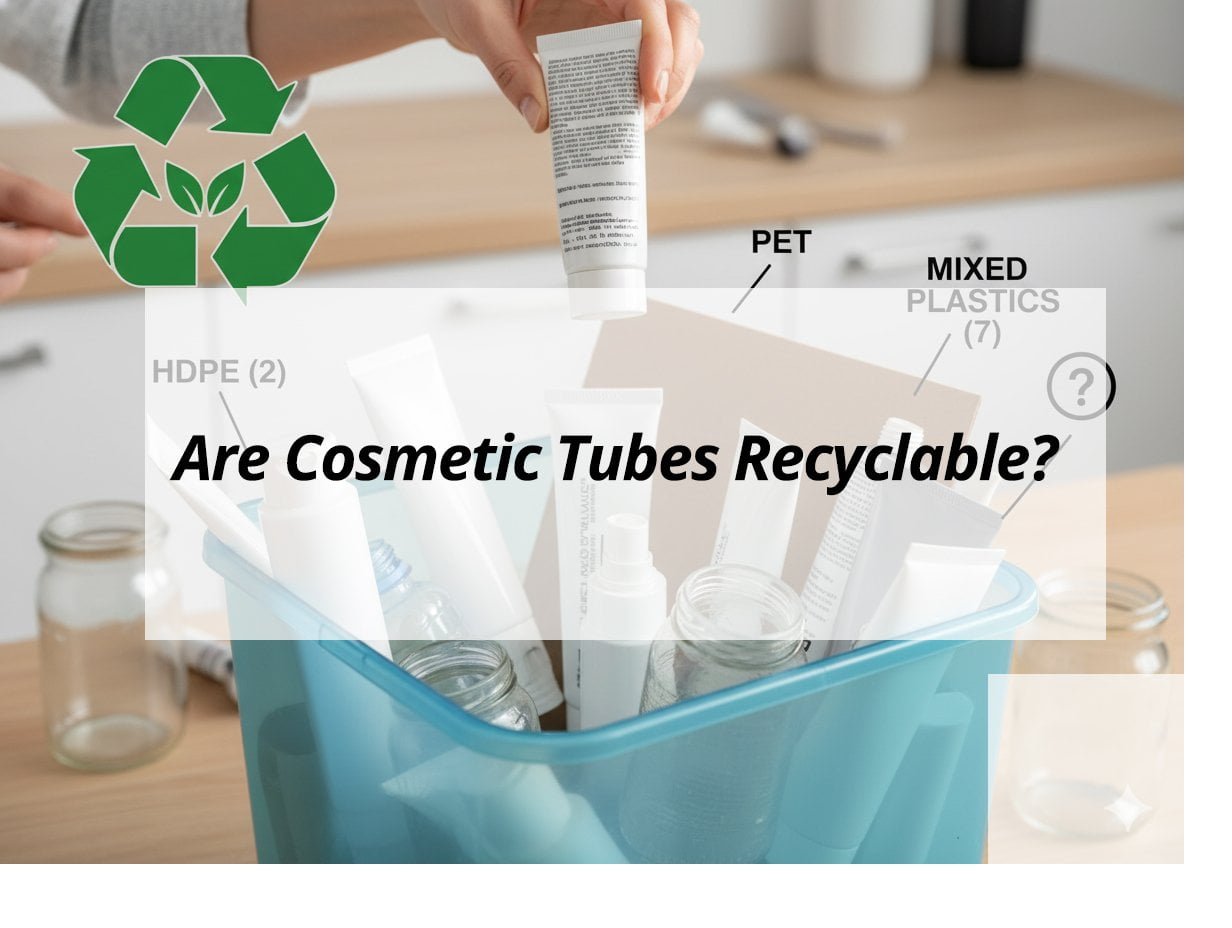
Plastic waste is a growing concern in the cosmetics industry, prompting a crucial question: are cosmetic tubes recyclable?
Yes, many cosmetic tubes are recyclable, but it depends on the materials used. Plastic tubes often require special processing due to mixed materials and coatings. Check local recycling guidelines to ensure proper disposal or consider eco-friendly packaging options to reduce environmental impact.
As a brand committed to sustainability, understanding the recyclability of your packaging options is vital for environmental responsibility and brand integrity.
Can you recycle cosmetic tubes?
Cosmetic packaging contributes significantly to landfill waste. Recycling efforts can mitigate this impact.
Cosmetic tubes can often be recycled, but not easily. Mixed materials used in tubes present challenges. Tubes made from a single type of plastic, such as PET or HDPE, are more easily recycled. Confirm with local recycling programs about accepted materials to promote effective recycling practices.
Recycling cosmetic tubes requires a deep dive into the materials used and the recycling processes available. Most cosmetic tubes consist of various plastics combined, which complicate the recycling effort. If the tube is primarily made of PET or HDPE, recycling is straightforward due to these plastics' high recyclability rates1. However, layered or mixed-material tubes require advanced processing to separate components, often resulting in lower recycling success.
Understanding Tube Materials
A detailed understanding of tube compositions aids recycling:
| Material | Recyclability | Processing Challenges |
|---|---|---|
| PET | High | Requires sorting |
| HDPE | High | Easily processed |
| Mixed Plastics | Low | Difficult to separate |
Embrace Sustainable Practices
For a sustainable future, it is essential to prioritize materials with a high recycling potential. Companies should aim to incorporate recyclability into their design process, thereby ensuring sustainability is a core aspect of their brand philosophy. This shift can also influence consumers, guiding them towards greener choices.
What to do with old cosmetic containers?
Old cosmetic containers often clutter homes. Repurposing can reduce waste.
Instead of discarding old cosmetic containers, consider repurposing them. Clean thoroughly and use as storage for small items or crafts. Alternatively, return them to brands offering take-back programs, promoting sustainable consumer habits and closing the loop on product life cycles.
Creative ways to reuse containers and explore companies offering recycling programs to engage eco-conscious customers. Repurposing not only offers a practical solution but also transforms potential waste into something valuable. Encouraging consumers to participate in recycling cycles strengthens community ties and promotes environmental stewardship.
Innovative Reuse Ideas
Repurposing cosmetic containers can be both practical and creative:
| Idea | Description |
|---|---|
| Storage | Use for jewelry, pins, or small accessories |
| Travel Kits | Refill with products for easy travel convenience |
| Crafts and DIY | Turn into planters or decorative pieces |
Brand Take-Back Programs
Brands that offer take-back programs are making strides toward circular economy concepts. This effort not only minimizes waste but also reinforces brand loyalty by showcasing a commitment to sustainability. Participating in these programs offers customers simple ways to contribute to eco-friendly practices.
Are sunscreen tubes recyclable?
Sunscreen tubes, often plastic, contribute to waste. Their recyclability varies.
Sunscreen tubes can be challenging to recycle due to mixed materials. Tubes made from a single type of recyclable plastic are preferred. Check with local facilities about specific requirements and consider manufacturers that prioritize sustainable materials to enhance environmental responsibility.
Recycling sunscreen tubes2 involves understanding their unique construction. Often composed of multiple layers to protect the product from UV damage and moisture, these tubes offer robust protection but complicate recycling efforts. By focusing on mono-material designs or biodegradable options, companies can enhance their product's environmental profile, ensuring easier recyclability.
Challenges with Sunscreen Tubes
The nature of sunscreen tubes often complicates recycling:
- Material Composition: Often multi-layered for product protection
- Recycling Difficulty: Separation of layers needed for proper processing
- Alternative Options: Embrace brands with eco-friendly packaging
Innovations in Sunscreen Packaging
The development of biodegradable or mono-material packaging can significantly reduce environmental impacts. As consumers are increasingly inclined towards sustainable options, brands that adopt these approaches may find it beneficial in terms of corporate responsibility and consumer appeal.
Are mascara tubes recyclable?
Mascara packaging poses unique recycling challenges due to small parts and mixed materials.
Mascara tubes are generally difficult to recycle. Their size, and combination of different plastics, limit recycling options. Seek out programs or brands dedicated to environmentally responsible packaging and educate consumers on proper disposal methods.
The complexity of mascara tubes3 lies in their intricate design, often combining various components like a wand, brush, and tube. This complexity requires specialized recycling facilities that are not always accessible. By streamlining design or adopting uniform materials, there's potential for improved recycling rates.
Mascara Tube Complexity
Breaking down the difficulties of recycling mascara tubes:
| Component | Recycling Issue | Potential Solutions |
|---|---|---|
| Tube and Wand | Small size | Specialized programs |
| Mixed Plastics | Difficult to process | Uniform materials |
Leading by Example
Brands that invest in developing sustainable, easily recyclable packaging set industry benchmarks. Transparency about sourcing and materials, along with consumer education, can influence market norms, encouraging responsible choices and enhancing brand reputation.
My insights: Cosmetic Tubes Recyclable
Confused about whether your cosmetic tubes are recyclable? Learn how design and material choices impact their recyclability and what you can do to recycle effectively.
Cosmetic tubes are often recyclable when made from single-material plastics like HDPE. However, mixed-material tubes face recycling challenges. Clean, empty tubes are more likely to be accepted, with take-back programs offering additional options for harder-to-recycle types.
Understanding Cosmetic Tube Recyclability
Challenges in Recycling:
-
Material Complexity: Many tubes are constructed from multiple layers of plastics or laminates, hindering recyclability. Squeezable and small tubes can be problematic due to size constraints in recycling systems.
-
Residue Issues: Products left inside the tube can contaminate recycling streams, emphasizing the need for thorough cleaning.
Recyclable Conditions:
-
Monomaterial Tubes: Tubes made entirely from HDPE or PP are easier to recycle and often accepted in areas that handle containers like pots and trays.
-
Take-Back Programs: Retailers partner with organizations like TerraCycle to accept any brand's empty tubes, focusing on converting them into new materials.
Recycling Guidance Table:
| Aspect | Details |
|---|---|
| Material | Monomaterial designs improve recyclability |
| Size | Larger, empty tubes more likely accepted |
| Programs | Use take-back options for mixed-materials |
To ensure responsible disposal, consumers should check local recycling guidelines, opt for easily recyclable packaging, and utilize take-back programs where available. Brands can further enhance sustainability by adopting clear labeling and monomaterial solutions.
Conclusion
Understanding the recyclability of cosmetic tubes can guide sustainable choices, both for brands and consumers, ultimately enhancing environmental stewardship.