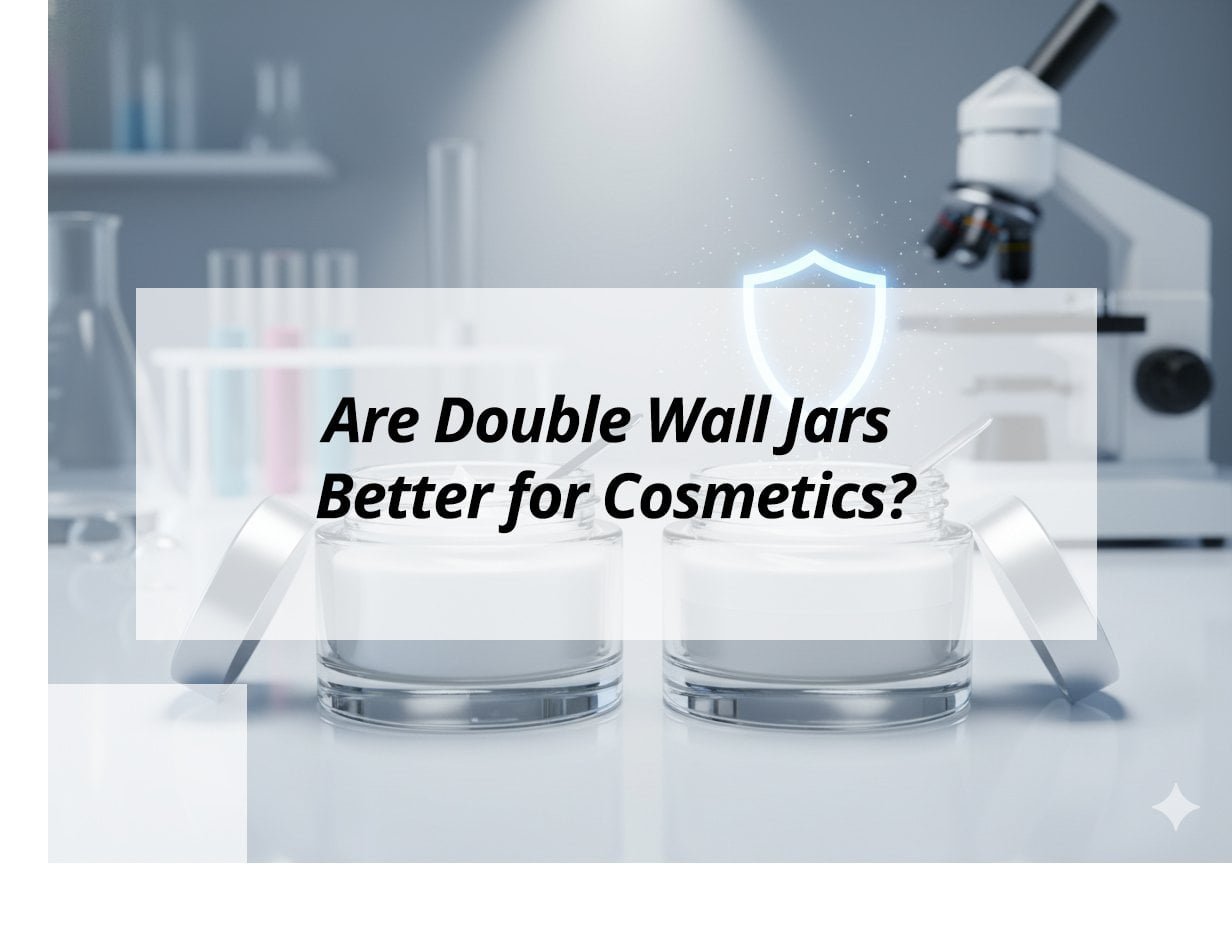
Are you wondering if your cosmetic creams and balms are truly protected in their jars? Packaging choice greatly impacts product stability and shelf life. Double wall jars offer distinct advantages.
Double wall jars are often considered better for cosmetics due to their enhanced protection, insulation, and premium aesthetic. The dual-layer design creates a thermal barrier, protecting sensitive formulations from temperature fluctuations. This construction also provides a more substantial, luxurious feel and can improve product stability and shelf life compared to single wall jars, making them a preferred choice for high-quality cosmetics.
Double wall jars consistently deliver on both counts. They are especially valued for delicate formulations that need extra care.
What is the difference between single wall and double wall jars?
Are you trying to choose the right jar for your cosmetic products? Single wall and double wall jars are common options. Understanding their differences helps you select the best one for your product's needs and brand image.
The main difference between single wall and double wall jars lies in their construction and resulting benefits. Single wall jars consist of one layer of material, offering a basic, lightweight, and cost-effective packaging solution. Double wall jars, however, feature an inner and outer wall with an air gap between them, providing superior insulation, enhanced durability, and a more luxurious, substantial feel for premium cosmetic products.
When I discuss cosmetic packaging1 with clients, this distinction is important. A single wall jar might be fine for a basic product. But a double wall jar can elevate a premium cream or serum, offering both better protection and a more upscale consumer experience.
Construction and Design
The way these jars are built is the most obvious difference.
- Single Wall Jars: These have one continuous layer of material. They are usually thinner and lighter. They look simpler and are straightforward to manufacture.
- Double Wall Jars: These consist of two distinct layers, an inner jar and an outer jar. There is a space or air gap between these two walls. This design makes them thicker and more robust.
Insulation Properties
The double wall design offers significant insulation benefits.
- Single Wall Jars: Offer minimal insulation. They provide little protection against external temperature changes. Product inside can heat up or cool down quickly.
- Double Wall Jars: The air gap between the two walls acts as a thermal barrier. This helps insulate the product, protecting it from sudden temperature fluctuations. This is crucial for sensitive formulations.
Aesthetic and Perceived Value
The look and feel of the jars vary greatly.
- Single Wall Jars: Tend to have a more basic or utilitarian look. They are often chosen for mass-market products where cost is a primary concern. They feel lighter in hand.
- Double Wall Jars: Exude a more premium, luxurious, and substantial feel. The thicker walls give the impression of higher quality and sophistication. They feel heavier and more expensive.
Durability and Protection
The structural integrity differs between the two.
| Feature | Single Wall Jars | Double Wall Jars |
|---|---|---|
| Impact Resistance | Moderate (can crack or break more easily if thin) | High (the dual structure provides better shock absorption) |
| Scratch Resistance | Depends on material, but can show marks more readily | Generally better protected, outer wall can shield inner |
| Product Stability | Less protected from external elements | Better protection from light, heat, and cold fluctuations |
| Material Usage | Uses less material | Uses more material |
What is the most eco-friendly packaging for cosmetics?
Are you a brand striving for true sustainability in your product line? Finding the most eco-friendly packaging2 for cosmetics is a complex but crucial task. Many options exist, but some stand out more than others in their environmental benefits.
The most eco-friendly packaging for cosmetics often involves a combination of factors rather than a single material. Generally, packaging that is reusable (especially refillable systems), made from high percentages of post-consumer recycled (PCR) content (like glass or certain plastics), or is genuinely compostable, tends to be the most sustainable. Minimalist designs that reduce material use and carbon footprint also contribute significantly to being eco-friendly.
As a cosmetic jar manufacturer3 and cosmetic bottle supplier, I see a strong shift towards these solutions. Brands are looking for eco cosmetic packaging that not only looks good but also aligns with their environmental values. This means moving beyond just basic recyclability.
Refillable Systems
These are often considered the gold standard for sustainability.
- Reduced Waste: The primary container is reused many times. Only small, replaceable inserts are discarded.
- Lower Carbon Footprint: Manufacturing fewer main containers saves energy and resources.
- Consumer Engagement: Encourages a circular economy model among users.
Post-Consumer Recycled (PCR) Materials
Using materials that have already been recycled is highly effective.
- PCR Plastic (e.g., PCR PET, PCR HDPE): Reduces demand for virgin plastic. Uses less energy in production than new plastic.
- Recycled Glass: Glass is infinitely recyclable. Using recycled glass saves energy and raw materials.
- Circular Economy: Keeps materials in use and out of landfills.
Mono-Material Designs
Simplicity in materials aids recycling.
- Easier Recycling: Packaging made from a single type of plastic (e.g., all PP or all PET) is much easier for recycling facilities to process.
- Less Contamination: Avoids mixing incompatible materials that can disrupt recycling streams.
Lightweighting and Material Reduction
Using less of anything is always more sustainable.
- Minimalist Design: Packaging designed to be as small and light as possible.
- Concentrated Products: If a product is concentrated, a smaller package is needed. This saves material and transport costs.
Biodegradable and Compostable Materials
These offer an alternative end-of-life solution.
- Natural Breakdown: Materials that break down into natural substances without leaving harmful residues. These should be certified compostable.
- Reduced Landfill: Prevents materials from sitting in landfills for hundreds of years.
- Soil Enrichment: Some compostable materials return nutrients to the soil.
How to sanitize glass jars for cosmetics?
Are you reusing glass jars for your cosmetic products or preparing them for a DIY creation? Proper sanitization is vital. It stops bacteria and contaminants from ruining your product or harming your skin.
To sanitize glass jars for cosmetics, first wash them thoroughly with hot soapy water, rinsing well. Then, sterilize them by boiling in water for at least 10 minutes, ensuring jars are fully submerged and removed with clean tongs. Alternatively, bake them in an oven at 250°F (120°C) for 15 minutes. Allow them to air dry completely on a clean surface, untouched, before use to prevent recontamination.
My clients know that a clean container is the first step to a safe product. Whether it is a new jar from a cosmetic jar manufacturer or a reused one, sanitization protects the integrity of the cosmetic formula.
Washing and Rinsing
This is the first step to remove visible dirt and residues.
- Hot Soapy Water: Use hot water and a good dish soap. This helps break down oils and product remnants.
- Thorough Scrubbing: Use a brush or sponge to clean all surfaces, inside and out. Pay attention to threads for the lid.
- Rinse Completely: Rinse under hot running water until no soap residue remains. Any remaining soap can contaminate your product.
Sterilization Methods
After washing, actual sterilization kills germs.
- Boiling Method:
- Place clean jars in a large pot.
- Cover them completely with water.
- Bring the water to a rolling boil for at least 10 minutes.
- Use clean tongs to carefully remove the jars.
- Oven Method:
- Place clean, dry jars upright on a baking sheet.
- Put them in an oven preheated to 250°F (120°C) for at least 15 minutes.
- Do not put wet jars in a hot oven, as they might crack.
Drying and Storage
Proper drying prevents recontamination.
- Air Dry: Place sterilized jars upside down on a clean, dry paper towel or cooling rack. Do not use a cloth towel, as it can transfer lint or germs.
- No Touching Inside: Avoid touching the inside of the jars or lids with your bare hands.
- Use Quickly: Use the sanitized jars as soon as they are dry. If storing, keep them sealed until needed.
Lids and Other Components
Do not forget to sanitize all parts.
- Plastic Lids: Boil plastic lids for a shorter time (2-3 minutes) or wash well and spray with high-proof alcohol. Boiling too long can warp them.
- Pump Dispensers: Disassemble if possible and wash thoroughly. For non-disassemblable pumps, flush with hot water, then pump boiling water through, and allow to air dry.
What is the best plastic for cosmetics?
Are you trying to pick the right plastic for your cosmetic packaging? The choice of plastic greatly affects product stability, user experience, and overall brand image. Not all plastics are created equal for cosmetics.
The "best" plastic for cosmetics depends on the specific product, but common top choices include PET (Polyethylene Terephthalate) and HDPE (High-Density Polyethylene). PET is excellent for transparency and barrier properties, often used for clear bottles. HDPE offers durability, chemical resistance, and is typically opaque, ideal for creams and lotions. Both are safe, widely recyclable, and cost-effective, making them leading materials for skincare packaging wholesale4.
When I advise clients looking for wholesale cosmetic bottles5 or skincare packaging wholesale, I always match the plastic type to the formulation. A good cosmetic jar manufacturer knows that the right plastic protects the product and enhances its appeal.
PET (Polyethylene Terephthalate)
PET is a very popular choice for many cosmetic bottles.
- Transparency: It is clear and aesthetically appealing. This allows consumers to see the product.
- Barrier Properties: Provides good protection against oxygen and moisture. This helps preserve sensitive ingredients.
- Durability: It is shatter-resistant and lightweight.
- Recyclability: Widely recycled, often marked with the '1' resin code.
HDPE (High-Density Polyethylene)
HDPE is a robust and versatile plastic.
- Chemical Resistance: Highly resistant to many chemicals. This makes it suitable for various cosmetic formulations.
- Durability: It is very strong and impact-resistant.
- Opacity: Typically opaque or translucent. This offers protection from light for light-sensitive ingredients.
- Recyclability: Widely recycled, marked with the '2' resin code.
PP (Polypropylene)
PP is another common plastic, especially for caps and jars.
- Heat Resistance: Good resistance to heat. This makes it suitable for hot-fill processes.
- Chemical Resistance: Excellent chemical resistance.
- Flexibility: It has good flexibility, making it durable against stress cracking.
- Recyclability: Recyclable, marked with the '5' resin code.
Other Plastics (Less Common for Primary Bottles)
Some other plastics have specific uses.
- PVC (Polyvinyl Chloride): Less common now due to environmental and health concerns.
- Acrylic (PMMA): Often used for outer walls of double wall jars to create a luxurious, glass-like appearance. It is not always suitable for direct product contact.
- SAN (Styrene Acrylonitrile): Offers good clarity and rigidity. It is sometimes used for a clear, high-end look.
My Insights: Advantages of Double Wall Jars for Cosmetics
Want to enhance your cosmetic packaging? Double wall jars could be the key to elevating product durability and appeal.
Double wall jars enhance cosmetic packaging by providing superior insulation, protection, and aesthetics. They preserve product stability, reduce oxidation, and offer a luxurious feel, making them ideal for premium and temperature-sensitive products.
Exploring the Benefits of Double Wall Jars
Key Benefits:
-
Enhanced Protection: Double wall jars offer excellent insulation, protecting cosmetics from light, temperature changes, and oxidation, effectively extending product shelf life.
-
Luxury and Appeal: Their premium look and feel, akin to glass, contribute to a higher perceived value without the associated costs and weight.
Comparison to Single Wall Jars:
| Feature | Double Wall Jars | Single/Thick Wall Jars |
|---|---|---|
| Protection | High (insulation, oxygen barrier) | Moderate |
| Capacity | Lower actual volume | Higher |
| Aesthetics | Premium, jewel-like depth | Clear or basic |
| Durability | Good, less breakage | Varies, thicker may resist damage more |
Potential Drawbacks:
While double wall jars excel in protection and aesthetics, they still share contamination risks typical of jars. Innovations like eco-materials are addressing concerns about material use and durability.
Double wall jars present a compelling option for brands aiming to enhance product protection and consumer appeal in the competitive cosmetics market.
Conclusion
Double wall jars offer superior protection, insulation, and a premium feel for cosmetics. Eco-friendly packaging prioritizes reusable, recycled, or compostable materials. Proper sanitization is essential for all cosmetic containers, while PET and HDPE are excellent plastic choices for product safety and appeal.
-
Discover best practices in cosmetic packaging to elevate your brand's image and product safety. ↩
-
Learn about sustainable packaging solutions that align with environmental values. ↩
-
Learn what to consider when choosing a cosmetic jar manufacturer for your products. ↩
-
Find out key considerations for selecting skincare packaging in wholesale. ↩
-
Explore the best options for sourcing wholesale cosmetic bottles for your brand. ↩