
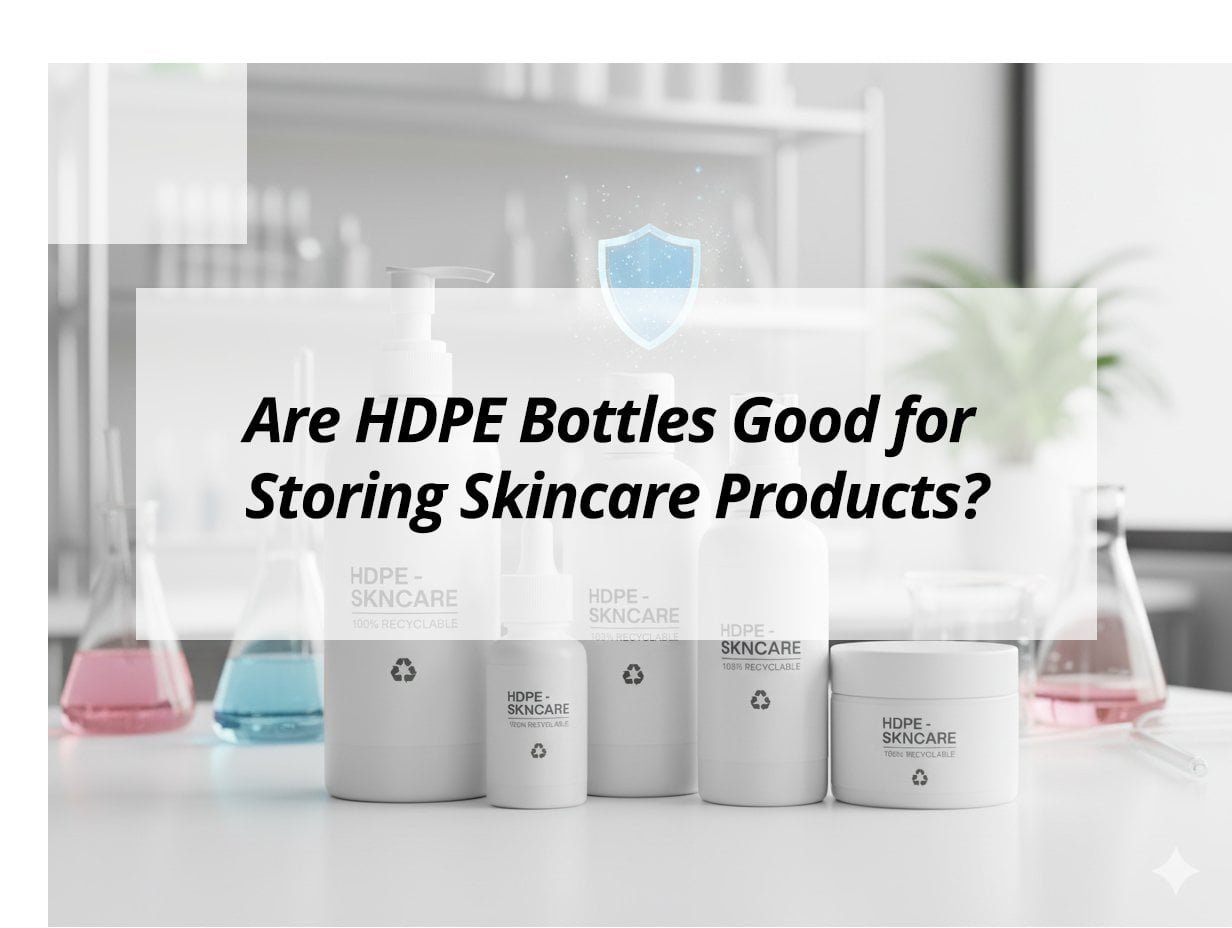
Are you wondering if the plastic bottles you use for skincare are truly suitable? Choosing the right packaging material is crucial for product stability and safety. HDPE is a common choice, but is it the best?
HDPE (High-Density Polyethylene) bottles are generally good for storing many skincare products. This plastic is durable, stable, and resistant to chemicals and moisture, which helps protect product integrity. However, its opacity and air permeability vary. While excellent for many lotions and creams, sensitive ingredients like Vitamin C may require more specialized airless or dark glass packaging to prevent degradation.
HDPE offers a cost-effective and reliable solution for a broad range of skincare formulations. But it is important to match the packaging to the specific needs of the product inside.
Is HDPE safe for cosmetics?
Are you thinking about the safety of plastic containers for your cosmetic products? High-Density Polyethylene1, or HDPE, is a very common plastic in packaging. It is important to know if it is a safe choice for your beauty items.
HDPE is widely considered safe for cosmetic packaging2. It is a stable, durable plastic that does not leach harmful chemicals into products under normal conditions. This makes it an excellent choice for a wide range of cosmetics, including shampoos, lotions, and creams. Its resistance to chemicals and moisture also helps maintain product integrity and shelf life.
When I discuss material options with customers, HDPE often comes up. Its widespread use in food and personal care products shows its accepted safety. It offers a reliable and cost-effective solution for many cosmetic brands.
Chemical Stability
HDPE is known for its inert nature.
- Non-Reactive: HDPE does not readily react with cosmetic ingredients. This prevents unwanted chemical changes in the product.
- Leaching Resistance: Under typical conditions, HDPE does not leach substances into the product. This keeps the formula pure.
- Barrier Properties: It provides a good barrier against moisture. This helps preserve the product's consistency and prevents evaporation.
Durability and Strength
HDPE is a strong and tough plastic.
- Impact Resistance: It can withstand drops and impacts without breaking. This makes it suitable for everyday use and transport.
- Flexibility: While strong, it also has some flexibility. This helps prevent cracking.
- Temperature Range: HDPE remains stable across a range of temperatures. This ensures packaging integrity in different environments.
Recyclability and Environmental Impact
HDPE is one of the most recycled plastics.
- Widely Accepted: Most recycling programs accept HDPE. It is labeled with the resin code '2'.
- Resource Efficiency: Recycling HDPE helps reduce the need for new raw materials.
- Lower Carbon Footprint: Producing HDPE often has a lower environmental impact compared to some other plastics.
Regulatory Acceptance
HDPE has broad approval for various uses.
| Regulatory Body | Approval Status for HDPE |
|---|---|
| FDA (USA) | Approved for food and drug contact. |
| European Union | Regulated for use in packaging. |
| Other Global Bodies | Generally recognized as safe. |
Can I store vitamin C serum in a plastic bottle?
Are you using a vitamin C serum and wondering about the best way to store it? Vitamin C is a powerful ingredient. But it is also very delicate. The type of bottle you use can greatly affect how long your serum stays effective.
Storing vitamin C serum in a plastic bottle is generally not ideal, especially if the bottle is clear or highly permeable to air. Vitamin C is highly sensitive to light and air (oxidation), which can degrade its potency quickly. To maintain its effectiveness, vitamin C serum is best stored in opaque, airless, or dark glass bottles that limit exposure to light and oxygen, protecting the active ingredients.
When I consult on packaging, I always highlight the importance of material choice for sensitive formulas. A well-chosen bottle can preserve a product's integrity. A poor choice can quickly render an expensive serum useless.
Sensitivity of Vitamin C
Vitamin C (L-ascorbic acid) is a very unstable ingredient.
- Oxidation: Exposure to air causes vitamin C to oxidize. It turns yellow or brown, and loses its effectiveness.
- Light Sensitivity: UV light can also break down vitamin C molecules. This speeds up degradation.
- Heat Sensitivity: High temperatures can also harm vitamin C.
Plastic Bottle Concerns
Many plastic bottles do not offer enough protection.
- Air Permeability: Some plastics, especially thinner ones, allow small amounts of air to pass through. This causes oxidation.
- Light Transmission: Clear plastic bottles let light reach the serum. This accelerates degradation.
- Chemical Interactions: While less common with stable plastics, some plasticizers could potentially interact with delicate formulas.
Ideal Storage Conditions
To protect vitamin C serum, specific packaging is needed.
- Opaque Packaging: Bottles should be dark or opaque. This blocks light from reaching the serum.
- Airless Pumps: Airless pump bottles are excellent. They prevent air from entering the container. This stops oxidation.
- Dark Glass Bottles: Amber or cobalt blue glass can block some light. But it still allows air if not an airless pump.
- Cool, Dark Place: Always store the bottle in a cool, dark place. This reduces heat and light exposure.
What is the best way to store skincare?
Are you investing in good skincare products and want to make them last? Proper storage is just as important as the product itself. The right storage can help maintain product potency and extend its shelf life.
The best way to store skincare is in a cool, dark place, away from direct sunlight, extreme temperatures, and excessive humidity. Products with sensitive ingredients, like vitamin C or retinol, benefit greatly from airless pump bottles or opaque containers to minimize exposure to light and air, preventing degradation and maintaining their effectiveness over time.
I often tell my clients that even the best formulations can be compromised by poor storage. Packaging design plays a big part in protecting products. However, consumers also have a role in how they keep their skincare at home.
General Storage Rules
These apply to most skincare products.
- Cool and Dark: Store products in a cupboard or drawer. Avoid windowsills or sunny countertops.
- Away from Heat: Keep them away from radiators, hot lights, or direct sunlight. Heat can break down ingredients.
- Avoid Humidity: Do not store products in steamy bathrooms. Humidity can promote bacterial growth in some formulas.
- Tight Lids: Always ensure lids are tightly closed after use. This prevents air entry and contamination.
Specific Product Needs
Some ingredients need extra care.
| Product Type | Ideal Storage Method | Reason |
|---|---|---|
| Vitamin C, Retinol Serums | Opaque, airless pump bottles, cool, dark place. | Highly sensitive to light and air (oxidation). |
| Eye Creams, Face Creams | Jars with spatulas, airless jars/pumps, cool place. | Reduces contamination from fingers. |
| Probiotic Skincare | Refrigerator (check product instructions), sealed. | Preserves live cultures. |
| Sunscreen | Room temperature, away from heat/sun. | High heat can destabilize SPF ingredients. |
Refrigerator Storage?
Some products can benefit from refrigeration.
- Pros: Cooling can extend the life of very sensitive products. It also provides a refreshing feeling upon application.
- Cons: Not all products are meant for cold. Some oil-based products can thicken or separate. Always check product instructions.
- Products that Benefit: Eye creams, facial mists, sheet masks, and some serums.
Avoiding Contamination
Keeping products clean is important.
- Clean Hands: Always wash your hands before applying skincare.
- Spatulas for Jars: Use a clean spatula to scoop out products from jars. This avoids dipping fingers directly into the product.
- Airless Packaging: Airless pumps and jars prevent finger contact and air exposure.
Do HDPE bottles contain BPA?
Are you worried about harmful chemicals like BPA in your plastic packaging? With growing awareness about plastic safety, it is a valid concern. Knowing if HDPE bottles contain BPA helps you make informed choices for your products.
No, HDPE (High-Density Polyethylene) bottles do not contain BPA (Bisphenol A). BPA is a chemical primarily associated with polycarbonate plastics and epoxy resins, which are different types of plastic than HDPE. HDPE is considered a safer plastic option, widely used in food-grade and cosmetic packaging due to its stability and lack of BPA content, providing peace of mind for consumers and brands alike.
This is a common question in the packaging industry. It is important to assure customers about the safety of materials used. HDPE's BPA-free status is a significant advantage, especially for health-conscious consumers.
Understanding BPA
Bisphenol A (BPA) is a chemical used in some plastics.
- Polycarbonate: BPA is a building block for polycarbonate plastics. These are clear, hard plastics often used in water bottles and food containers.
- Epoxy Resins: BPA is also used in epoxy resins. These resins line the inside of food cans and bottle tops.
- Health Concerns: Some studies suggest potential health effects from BPA exposure. This has led to consumer demand for BPA-free products.
HDPE Composition
HDPE is a distinct type of plastic.
- Ethylene Polymerization: HDPE is made from the polymerization of ethylene monomers. It does not use bisphenol A in its production process.
- Chemical Structure: Its chemical structure is different from polycarbonates. This difference means it does not contain BPA.
- Opacity: HDPE is typically opaque or translucent. Polycarbonate is clear.
Safety and Regulations
HDPE has a strong safety record.
- BPA-Free Certification: HDPE is inherently BPA-free. Manufacturers often highlight this feature.
- Food-Grade Approved: It is widely approved by regulatory bodies worldwide for contact with food and beverages. This reflects its safety profile.
- Cosmetic Use: Its safety for food contact also extends to cosmetic use. It ensures the integrity of beauty products.
Identifying HDPE
You can often identify HDPE products.
- Recycling Code '2': HDPE plastic typically has the recycling symbol '2' inside a triangle. This makes it easy to identify.
- Common Products: It is used for milk jugs, shampoo bottles, detergent bottles, and some cosmetic containers.
My Insights: Why HDPE Bottles Are Ideal for Skincare Storage
Worried about storing skincare safely? Learn why HDPE bottles offer an effective and eco-friendly solution.
HDPE bottles are a great choice for skincare products due to their chemical resistance, moisture barrier, and durability. Lightweight and cost-effective, they protect contents from leaks, impacts, and degradation, ensuring product integrity.
Exploring the Advantages of HDPE Bottles
Key Benefits:
-
Durability and Resistance: HDPE provides strong protection against chemicals, moisture, and UV light, preventing reactions with active ingredients and ensuring long-term stability without leaks.
-
Eco-friendly and Cost-effective: Lightweight and recyclable, HDPE is a sustainable choice that doesn't compromise on protection, offering a balance between cost and performance.
Common Uses:
HDPE bottles are versatile, suitable for storing shampoos, body washes, and creams, featuring options like pumps or sprayers. Their flexibility aids in maintaining product integrity and ease of use.
Potential Drawbacks:
While HDPE is excellent for most skincare products, it's less suitable for highly sensitive or light-dependent formulations, which may require glass for optimal preservation. Additionally, proper storage in cool, dry conditions is recommended.
| Feature | Benefit |
|---|---|
| Chemical Resistance | Prevents reactions |
| Moisture Barrier | Maintains integrity |
| Eco-friendly | Recyclable and lightweight |
By leveraging these benefits, HDPE bottles provide a secure and sustainable packaging option for a wide range of skincare products.
Conclusion
HDPE bottles are good for many skincare products due to their safety and durability. However, sensitive ingredients require specialized packaging like opaque, airless containers. Proper storage in a cool, dark place is always key.