
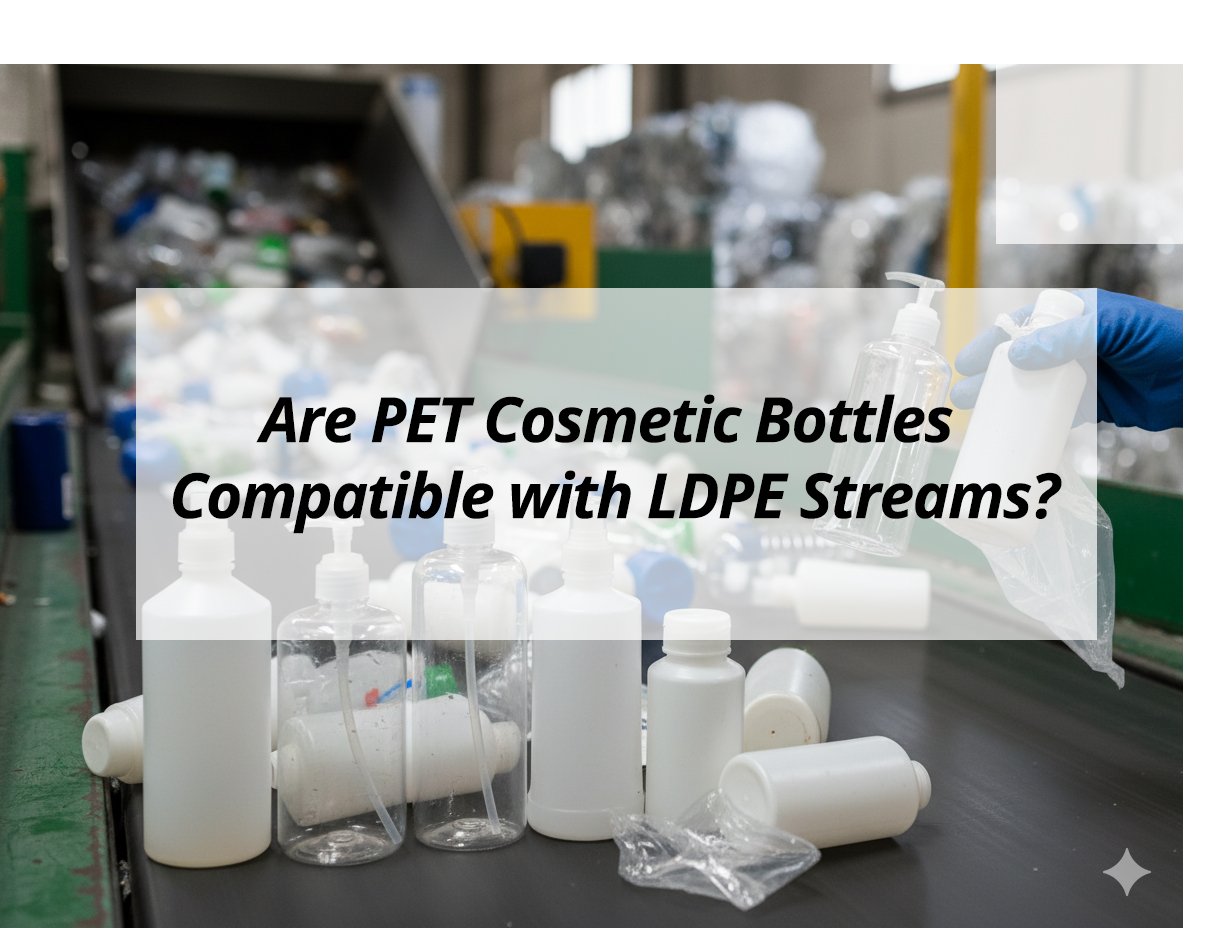
Are you involved in cosmetic packaging or product development? Understanding plastic compatibility is critical. It impacts both product integrity and environmental sustainability.
PET cosmetic bottles are generally not compatible with LDPE recycling streams. These plastics possess distinct chemical structures and melting points. Their commingling can lead to contamination during recycling. This results in compromised recycled material quality.
Effective recycling relies on accurate material separation. This article clarifies the differences between common plastic types. It explains why maintaining segregation is crucial for successful recycling initiatives.
Are LDPE and PET the same?
Does the array of plastic abbreviations cause confusion? Many perceive plastics as interchangeable. However, LDPE and PET are distinct materials.
LDPE (Low-Density Polyethylene) and PET (Polyethylene Terephthalate) are fundamentally different plastic types. They exhibit unique chemical compositions and physical characteristics. Consequently, their applications vary significantly across industries.
The distinction between LDPE and PET is crucial for proper material handling. Misidentification can lead to inefficient processes. This impacts both manufacturing and recycling operations.
Understanding LDPE
LDPE is a thermoplastic polymer. It is characterized by its high flexibility and low density.
- Molecular Structure: Features highly branched polymer chains. This branching prevents dense packing.
- Physical Properties: Known for softness, pliability, and good impact strength. It also demonstrates chemical resistance.
- Common Applications: Frequently used in flexible packaging such as plastic films, bags, and some squeeze bottles. Many flexible tubes for cosmetics utilize LDPE.
Understanding PET
PET is also a thermoplastic polymer. It is noted for its strength, rigidity, and clarity.
- Molecular Structure: Possesses a more linear polymer chain. This structure allows for tighter packing. This contributes to its strength.
- Physical Properties: Recognized for its rigid nature, transparency, and durability. It provides excellent barrier properties against gases and moisture.
- Common Applications: Extensively used for beverage containers, food jars, and numerous clear cosmetic bottles and jars.
Key Distinctions Between LDPE and PET
A clear understanding of their differences is essential. This table outlines the primary distinctions.
| Feature | LDPE | PET |
|---|---|---|
| Density | Low | High |
| Flexibility | High (flexible, easily deformable) | Low (rigid, retains shape) |
| Clarity | Translucent to opaque | High (transparent, glass-like) |
| Melting Point | Lower (approximately 105-115 °C) | Higher (approximately 250-260 °C) |
| Strength | Moderate tensile strength | High tensile strength |
| Primary Uses | Bags, films, squeeze tubes, flexible caps | Beverage bottles, rigid cosmetic containers |
| Recycling Code | #4 | #1 |
Recognizing these material specificities is vital. It enables appropriate material selection. It also facilitates correct recycling practices.
What is the difference between HDPE and LDPE bottles?
Are HDPE and LDPE interchangeably understood? While both are polyethylenes, they exhibit significant differences.
HDPE (High-Density Polyethylene) and LDPE (Low-Density Polyethylene) vary in density and structural characteristics. HDPE is more rigid and durable due to minimal branching in its polymer chains. Conversely, LDPE is more flexible and softer, a result of extensive branching.
The choice between HDPE and LDPE for bottle manufacturing depends on desired product characteristics. Understanding these differences ensures optimal material selection for specific functional requirements. This impacts container rigidity, flexibility, and overall performance.
HDPE: Characteristics and Applications
HDPE is a robust plastic. It is valued for its strength and rigidity. It has a high density.
- Molecular Structure: Characterized by long, linear polymer chains. These chains pack closely together. This contributes to its high density and strength.
- Physical Properties: Known for its rigidity, toughness, and opacity. It offers excellent chemical resistance.
- Common Applications: Widely used in containers requiring stiffness and impact resistance. Examples include milk jugs, detergent bottles, and certain opaque cosmetic bottles.
LDPE: Characteristics and Applications
LDPE, in contrast, is known for its flexibility. It has a lower density.
- Molecular Structure: Features a highly branched polymer structure. This branching prevents dense packing. This results in lower density and increased flexibility.
- Physical Properties: Distinguished by its softness, pliability, and good resistance to tearing. It typically appears translucent.
- Common Applications: Employed in products needing flexibility. This includes plastic bags, films, and various squeeze tubes for cosmetic and personal care products.
Comparative Analysis of HDPE and LDPE
The following table highlights the key differentiating features between HDPE and LDPE.
| Feature | HDPE | LDPE |
|---|---|---|
| Density | High (0.941–0.965 g/cm³) | Low (0.910–0.940 g/cm³) |
| Flexibility | Low (rigid, stiff) | High (flexible, easily bent) |
| Clarity | Opaque | Translucent to opaque |
| Strength | High tensile strength, good impact strength | Moderate tensile strength, good impact strength |
| Melting Point | Higher (approximately 120-130 °C) | Lower (approximately 105-115 °C) |
| Primary Uses | Rigid bottles, pipes, crates | Films, bags, squeeze tubes |
| Recycling Code | #2 | #4 |
Selecting between HDPE and LDPE for bottle applications depends heavily on the functional need. For sturdy, non-flexible containers, HDPE is the preferred material. For squeezable or flexible bottles, LDPE is more suitable.
Functional Considerations for Cosmetic Packaging
- Product Protection: HDPE offers robust protection for sensitive formulations. Its rigidity maintains container shape.
- Dispensing Method: LDPE's flexibility is ideal for products requiring squeezing. This allows controlled dispensing.
- Aesthetic Appeal: Both materials can be customized. HDPE often achieves a more matte or opaque finish. LDPE can provide a softer, more tactile feel.
- Chemical Compatibility: Both generally exhibit good chemical resistance. Specific formulations should always be tested with the chosen plastic.
Can HDPE and PET be recycled together?
Is it possible to commingle HDPE and PET for recycling? The effectiveness of recycling processes depends on material purity.
No, HDPE and PET cannot be recycled together. These plastics have fundamentally different chemical structures and melting points. Their co-processing leads to material degradation. This results in a low-quality, unusable recycled product.
The integrity of recycled plastics is paramount for their reintroduction into manufacturing. Mixing incompatible plastics undermines this integrity. It hinders efforts to create new, valuable products from recycled materials.
Challenges of Mixed Plastic Recycling
- Melting Point Disparity: PET melts at a significantly higher temperature than HDPE. When heated together, HDPE may degrade while PET struggles to reach its melting point.
- Material Contamination: The incompatible polymers do not blend uniformly. This creates a heterogeneous mixture. This mixture possesses poor mechanical properties.
- Reduced Material Value: The resulting recycled material is weakened and often discolored. This limits its potential applications. It reduces its market value.
The Importance of Segregated Recycling
- Identification Codes: Each plastic type carries a distinct recycling code (e.g., #1 for PET, #2 for HDPE). These codes guide proper sorting.
- Separate Collection Systems: Recycling facilities are designed to process plastics separately by type. This maximizes efficiency and material quality.
- Benefits of Purity:
- Ensures the production of high-quality recycled resins.
- Expands the range of products that can incorporate recycled content.
- Reduces reliance on virgin plastic production.
- Supports a circular economy for plastic materials.
Implications for Cosmetic Packaging Design
Designers of cosmetic packaging should consider end-of-life options. This includes material selection for optimal recyclability.
- Mono-material Design: Utilizing a single type of plastic for a container simplifies recycling. For example, an entire bottle made exclusively from PET or HDPE.
- Clear Labeling: Clearly marking the plastic type on packaging aids consumers in proper disposal.
- Supplier Collaboration: Engaging with packaging suppliers who understand recycling protocols is beneficial. This ensures chosen materials are genuinely recyclable within existing infrastructures.
As a B2B supplier of cosmetic packaging, providing guidance on material compatibility is a core service. This informs clients on sustainable packaging choices.
Are plastic bottles LDPE?
Many types of plastic bottles exist. Is LDPE a universal material for all plastic bottles?
No, not all plastic bottles are made from LDPE. While LDPE is utilized for flexible squeeze bottles and tubes, the majority of rigid plastic bottles, particularly for beverages and many cosmetic applications, are primarily constructed from PET or HDPE.
Identifying the specific plastic used in a bottle is important. This affects its physical characteristics. It also dictates its proper recycling pathway. Misconceptions about bottle materials can lead to incorrect recycling practices.
Predominant Materials in Plastic Bottle Manufacturing
Plastic bottles are fabricated from various polymers. Each offers distinct functional advantages.
-
PET (#1):
- Attributes: Exceptional clarity, high strength, and good barrier properties.
- Applications: Widely used for carbonated soft drink bottles, water bottles, and transparent cosmetic bottles (e.g., toners, serums).
- Rationale for Use: Its transparency allows product visibility. Its strength ensures product integrity.
-
HDPE (#2):
- Attributes: Opaque, rigid, durable, and excellent chemical resistance.
- Applications: Common in milk jugs, laundry detergent bottles, and robust opaque cosmetic bottles (e.g., certain creams, lotions).
- Rationale for Use: Provides high durability and protection for bulk products. It is also cost-effective.
-
LDPE (#4):
- Attributes: Flexible, soft, and typically translucent.
- Applications: Utilized for squeeze bottles, dropper bottles requiring pliability, and various tubes (e.g., hand creams, body washes).
- Rationale for Use: Its flexibility enables easy product dispensing. It offers a soft tactile feel.
Distinguishing LDPE Bottles
- Tactile Test: LDPE bottles feel distinctly softer and more pliable compared to PET or HDPE. They deform easily when squeezed.
- Visual Characteristics: Often appear translucent or slightly milky, rarely crystal clear like PET.
- Recycling Symbol: The most reliable indicator is the #4 recycling symbol, usually found molded into the bottle's base.
For cosmetic packaging, material choice aligns with product function and brand aesthetic. For example, a squeezable cleanser tube benefits from LDPE. A clear, rigid serum bottle typically requires PET. An opaque, robust shampoo bottle often uses HDPE.
Key Considerations for LDPE in Packaging
- Product Viscosity: LDPE is ideal for products with higher viscosity that require manual squeezing for dispensing.
- Design Flexibility: Its inherent flexibility allows for unique bottle shapes and designs that might be challenging with more rigid plastics.
- Sustainability Profile: While recyclable, LDPE recycling streams can be less common than PET or HDPE in some regions. This needs consideration.
My Insights: Are PET Cosmetic Bottles Compatible with LDPE Streams?
Confused about recycling PET and LDPE containers? Clarify the critical differences to enhance recycling efficiency and sustainability.
PET cosmetic bottles are not compatible with LDPE recycling streams. Each has distinct recycling processes due to different chemical properties and melting points. Mixing these materials can contaminate recycling batches, so they must be sorted and processed separately to ensure successful recycling.
Understanding Recycling Compatibility
Material Differences
-
PET: Identified by resin code #1, PET bottles are clear and used for products needing gas barriers, such as serums and lotions. They must enter PET-specific recycling streams.
-
LDPE: Represented by resin code #4, LDPE is used for flexible containers like tubes. Its recycling process differs due to its lower melting point and stress-crack resistance.
Contamination and Processes
Mixing PET in LDPE streams leads to contamination due to incompatible chemical properties, resulting in defects in the recycled material. Each material requires a distinct recycling process to maintain integrity and functionality.
Practical Recommendations
For effective recycling:
- PET Items: Recycle in PET streams, ensuring transparency and rigidity aren't compromised.
- LDPE Items: Direct to LDPE streams, focusing on flexibility and softness.
| Material | Resin Code | Uses | Recycle Stream |
|---|---|---|---|
| PET | #1 | Serums, clear bottles | PET stream |
| LDPE | #4 | Soft tubes, flexible packs | LDPE stream |
Understanding and adhering to these guidelines prevent contamination and enhance the recycling process, contributing to a more sustainable environment.
Conclusion
PET cosmetic bottles are incompatible with LDPE recycling streams due to material differences. Similarly, HDPE and PET cannot be recycled together. Accurate plastic identification and segregation are crucial for effective recycling processes.