
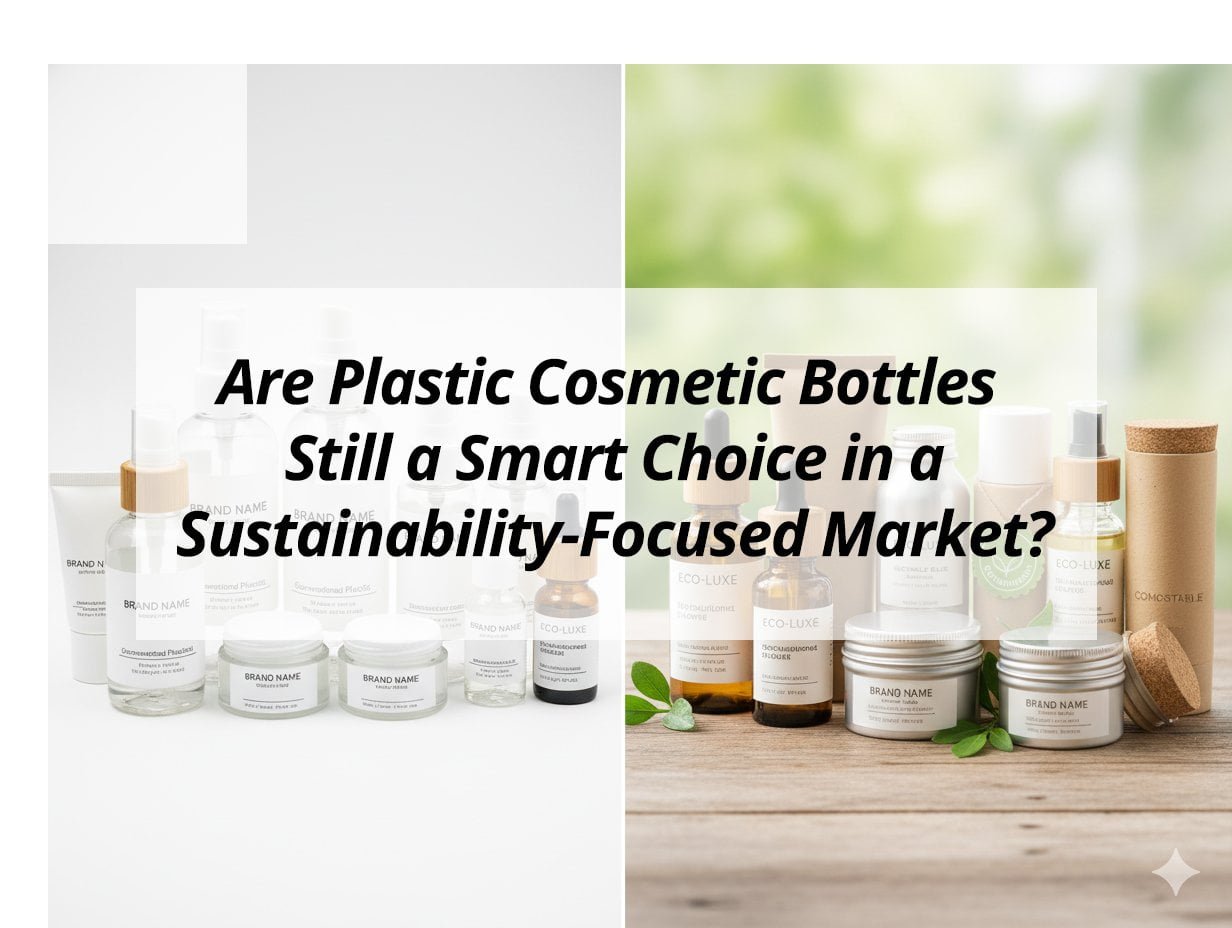
In an era obsessed with sustainability, choosing between plastic and other materials can be overwhelming for brands aiming to be eco-friendly.
Plastic cosmetic bottles remain popular due to their lightweight and affordability, but their environmental impact is a major concern. Brands are exploring sustainable alternatives, as consumers demand eco-friendly solutions. This article examines whether plastic bottles are still a viable choice in today’s sustainability-focused market.
Understanding plastic's impact is key to making informed packaging decisions.
Why are plastic bottles not sustainable?
The challenge of plastic waste is growing, impacting ecosystems worldwide.
Plastic bottles contribute to pollution due to their non-biodegradable nature. They persist in the environment, harming wildlife and leading to significant ecological damage. This makes sustainable skincare packaging solutions increasingly appealing to environmentally conscious consumers.
Grasping the sustainability issues with plastic can guide better packaging choices.
Plastic's Environmental Impact
-
Longevity in Landfills: Plastic bottles1 take hundreds of years to decompose. During this time, they can break into microplastics, which spread throughout ecosystems, causing harm to wildlife and entering the food chain.
-
Production and Carbon Footprint: Producing plastics involves significant energy consumption and fossil fuel use, leading to high carbon emissions. The process contributes to global warming and climate change.
-
Recycling Challenges: While recycling offers a solution, it's not foolproof. Many plastics aren't recycled due to contamination or lack of facilities. This results in landfill accumulation, reinforcing the need for plastic-free cosmetic packaging options.
| Issue | Impact |
|---|---|
| Longevity in Landfills | Causes microplastic pollution |
| Production and Carbon Footprint | High energy and fossil fuel use |
| Recycling Challenges | Limited recycling facilities and contamination |
What is being done to make plastic bottles sustainable?
Efforts abound in the quest to transform plastic's role in packaging.
Innovations are underway to make plastic bottles eco-friendly. Biodegradable plastics and recycling advancements are key steps towards sustainable cosmetics packaging. These efforts focus on reducing waste and enhancing recyclability.
Exploring innovations helps identify viable alternatives for greener packaging.
Innovations in Plastic
-
Biodegradable Plastics: These are designed to decompose faster than traditional plastics, often using natural materials like corn starch. They reduce landfill impact and are a focus for sustainable skincare packaging2 in Australia and globally.
-
Recycling Improvements: New recycling technologies aim to increase efficiency and reduce contamination. Advanced sorting systems and chemical recycling are improving the process, making recycling more practical and widespread.
-
Consumer Awareness: Brands are educating consumers about proper disposal and recycling practices. Enhanced labels and recycling programs encourage responsible behavior, aligning with the shift towards sustainable cosmetics packaging.
| Innovation | Benefit |
|---|---|
| Biodegradable Plastics | Decomposes faster, reducing landfill waste |
| Recycling Improvements | Increases efficiency and reduces contamination |
| Consumer Awareness | Encourages responsible disposal and recycling |
Which is worse for the environment, glass or plastic bottles?
Choosing between glass and plastic is complex, with pros and cons for each.
Glass bottles, while reusable and recyclable, have high production energy costs. In contrast, plastic bottles, although lightweight and convenient, create enduring waste. Weighing these factors is crucial for sustainable packaging decisions.
Understanding these trade-offs informs better environmental choices.
Glass and Plastic Bottles
-
Glass Pros and Cons: Glass is infinitely recyclable and doesn’t degrade. However, it requires more energy to produce and transport, translating to higher carbon emissions. It's sturdy and preferred for luxury packaging but less practical for mass distribution.
-
Plastic Pros and Cons: Plastic requires less energy to produce and transport. The downside is its permanent pollution potential. Sustainable skincare packaging must consider these aspects to meet eco-friendly goals.
-
End-of-Life Impact: Disposing of both materials has implications. Glass offers reusable schemes, while plastic relies heavily on effective recycling systems. Each choice impacts global sustainability efforts differently.
| Criteria | Glass Bottles | Plastic Bottles |
|---|---|---|
| Recycling | Infinitely recyclable | Contaminated easily in recycling processes |
| Carbon Footprint | High due to energy-intensive production | Lower but accumulates in landfills |
| Practicality | Heavy and breakable, higher cost | Lightweight, cost-effective, but polluting |
What is the most environmentally friendly packaging?
Choosing eco-friendly packaging fuels a healthier planet and satisfies consumer demand.
Biodegradable and recyclable materials lead in eco-friendly packaging. Towards sustainable cosmetics packaging, these options align with global sustainability standards. Brands adopting such materials boost their green credentials and appeal to conscious consumers.
Sustainability harmonizes environmental needs with consumer preferences.
Eco-Friendly Options
-
Biodegradable Solutions: These include packaging from materials like mushroom roots, which naturally break down. Such innovations offer compelling alternatives for sustainable skincare packaging.
-
Recyclable Materials: Paper, aluminum, and some plastics are recyclable without losing quality. These materials contribute to circular economies, where resources are continuously reused, reducing waste.
-
Refill Programs: These allow packaging reuse. Customers refill containers, minimizing waste and reducing production needs. Such initiatives are being adopted worldwide to support sustainable skincare packaging.
| Eco-Friendly Approach | Description |
|---|---|
| Biodegradable Solutions | Natural materials that decompose organically |
| Recyclable Materials | Enable continuous resource use |
| Refill Programs | Reduce waste with reused containers |
My insights: Evaluating Plastic Cosmetic Bottles in a Sustainable Market
Worried about sustainability in packaging? Plastic cosmetic bottles still offer smart solutions when designed for recycling and sustainability.
Plastic cosmetic bottles remain viable in a sustainability-focused market when incorporating recycled content and recyclability. Innovations in biodegradable plastics and closed-loop systems enhance their eco-friendly potential while maintaining cost-effectiveness and versatility.
Strategic Use of Plastic in Sustainable Packaging
Sustainability through Innovation:
Plastic remains practical, thanks to lightweight and durable qualities. Innovations such as recycled PET and biodegradable options reduce carbon footprints and waste.
Design and Material Selection:
Choosing materials like PET and PCR blends enhances recyclability. Design for disassembly supports recycling, while reusable and lightweight designs reduce environmental impact.
Market Adaptation:
Brands should prepare for regulatory changes and consumer shifts by exploring mixed materials like bioplastics and glass. These alternatives provide options for premium and environmentally conscious consumers.
| Considerations | Description | Impact |
|---|---|---|
| Innovative Materials | Use recycled and biodegradable plastics | Reduces carbon footprint and waste |
| Design for Recyclability | Maximize recyclability and minimize material use | Enhances sustainability and consumer appeal |
| Adaptability | Diversify with glass and bioplastics if needed | Meets evolving regulations and consumer demands |
Plastic cosmetic bottles, when used thoughtfully, continue to meet sustainability goals while offering practical and affordable packaging options.
Conclusion
Balancing cost, practicality, and sustainability guides cosmetic packaging choices. Adopting eco-friendly options satisfies consumer demands and promotes responsible environmental stewardship.