
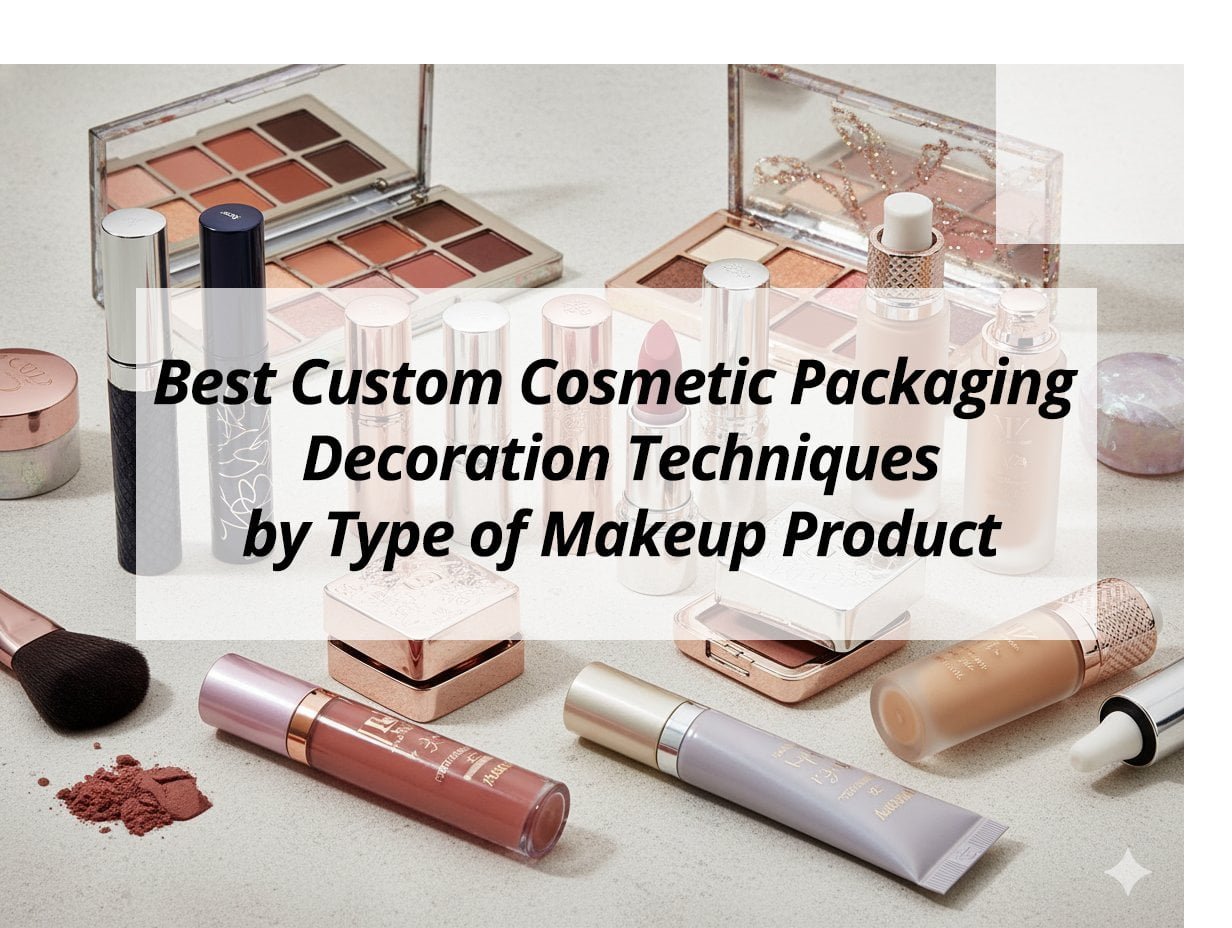
Selecting the ideal decoration for cosmetic packaging is a crucial task. Many brands face challenges in making their products stand out. Without effective decoration, products can appear ordinary and fail to attract consumer attention.**
The most effective custom cosmetic packaging decoration techniques vary by makeup product type. For liquids, airless pumps with silk screening ensure product integrity and branding. Powders benefit from compacts with hot stamping for luxury. Tubes often use offset printing for vibrant designs. This guide helps you choose the best options.
Effective packaging plays a significant role in market presence. It draws customers in. It also encourages further interest in the product. Well-executed packaging enhances brand recall. It also contributes positively to sales performance.
What are the 7 types of packaging?
Understanding different packaging types is essential. Many often consider only primary packaging. However, packaging involves multiple layers. Recognizing these distinctions aids in making informed decisions.
The various packaging types serve distinct functions. Each layer plays a specific role. Grasping these roles helps in planning a product's journey from production to consumer.
Let us explore the main categories of packaging. These include primary, secondary, and tertiary packaging. There are also specialized types tailored for different requirements.
Primary Packaging: Direct Product Containment
Primary packaging is the initial layer. It directly encloses the product. Examples include jars, bottles, or tubes. Its main purpose is product protection. It maintains the cosmetic's safety and freshness. For instance, a lipstick tube safeguards the lipstick bullet. A lotion bottle prevents spills. This layer is critical for product integrity. It frequently features the main design elements.
Secondary Packaging: Branding and Supplementary Protection
Secondary packaging surrounds the primary package. Consider a box that holds a lipstick tube. This layer groups individual products. It also provides additional protection. Importantly, it is central for branding. This is where many decorative features are applied. It helps products gain visibility on retail shelves. Consumers often encounter this layer first in stores.
Tertiary Packaging: Logistics and Transit Protection
Tertiary packaging is designed for shipping. It protects products during transportation. This may involve large cartons or pallets. It is not intended for consumers. Its function is to facilitate the safe movement of multiple units. This type of packaging ensures products arrive undamaged. It streamlines logistical processes for businesses.
Other Important Packaging Classifications
Further important packaging types include:
- Flexible Packaging: This uses pliable materials. Pouches or sachets are examples. It is lightweight and often used for samples.
- Rigid Packaging: This employs firm materials. Glass bottles or plastic jars illustrate this type. It offers robust protection.
- Sustainable Packaging: This focuses on environmentally friendly materials. Recycled plastics or biodegradable options are utilized. A growing number of brands are adopting this type.
- Child-Resistant Packaging: This is engineered to be difficult for children to open. It is used for products that could pose a hazard if consumed.
Knowledge of these types assists in selecting appropriate strategies. Each type requires specific decoration approaches. For example, a sturdy carton for tertiary packaging might use simple labels, while secondary packaging for retail might feature intricate printing.
What are the different types of cosmetic packaging?
The range of cosmetic packaging types is extensive. Each type is suited for a particular product. Choosing the correct one is vital for a brand's market success.
Navigating the many choices can be challenging. Different cosmetics demand varying levels of protection. A powder compact's requirements differ from a lotion bottle's. The selection must be precise.
Let us examine the primary types of cosmetic packaging. This overview covers common formats. It helps in understanding the available options for various products.
Tubes: Adaptable and Functional
Tubes are a widely used packaging format. They are suitable for creams, gels, and lotions. Their squeezable design allows for controlled product dispensing. Tubes also minimize air exposure. This helps maintain product freshness. Specific examples include:
- Lip Gloss Tubes: Small and convenient.
- Eyelash Tubes: Often slender with an integrated wand.
- Hand Cream Tubes: Larger capacity for greater volume.
Tubes are manufactured from plastic or laminate materials. Plastic offers flexibility. Laminate provides a strong barrier. Both are highly amenable to various decoration techniques.
Jars: Ideal for Creams and Balms
Jars are well-suited for thick creams, balms, and masks. They feature a wide opening. This facilitates easy product access. Jars frequently convey a premium impression. They can be made from glass or plastic.
- Cream Jars: Standard for facial and body creams.
- Eye Cream Jars: Smaller, often made of glass to enhance perception.
Glass jars provide a substantial feel. They suggest a luxurious product. Plastic jars are lighter and more resistant to breakage. Both can be decorated effectively with labels or direct printing.
Bottles: For Liquid Formulations and Serums
Bottles are used for liquid products. This includes lotions, serums, and foundations. They often incorporate pumps, droppers, or sprayers. These dispensing mechanisms aid in product application. Bottles are available in glass or plastic.
- Lotion Bottles: Typically equipped with a pump dispenser.
- Vacuum Bottles: Designed to exclude air, beneficial for sensitive formulas.
- Serum Bottles: Frequently include a dropper for precise dosage.
Vacuum bottles are specialized. They prevent product oxidation. This makes them suitable for natural or organic product lines.
Compacts and Cases: For Powders and Solid Makeup
Compacts and cases are for solid makeup products. These encompass eyeshadows, blushes, and pressed powders. They commonly feature an integrated mirror. Their design prioritizes portability.
- Eyeshadow Cases: Can accommodate single shades or multiple-pan palettes.
- Air Cushion Cases: For liquid foundation held in a sponge applicator system.
- Blush Compacts: Often designed in round or square shapes.
These cases require durable decoration. They experience frequent handling. Custom molding can further distinguish compacts, enhancing brand identity.
Other Key Cosmetic Packaging Forms
- Lipstick Tubes: A traditional format. They protect the delicate lipstick bullet. Secure closures are essential.
- Eyeliner Tubes: Often slim, with a brush or felt tip applicator.
- Roll-on Bottles: Used for fragrances or liquid deodorants.
Each packaging type presents distinct decoration opportunities. Techniques include printing, hot stamping, or frosting. The correct selection significantly enhances the best makeup packaging for a brand.
What are the types of decorative cosmetics?
Decorative cosmetics are products designed to enhance physical appearance. These products focus on color and style. Their packaging typically reflects this aesthetic emphasis.
The array of makeup products can be extensive. Each product serves a specific function. Understanding these functions helps in determining appropriate packaging requirements.
Let us delineate the primary categories of decorative cosmetics. This categorization links product type with suitable decoration strategies. This ensures that packaging accurately represents the product within.
Face Makeup: Foundation, Powder, Blush
Face makeup aims to even skin tone and add color. These products necessitate packaging that protects sensitive formulations. They also require packaging that is user-friendly.
- Foundations: Liquid or cream formulations. Often in bottles with pumps or droppers.
- Concealers: Similar to foundation, used for targeted coverage. Frequently in tubes or small pots.
- Powders: Pressed or loose varieties. Typically in compacts or sifter jars.
- Blush/Bronzer: Pressed powder formats. Contained within compacts.
Decoration for face makeup often emphasizes elegance. Matte finishes or metallic accents are frequently utilized. A simple compact can be transformed with a subtle hot stamp, elevating its perceived value.
Eye Makeup: Mascara, Eyeliner, Eyeshadow
Eye makeup products enhance the eyes. These items require precise applicators. Their packaging must be slender and highly functional.
- Mascara: Housed in tubes with an integrated wand applicator.
- Eyeliner: Available in liquid, gel, or pencil forms. Liquid liners are often in thin tubes.
- Eyeshadows: Pressed powder formulas. Presented in palettes or single compacts.
Eye makeup packaging often incorporates vibrant colors or sleek designs. Durability is important, as these items are frequently carried.
Lip Makeup: Lipsticks, Lip Gloss, Lip Liners
Lip makeup products impart color and shine to the lips. These items are generally small. They require convenient and portable packaging.
- Lipsticks: Encased in classic twist-up tubes.
- Lip Gloss: Provided in tubes with a wand applicator.
- Lip Liners: Typically in pencil form.
Lip product packaging offers significant creative potential. Unique shapes or textures can distinguish them. Metallic or frosted finishes are commonly employed.
Nail Makeup: Nail Polish
Nail polish is used to color nails. It is typically supplied in glass bottles. These bottles include a brush applicator.
- Nail Polish: Small glass bottles with screw caps.
Nail polish packaging often highlights the bottle's shape. The cap can also serve as a design element. Labels are crucial for brand identification.
The Role of Decoration in Decorative Cosmetics
Decoration is paramount for these product types. It attracts consumer interest. It also communicates the brand's aesthetic. Techniques such as:
- Silk Screen Printing: For detailed logos and text application.
- Hot Stamping: For metallic or holographic visual effects.
- Offset Printing: For reproducing full-color imagery.
- UV Coating: Enhances shine and provides surface protection.
- Frosting: Creates a matte, soft-touch tactile experience.
Appropriate decoration can elevate a product's appeal. It also contributes to creating the best makeup packaging for any brand. Utilizing a velvet-touch finish on lipstick tubes, for example, can instantly convey a premium feel.
Which makeup brand has the best packaging?
The question of which makeup brand possesses the best packaging is frequently posed. The answer often depends on individual preferences. However, certain brands consistently demonstrate excellence.
It is challenging to designate a single best brand. Many brands achieve high standards. They successfully integrate style with practical function. They also use high-quality materials.
Let us discuss some brands recognized for superior packaging. We will analyze their distinguishing features. This can offer inspiration for other brands.
Fenty Beauty: Modern Design
Fenty Beauty is recognized for its modern aesthetic. Its packaging is sleek. It conveys a high-end feel. The brand employs clean lines and simple color schemes. For instance, their foundation bottles are elegant. They feature a frosted glass appearance. This contributes to a luxurious perception. Rose gold accents are often used. This adds a touch of sophistication. The products feel substantial and well-crafted. This communicates a sense of quality.
Glossier: Minimalist and Engaging
Glossier distinguishes itself with a minimalist approach. Its packaging is straightforward. It uses soft colors and engaging typography. Squeezable tubes are frequently utilized. These are practical and convenient for users. Their "Boy Brow" packaging is distinctive. It is a small tube with a simple logo. This appeals to a contemporary audience. Glossier demonstrates that simplicity can be highly effective. The focus remains on the product itself.
Charlotte Tilbury: Luxurious and Classic Inspiration
Charlotte Tilbury presents a luxurious, vintage-inspired aesthetic. Its packaging incorporates rose gold and deep bronze tones. It often features intricate details. The compacts resemble antique artifacts. The brand uses weighty materials. This enhances the perception of luxury. Their lipstick tubes are notable. They have a ribbed design. This provides a comfortable grip. The packaging maintains strong consistency across the product line. This builds robust brand recognition.
NARS Cosmetics: Bold and Contemporary
NARS is known for its bold, matte black packaging. It projects a chic image. Their compacts and palettes feature a rubberized finish. This gives them a unique tactile quality. The stark black design allows product colors to stand out. Their "Orgasm" blush compact is iconic. It features a sharp white logo on a black background. This creates a strong visual statement. NARS illustrates that powerful branding can stem from restrained color palettes.
Factors in Effective Packaging Design
These brands demonstrate several key strengths:
| Feature | Description | Example Brand |
|---|---|---|
| Consistency | All products maintain a cohesive visual identity. | Charlotte Tilbury |
| Material Quality | High-grade materials enhance tactile and visual appeal. | Fenty Beauty |
| User Experience | Packaging is easy to use and provides product protection. | Glossier |
| Brand Expression | Packaging clearly communicates the brand's identity. | NARS Cosmetics |
| Design Innovation | Occasional use of novel materials or design concepts. | Fenty Beauty |
Effective packaging involves more than visual appeal. It encompasses tactile experience and functional performance. These successful brands understand this holistic approach. They invest in their packaging design. This facilitates a stronger connection with consumers.
My Insights: Best Custom Cosmetic Packaging Decoration Techniques by Type of Makeup Product
Want to elevate your cosmetic product packaging? Discover the best decoration techniques tailored for each type of makeup product.
Custom packaging decoration techniques like embossing, digital printing, and hot stamping enhance cosmetic products by providing a unique, engaging experience. Choosing the right technique based on product type and material ensures optimal visual appeal and functionality.
Tailored Decoration Techniques for Cosmetic Packaging
Decoration Techniques by Product Type
| Makeup Product | Best Technique | Premium Option |
|---|---|---|
| Lipstick Bullets | Screen Printing | Hot Foil Stamping |
| Liquid Foundation | Silk Screen on Glass | Metallized Pump Collar |
| Eyeshadow Palettes | Offset Printing | Foil Logo with Embossing |
| Nail Polish Bottles | UV Coating | Digital Printing |
Considerations
- Materials: Choose techniques that match the viscosity and durability needs of the product, enhancing packaging strength and appeal.
- Consumer Experience: Design-based decisions should prioritize formula visibility and tactile elements, making shade and texture the focal point.
By understanding these tailored decoration techniques, cosmetic brands can effectively align their packaging with marketing goals and consumer preferences, driving enhanced brand recognition and product appeal.
Conclusion
Finding the best makeup packaging decoration is vital. It depends on your product and brand. Understanding packaging types and decoration techniques helps. Choosing wisely will make your cosmetic products shine.