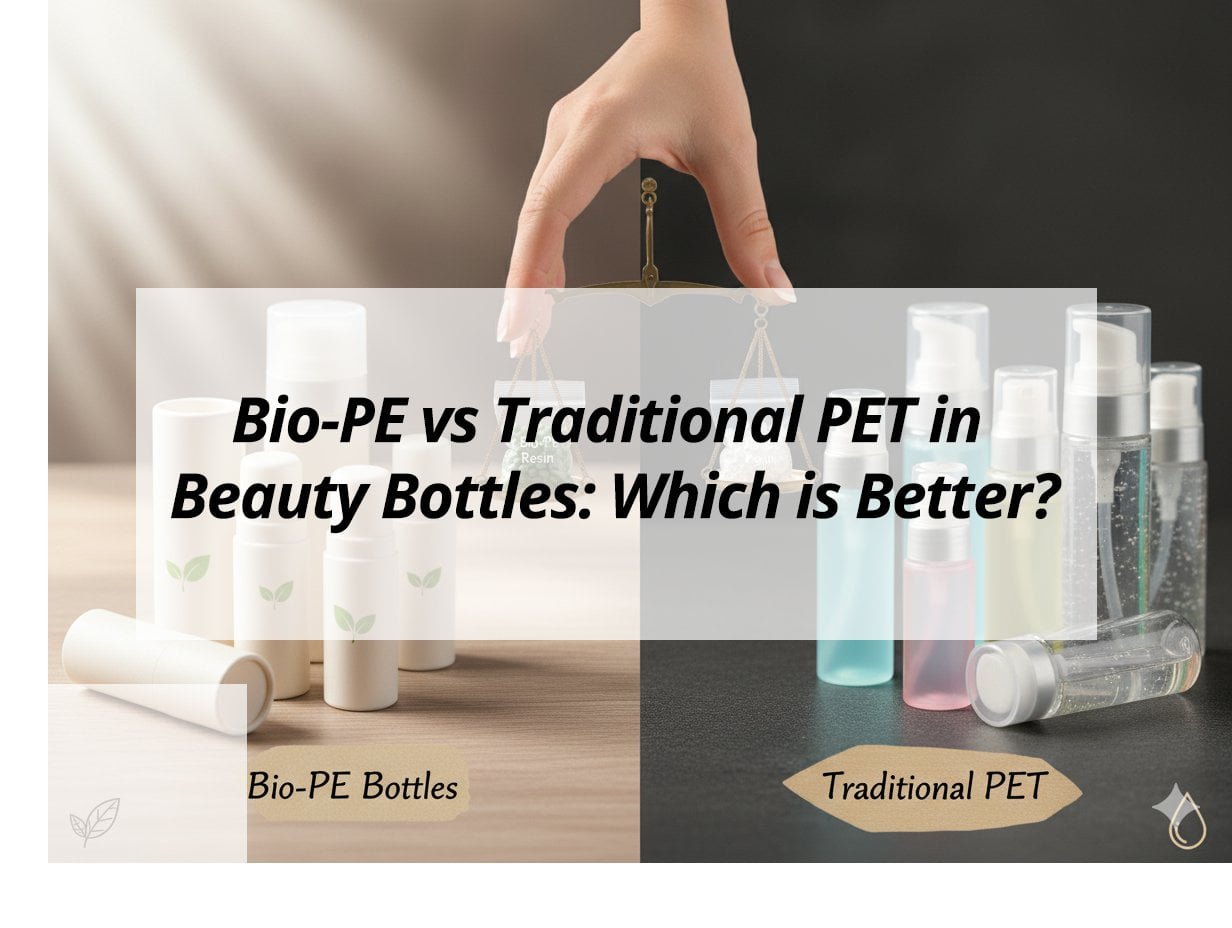
Are you confused about plastic types for beauty bottles? Do you want to make eco-friendly choices but feel lost? Choosing the right material is vital for product integrity and environmental goals.
Bio-PE and traditional PET are two common materials for beauty bottles. Each has different environmental impacts and performance qualities. Understanding their differences helps in making informed decisions for sustainable packaging. This article explores these differences to help choose wisely.
Let us dive into the details of Bio-PE and traditional PET. This will help understand which material might be best for beauty products.
Is PET plastic better than PE plastic?
Are you wondering which plastic is superior for beauty bottles? Do you need to know if PET or PE suits a product more? Choosing between PET and PE plastic depends on specific product needs.
PET and PE plastics both have unique properties that make them suitable for different applications. PET is known for its clarity and barrier properties, making it great for products needing a strong seal. PE, on the other hand, is more flexible and impact-resistant.
The selection between PET and PE often depends on the product's formula and intended use. For instance, a clear serum bottle frequently requires PET due to its transparency. A squeezable lotion bottle, however, often benefits from PE's flexibility.
What are the properties of PET plastic?
PET, or Polyethylene Terephthalate, is a common plastic. It is known for its clear look and strength. It is widely used in many industries.
- Clarity: PET is very clear. This makes it perfect for showing off product colors.
- Barrier Properties: It is good at stopping oxygen and moisture. This helps products last longer.
- Strength: PET is strong and rigid. It resists breakage well.
- Recyclability: It is easily recycled. It often gets new life as other products.
- Chemical Resistance: It handles many chemicals without issues. This is good for various beauty formulas.
What are the properties of PE plastic?
PE, or Polyethylene, is also a very common plastic. It is known for its flexibility. It comes in different forms like HDPE and LDPE.
- Flexibility: PE is more flexible than PET. This makes it good for squeezable bottles.
- Impact Resistance: It can take bumps and drops well. This is good for products used often.
- Moisture Barrier: It is an excellent barrier against water. This protects liquid products.
- Versatility: PE can be opaque or translucent. This offers different design choices.
- Cost-Effective: It is often a more affordable option. This helps manage production costs.
| Feature | PET (Polyethylene Terephthalate) | PE (Polyethylene) |
|---|---|---|
| Clarity | Very clear | Translucent to opaque, less clear |
| Flexibility | Rigid | Flexible (LDPE) to semi-rigid (HDPE) |
| Barrier | Good oxygen, moisture barrier | Excellent moisture barrier, less for oxygen |
| Strength | High | Good impact resistance |
| Recycling | Widely recycled (resin code 1) | Widely recycled (resin codes 2 and 4) |
| Cost | Moderate | Often lower |
Choosing between PET and PE depends on specific requirements. If clear bottles and strong barriers are needed, PET is good. If flexible, impact-resistant bottles are needed, PE is a better choice.
What are the disadvantages of using bioplastics?
Are you considering bioplastics for beauty bottles? Do you want to know if there are any downsides to these green options? Understanding the disadvantages is important for making smart choices.
Bioplastics, while eco-friendly in concept, come with certain challenges. These can include higher costs, specific recycling needs, and limitations in performance. It is important to weigh these factors against the environmental benefits before fully committing to bioplastic packaging.
Considering bioplastics requires careful thought. While the idea of being "green" is appealing, practical aspects are important. For example, some bioplastics need industrial composting. This is not always available everywhere. These points need to be considered to ensure practical and truly sustainable choices.
What are the main challenges with bioplastic costs?
Bioplastics can sometimes cost more than traditional plastics. This is a common concern for businesses. The price difference can affect product budgets.
- Production Scale: Bioplastic production is smaller. This means higher unit costs.
- Raw Materials: Bio-based materials can be more expensive. They might compete with other uses.
- Research and Development: Ongoing innovation adds to the price. New methods cost money.
- Market Demand: If demand is low, prices stay high. More adoption could lower costs.
What are the recycling and disposal issues?
Recycling bioplastics is not always straightforward. This can create confusion for consumers and waste management. Proper disposal is key to their environmental benefits.
- Composting Needs: Many bioplastics need industrial composting. Home composting often fails.
- Contamination: Mixing bioplastics with traditional plastics can contaminate recycling streams. This makes recycling harder for both.
- Labeling Confusion: Consumers often do not know how to dispose of bioplastics. Clear labels are very important.
- Infrastructure: Not all areas have the facilities needed for bioplastic recycling or composting.
| Disadvantage Category | Specific Challenges | Impact on Brands |
|---|---|---|
| Cost | Higher raw material prices, smaller production scale | Increased packaging costs, lower profit margins |
| Performance | Limited barrier properties, less heat resistance | Shorter shelf life, restricted product types |
| End-of-Life | Specific industrial composting/recycling needed | Consumer confusion, potential landfilling |
| Supply Chain | Variability in raw material availability | Production delays, inconsistency |
Despite these disadvantages, bioplastics are improving. As technology advances, many of these issues are becoming less significant. However, it is important to be aware of current limitations when choosing packaging.
What is the difference between bio PET and PET?
Are you seeing "bio PET" and "PET" labels and wondering what they mean? Do you think they are the same, or very different? Understanding the distinction is important for sustainable choices.
Bio PET and traditional PET are chemically identical. The key difference lies in their origin. Bio PET is made using bio-based raw materials, while traditional PET uses petroleum-based materials. This distinction impacts their environmental footprint, particularly in terms of renewable resource use.
When discussing packaging options, this difference is often highlighted. The question of whether "bio" truly means better often arises. Chemically, they are the same plastic. The benefit of bio PET comes from its renewable source, not from how it degrades. This helps clarify expectations.
How are their raw materials different?
The source of the materials is the main difference. This affects their sustainability. It is a key point for eco-conscious brands.
- Traditional PET: This comes from fossil fuels. It uses petroleum-based chemicals like ethylene glycol and terephthalic acid.
- Bio PET: This uses bio-based ethylene glycol. This comes from plant sources, such as sugarcane or corn. The terephthalic acid part usually remains petroleum-based for now.
- Renewable Content: Bio PET can have up to 30% plant-derived content. This makes it partly renewable.
What about their chemical structure and performance?
Despite different sources, their chemical makeup is the same. This means they perform similarly. It simplifies production and usage.
- Chemical Identity: Both Bio PET and traditional PET have the exact same chemical formula. They are polymers of ethylene glycol and terephthalic acid.
- Performance: Because they are chemically identical, their physical properties are the same. This includes clarity, strength, and barrier properties.
- Recyclability: Both types can be recycled together. They go into the same PET recycling stream. This is a big advantage for waste management.
- Manufacturing: They can be processed using the same machinery. This makes it easy for factories to switch.
| Aspect | Traditional PET | Bio PET |
|---|---|---|
| Raw Material | 100% fossil-fuel-based | Partially bio-based (up to 30% from plants) |
| Chemical Formula | Identical | Identical |
| Physical Properties | Identical (clarity, strength, barrier) | Identical |
| Recyclability | Recycled alongside other PET | Recycled alongside other PET |
| Environmental Benefit | Lower carbon footprint than some other plastics | Reduced reliance on fossil fuels |
Choosing Bio PET offers a way to reduce reliance on fossil fuels. It maintains the trusted performance of PET. It is a good step towards more sustainable packaging.
Which is better, HDPE or PET bottles?
Are you deciding between HDPE and PET for beauty bottles? Do you need to know which material best suits your product? Both HDPE and PET have unique advantages for different uses.
HDPE and PET bottles each excel in specific areas. HDPE is known for its durability, impact resistance, and opacity, making it ideal for certain formulations. PET, on the other hand, offers superior clarity and barrier properties, often preferred for products where visibility and a strong seal are key.
The choice between HDPE and PET often depends on the product's consistency and how it will be used. For example, if a thick cream or lotion is to be packaged, HDPE is usually chosen because it is squeezable. If a clear toner or serum is to be packaged, PET is often better because of its transparency. The plastic should match the product's properties and customer use.
What are the benefits of HDPE bottles?
HDPE, or High-Density Polyethylene, is a robust plastic. It is very common for personal care products. It offers specific benefits.
- Durability: HDPE is very strong. It resists cracks and impacts well.
- Chemical Resistance: It handles many chemicals. This makes it safe for diverse formulas.
- Opaque Options: HDPE can be easily colored. It can be fully opaque. This protects light-sensitive products.
- Flexibility: It is flexible enough for squeezable bottles. This is good for lotions and shampoos.
- Cost-Effective: HDPE is often an economical choice. This helps manage production budgets.
What are the benefits of PET bottles?
PET, or Polyethylene Terephthalate, is valued for its clarity and elegance. It is a popular choice for premium beauty products. It offers unique advantages.
- Transparency: PET is exceptionally clear. It shows off the product inside. This is good for colorful liquids.
- Barrier Properties: It is great at blocking oxygen. This keeps products fresh for longer periods.
- Rigidity: PET bottles are stiff. They hold their shape well. This gives a premium feel.
- Design Versatility: It can be molded into many shapes. This allows for complex bottle designs.
- Recyclability: PET is widely recycled. It helps reduce waste.
| Feature | HDPE (High-Density Polyethylene) | PET (Polyethylene Terephthalate) |
|---|---|---|
| Clarity | Opaque to translucent | Very clear |
| Flexibility | Flexible, squeezable | Rigid, holds shape |
| Impact | High impact resistance | Good impact resistance |
| Barrier | Good moisture barrier, less for oxygen | Excellent oxygen and moisture barrier |
| Product Type | Lotions, shampoos, thicker liquids | Serums, toners, oils, clear liquids |
| Recycling | Widely recycled (resin code 2) | Widely recycled (resin code 1) |
Choosing between HDPE and PET means matching the bottle to the product. Consider the product's properties. Also, think about how customers will use the bottle. This ensures the best fit.
My Insights: Bio-PE vs Traditional PET in Beauty Bottles: Which is Better?
Conflicted about using Bio-PE or traditional PET for beauty bottles? Let's evaluate their sustainability, cost, and performance to determine the ideal choice for your brand.
Bio-PE offers a sustainable option with renewable sources and lower carbon footprint, while PET is durable, widely recyclable, and cost-effective. Choosing between them depends on brand goals, sustainability priorities, and target market considerations.
Evaluating Bio-PE and Traditional PET for Beauty Bottles
Material and Performance
- Bio-PE: Derived from renewable resources, Bio-PE boasts a lower carbon footprint. However, it can be more expensive to produce, affecting large-scale adoption.
- PET: Known for its durability, clarity, and established recycling infrastructure, PET continues to be a favorite for its cost-effectiveness and chemical resistance.
Sustainability and Impact
- Bio-PE Sustainability: Its renewable nature supports eco-friendly branding but may involve higher costs. Consider feedstock sources and end-of-life plans to ensure genuine sustainability.
- PET Recycling: While reliant on fossil fuels, PET's recyclability and mature infrastructure can offset some environmental concerns, especially when using recycled PET content.
| Factor | Bio-PE | Traditional PET |
|---|---|---|
| Sustainability | Renewable, lower carbon | Widely recyclable |
| Performance | Comparable strength and clarity | Durable, chemical-resistant |
| Cost | Higher production cost | Cost-effective |
Brand Considerations
Choosing between Bio-PE and PET involves assessing sustainability claims, cost constraints, and performance needs. Bio-PE is ideal for eco-conscious brands, while PET remains a staple for widespread recycling and durability. Tailor your choice to align with brand identity and market expectations.
Conclusion
Choosing between Bio-PE and traditional PET depends on priorities. Bio-PE reduces fossil fuel use, while PET offers clarity and strong barriers. Both materials have unique advantages. The best choice balances performance, cost, and environmental goals.