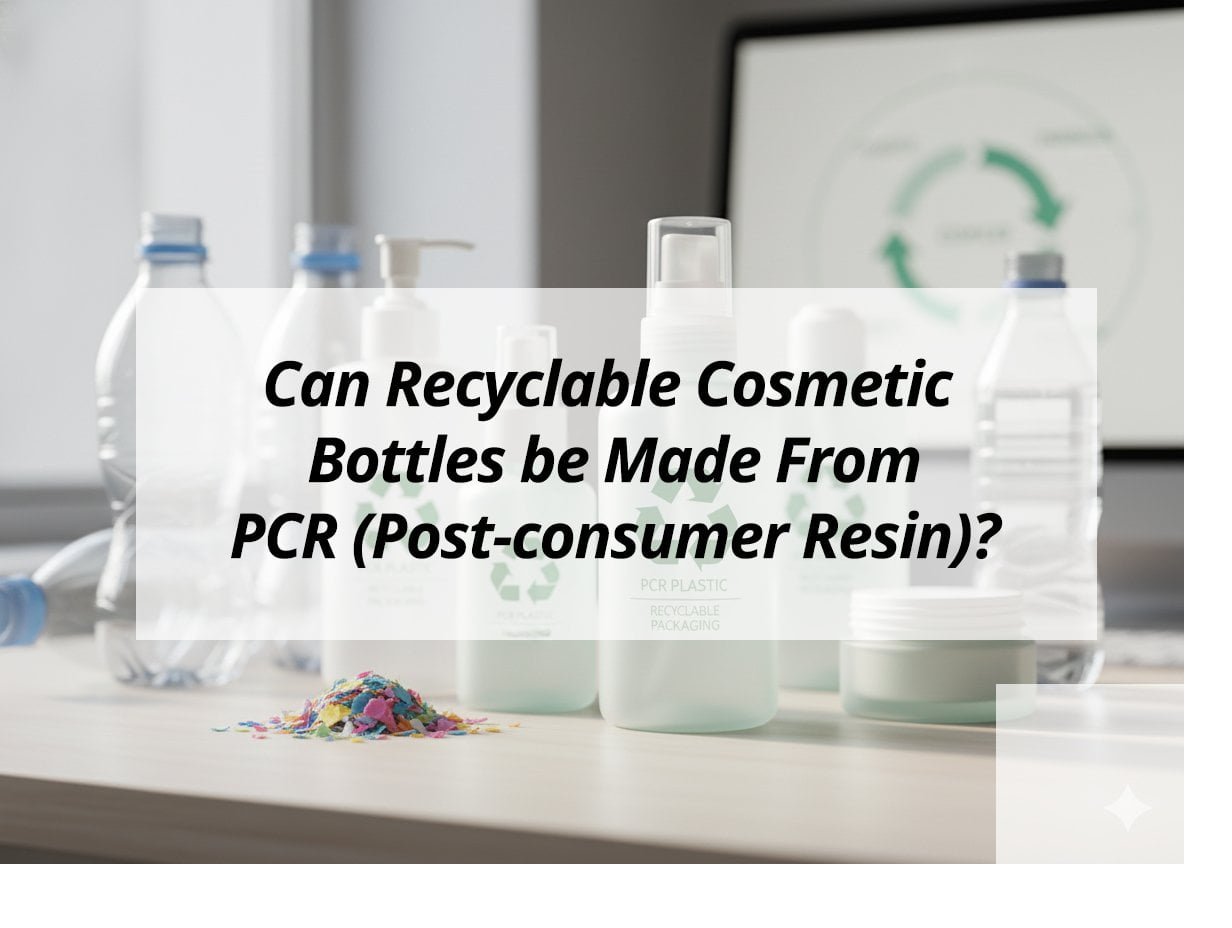
In today’s eco-conscious world, sustainable packaging is more crucial than ever. Using PCR can turn your brand into a green champion, but how feasible is it for cosmetic bottles?
Yes, cosmetic bottles made from Post-consumer Resin (PCR) are recyclable. Utilizing PCR reduces landfill waste and carbon footprint, meeting the demand for sustainable packaging. This eco-friendly approach appeals to environmentally conscious consumers by supporting waste reduction and resource conservation, effectively contributing to a more sustainable industry.
Making the switch to PCR is an eco-friendly move. Not only does it align with global sustainability goals, but it also serves as a powerful marketing point for attracting eco-conscious customers.
Can PCR plastic be recycled?
Recycling helps in conserving natural resources. But does PCR plastic1 fit into this sustainability circle seamlessly?
PCR plastic can be recycled again, making it a highly sustainable option for packaging. It's composed of recycled materials rather than virgin petroleum, thus decreasing reliance on non-renewable resources. Reusing PCR plastic helps close the loop in the recycling process.
The ability to recycle PCR plastic not only contributes to a closed-loop economy but also underscores the importance of sustainable practices2 in packaging solutions.
The Recycling Process of PCR Plastic
- Collection: Consumer-used plastics are collected after disposal.
- Cleaning and Shredding: The plastics are cleaned and shredded into flakes.
- Pelletizing: These flakes are melted and formed into pellets.
- Remolding: Pellets are remolded into new products, thus recycling.
Recycling PCR plastic helps reduce environmental impact3 while promoting a cycle of reuse. This process is key to a sustainable future, allowing us to minimize waste and conserve resources. Manufacturers can integrate these practices to enhance their sustainability goals and align with consumer expectations.
What is post-consumer recycled PCR?
There's a lot of buzz about PCR, but what does it actually entail?
Post-consumer recycled (PCR) materials are derived from products discarded by consumers, which have been collected and reprocessed to form new products. This innovative approach promotes circularity in product lifecycle management, offering an eco-friendly alternative to traditional materials.
By understanding PCR, businesses can make informed decisions about integrating sustainable materials into their product designs.
Key Aspects of PCR
- Sources: Bottles, containers, and other plastic goods used by consumers.
- Processing Steps: Collection, sorting, cleaning, and repurposing.
- Benefits: Reduces landfill waste, conserves resources, and supports circular economy.
| Aspect | Description |
|---|---|
| Sources | Consumer goods like beverage bottles |
| Benefits | Lower carbon footprint, environmental savings |
| End Use | New packaging, reducing need for raw plastics |
PCR is significant due to its potential to boost sustainability across industries. By incorporating PCR, brands can effectively reduce their environmental impact and contribute to a more sustainable future.
Can resin plastic be recycled?
Plastic pollution is a growing concern. Can resin plastics be part of the recycling solution?
Resin plastic can be recycled, making it a viable option for eco-friendly packaging. By recycling resin plastics, we reduce dependency on fossil fuels and minimize waste, thus conserving the environment. Efficient resin recycling processes enhance material longevity through repeated use cycles.
Resin recycling emphasizes waste reduction and resource conservation, promoting more sustainable industrial processes.
Recycling and Its Environmental Impact
- Reduction of Waste: Decreases plastic ending up in landfills.
- Resource Conservation: Lessens the need for virgin materials.
- Energy Efficiency: Recycling typically requires less energy than producing new materials.
Recycling resin plastic is pivotal for reducing environmental implications associated with excessive plastic use. The recyclability of resins supports conscious production and consumption models, aligning with global environmental targets. Adopting these practices can lead to more sustainable packaging solutions, fulfilling consumer demands for eco-friendly options.
How many times can PCR be recycled?
Recycling improves sustainability, but is there an end to PCR’s recyclability?
PCR can typically be recycled multiple times, but the quality may degrade after each cycle. The exact number depends on the type of plastic and recycling practices. However, implementing advanced technologies can extend the lifecycle of PCR materials and enhance their usability in various applications.
Continuous innovation in recycling methods could potentially increase the recyclability and quality of PCR plastics.
Enhancing PCR Recyclability
- Material Quality: Maintaining consistent high quality through advanced sorting and cleaning technologies.
- Innovative Recycling: Techniques that preserve or improve the properties of recycled materials.
- Application Flexibility: Expanding uses across various industries to accommodate slightly degraded materials.
| Technique | Benefit |
|---|---|
| Advanced Sorting | Enhances purity and quality |
| Efficient Cleaning | Reduces contaminants |
| Innovative Methods | Increases number of recyclable cycles |
Recycling PCR multiple times while preserving its quality presents a significant challenge and opportunity for the packaging industry. Embracing and investing in advanced recycling technologies can aid in overcoming these challenges, supporting a more sustainable future.
My insights: Recyclable Cosmetic Bottles Be Made from PCR (Post-consumer Resin)
Seeking to reduce plastic waste in cosmetics? Discover how post-consumer resin (PCR) offers an eco-friendly solution for creating recyclable cosmetic bottles4.
Yes, recyclable cosmetic bottles can be made from PCR, which uses recycled materials to reduce reliance on virgin plastics, minimize carbon footprints, and support sustainability goals. PCR bottles meet durability standards and appeal to eco-conscious consumers.
Understanding PCR’s Role in Sustainable Cosmetics Packaging
PCR Basics and Benefits:
Post-consumer resin (PCR) is made from recycled consumer waste like bottles and containers, repurposed into new, durable packaging suitable for cosmetics. This process reduces dependence on virgin plastics and lowers the carbon footprint of packaging production.
Manufacturing Process:
Cosmetic bottles made from PCR blend recycled resin with virgin plastic, maintaining high functionality and compliance with standards such as FDA and Global Recycled Standard. PCR content varies from 10% to 100%, allowing customization for brands aiming for sustainability.
Challenges and Solutions:
While PCR bottles are fully recyclable, high PCR content can lead to slight discoloration. This is mitigated through material blending or using darker shades. Despite these challenges, PCR bottles contribute significantly to a circular economy by reducing waste and carbon emissions.
| Aspect of PCR Use | Details and Benefits |
|---|---|
| Sustainability Impact | Decreases reliance on virgin plastics, supporting eco-friendly initiatives. |
| Manufacturing Compliance | Adheres to international standards ensuring product safety and quality. |
| Customization Flexibility | Allows brands to adjust PCR content and aesthetics to meet sustainability goals. |
By integrating PCR into cosmetic packaging, brands can enhance their environmental footprint, respond to consumer demand for sustainable products, and take part in global circular economy efforts.
Conclusion
Recyclable cosmetic bottles made from PCR can significantly reduce environmental impact, offering both sustainability and branding advantages in today’s eco-conscious market.
-
Explore the benefits of PCR plastic recycling to understand its role in sustainability and resource conservation. ↩
-
Learn how sustainable practices in packaging can lead to reduced environmental impact and improved resource management. ↩
-
Learn about the positive effects of recycling on the environment and resource conservation. ↩
-
Learn how PCR is used in cosmetic packaging to promote sustainability and reduce plastic waste. ↩