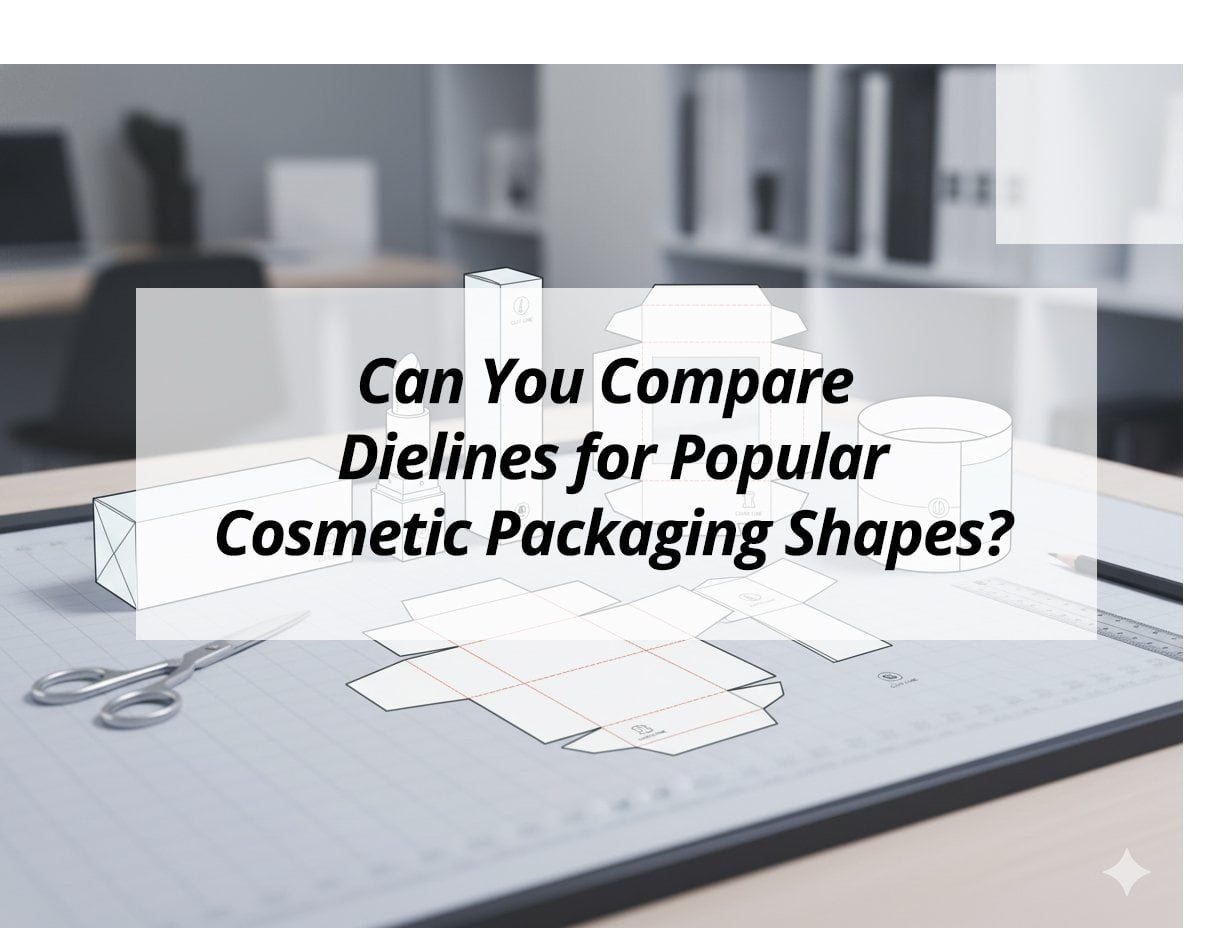
Are you a brand looking to create visually appealing and functional cosmetic packaging? Understanding dielines is crucial. Dielines are flat templates that guide the cutting and creasing of packaging, ensuring a perfect shape.
Yes, comparing dielines for popular cosmetic packaging shapes is essential for effective design and manufacturing. Dielines provide precise outlines for various shapes like cylinders, squares, ovals, and custom forms, ensuring accurate production. By comparing them, designers can optimize material use, printing alignment, and structural integrity for specific packaging types such as tubes, jars, or compacts, leading to visually appealing and functional final products.
As a cosmetic packaging supplier, I constantly work with dielines. They are the blueprint for every custom piece of packaging we create. A well-designed dieline ensures that the final product not only looks good but also functions perfectly and can be mass-produced efficiently.
What is the best shape for packaging?
Are you trying to decide on the perfect shape for your cosmetic packaging1? The shape of your packaging does more than just hold the product. It influences how consumers perceive your brand, how easy the product is to use, and even how it fits on store shelves.
There is no single "best" shape for packaging; the ideal shape depends on the product, brand identity, target audience, and logistical needs. Cylindrical shapes are popular for ease of handling and manufacturing. Square or rectangular shapes optimize shelf space. Unique or custom shapes can differentiate a luxury product. Ultimately, the best shape balances aesthetic appeal, functionality, and cost-efficiency for the specific cosmetic item.
When advising clients, I stress that packaging shape is a strategic decision. It needs to align with the brand's message. A high-end serum might use a sleek, custom shape, while a daily lotion might opt for a more practical cylinder.
Functionality and User Experience
The shape impacts how a product is used.
- Ergonomics: How well the packaging fits in the hand. Is it easy to hold, open, and dispense?
- Dispensing: Does the shape support the dispensing mechanism effectively? For example, a tube shape works well for squeezing.
- Stability: Is the package stable on a flat surface? Does it easily tip over?
- Portability: Is it easy to carry in a purse or travel bag? Smaller, compact shapes are good for this.
Aesthetic and Brand Identity
The shape strongly influences brand perception.
- Modern vs. Classic: Sleek, geometric shapes often suggest modernism. Rounded or ornate shapes can evoke classic luxury.
- Luxury vs. Mass Market: Unique cosmetic packaging shapes can signal exclusivity and high value. Standard shapes are often more cost-effective for mass markets.
- Differentiation: A distinctive shape helps a product stand out on crowded shelves.
Production and Logistics
Practical aspects of manufacturing and transport.
- Material Efficiency: Some shapes are more material-efficient to produce than others. Cylinders and squares can be very efficient.
- Manufacturing Complexity: Highly intricate or custom shapes can increase production costs and time.
- Shipping and Storage: Rectangular or square packaging can be more efficient for stacking and shipping. This optimizes space.
Common Cosmetic Packaging Shapes
| Shape Type | Typical Use Cases | Pros | Cons |
|---|---|---|---|
| Cylindrical | Lotions, creams, serums, lipsticks, mascaras | Easy to hold, common, efficient production | Can roll, less space-efficient on shelves |
| Square/Rectangular | Palettes, compacts, soap bars, some bottles | Space-efficient, stackable, modern look | Less ergonomic for handheld bottles |
| Oval | Foundations, body lotions, shampoo bottles | Soft aesthetic, good grip, stable | Can be slightly less space-efficient |
| Custom/Irregular | Luxury perfumes, special edition makeup | Highly distinctive, strong brand identity | Higher cost, complex manufacturing |
What are the 4 C's of packaging?
Are you looking for a framework to evaluate cosmetic packaging beyond just its looks? The 4 C's of packaging offer a comprehensive guide. These principles help ensure packaging is effective, responsible, and aligned with market needs.
The 4 C's of packaging stand for Containment, Convenience, Communication, and Cost. Containment refers to the packaging's ability to hold and protect the product. Convenience relates to ease of use and transport. Communication is about how the packaging informs and appeals to consumers. Cost involves the economic aspects of materials, production, and logistics. These principles are vital for designing successful cosmetic packaging.
For a cosmetic jar manufacturer or cosmetic bottle supplier2, understanding these 4 C's is fundamental. They guide every decision, from material selection to design details, ensuring the final product meets market demands effectively.
Containment
This is the primary function of any packaging.
- Protection: The packaging must protect the product from physical damage, contamination, and environmental factors like light, air, and moisture.
- Integrity: It must prevent leaks, spills, or evaporation. This maintains product freshness and stability.
- Safety: The material must be safe and not react with the product. It should also be safe for consumers to handle.
- Dosage: It should hold the correct volume of product.
Convenience
This relates to the user experience and practical aspects.
- Ease of Use: Is it easy to open, close, and dispense the product? Features like pumps, droppers, or flip-top caps enhance convenience.
- Portability: Is the packaging easy to carry, travel with, and store at home?
- Reusability/Refillability: Does it offer options for reuse or refills? This adds convenience and sustainability.
- Disposability: Is it easy to dispose of or recycle after use?
Communication
Packaging is a powerful marketing tool.
- Brand Identity: Does the packaging clearly represent the brand's values, aesthetics, and target audience? This includes colors, fonts, and finishes.
- Information: It must provide necessary product information. This includes ingredients, usage instructions, warnings, and regulatory details.
- Appeal: Does it attract consumers on the shelf? Is it visually appealing and intriguing?
- Differentiation: Does it stand out from competitors? Unique cosmetic packaging helps here.
Cost
Economic efficiency is always a key consideration.
- Material Cost: The price of raw materials used for the packaging.
- Production Cost: The cost of manufacturing, printing, and assembly.
- Transportation Cost: The weight and bulk of packaging impact shipping costs.
- Lifecycle Cost: Includes disposal or recycling costs. Balancing all these costs is key for skincare packaging wholesale.
What type of packaging does Gen Z like?
Are you targeting Gen Z with your cosmetic products? This demographic has distinct preferences driven by their values and digital native experiences. Understanding their packaging likes helps brands connect effectively.
Gen Z prefers cosmetic packaging that is highly sustainable, aesthetically pleasing (often minimalist or unique), and functional. They favor refillable systems, packaging made from recycled content or natural materials, and transparent brands. They also appreciate engaging visuals, tactile experiences, and packaging that aligns with their values of authenticity and environmental responsibility, making sustainability and visual appeal crucial for this demographic.
I see a clear trend among newer brands catering to Gen Z. They prioritize both ethics and aesthetics. This means packaging needs to be both cool-looking and genuinely eco-friendly. It is about style with a conscience.
Sustainability First
Gen Z is very environmentally conscious.
- Eco-Friendly Materials: They prefer packaging made from eco friendly cosmetic packaging materials. This includes post-consumer recycled (PCR) plastics, glass, aluminum, and paper.
- Refillable & Reusable: They highly value packaging that can be refilled or reused. This reduces waste.
- Minimal Waste: They dislike excessive or unnecessary packaging.
- Transparency: They want brands to be open about their sustainability efforts and impacts.
Aesthetic Appeal (Digital Native Influence)
Visuals are critical, especially for social media.
- Minimalist Design: Clean lines, simple fonts, and neutral colors are often popular.
- Unique and Aesthetic: They appreciate unique cosmetic packaging3 that looks good in photos and videos. It should be visually interesting.
- Tactile Experience: Packaging that feels good to touch, with interesting textures or finishes.
- Instagrammable: Products that are visually appealing for sharing on social media platforms.
Functionality and Convenience
Practicality is also important.
- Easy to Use: Packaging that is intuitive and hassle-free.
- Durable: They want packaging that holds up well.
- Portable: Products that are easy to carry for on-the-go lifestyles.
- Clear Information: Labels should be clear and easy to understand.
Authenticity and Values Alignment
Gen Z supports brands that share their values.
- Ethical Sourcing: They care about how ingredients are sourced.
- Cruelty-Free: Animal testing is a major concern.
- Social Responsibility: Brands that demonstrate broader social responsibility resonate well.
Which is the most recent new trend in packaging and labeling?
Are you trying to keep your cosmetic packaging current and appealing? The beauty industry is always evolving. Staying aware of the latest trends in packaging and labeling helps your brand remain relevant and innovative.
The most recent new trend in packaging and labeling is hyper-personalization and smart packaging, alongside an intensified focus on radical transparency and verifiable sustainability. This includes using AR/QR codes for product traceability, leveraging AI for custom designs, implementing refillable and mono-material solutions, and employing clear, concise labeling that communicates eco-credentials and ingredient information instantly. This blends technology with a strong ethical and environmental commitment for eco cosmetic packaging.
For a cosmetic bottle supplier or cosmetic jar manufacturer, these trends mean constantly adapting. We see a blend of advanced tech with a back-to-basics approach on materials. It is about smarter, greener, and more connected packaging.
Radical Transparency and Traceability
Consumers want to know everything about their products.
- QR Codes/AR Features: Labels include QR codes that link to detailed product information. This includes ingredient sourcing, manufacturing processes, and sustainability certifications. Augmented Reality (AR) allows interactive experiences.
- Blockchain Technology: Some brands use blockchain to provide immutable proof of product authenticity and supply chain transparency.
- Minimalist Labeling with Data Access: Labels are clean but provide access to deep data via digital means.
Hyper-Personalization
Packaging that speaks directly to the individual consumer.
- AI-Driven Customization: AI helps create unique designs or product recommendations based on individual preferences.
- Print-on-Demand: Technologies allow for small-batch, customized labels and packaging. This makes each product feel unique.
- Variable Data Printing: Labels can include personalized messages, names, or designs.
Advanced Sustainable Solutions
Beyond basic recyclability, the focus is deeper.
- Refill-at-Home/In-Store: Widespread adoption of sleek, user-friendly refill systems. This minimizes primary packaging waste.
- Mono-Material Packaging: Designing packaging from a single type of plastic or glass. This makes recycling much simpler and more efficient.
- Ocean-Bound/Recovered Plastics: Using plastics collected from coastal areas or the ocean. This directly addresses pollution.
- Biomaterials: Exploring innovative materials from agricultural waste or algae. These offer new sustainable options.
Smart Packaging and Connectivity
Technology integrated into the packaging itself.
- Sensors: Packaging with sensors that monitor product freshness or usage.
- NFC Tags: Near Field Communication (NFC) tags allow consumers to tap their phone on the packaging. This provides information or interactive content.
- Interactive Labels: Labels that change appearance or provide new information over time.
My Insights: Comparing Dielines for Popular Cosmetic Packaging Shapes
Struggling with effective packaging designs? Learn how different dielines shape cosmetic product presentation and functionality.
Dielines are crucial for cosmetic packaging, affecting design, structure, and functionality. Tubes use straightforward dielines, bottles require complex fits, and jars focus on lid alignment. Custom shapes demand unique dieline considerations for brand differentiation.
Understanding Dielines for Cosmetic Packaging
Key Packaging Shapes:
- Tubes: Use simple tuck-end dielines suited for vertical branding and easy shelf orientation.
- Bottles: Require dielines with internal flaps to prevent movement and ensure label accuracy.
- Jars: Focus on reinforced bases for weight support and glass protection.
Common Dieline Structures:
| Structure | Description |
|---|---|
| Straight Tuck-end | Flaps on the same side, common for lightweight items. |
| Reverse Tuck-end | Flaps on opposite sides for efficient layout. |
| Auto-lock Bottom | Strong base for heavier jars and bottles. |
| Sleeves/Slipcases | No top/bottom flaps, used for premium sets. |
Functional Details:
- Windows and Cutouts: Allow visibility and require reinforcement.
- Inserts and Platforms: Stabilize high-end products for presentation.
- Closures and Security: Incorporate tamper-evident features for protection.
When selecting dielines, match the tolerance for product movement, ensure manufacturability, and align branding with structural design for optimal impact. Whether packaging tubes or creating premium sets, thoughtful dieline choices can enhance both functionality and visual appeal.
Conclusion
Comparing dielines is vital for functional cosmetic packaging shapes. The "best" shape balances aesthetics, use, and cost. Packaging trends for Gen Z prioritize sustainability and unique, digital-friendly designs. Overall, recent trends combine radical transparency, personalization, and advanced eco-friendly solutions.