
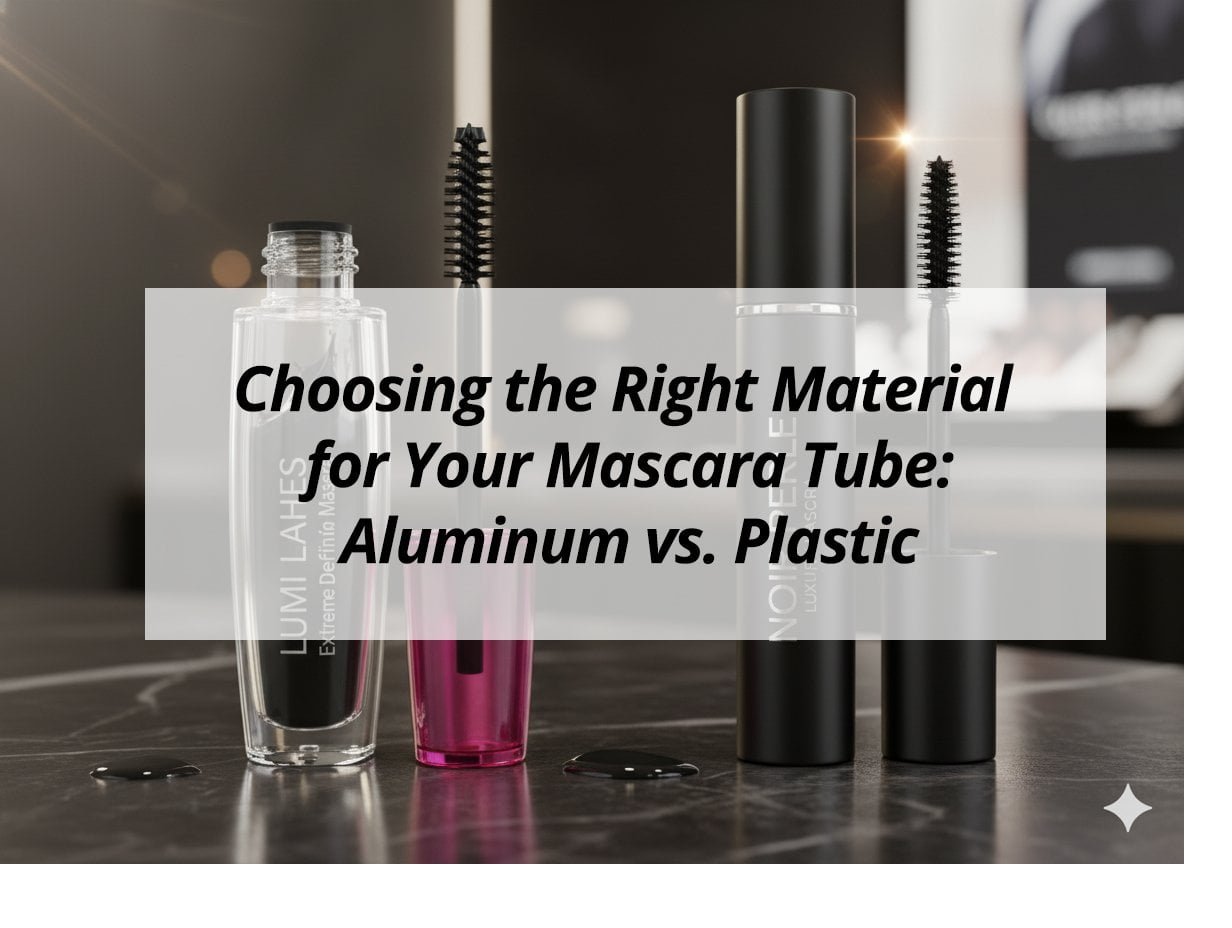
Feeling overwhelmed by the choices for mascara tube materials? You're not alone. This decision impacts product quality, branding, and environmental footprint.
Recyclable options like aluminum mascara tubes are gaining popularity for their lightweight durability and eco-friendly benefits. These containers offer sustainability, while plastic tubes provide economic advantages and design flexibility. Balancing cost and responsibility is crucial in deciding which material to use.
Choosing between aluminum and plastic influences your brand’s appeal and ecological stance. Let's explore these options in detail.
Which is better, plastic or aluminum?
Choosing the right material for mascara tubes requires understanding each option's benefits and drawbacks.
Aluminum mascara tubes1 offer recyclability and a sleek finish that enhances perceived quality. They are ideal for brands aiming to project a premium image while being eco-conscious. Plastic, being lightweight and cost-effective, allows for innovative designs. Each material provides unique advantages that cater to different market needs, balancing eco-consciousness and cost efficiency.
Understanding these differences ensures you choose the right fit for both your product and brand values.
Material Characteristics and Applications
| Trait | Aluminum | Plastic |
|---|---|---|
| Recyclability | High | Limited |
| Durability | Resistant to denting | Generally less durable |
| Cost-Effectiveness | Higher production cost | Generally cheaper to produce |
| Aesthetic Appeal | Premium look | Flexible design options |
Selecting between them depends on priorities like sustainability, cost, aesthetics, and target demographics.
Which is better, aluminum cans or plastic bottles?
Understanding packaging choices across industries is essential for larger market insights.
Aluminum cans are highly sustainable due to their recyclability, effectively reducing waste and supporting eco-friendly initiatives. Plastic bottles2, though less sustainable, offer lightweight convenience and are often more economical. Each option serves different purposes and markets, reflecting diverse environmental and fiscal considerations.
Weighing these factors is vital for making informed decisions across industries regarding packaging materials.
Comparing Environmental and Economic Impact
Broader insights on their impact are crucial:
-
Aluminum Cans:
- Environmental Benefits3: High recyclability reduces reliance on raw materials and lowers carbon footprint.
- Market Perception: Viewed as eco-friendly, enhancing brand reputation.
-
Plastic Bottles:
- Economic Considerations: Lower production costs benefit pricing strategies, making them accessible.
- Consumer Convenience4: Lightweight and durable, with widespread consumer acceptance.
Balancing these aspects guides strategic decisions in packaging material selection.
Why don't we use aluminum instead of plastic?
The choice between aluminum and plastic is complex. Aluminum offers sustainability, yet plastic remains widely used. Why?
Although aluminum is known for its eco-friendly properties and durability, its higher cost and production complexities make plastic a preferred choice for industries seeking budget-friendly solutions. Plastic's versatility and affordability maintain its popularity despite environmental concerns.
Balancing cost and sustainability drives material choices across diverse sectors.
Benefits and Challenges of Using Aluminum
-
Aluminum Benefits:
- Sustainability: Environmentally friendly, enhancing brand image.
- Durability and Prestige: Provides a refined feel, resonating with consumers seeking quality.
-
Plastic Challenges:
- Cost-Effective Production: Lower initial investment attracts budget-oriented brands.
- Malleability: Easily shaped into wide-ranging designs, appealing to creative industries.
Addressing these challenges helps optimize the decision-making process, aligning product design with eco-friendly goals.
What breaks down faster, aluminum or plastic?
Understanding the decomposition rates of packaging materials supports eco-friendly decision-making.
Aluminum generally decomposes faster than plastic, breaking down in 200 to 500 years compared to plastic's 450 to 1,000 years. Aluminum's recyclability further enhances its environmental appeal, offering a quicker return to natural cycles and promoting a sustainable lifecycle.
Understanding this helps drive strategic decisions towards reducing long-term ecological footprints.
Decomposition and Lifecycle Considerations
| Aspect | Aluminum | Plastic |
|---|---|---|
| Decomposition Rate | Faster | Prolonged |
| Lifecycle Recycling | High | Limited |
| Long-term Impact | Reduced ecological footprint | Increased environmental burden |
Balancing these considerations highlights aluminum's ecological advantages, supporting sustainable corporate growth.
My insights: Balancing Sustainability and Design in Mascara Tube Selection: Aluminum vs. Plastic
Struggling to choose the right mascara tube material? Understanding aluminum and plastic benefits can guide eco-friendly and brand-conscious decisions.
Aluminum mascara tubes offer superior recyclability and product protection, ideal for premium brands. Plastic tubes are lightweight, cost-effective, and versatile in design options, suiting mass production needs. Evaluate environmental impact and branding goals.
Delving into Material Choices for Mascara Tubes
Material Attributes:
-
Aluminum:
- Durability and Protection: Shields from light and air, preserving mascara quality.
- Aesthetics and Environmental Impact: Premium feel, infinitely recyclable, appealing to eco-conscious consumers.
-
Plastic:
- Design Flexibility: Lightweight, varied shapes, colors, allowing for creative branding.
- Production and Cost: Economical, suited for large-scale manufacturing, yet less sustainable.
Material Comparison Table
| Material | Advantages | Challenges |
|---|---|---|
| Aluminum | Durable, recyclable, premium appearance | Cost, weight compared to plastic |
| Plastic | Lightweight, versatile design | Limited recyclability, environmental strain |
Critical Considerations:
- Brand Positioning: Luxury brands may opt for aluminum to convey quality and sustainability.
- Cost vs. Impact: Evaluate production efficiency versus long-term environmental effects.
Choosing between aluminum and plastic involves weighing design flexibility, sustainability, and branding objectives, ensuring alignment with consumer values and company goals.
Conclusion
Choosing between aluminum and plastic for mascara tubes affects cost, design, and ecological footprint, essential elements driving brand success in competitive markets.
-
Explore the advantages of aluminum mascara tubes for eco-conscious brands aiming for a premium image. ↩
-
Learn about the benefits of plastic bottles, including convenience and cost-effectiveness for various industries. ↩
-
Learn about the eco-friendly advantages of aluminum cans and their impact on sustainability. ↩
-
Understand how consumer convenience shapes packaging decisions and affects market trends. ↩