
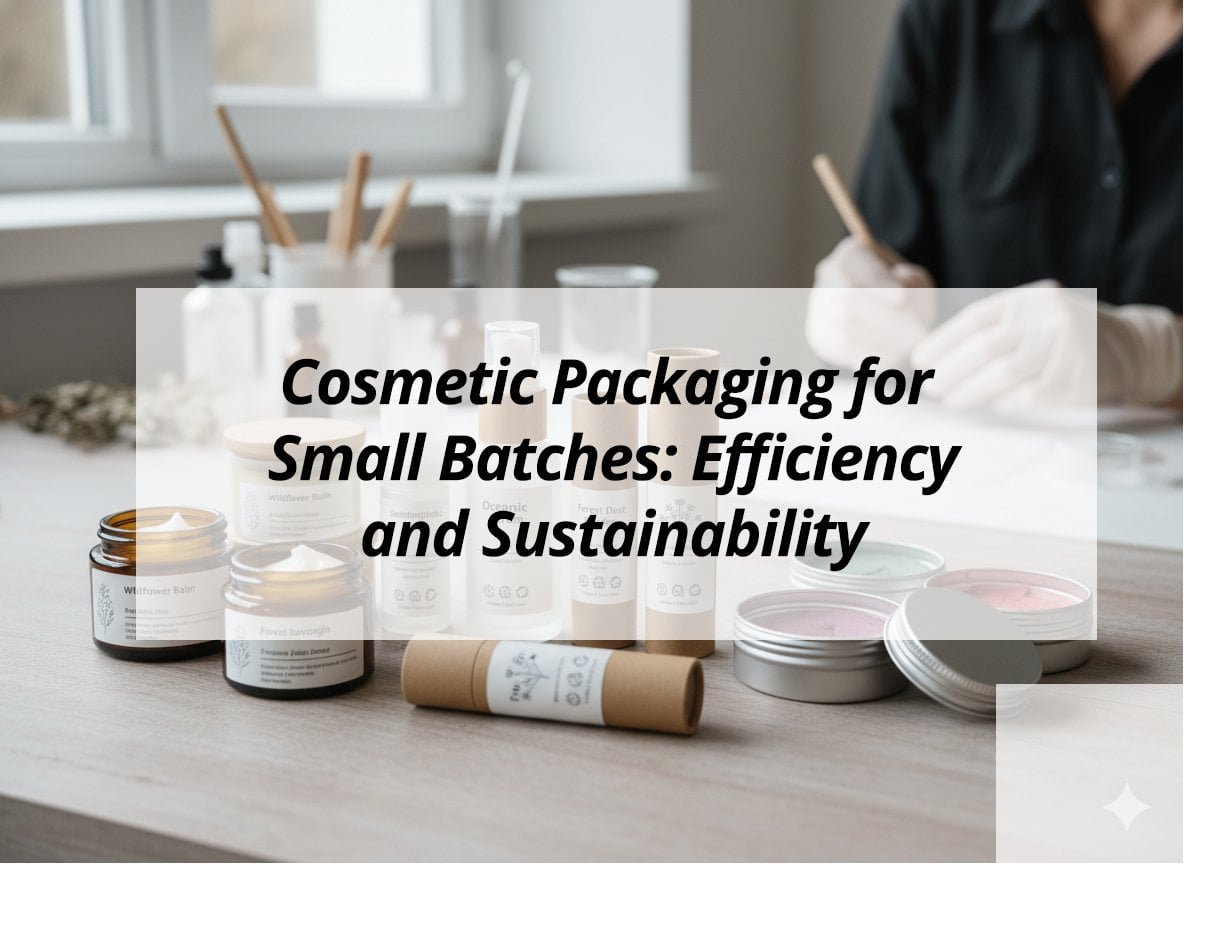
The cosmetic industry now demands flexible packaging solutions. Small businesses need packaging that balances efficient production with environmental responsibility. This is crucial for market success and brand image.
Businesses face the challenge of sourcing packaging that meets smaller order needs while supporting ecological goals. This requires a clear understanding of available materials and design principles. This article explores strategies for efficient and sustainable cosmetic packaging.
Making informed decisions about packaging can seem complex. This guide provides a framework to understand sustainable options. It aims to help businesses select packaging that aligns with both operational requirements and environmental values.
What is the most sustainable cosmetic packaging?
Identifying the most sustainable packaging is a priority for many modern brands. It reflects a commitment to environmental stewardship and consumer values. The best choices often involve materials designed for circular use.
The most sustainable cosmetic packaging prioritizes materials with minimal environmental impact. This includes materials that are readily recyclable, reusable, or compostable. It also emphasizes designs that reduce overall material consumption.
A key trend in the industry involves a shift towards eco-friendly materials. For example, many brands are now requesting lipstick tubes made from recycled content. This move demonstrates a growing commitment to sustainable cosmetic packaging1 solutions across the supply chain, including for cosmetic packaging for small business.
Recycled Content Materials
Using recycled materials significantly reduces the demand for new raw resources. This conserves energy and minimizes waste generation.
- PCR (Post-Consumer Recycled) Plastic: This material is derived from plastics previously used by consumers and then recycled. It represents a widely adopted choice for sustainable cosmetic packaging.
- Recycled Glass: Glass offers high recyclability, allowing for numerous reuse cycles without loss of quality. It also conveys a premium image, suitable for custom cosmetic containers.
Biodegradable and Compostable Materials
Certain materials are designed to safely return to the environment. This process is known as composting.
- Biodegradable Plastics: These plastics break down under specific environmental conditions. Their use helps reduce persistent plastic waste.
- Paper and Cardboard: These materials are generally easy to recycle or compost. They are commonly used for secondary or outer packaging.
Reusable and Refillable Systems
Packaging designed for multiple uses offers significant environmental advantages. Consumers appreciate these options for waste reduction at home.
- Refillable Containers: These systems are popular for products like cream jars or lotion bottles. Consumers purchase a container once and then buy refills. This offers a practical cosmetic packaging solution.
- Durable Containers: Robust packaging can be repurposed by consumers after the product is finished. This extends the lifespan of the material.
| Material Type | Advantages | Considerations | Typical Applications |
|---|---|---|---|
| PCR Plastic | Reduces waste, accessible | Recycling infrastructure varies | Tubes, bottles, jars |
| Recycled Glass | Premium feel, infinitely recyclable | Heavier, more fragile, higher transport impact | Cream jars, serum bottles |
| Bamboo | Renewable, biodegradable | Can be more costly, durability may vary | Caps, outer casings |
| Aluminum | Lightweight, highly recyclable | Prone to denting, energy-intensive in production | Tins, bottles |
| Bioplastics | Biodegradable, reduces fossil fuel dependence | Specific composting conditions required | Selected tubes, small components |
What are the 7 R's of sustainable packaging?
A comprehensive approach to sustainable packaging extends beyond basic recycling. The 7 R's provide a holistic framework for environmental responsibility in packaging design and management.
The 7 R's serve as guiding principles for enhancing packaging sustainability. They aim to minimize waste and optimize resource utilization throughout the packaging lifecycle. These principles encompass design, material selection, and end-of-life considerations.
Industry demand increasingly focuses on sustainable practices. Manufacturers of luxury cosmetic packaging wholesale understand the importance of addressing these principles. For instance, inquiries about material sourcing and waste reduction are common from brand buyers seeking ethical supply chains.
Rethink: Re-evaluate Design Paradigms
The initial step involves fundamentally rethinking packaging design. This explores opportunities for innovation and simplification.
- Innovative Design: Develop packaging that uses minimal material. Consider designs that integrate functions or reduce component complexity.
- Lifecycle Assessment: Evaluate the environmental impact across the entire packaging lifecycle. This includes material extraction, manufacturing, use, and disposal.
Reduce: Minimize Material Consumption
Reducing the amount of material used is a direct way to decrease environmental impact. This lowers waste generation and energy consumption during production.
- Lightweighting: Design containers with thinner walls or smaller dimensions without compromising product integrity. This also reduces shipping weight and costs.
- Minimalist Design: Eliminate unnecessary elements or excessive packaging layers. This principle is applicable to custom cosmetic containers as well.
Reuse: Design for Multiple Life Cycles
Packaging designed for repeated use offers significant environmental benefits by extending its utility.
- Refillable Systems: Create containers that consumers can easily replenish. This approach is gaining traction as a sustainable cosmetic packaging solution.
- Secondary Functionality: Design packaging with a subsequent purpose, such as a container that can be repurposed for storage.
Recycle: Facilitate End-of-Life Processing
Packaging should be easily recyclable within existing waste management infrastructures.
- Mono-material Packaging: Employ a single type of plastic or material where feasible. This simplifies the recycling process.
- Clear Labeling: Provide explicit instructions for consumers on how to properly recycle each component of the packaging.
Repair: Enhance Product Durability
While less directly applicable to packaging itself, this principle relates to using packaging that effectively protects the product, thereby extending the product's lifespan and reducing waste from damaged goods.
- Protective Packaging: Robust packaging safeguards products from damage during transit and handling. This prevents product waste.
Refuse: Avoid Unnecessary Packaging
Sometimes, the most sustainable action is to decline superfluous packaging altogether.
- Eliminate Excess: Question the necessity of secondary boxes or plastic overwraps.
- Bulk Options: Offer larger product sizes or bulk formats to reduce the amount of packaging per unit of product.
Recover: Energy from Waste
When other options are exhausted, waste-to-energy processes can convert non-recyclable materials into energy. This is typically a last-resort solution.
- Energy Recovery: Incinerating waste to generate electricity reduces reliance on landfills.
| R-Principle | Action | Environmental Benefit | Example |
|---|---|---|---|
| Rethink | Redesign for efficiency and sustainability | Reduced material, improved functionality | Streamlined air cushion cases |
| Reduce | Minimize material usage and weight | Lower environmental footprint, reduced costs | Lightweight lotion bottles |
| Reuse | Develop refillable or returnable systems | Decreased single-use waste, consumer loyalty | Refillable lipstick tubes |
| Recycle | Ensure material compatibility with recycling | Higher recycling rates, resource conservation | PET jars designed for municipal recycling |
| Repair | Design for product protection | Extended product life, reduced product waste | Durable mascara tubes preventing breakage |
| Refuse | Eliminate superfluous packaging | Resource savings, less waste generated | Omitting secondary boxes for lip gloss tubes |
| Recover | Utilize waste for energy generation | Alternative to landfill disposal | Packaging suitable for energy-from-waste plants |
What is minimal sustainable packaging?
Minimal sustainable packaging focuses on achieving product protection and communication with the least possible environmental impact. It emphasizes efficiency in material use and design.
Minimal sustainable packaging involves using the smallest practical amount of material to safeguard a product. The goal is to reduce waste, energy consumption, and costs, while selecting materials that are environmentally responsible.
The pursuit of minimalist design is strong in the industry. For instance, custom cosmetic containers2 for skincare lines often prioritize sleek, simple aesthetics that also minimize material usage. This approach resonates with brands seeking luxury cosmetic packaging wholesale options that are both elegant and eco-conscious.
Core Tenets of Minimal Packaging
Minimal packaging is defined by its strategic use of resources, not just by small size.
- Essential Protection: Packaging should provide adequate protection for the product, avoiding unnecessary bulk or layers.
- Lightweighting: Selecting lightweight yet durable materials minimizes transportation emissions and material consumption.
Material Choices for Minimalism
Material selection is critical for achieving minimal packaging goals.
- Mono-Material Construction: Where feasible, using a single type of material simplifies the recycling process.
- Recycled and Recyclable Content: Prioritizing materials that incorporate recycled content and are themselves recyclable is fundamental. This applies to various items like lipstick tubes or lip gloss tubes.
Advantages of Minimal Packaging
Adopting minimal packaging strategies offers multiple benefits.
- Environmental Impact: Reduced material use leads to less waste, lower energy consumption, and fewer virgin resources extracted.
- Cost Efficiency: Lower material requirements can decrease production expenses. Lighter packages also result in reduced shipping costs.
- Brand Perception: Demonstrating a commitment to sustainability can enhance brand image and appeal to environmentally conscious consumers.
Examples of Minimalist Approaches
Minimal packaging solutions are evident across various product types.
- Direct-to-Container Printing: Applying product information directly onto the primary container eliminates the need for labels or wraps.
- Elimination of Secondary Packaging: For certain products, such as eyeliner tubes or mascara tubes, an outer box may not be essential.
- Concentrated Formulations: Developing concentrated products allows for smaller container sizes, thereby reducing packaging per use.
| Aspect | Conventional Packaging | Minimal Sustainable Packaging |
|---|---|---|
| Material Volume | Often includes multiple layers, excess | Focus on essential materials, single layers |
| Weight | Can be substantial due to added components | Lightweight design, optimized for transport |
| Recyclability | Complex due to mixed material structures | Designed for ease of recycling, mono-material |
| Cost Implications | Higher material and shipping expenses | Reduced material and transportation costs |
| Environmental Footprint | Larger due to resource extraction and waste | Smaller, with emphasis on resource efficiency |
| Aesthetics | Can be elaborate, potentially cluttered | Clean, simple, emphasizing product purity |
What are the 3 C's of packaging?
Effective packaging design considers three fundamental aspects: Containment, Communication, and Convenience. These principles guide the development of functional and marketable cosmetic packaging.
The 3 C's of packaging—Containment, Communication, and Convenience—represent the core functions of any package. They ensure product integrity, clear messaging, and a positive user experience.
These principles are critical for cosmetic packaging middlemen buyers and manufacturers. For example, a buyer sourcing serum bottles would prioritize robust containment to protect the product, clear communication of brand and product benefits, and convenient dispensing for the end-user. Understanding the 3 C's is essential for developing effective cosmetic packaging solutions, including luxury cosmetic packaging wholesale orders.
Containment: Safeguarding the Product
This primary function involves holding the product securely and protecting it from external factors.
- Protection: Packaging must shield the product from physical damage, contamination, and environmental exposure. Vacuum bottles, for instance, protect lotions from air exposure.
- Barrier Properties: Specific products require specialized barriers. An eyeshadow case protects pressed powders, while a lipstick tube prevents drying or melting.
- Product Stability: The packaging material must not interact adversely with the product formulation. This is crucial for sensitive skincare products stored in cream jars.
Communication: Conveying Information and Brand Message
Packaging serves as a primary interface between the brand and the consumer, conveying essential information and brand identity.
- Brand Identity: Design elements, colors, and branding communicate the brand's image and values. This is particularly important for luxury cosmetic packaging manufacturers.
- Product Information: Packaging must clearly display product details, usage instructions, and ingredient lists, often found on labels of items like a lip gloss tube.
- Marketing Messaging: The packaging design can attract attention and highlight key product benefits or unique selling points.
Convenience: Enhancing User Experience
Well-designed packaging is user-friendly, facilitating ease of access and application for consumers.
- Ease of Use: Packaging should be simple to open, close, and handle. An air cushion case should offer straightforward access.
- Dispensing Functionality: The package should allow for controlled and clean product dispensing. A pump on a lotion bottle provides convenient application.
- Portability: The design should consider ease of transport, such as compact eyeliner tubes.
- Disposability: Post-use, the packaging should be easy to recycle or dispose of, aligning with sustainable cosmetic packaging goals.
| C-Factor | Definition | Relevance for Cosmetic Packaging | Illustrative Example |
|---|---|---|---|
| Containment | Holds and protects the product contents | Prevents spoilage, maintains product integrity | Airtight cream jars, UV-protective serum bottles |
| Communication | Conveys brand message and product details | Attracts consumers, informs purchasing decisions | Distinctive branding on lipstick tubes, ingredient labels |
| Convenience | Facilitates ease of use, handling, and access | Enhances consumer experience, promotes repeat purchase | Easy-open eyeshadow cases, travel-sized packaging |
My Insights: Optimizing Cosmetic Packaging for Small Batches with Efficiency and Sustainability
Looking to elevate your small-batch cosmetics? Adopt innovative packaging solutions that blend efficiency with sustainability, attracting eco-conscious consumers and reducing costs.
Efficient and sustainable packaging for small-batch cosmetics involves using low-MOQ modular designs and eco-friendly materials. Employing recycled, refillable, and digital printing options helps brands minimize waste and costs while enhancing their environmental credentials.
Key Strategies for Sustainable Small-Batch Cosmetic Packaging
Prioritize Low MOQs and Standard Tooling:
- Search for suppliers offering low minimum order quantities and off-the-shelf molds to avoid custom costs. Choose versatile designs that work across multiple products to streamline inventory and production.
Efficient Primary Packaging Choices:
- Opt for standard glass or PCR plastic, perfect for easy scaling and reduced shipping emissions. Refillable formats, such as inner-cup jars, support sustainability by minimizing material usage.
Sustainable Secondary and Flexible Packaging:
- Use FSC-certified paperboard and biodegradable inks for cost-effective, recyclable secondary packaging. Flexible pouches are ideal for samples and refills, efficiently reducing packaging volume.
Practical Cost–Sustainability Tactics:
| Strategy | Benefits |
|---|---|
| Use versatile packs | Streamlines inventory and production costs |
| Refillable formats | Reduces long-term material usage |
| Eco-friendly materials | Aligns with sustainability goals |
Adopting these strategies helps small cosmetic brands enhance their market presence, offering a strong value proposition through sustainability and smart design.
Conclusion
Effective cosmetic packaging for small batches requires balancing efficiency and sustainability. Prioritizing recycled materials, adopting minimalist designs, and considering the 3 C's of containment, communication, and convenience are vital for success.