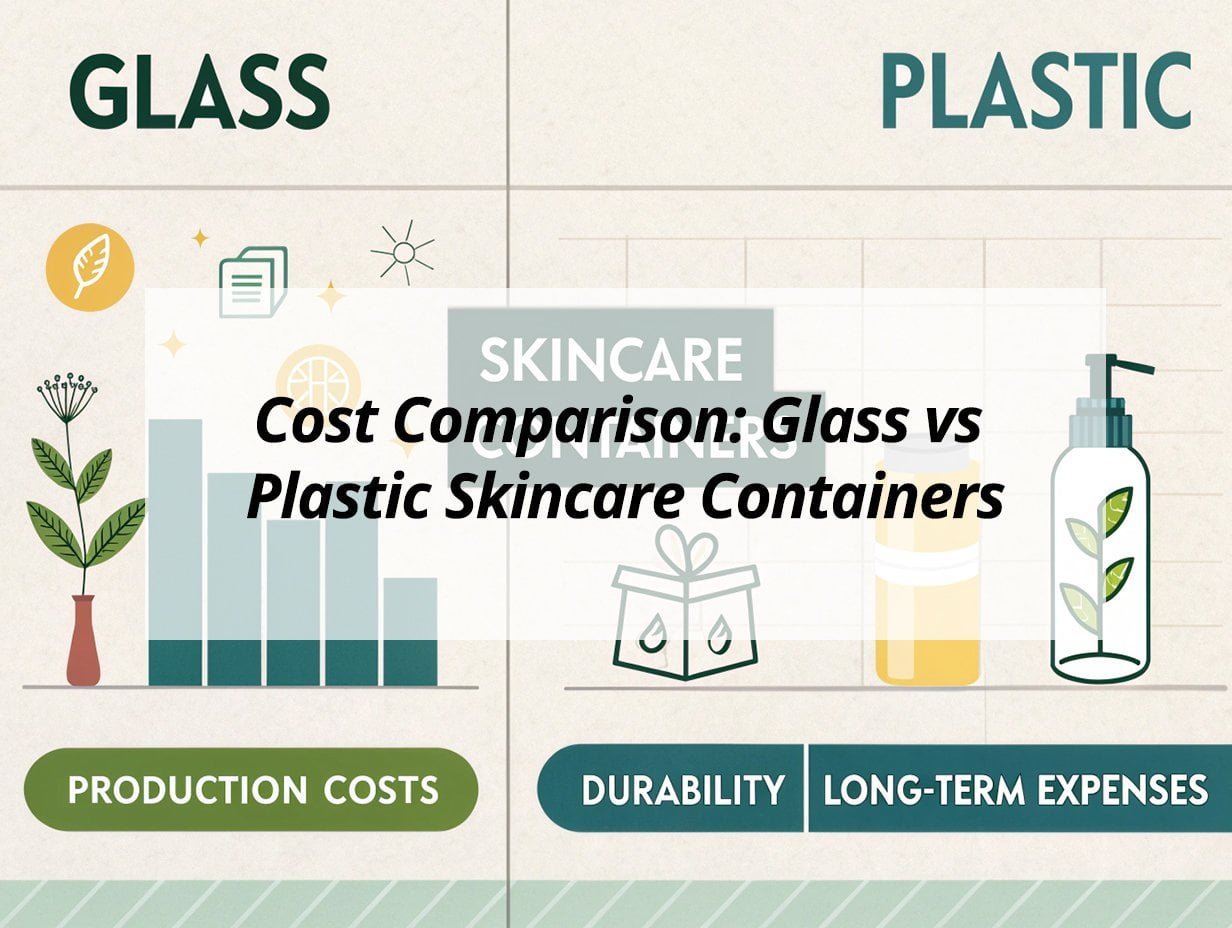
In a bustling marketplace, choose between glass or plastic for skincare. Each has advantages; align with business goals.
Glass containers provide a premium appeal and superior recyclability, aligning with sustainability-focused brands. While plastic offers lower production and shipping costs, glass stands out for its elegance and environmental benefits, making it a preferable choice for brands prioritizing eco-friendly practices and high-end aesthetics in their skincare line.
Let's dive deeper into the cost dynamics and how these materials can impact your business strategy.
How much more expensive is glass than plastic?
Choosing the right material is pivotal for defining a brand's market positioning. But does the cost disparity between glass and plastic justify your choice?
Glass containers usually come with higher costs than plastic ones due to increased material and production expenses. However, their premium perception can justify higher price points, especially for luxury-oriented brands.
Cost considerations span production, transport, and lifecycle implications.
Glass vs Plastic Costs
Selecting the right container involves analyzing both immediate and long-term costs associated with each material:
Material and Production Costs1
-
Plastic:
- Generally cheaper due to lower material costs and efficient, high-volume automated production.
- Process: Utilizes efficient molding techniques, reducing unit costs.
-
Glass:
- More expensive because of energy-intensive manufacturing processes.
- Process: Requires substantial energy for melting and forming, raising production costs.
| Material | Production Costs | Characteristics |
|---|---|---|
| Plastic | Lower | Automated, efficient, lightweight |
| Glass | Higher | Energy-intensive, heavier |
Packaging and Handling Considerations
- Plastic: Lightweight nature simplifies shipping and reduces costs.
- Glass: Heavier with higher risk of breakage, necessitating durable packaging.
| Variable | Impact |
|---|---|
| Weight | Affects shipping and handling costs |
| Durability | Influences packaging requirements |
Is glass better than plastic for skincare?
In an environmentally conscious world, the choice between glass and plastic can reflect a brand's values. Is glass the key to aligning with green consumer expectations?
Glass is often preferred for skincare due to its recyclability and inert properties, securing product integrity and strengthening sustainable brand positioning.
These benefits contribute to an enhanced product perception, integral to eco-friendly businesses.
Material Benefits
Understanding consumer preference for glass involves examining its intrinsic qualities:
Advantages of Glass
- Recyclability: Glass can be recycled endlessly without quality loss, supporting circular economy ideals.
- Premium Appeal2: Provides an upscale image, enhancing brand reputation.
- Inertness: Does not react with skincare formulas, maintaining product purity.
Advantages of Plastic
- Cost-Effectiveness3: Lower initial costs and lighter shipping make it budget-friendly.
- Versatility: Available in various shapes and configurations to suit market needs.
| Material | Sustainability | Health Impact |
|---|---|---|
| Glass | Highly recyclable | Inert, non-reactive |
| Plastic | Easy to handle | Concerns over leaching for some formulations |
Why should you use glass instead of plastic containers?
Opting for glass might mean initial higher costs, but what are the compelling reasons for making this choice?
Glass containers enhance your product's appeal with a luxurious feel, offer recyclability, and assure customers of product safety due to their non-reactive nature.
Opting for glass supports a brand's commitment to quality and sustainability, appealing to eco-conscious consumers.
Justifying the Switch
Here’s why many brands consider transitioning to glass worthwhile:
Premium Positioning
- Market Perception4: Glass elevates product luxury, attracting affluent consumer bases.
- Customer Trust: Assures non-toxicity, matching health-conscious consumer values.
Sustainability Commitment5
- End-of-Life Benefits: Glass is endlessly recyclable, strengthening a brand’s sustainable narrative.
- Long-Term Strategy: Contributes to a greener brand image and attracts eco-aware consumers.
What is the disadvantage of glass packaging?
Despite its charm, glass isn't flawless. Understanding its drawbacks is essential for a balanced decision.
Glass packaging can lead to higher expenses due to weight and fragility, potentially increasing shipping and replacement costs.
Efficiently managing the downsides of glass requires foresight and planning.
Managing Glass's Drawbacks
While glass presents advantages, here are potential challenges:
Breakage and Handling6
- Fragility Concerns7: High risk of damage means increased handling care.
- Insurance Costs: Additional costs arise to manage breakage during transport.
| Risk Factor | Cost Impact |
|---|---|
| Fragility | Heightened breakage handling costs |
| Insurance | Increases due to potential damages |
Environmental Costs
- Transport Emissions8: The heavier weight contributes to a larger carbon footprint.
- Recycling Variability: The efficacy of glass recycling depends on regional infrastructure.
| Issue | Impact |
|---|---|
| Transport | Higher emissions due to weight |
| Recycling | Dependent on local facilities |
My Insights: Cost Comparison of Glass vs Plastic Skincare Containers
Choosing between glass and plastic containers for skincare can affect both your brand image and bottom line. Let's explore.
Plastic containers are generally more cost-effective, offering versatility and lower shipping costs, while glass presents a premium image with higher production and shipping costs.
Cost and Practicality
Production and Material Costs
-
Plastic
- Cheaper to produce with lower minimum order quantities; versatile designs.
-
Glass
- Higher production cost due to energy-intensive manufacturing; preferred for luxury brands.
Shipping and Handling
| Aspect | Glass | Plastic |
|---|---|---|
| Cost | Higher due to weight | Lower, lightweight and durable |
| Breakage | Higher risk, increased damage costs | Resistant to breakage |
Brand Perception and Environmental Impact
- Glass offers a sustainable, premium look, easily recycled.
- Plastic is more durable and affordable, fitting broader market needs.
Choose glass for upscale branding if budget allows, or opt for plastic to minimize costs and maximize design flexibility.
Conclusion
Balancing between glass and plastic containers requires evaluating costs, sustainability goals, and brand identity, ensuring alignment with both consumer expectations and business objectives.
-
Understanding these costs can help you make informed decisions about packaging. ↩
-
Discover how premium appeal can elevate your brand's market position. ↩
-
Understanding cost-effectiveness can help you balance budget and quality. ↩
-
Explore how market perception can drive sales and brand loyalty. ↩
-
Learn how sustainability can enhance your brand's image and attract eco-conscious consumers. ↩
-
Understanding these challenges can help you improve your logistics and reduce costs. ↩
-
Understanding fragility can help you mitigate risks in your supply chain. ↩
-
Explore the environmental impact of your packaging choices. ↩