
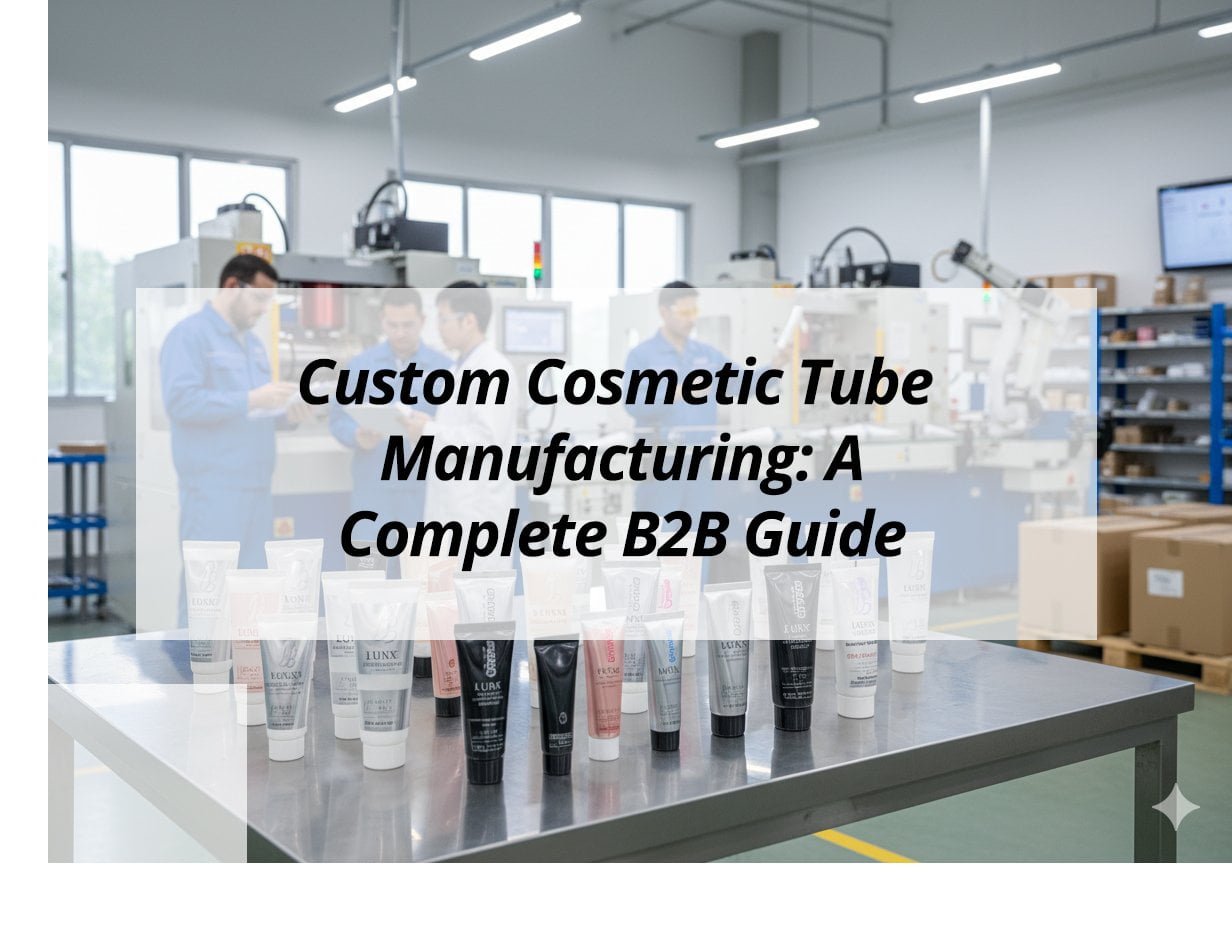
Custom cosmetic tubes are crucial for brand differentiation. But how does B2B manufacturing work for them? This guide explains the process for businesses.
Understanding B2B manufacturing helps businesses procure custom cosmetic tubes effectively. This guide covers tube production methods, various B2B models, and key strategies. It aids in making informed sourcing decisions.
The B2B cosmetic packaging landscape can appear intricate. This guide clarifies custom cosmetic tube manufacturing. It provides a structured overview from design conceptualization to final product delivery. Businesses will gain insights into essential aspects.
What is B2B manufacturing?
B2B manufacturing involves one business producing goods for another business. This model specifically targets corporate clients rather than individual consumers. It is fundamental in industries like cosmetic packaging1.
B2B manufacturing refers to companies that produce goods or components intended for other businesses. These products are then integrated into the purchasing company's operations or used in their final product offerings. This manufacturing segment is characterized by its focus on specialized business requirements and large-volume orders.
In the cosmetic packaging sector, B2B is the primary business model. This involves producing items such as lipstick tubes, lip gloss tubes, and custom cosmetic containers2 for brand owners, packaging distributors, and finished product manufacturers. The transactions occur between businesses, involving bulk orders rather than single-unit consumer sales.
Core Principles of B2B Transactions
B2B manufacturing operates under different principles compared to consumer markets. Buyer objectives are distinct.
- Volume Procurement: Businesses typically require products in substantial quantities. This necessitates robust and efficient production capabilities.
- Detailed Specifications: Buyers often provide precise requirements for their products. For instance, a brand might specify exact dimensions or material compositions for custom cosmetic tubes.
- Collaborative Relationships: B2B interactions frequently evolve into long-term partnerships. Suppliers and buyers work together through extended engagements.
Essential Components of B2B Manufacturing
Several factors are critical within B2B manufacturing relationships.
- Quality Assurance: Product quality is paramount. Defective batches of cosmetic tubes can significantly impact a buyer's production schedule and product integrity.
- Technical Proficiency: Manufacturers must possess in-depth knowledge of their products. This includes expertise in materials science, production processes, and regulatory compliance.
- Logistics Management: Efficient delivery of products from the factory to the buyer is vital. This encompasses robust supply chain and precise delivery scheduling.
B2B vs. B2C Manufacturing Distinctions
Differentiating between B2B and B2C manufacturing highlights key operational differences.
- Target Market: B2B focuses on business entities. B2C targets individual end-users.
- Decision-Making Process: B2B purchasing decisions often involve multiple stakeholders and formalized procurement procedures. B2C decisions are typically individual and less formalized.
- Marketing Approach: B2B marketing emphasizes value propositions, operational efficiency, and return on investment. B2C marketing often leverages emotional appeal and brand image.
| Feature | B2B Manufacturing | B2C Manufacturing |
|---|---|---|
| Buyer | Business entities | Individual consumers |
| Order Volume | Large-scale, bulk purchases | Small-scale, single-unit purchases |
| Product Customization | High, tailored to specific business requirements | Standardized, mass-produced for general appeal |
| Decision Process | Complex, multi-stakeholder, data-driven | Simpler, often impulse-driven, individual choice |
| Relationship | Long-term, strategic partnerships | Transactional, episodic |
| Sales Cycle | Extended, often involves negotiations and proposals | Shorter, direct sales |
How are plastic tubes manufactured?
Plastic tubes are a prevalent choice for cosmetic packaging. Understanding their manufacturing process is crucial. It informs material selection and customization possibilities.
Plastic cosmetic tubes are typically produced using an extrusion process. This method forms a continuous plastic tube, which is then processed further. Subsequent steps include cutting, decoration, and cap application to create the finished packaging unit.
The manufacturing process for custom cosmetic tubes begins with raw plastic pellets. These pellets are heated and then forced through a die to form a continuous, hollow tube. This long tube then undergoes various stages, including precise cutting to specific lengths. Decoration is applied through methods such as printing or hot stamping. Finally, a head is attached, and the tube is capped. This fundamental process applies to various tube types, including specialized lip gloss tubes or eyeliner tubes.
The Extrusion Stage
Extrusion is the foundational method for producing seamless plastic tubes.
- Material Input: Plastic resins, often in pellet form, are fed into an extrusion machine. Common materials include LDPE and HDPE.
- Melting and Shaping: The plastic is heated to its molten state. An internal screw mechanism then pushes this molten plastic through a shaped die. This die forms the continuous tubular profile.
- Cooling and Solidification: The newly formed hot tube is passed over a cooling mandrel. This step allows the plastic to solidify and retain its cylindrical shape.
Finishing and Aesthetic Treatments
Following extrusion, the basic tube undergoes further refinement and aesthetic enhancement.
- Cutting to Length: The continuous tube is cut into individual segments, each corresponding to the required length for the cosmetic product.
- Head Application: A pre-molded plastic head, designed to accommodate the cap, is welded onto one end of each tube. This contributes to the overall custom cosmetic container design.
- Decoration Techniques: This stage imbues the tube with its brand-specific visual identity.
- Offset Printing: Inks are transferred to the tube surface, enabling intricate, multi-color designs.
- Silkscreen Printing: A thicker layer of ink is applied through a mesh screen, ideal for bold graphics and tactile finishes.
- Hot Stamping: Metallic or pigmented foil is applied using heat and pressure, creating a luxurious, reflective effect.
- Labeling: Pre-printed adhesive labels are affixed to the tube surface.
Quality Control and Final Assembly
Rigorous quality inspections are performed at various production stages to ensure adherence to specifications.
- Inspection Protocols: Tubes are meticulously checked for manufacturing flaws, print accuracy, and dimensional consistency.
- Capping Procedure: The appropriate closure, such as a screw cap, flip-top cap, or a specialized applicator, is securely attached to the tube.
- Packaging for Distribution: Finished tubes are carefully packaged for shipment to clients, including cosmetic finished product factories, ensuring safe transit.
| Stage | Description | Critical Parameters | Associated Machinery |
|---|---|---|---|
| Extrusion | Plastic material is formed into a continuous tube | Polymer type, tube diameter, wall thickness | Extruder unit, shaping die, cooling system |
| Cutting and Head Welding | Tube is portioned, head securely attached | Length precision, weld integrity | Automatic cutter, head-welding apparatus |
| Decoration | Application of visual branding and graphics | Print registration, color fidelity, adhesion | Printing presses, hot stamping equipment, label applicators |
| Capping and Inspection | Closure attachment and quality verification | Cap fit, seal effectiveness, visual standards | Capping machines, automated inspection systems |
| Packaging for Shipment | Preparation of tubes for transport | Protection from damage, accurate quantity | Packing lines, carton sealing equipment |
What are the 4 types of B2B?
The B2B market comprises diverse relationship structures. Understanding these classifications assists businesses in identifying suitable collaborators. It illuminates the various ways companies interlink.
The four primary categories of B2B relationships define how businesses interact and facilitate the exchange of products or services. These include models such as supplier-to-manufacturer, manufacturer-to-retailer, wholesaler-to-retailer, and service provider-to-business. Each category exhibits unique characteristics that influence business operations.
Businesses often engage in multiple types of B2B relationships. For example, a cosmetic packaging supplier might serve as a direct provider of custom cosmetic containers to a brand. Alternatively, they could supply a cosmetic packaging middlemen buyer who then distributes to smaller brands. This demonstrates the varied nature of business-to-business interactions within the global market.
1. Supplier to Manufacturer
This is a foundational B2B type where one business furnishes raw materials or components to another for production.
- Raw Material Provision: A company provides plastic resins to a custom cosmetic tube manufacturer.
- Component Supply: Another firm produces pump mechanisms utilized by a lotion bottle manufacturer.
- Example: A specialty chemical producer supplying active ingredients to a cosmetic brand.
2. Manufacturer to Retailer
In this model, a producer of finished goods sells these products directly to a retail enterprise. The retailer subsequently sells these items to end-consumers.
- Finished Goods Distribution: A brand manufactures completed lipstick products and sells them to a large beauty retail chain.
- Wholesale Transactions: The manufacturer supplies products in bulk to the retailer.
- Example: An apparel company selling clothing collections to a department store.
3. Wholesaler to Retailer
A wholesaler acquires products in large volumes from manufacturers. These products are then resold in smaller, but still bulk, quantities to various retailers.
- Intermediary Function: Wholesalers bridge the gap between manufacturers and numerous smaller retail outlets.
- Logistical Support: They manage inventory storage and distribution, which is crucial for operations like luxury cosmetic packaging wholesale.
- Example: A food service distributor purchasing from agricultural producers and supplying restaurants.
4. Service Provider to Business
This category involves one business delivering a specialized service to another business, rather than physical goods.
- Professional Services: This includes offerings such as marketing consultancy, IT support, or legal advice.
- Operational Services: Support functions that enhance a business's efficiency. For instance, a logistics firm managing freight for a cosmetic packaging manufacturer.
- Example: An an advertising agency developing campaigns for a cosmetic brand.
| B2B Type | Relationship Description | Primary Exchange | Representative Parties |
|---|---|---|---|
| Supplier to Manufacturer | Provides foundational inputs for production | Raw materials, components | Plastic resin suppliers, specialty chemical companies |
| Manufacturer to Retailer | Sells completed products to retail distribution | Consumer-ready goods | Cosmetic brands, electronics manufacturers, apparel companies |
| Wholesaler to Retailer | Distributes goods in bulk to retail points | Packaged goods for resale | Packaging distributors, industrial suppliers, food wholesalers |
| Service Provider to Business | Offers specialized non-physical support | Professional services | Marketing agencies, IT solution providers, logistics firms |
What is the rule of 7 in B2B?
The "Rule of 7" is a marketing concept. It posits that a potential business customer typically needs to encounter a message at least seven times. This occurs before they recognize or act upon it.
The Rule of 7 suggests that business prospects generally require a minimum of seven exposures to a marketing message before they are inclined to take a desired action. This principle underscores the importance of consistent communication and sustained brand visibility throughout the B2B sales cycle.
In B2B marketing, achieving consistent exposure is critical. This involves utilizing various channels, such as online advertising, industry events, and direct communication. Businesses, whether brand companies or cosmetic finished product factories, engage in extensive research. They require repeated encounters with a supplier's offerings, such as custom cosmetic containers or their quality features, to build recognition and trust. This sustained presence helps ensure the supplier remains a viable option when purchasing decisions are made.
The Significance of Repeated Exposure
B2B procurement cycles are often protracted and intricate, involving multiple stakeholders.
- Trust Development: Consistent messaging fosters credibility and reliability over time.
- Brand Top-of-Mind: Repeated exposure ensures a brand maintains high visibility. This is vital when buyers are researching luxury cosmetic packaging3 manufacturers or luxury cosmetic packaging wholesale options.
- Message Reinforcement: Multiple encounters with a message aid understanding and retention of value propositions.
Applying the Rule of 7 in B2B Marketing
Businesses employ diverse strategies to achieve this cumulative exposure.
- Multi-Channel Strategy: Utilize various communication platforms, including email campaigns, professional social media, industry conferences, and direct outreach.
- Value-Driven Content: Develop and disseminate informative content such as blog articles, whitepapers, and case studies. These provide multiple touchpoints for engagement.
- Systematic Follow-Up: Sales teams implement structured follow-up procedures through calls, emails, and scheduled meetings.
Flexibility of the "Seven" Guideline
The number seven functions as a general guideline, not an absolute requirement. The actual number of exposures may vary.
- Industry Dynamics: Different B2B sectors exhibit varying sales cycle lengths and decision-making complexities.
- Product Complexity: Products with higher technical complexity or significant investment often necessitate more interactions for thorough comprehension.
- Buyer Profile: Individual buyer roles and preferences can influence the required number of touchpoints for engagement.
| Strategy | Description | Contribution to Rule of 7 | Example for Cosmetic Packaging Manufacturers |
|---|---|---|---|
| Email Marketing Campaigns | Targeted dissemination of information via email | Consistent touchpoints, direct communication | Regular newsletters detailing new custom cosmetic containers |
| Content Marketing Efforts | Creation of valuable articles, guides, and studies | Educates and engages prospects over time | Blog posts on innovations in sustainable cosmetic packaging |
| Professional Social Media | Active presence on industry-relevant platforms | Enhances brand visibility, fosters interaction | LinkedIn updates showcasing latest lipstick tubes designs |
| Industry Trade Events | Participation in exhibitions and conferences | Direct engagement, relationship building | Booth presence at major packaging trade shows |
| Website & SEO Optimization | Ensuring a strong online presence and search visibility | Passive exposure through online queries | High search engine ranking for "luxury cosmetic packaging wholesale" |
| Targeted Digital Advertising | Running specific ad campaigns on relevant platforms | Consistent brand presence, audience reach | Google Ads targeting "cosmetic packaging solution" |
| Personalized Sales Outreach | Direct communication from sales representatives | Builds personal connections, addresses specific needs | Tailored calls discussing custom cosmetic containers requirements |
My Insights: A Comprehensive B2B Guide to Custom Cosmetic Tube Manufacturing
Struggling with custom cosmetic tube manufacturing4? Unlock a strategic advantage with tailored tubes to enhance brand identity, control costs, and accelerate market entry.
Custom cosmetic tube manufacturing involves choosing materials, defining specifications, and optimizing logistics. Key aspects include mold customization, material sustainability, and detailed graphics. Ensuring quality control and strategic partnerships enhances brand differentiation and market success.
Core Components of Custom Cosmetic Tube Manufacturing
Core Tube Types:
- Material Selection: Mono-layer PE for flexibility and cost-effectiveness, laminated tubes for enhanced barriers, and aluminum for premium products. Eco-friendly options include sugarcane PE and PCR content.
Manufacturing Process Overview:
- Tube Formation: Involves extrusion or lamination, heading, printing, and assembly. Each phase impacts final quality, cost, and production efficiency.
Design and Customization:
- Dimensions and Decoration: Controlling tube dimensions and choosing appropriate decoration styles like metallic foil or textured effects significantly alter shelf impact and cost.
Lead Times and Cost Drivers:
| Aspect | Description |
|---|---|
| Lead Times | Pre-production samples in 7–12 days, full production in 20–35 days |
| Cost Drivers | Material type, thickness, order volume, and decoration complexity |
Compliance and Supplier Selection:
- Regulatory Considerations: Ensure compliance with US and EU regulations regarding packaging safety and labeling. Select suppliers with certifications and capabilities for eco-materials and custom designs.
Leveraging these insights, businesses can optimize their tube manufacturing processes, enhancing brand identity while managing costs and ensuring regulatory compliance.
Conclusion
Mastering custom cosmetic tube manufacturing involves understanding B2B processes. It means knowing how tubes are made, recognizing B2B types, and applying the Rule of 7 for effective engagement.
-
Discover the latest trends in cosmetic packaging to stay ahead in the industry. ↩
-
Discover the benefits of using custom cosmetic containers for branding and product differentiation. ↩
-
Stay updated on the latest trends in luxury cosmetic packaging to stay competitive. ↩
-
Gain insights into the custom cosmetic tube manufacturing process to optimize your production. ↩