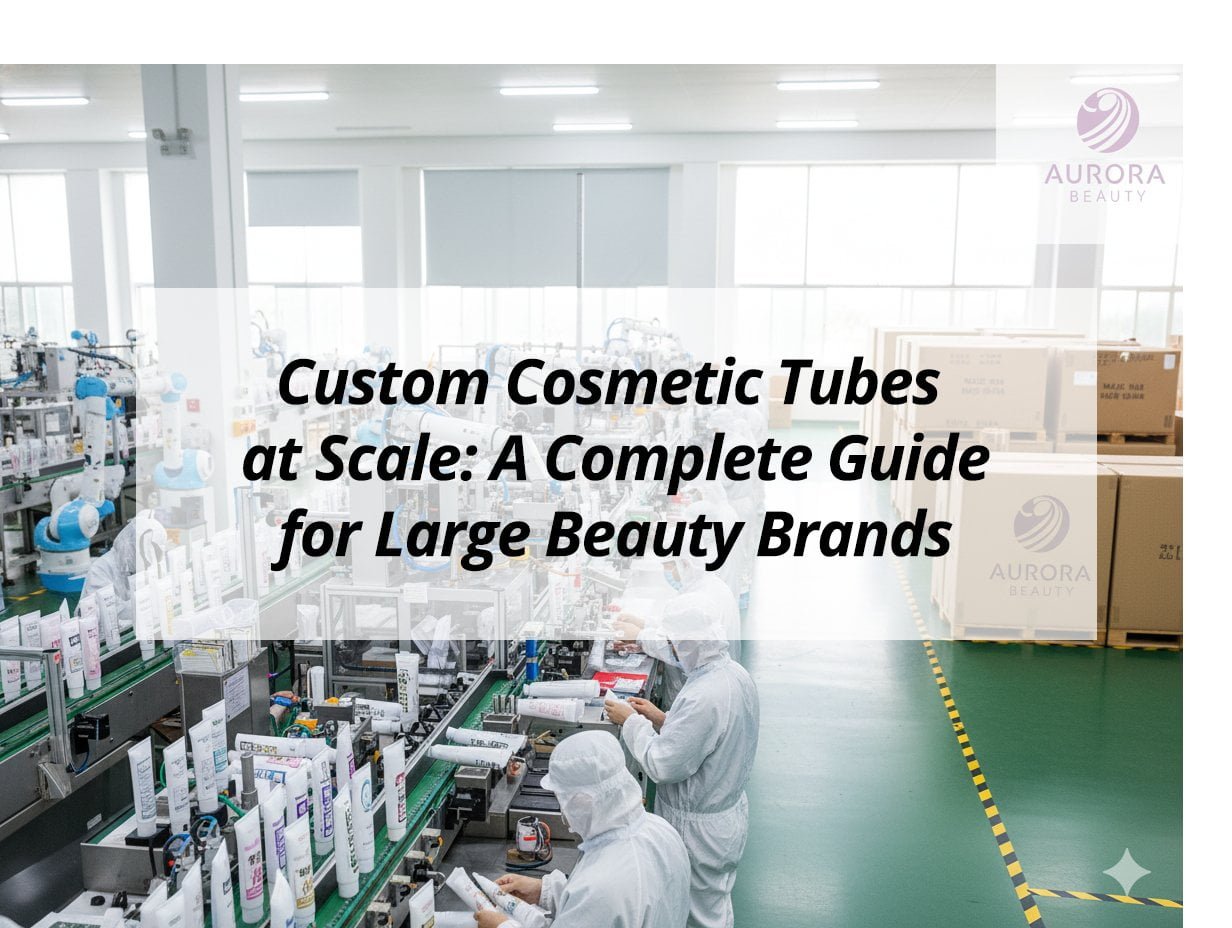
Large beauty brands need unique packaging. Custom cosmetic tubes are key. How do big brands get custom tubes at scale?
Custom cosmetic tubes at scale require careful planning and a strong manufacturing partner. Large beauty brands must focus on material selection, design consistency, and robust quality control. This ensures their packaging reflects brand identity and meets high market demands. It also guarantees efficient production and timely delivery.
I know that packaging is an extension of the brand. For big beauty companies, consistency across millions of units is vital.
What are the largest cosmetic brands?
The beauty industry has many big players. These companies set trends. They also demand high-volume, custom packaging.
The largest cosmetic brands globally include giants like L'Oréal, Estée Lauder, Procter & Gamble, Unilever, and Shiseido. These companies have vast product portfolios. They operate across multiple beauty categories. Their scale demands sophisticated supply chains. They also need reliable custom packaging solutions for their diverse product lines.
I have watched these brands for years. Their success often comes from consistent quality. This includes their packaging.
L'Oréal.
L'Oréal is a global leader. It owns many well-known brands. They cover skincare, makeup, and hair care. Their need for custom tubes is huge. They operate worldwide.
Their diverse portfolio means they require a wide range of packaging types. This includes many custom tubes.
Estée Lauder Companies.
Estée Lauder focuses on prestige beauty. They have many luxury brands. They need high-quality, often complex, custom packaging. Their products are sold globally in high-end markets.
Quality and design are paramount for luxury brands. Packaging must reflect this premium image.
Procter & Gamble (P&G).
P&G is a consumer goods giant. They have beauty brands like Olay and SK-II. They need packaging for mass markets. This means high volumes and efficient production.
| Brand Group | Market Focus | Packaging Volume | Key Packaging Needs |
|---|---|---|---|
| L'Oréal | Global, Mass & Prestige | Very High | Diverse, innovative, custom |
| Estée Lauder | Global, Prestige | High | High-quality, luxurious, custom |
| P&G | Global, Mass Market | Very High | Cost-effective, functional, safe |
| Unilever | Global, Mass Market | Very High | Sustainable, functional, custom |
| Shiseido | Asia-centric, Global Prestige | High | Innovative, elegant, quality |
Their scale requires reliable, cost-effective packaging solutions. This helps them maintain competitive pricing.
Unilever.
Unilever has a wide range of beauty and personal care products. Brands like Dove and Simple are part of their portfolio. They also need massive amounts of custom tubes. Sustainability is a big focus for them.
Their commitment to sustainability influences their packaging choices. They often seek eco-friendly tube materials.
Shiseido.
Shiseido is a Japanese multinational. They have a strong presence in Asia. They also have a global reach. They focus on skincare and makeup. Their packaging often combines innovation with elegant design.
Their emphasis on innovation extends to packaging. They often use advanced materials and designs for tubes.
Which skincare brand has the best packaging?
"Best" packaging can mean many things. It can be about design. It can be about function. It can be about sustainability.
Determining the "best" skincare packaging is subjective. It often depends on criteria like aesthetic appeal, functional design, and sustainability. Brands like Drunk Elephant are known for innovative airless pumps1. Aesop stands out for minimalist, apothecary-style containers. Fenty Skin uses refillable options. The best packaging combines beauty with practical benefits and brand identity.
I know that packaging needs to perform well. It also needs to look good. These elements combine to define "best."
Drunk Elephant.
Drunk Elephant uses colorful, unique packaging. They often use airless pump bottles for their creams and serums. This protects their active ingredients. Their packaging is also easy to use.
Their focus on ingredient integrity drives their packaging choices. Airless pumps are a good example.
Aesop.
Aesop uses simple, dark brown bottles. Their packaging has a classic, apothecary look. It is minimal. It is also very distinct. This reflects their brand image.
Their minimalist design creates a strong brand identity. It also suggests a focus on product efficacy.
Fenty Skin.
Fenty Skin focuses on sustainability. Many of their products are refillable. Their packaging is sleek and modern. This combines good looks with environmental care.
| Brand Example | Packaging Style | Key Feature | Perceived Benefit |
|---|---|---|---|
| Drunk Elephant | Colorful, functional | Airless pumps | Ingredient protection, ease of use |
| Aesop | Minimalist, dark | Recyclable glass/PET | Classic, sustainable image |
| Fenty Skin | Modern, sleek | Refillable systems | Eco-friendly, innovative |
| Kiehl's | Pharmaceutical, simple | Clear labeling | Trustworthy, effective |
Refillable packaging appeals to eco-conscious consumers. It shows a commitment to reducing waste.
Kiehl's.
Kiehl's packaging is simple and pharmaceutical-inspired. It focuses on the product inside. Their designs are clean. They show trust and effectiveness.
Their straightforward packaging communicates honesty and reliability. This aligns with their brand values.
Tatcha.
Tatcha uses elegant, luxurious packaging. Their designs often feature rich colors and traditional Japanese aesthetics. This creates a high-end feel.
Luxury brands often invest heavily in packaging. It enhances the perceived value of the product.
What is a cosmetic packaging2?
Cosmetic packaging is more than just a container. It plays many roles. It is vital for a product's success.
Cosmetic packaging is the outer container or dispenser for beauty products. Its purpose is multifaceted. It protects the product from contamination and damage. It also preserves product integrity. Packaging informs consumers through labeling. It communicates brand identity and appeals to target markets. It is a critical component of product presentation and protection.
I know that packaging is the first interaction a customer has with a product. It needs to make a good impression.
Protection.
The main job of packaging is to protect. It keeps the cosmetic product safe. It guards against physical damage. It also protects from light, air, and germs. This ensures the product stays fresh.
This protection is essential for maintaining product stability and safety. It prevents spoilage.
Preservation.
Some cosmetic ingredients are very sensitive. Packaging helps preserve them. For example, airless pumps protect from air. Dark bottles protect from light. This ensures the product works as intended.
| Packaging Function | Description | Example for Tube |
|---|---|---|
| Protection | Guards against damage & contamination | Durable plastic, sealed cap |
| Preservation | Maintains product efficacy | Opaque material, barrier layers |
| Information | Communicates product details | Labeling, ingredient list |
| Branding | Conveys brand identity & appeal | Custom color, logo, finish |
| Dispensing | Facilitates product use | Squeeze tube, flip-top cap |
Preservation directly impacts the product's effectiveness and shelf life.
Information.
Packaging provides important information. It lists ingredients. It gives usage instructions. It also shows expiry dates. This helps consumers make informed choices.
Clear and accurate labeling is legally required. It also builds consumer trust.
Branding and marketing.
Packaging is a silent salesperson. Its design, colors, and graphics convey brand identity. It attracts target customers. Good packaging makes a product stand out on the shelf.
Aesthetic appeal and brand consistency are powerful marketing tools. They influence purchasing decisions.
Dispensing.
Packaging also dispenses the product. Tubes let you squeeze. Pumps let you press. The dispensing method affects how easy the product is to use.
An intuitive and efficient dispensing mechanism enhances user satisfaction.
Who are the big 7 of the beauty industry?
The beauty industry is large. Seven major companies often dominate it. They have huge market shares.
The "Big 7" of the beauty industry typically refer to the leading global conglomerates that own numerous beauty brands. These include L'Oréal, Estée Lauder Companies, Procter & Gamble, Unilever, Shiseido, Johnson & Johnson, and Coty. These giants influence trends. They also drive innovation. They shape the global beauty market through vast product portfolios and expansive distribution networks.
I recognize these companies. They are powerful forces in the global market. Their decisions impact the entire industry.
L'Oréal.
L'Oréal is a French company. It is the world's largest cosmetics company. They have brands like Maybelline, Garnier, and Lancôme. Their reach is global.
Their vast portfolio covers all price points. This gives them a wide market presence.
Estée Lauder Companies.
This American company focuses on luxury. Brands like MAC, Clinique, and La Mer are theirs. They are strong in prestige skincare and makeup.
Their emphasis on high-end products distinguishes them in the market.
Procter & Gamble (P&G).
P&G is an American consumer goods corporation. Their beauty segment includes Olay, SK-II, and Head & Shoulders. They are strong in mass-market skincare and hair care.
| Company Name | Key Focus | Notable Brands (Beauty) | Global Reach |
|---|---|---|---|
| L'Oréal | All beauty segments | Maybelline, Lancôme, Garnier | Global |
| Estée Lauder | Prestige skincare, makeup | MAC, Clinique, La Mer | Global |
| P&G | Mass market beauty, hair | Olay, SK-II, Head & Shoulders | Global |
| Unilever | Personal care, beauty | Dove, Simple, TRESemmé | Global |
| Shiseido | Asia-centric, prestige | NARS, Shiseido, bareMinerals | Global |
| Johnson & Johnson | Health, baby, skincare | Neutrogena, Aveeno, Clean & Clear | Global |
| Coty | Fragrances, cosmetics | CoverGirl, Sally Hansen, Gucci Beauty (license) | Global |
Their strength lies in extensive distribution and brand recognition.
Unilever.
Unilever is a British-Dutch company. They own beauty brands like Dove, Simple, and TRESemmé. They focus on personal care for mass markets.
Their broad product range caters to diverse consumer needs worldwide.
Shiseido.
Shiseido is a Japanese beauty company. They offer high-end skincare, makeup, and fragrances. They are very strong in Asian markets. They also have a global luxury presence.
Their heritage and innovation make them a significant player, especially in premium segments.
Johnson & Johnson (J&J).
J&J is an American company. While known for healthcare, they have significant beauty brands. These include Neutrogena, Aveeno, and Clean & Clear. They focus on dermatologist-recommended skincare.
Their strong scientific background gives their skincare brands credibility.
Coty.
Coty is an American beauty company. They specialize in fragrances, cosmetics, and skincare. They own brands like CoverGirl. They also hold licenses for many designer fragrances.
Their focus on fragrances and color cosmetics gives them a distinct market position.
My Insights: Mastering Custom Cosmetic Tubes for Large Beauty Brands
Scaling packaging for large beauty brands can be challenging. Discover how custom cosmetic tubes provide tailored solutions for high-volume success.
Custom cosmetic tubes allow beauty brands to optimize production, enhance brand identity, and maintain quality standards. They offer flexibility in materials, sizes, and designs, ensuring effective scalability and sustainability for millions of units.
Strategies for Custom Cosmetic Tube Success
High-Volume Production and Customization:
- Scalability: Partner with manufacturers capable of handling large MOQs to lower unit costs and ensure consistency in color and print across batches.
- Design Options: Customization includes materials, sizes, and decorations to create iconic designs that enhance the unboxing experience.
Material and Process Choices:
- Material Options: Choose between PE plastic, laminated, aluminum, or sustainable materials like PCR. Laminated tubes offer superior barriers for sensitive formulas.
- Production and Testing: Brands define specifications and review samples for seal integrity. Mass runs include testing for stability and compatibility with automated filling lines.
| Factor | Description |
|---|---|
| Scalability | Lower unit costs, consistent quality |
| Design Options | Customization in materials, sizes, and decoration |
| Material Choices | PE, laminated, aluminum, PCR for tailored needs |
| Production Process | Spec definition, sample review, mass testing |
By selecting specialized manufacturers and embracing innovative designs, beauty brands can achieve effective scaling and differentiation in the competitive market.
Conclusion
Large beauty brands need custom cosmetic tubes at scale. These tubes protect products, reflect brand identity, and meet market demands. The "Big 7" companies drive innovation and demand in packaging.