
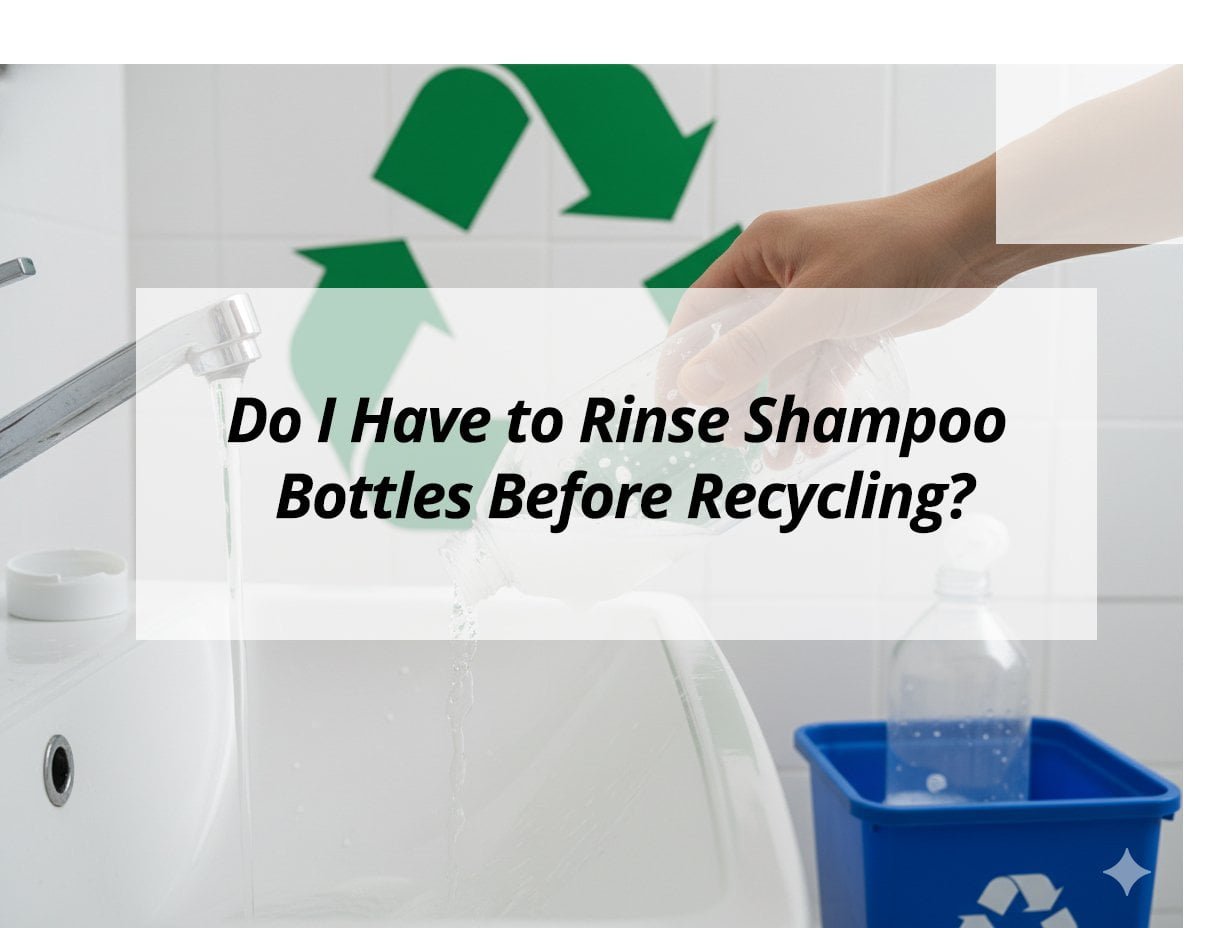
Many people wonder about the correct way to recycle plastic bottles. This guide explains whether you need to rinse shampoo bottles before putting them in the recycling bin.
You do not have to thoroughly rinse shampoo bottles before recycling. Most local recycling programs accept bottles with a small amount of residue. A quick, light rinse can be helpful, but a completely clean bottle is often not necessary. The main goal is to ensure the bottle is mostly empty.
Understanding the best practices for recycling helps improve the efficiency of the entire process. Simple steps ensure your efforts contribute positively to waste management.
Do You Have to Rinse Out Shampoo Bottles Before Recycling?
This is a very common question, and many individuals are unsure about the level of cleanliness required for plastic bottles. Proper preparation helps the recycling system operate more effectively.
No, a thorough rinse of shampoo bottles until they are spotless is not typically required for recycling. Most recycling facilities can process bottles with minor product residue. The primary requirement is that the bottle should be mostly empty, not perfectly clean.
The design of recycling plants accounts for some level of residue in plastic containers. Over-rinsing uses more water and energy than is often needed. Focus on emptying the bottle as much as possible rather than achieving complete cleanliness.
Why "Mostly Empty" is Sufficient
Recycling facilities employ machinery designed to clean and process plastics. They are equipped to handle small amounts of remaining product. Extensive rinsing by consumers often provides minimal additional benefit.
- Water Conservation: Reducing unnecessary rinsing helps save water resources.
- Energy Efficiency: Less hot water used for rinsing contributes to lower energy consumption.
- Time Savings: Simply emptying the bottle thoroughly is quicker and more practical for individuals.
| Residue Level | Recyclability Status | Explanation |
|---|---|---|
| Mostly Empty | Generally Accepted | Standard acceptance by most recycling centers. |
| Small Amount of Residue | Accepted | Facilities can typically manage minor residues. |
| Significant Product | Not Accepted | Likely to contaminate and be rejected. |
The focus for residential recycling is on practical and effective steps. Making the process too demanding can reduce participation rates. Efficient recycling practices balance environmental benefits with user convenience.
What Happens if You Don't Rinse Before Recycling?
Many individuals are concerned about the implications of recycling containers with residual product. Understanding these impacts helps clarify proper recycling procedures.
If a shampoo bottle contains a large amount of product and is not rinsed, it can contaminate a batch of recyclable materials. However, a small amount of residue typically does not pose a significant problem. Recycling facilities have sorting and cleaning systems designed to handle minor impurities.
A bottle with a substantial amount of liquid or cream inside can affect the quality of recycled plastic. Such items may need to be removed from the recycling stream. This increases processing costs and can reduce the overall effectiveness of recycling efforts.
The Impact of Contamination in Recycling
Contamination occurs when non-recyclable items or excessive residues mix with desired recyclables. This can negatively affect the quality and process of recycling.
- Degraded Material Quality: Contaminated plastics may result in lower-grade recycled material.
- Increased Operational Costs: Recycling facilities incur higher expenses for additional sorting and cleaning.
- Diversion to Landfill: Heavily contaminated batches might be rejected from recycling and sent to landfills.
| Contaminant Type | Potential Impact on Recycling | Common Outcome |
|---|---|---|
| Excess Product Residue (Liquid) | Can reduce the purity of plastics and paper. | May be sorted out for disposal if severe. |
| Non-Recyclable Materials | Can damage machinery or compromise batches. | Often leads to rejection and landfilling. |
| Large Amounts of Liquids | Can soak and damage paper/cardboard items. | Entire loads may become unsuitable for recycling. |
Maintaining the purity of recycling streams is crucial for their economic viability and environmental benefit. When in doubt, it is generally better to dispose of an item that is heavily soiled or contains significant product rather than risk contaminating an entire batch of recyclables.
What is Surprisingly Not Recyclable?
Many items commonly found in households are often mistakenly placed in recycling bins. Identifying these non-recyclable materials is important for efficient waste management.
A range of everyday items are often not accepted in standard curbside recycling programs, despite appearing to be plastic or recyclable. Examples include plastic bags, Styrofoam, and very small plastic components. These materials can cause operational issues at recycling facilities or contaminate valuable recyclable streams.
Misconceptions about what is recyclable are common. For instance, plastic films, like those from food packaging, are often made of different plastic types and can jam sorting equipment. Consulting local recycling guidelines is essential for accurate disposal.
Unexpected Non-Recyclables
Awareness of specific items that are typically excluded from curbside recycling helps to prevent contamination and ensure smooth processing.
- Plastic Bags and Films: These materials frequently tangle in sorting machinery, causing breakdowns.
- Styrofoam (Polystyrene Foam): It is difficult to process, costly to transport due to its bulk, and fragments easily, leading to contamination.
- Ceramics and Non-Bottle Glass: Items like drinking glasses, plates, or ceramics have different compositions and melting points than recyclable glass bottles.
- Small Plastic Items: Plastics smaller than a credit card, such as tiny caps or intricate parts, can fall through sorting screens and end up as waste.
- "Compostable" Plastics: These require specific industrial composting conditions and do not break down in traditional recycling or landfill environments.
| Item Category | Reason for Non-Recyclability (Curbside) | Recommended Disposal Method |
|---|---|---|
| Plastic Films/Bags | Causes equipment entanglement | Special drop-off locations (if available) |
| Styrofoam Packaging | Prone to fragmentation, costly to process | General waste, special collection |
| Ceramic Dishes/Glassware | Different material composition | General waste |
| Small Plastic Components | Too small for sorting equipment | General waste |
| "Compostable" Food Service | Requires specific industrial facilities | Industrial composting (if available), waste |
Erroneous recycling, often termed "wish-cycling," can create significant challenges for recycling centers. It is more effective to properly dispose of questionable items as general waste than to introduce contaminants into the recycling stream.
Can Shampoo Bottles Go Into Recycling?
This question is fundamental to household recycling practices. Knowing which types of containers are accepted is key to effective waste diversion.
Yes, most shampoo bottles are generally accepted in recycling programs. These bottles are typically manufactured from common and widely recyclable plastics such as #1 PET (Polyethylene Terephthalate) or #2 HDPE (High-Density Polyethylene). It is always advisable to check the specific recycling symbol on the bottle and the guidelines provided by your local waste management service.
These plastic types are highly valued in the recycling industry. They can be reprocessed into new plastic products, reducing the demand for virgin plastic materials. This process supports resource conservation and lessens environmental impact.
Identifying Recyclable Plastic Bottles
Recyclable plastics are usually identified by a triangular chasing arrow symbol containing a number, indicating the specific resin type.
- #1 PET (Polyethylene Terephthalate): Commonly used for beverage bottles and some personal care product containers. It is one of the most widely recycled plastics.
- #2 HDPE (High-Density Polyethylene): Frequently found in milk jugs, detergent bottles, and the majority of shampoo and conditioner bottles. This plastic also has a high recycling rate.
- #5 PP (Polypropylene): Used for items like yogurt cups, bottle caps, and certain cosmetic jars. Its recyclability is increasing, but acceptance varies regionally.
| Plastic Type | Common Applications | General Recyclability | Specific Considerations |
|---|---|---|---|
| #1 PET | Beverage bottles, shampoo | High | Often clear or light-colored. |
| #2 HDPE | Milk jugs, shampoo, detergent | High | Often opaque or colored. |
| #5 PP | Caps, jars, some tubes | Moderate/Increasing | Check local guidelines, often accepted if separated. |
When preparing shampoo bottles for recycling, it can be beneficial to remove any pumps or sprayers, as these components are often made of mixed materials that are not easily recyclable. Emptying and lightly rinsing the bottle ensures it is ready for processing.
My Insights: Do I Have to Rinse Shampoo Bottles Before Recycling?
Unsure if you need to rinse shampoo bottles before recycling? Let’s clear up the confusion to improve recycling efficiency and reduce contamination.
Rinsing shampoo bottles isn’t mandatory but highly recommended. A quick rinse helps prevent contamination and odors, ensuring the plastic can be successfully recycled without being rejected by facilities.
Understanding Rinsing Requirements for Shampoo Bottles
Recycling Guidelines
- Rinsing Necessity: Aim for a quick rinse to remove excess product, while a thin film is acceptable. Completely clean bottles are unnecessary, but emptiness is crucial to avoid contamination.
- Residue Impact: Residual product can cause the recycling batch to be rejected, increasing waste and processing costs. Rinsing minimizes contamination, ensuring more effective recycling.
Practical Steps
- Initial Emptying: Ensure no large product remains.
- Quick Rinse: Swish warm water inside, shake, and drain.
- Cap Management: Most recycling accepts caps if left on, but check local guidelines. Pumps often need to be discarded due to mixed materials.
| Aspect | Recommended Action | Note |
|---|---|---|
| Rinsing | Quick rinse with warm water | Thin residue is acceptable |
| Caps | Leave on if recyclable | Verify local rules |
| Pumps | Dispose of separately if mixed | Not usually recycled |
Local Guidelines Check
Always consult local recycling rules to align with their requirements. Compliance ensures that your efforts contribute positively to reducing environmental impact and processing efficiency.
Conclusion
Recycling shampoo bottles is usually straightforward. Most bottles are recyclable, and ensuring they are mostly empty is often sufficient. These actions contribute significantly to environmental sustainability.