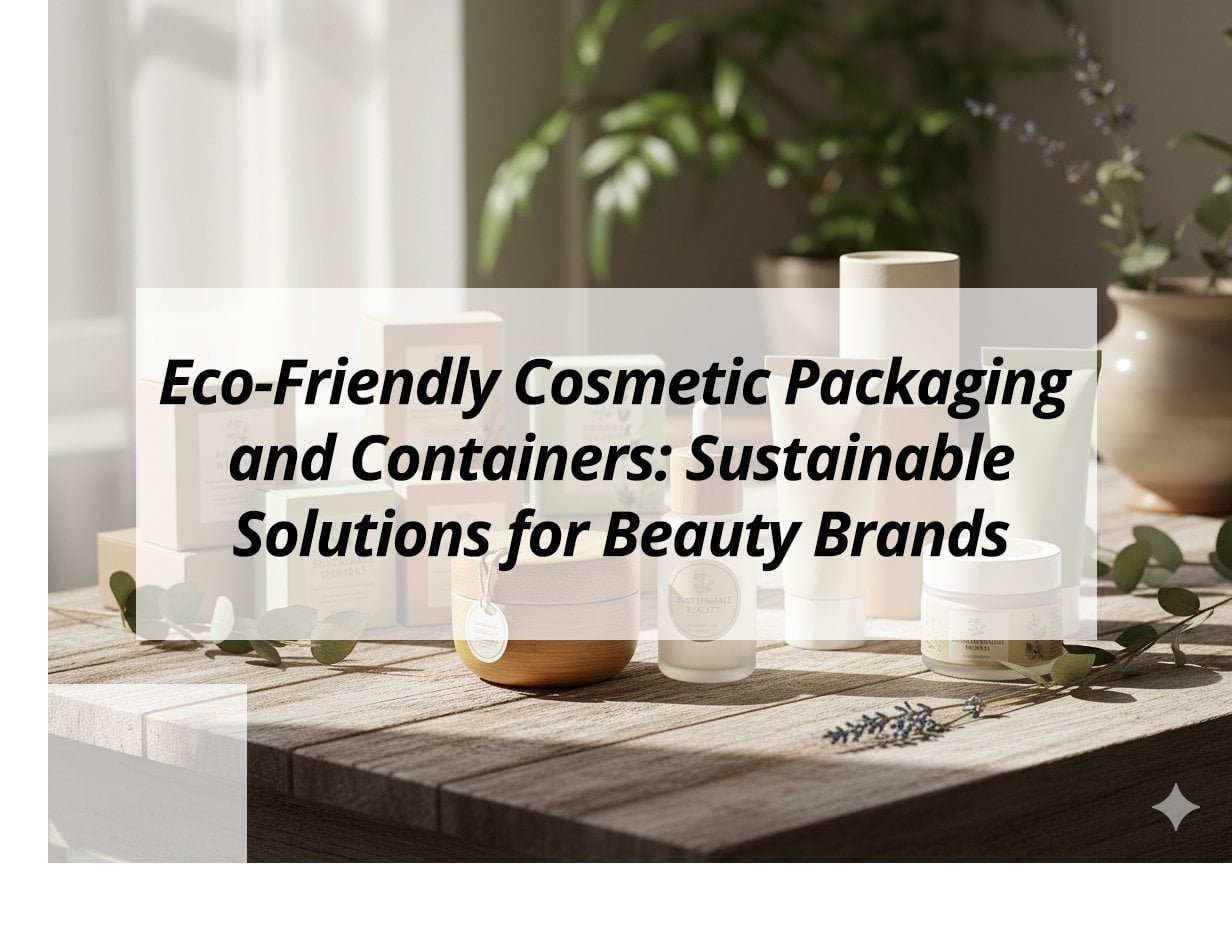
Many beauty brands seek to adopt sustainable practices. The choice of eco-friendly packaging is crucial for this goal. Brands that fail to utilize sustainable options risk alienating environmentally conscious consumers. Therefore, selecting appropriate packaging is paramount for product presentation and market appeal.
Implementing eco-friendly cosmetic packaging involves choosing materials with reduced environmental impact. Examples include recycled plastics, glass, or bamboo. This approach minimizes waste and decreases a brand's carbon footprint. It also demonstrates a commitment to environmental responsibility, enhancing brand attractiveness to consumers.
This discussion explores various eco-friendly packaging solutions. It aims to assist brands in identifying sustainable options for their beauty products.
What Are the Best Sustainable Packaging Options for Cosmetics?
Identifying suitable sustainable packaging for cosmetics presents distinct challenges. Packaging must protect products effectively while reflecting environmental values. Inadequate choices can undermine sustainability claims. This can negatively affect a brand's green image. So, what are the most effective eco-friendly packaging solutions available?
The most effective sustainable packaging options for cosmetics include materials that are highly recyclable, reusable, or biodegradable. Key examples are glass, aluminum, bamboo, and post-consumer recycled (PCR) plastics. These choices contribute to a lower environmental footprint. They also resonate with eco-conscious consumers, which can enhance brand reputation.
Here are some leading eco-friendly cosmetic containers wholesale options.
Glass: A Traditional, Recyclable Material
Glass is a highly effective packaging material. It is infinitely recyclable. It also conveys a premium aesthetic. This makes it suitable for luxury cosmetic packaging wholesale. Glass jars and bottles are commonly used for creams, serums, and lotions. It offers excellent product protection. It also provides a tactile, quality feel. Many unique cosmetic packaging designs utilize glass.
- Advantages: High recyclability, premium feel, chemically inert (non-reactive).
- Disadvantages: Heavy, susceptible to breakage, higher transportation costs.
Aluminum: Lightweight and Fully Recyclable
Aluminum is another excellent choice for packaging for cosmetic products. It is exceptionally lightweight. It is also 100% recyclable. It can be formed into tins, bottles, and jars. It provides strong protection against light and air. This helps maintain product freshness. It also offers a sleek, modern appearance. Many eco friendly lotion packaging solutions use aluminum.
- Advantages: Lightweight, fully recyclable, good barrier properties.
- Disadvantages: Prone to denting, not transparent.
Post-Consumer Recycled (PCR) Plastic: A Circular Solution
PCR plastic is manufactured from previously used plastic waste. This reduces the demand for virgin plastic production. It helps to divert plastic from landfills. It is a viable option for brands requiring plastic packaging. PCR bottles and jars are used for various beauty items. Its use demonstrates a commitment to recycling initiatives. Many eco friendly cosmetic packaging manufacturers offer PCR options.
- Advantages: Reduces reliance on virgin plastic, supports circular economy.
- Disadvantages: Limited color options, supply can fluctuate.
Bamboo: Natural and Renewable Resource
Bamboo is a rapidly growing plant. It represents a highly renewable resource. It imparts a natural, organic look to packaging. Bamboo caps, jars, and compacts are widely available. It is also biodegradable. This is a strong choice for brands aiming for an authentic natural aesthetic. It is often used for unique cosmetic packaging.
- Advantages: Renewable, biodegradable, natural appearance.
- Disadvantages: Can be more costly, less moisture-resistant than plastic.
Paper and Cardboard: Light and Biodegradable
Paper and cardboard are suitable for secondary packaging or solid product applications. Examples include lipstick tubes or deodorant sticks made from paper. They are lightweight and biodegradable. They also originate from renewable sources. This significantly reduces plastic consumption. They also provide versatile surfaces for branding.
- Advantages: Lightweight, biodegradable, customizable.
- Disadvantages: Not suitable for liquid products, potentially less durable.
| Material Type | Key Benefits | Common Cosmetic Applications | Environmental Profile |
|---|---|---|---|
| Glass | Recyclable, premium feel | Jars, bottles for creams, serums | High recyclability, higher weight |
| Aluminum | Lightweight, highly recyclable | Tins, bottles, jars | High recyclability, low weight |
| PCR Plastic | Reduces virgin plastic demand | Bottles, jars, tubes | Contributes to plastic waste reduction |
| Bamboo | Renewable, natural aesthetic | Caps, jars, compacts | Renewable, biodegradable |
| Paper/Cardboard | Biodegradable, lightweight | Solid product tubes, outer cartons | Renewable, biodegradable |
What Are the 5 R's of Sustainable Packaging?
Considering the principles of sustainable packaging can be a complex endeavor. Brands aim to implement choices that genuinely benefit the environment. Without clear guidelines, efforts may be ineffective. This can lead to perceptions of greenwashing. So, what fundamental principles should guide the selection of eco-friendly cosmetic packaging?
The 5 R's of sustainable packaging offer practical guidelines for minimizing environmental impact. These principles are Refuse, Reduce, Reuse, Recycle, and Rot (Compost). Adhering to these steps enables brands to develop genuinely eco-friendly packaging. This also demonstrates a clear commitment to sustainability, which is highly valued by consumers.
These principles inform the selection of eco friendly cosmetic containers wholesale options.
Refuse: Eliminate Unnecessary Packaging
The first principle is to refuse superfluous packaging. It prompts an assessment of whether packaging components are truly necessary. This involves questioning the need for extra layers or avoidable plastics. For instance, a product might be over-packaged in a box when a simple container label suffices. This step conserves resources and minimizes waste generation from the outset.
Reduce: Minimize Material Usage
The next R emphasizes reducing the quantity of material consumed. This involves designing lighter packaging. It also means using thinner container walls where structural integrity is maintained. Employing smaller containers when appropriate also contributes. Reducing material consumption lowers raw material usage. It also decreases energy expenditure for manufacturing and transport. This helps lessen the overall environmental footprint. Many eco friendly cosmetic packaging manufacturers prioritize this.
Reuse: Design for Multiple Applications
The principle of reuse explores whether packaging can be utilized multiple times. This is a highly effective sustainability strategy. Examples include refillable containers. Consumers purchase a product once in a durable container. Subsequent refills are then provided in simpler, less resource-intensive formats. This significantly reduces new packaging demand. Glass jars are particularly well-suited for repeated cleaning and refilling. This also offers unique cosmetic packaging solutions.
Recycle: Facilitate Material Recovery
Ensuring packaging is easily recyclable is crucial. This involves selecting materials widely accepted in recycling programs. Opting for mono-material packaging, where feasible, avoids separation challenges. Clear recycling instructions for consumers are also beneficial. This helps ensure packaging materials are diverted from landfills.
Rot (Compost): Return to Natural Cycles
The final R advocates for packaging that naturally decomposes. This refers to composting or biodegrading. Materials like paper, cardboard, or plant-based bioplastics can naturally break down. They then integrate back into the soil. This is suitable for packaging that cannot be effectively reused or recycled. Such materials typically require industrial composting facilities. This is an emerging option for packaging for cosmetic products.
| 5 R's Principle | Action in Cosmetic Packaging | Environmental Outcome |
|---|---|---|
| Refuse | Eliminate superfluous packaging layers | Reduces initial waste generation |
| Reduce | Optimize material quantity and weight | Conserves resources, lowers emissions |
| Reuse | Implement refillable systems, durable designs | Extends product life, less manufacturing |
| Recycle | Select widely recyclable, mono-materials | Prevents landfill, supports circularity |
| Rot (Compost) | Choose biodegradable/compostable materials | Returns nutrients to soil, reduces landfill |
What Are the 7 R's of Sustainable Packaging?
Considering a broader scope for sustainable packaging can appear intricate. Brands aim to exceed basic sustainability efforts. Focusing only on a few areas might overlook significant environmental impacts. This can limit the effectiveness of sustainability initiatives. So, what comprehensive principles guide truly sustainable packaging choices?
The 7 R's expand upon core principles to provide a more holistic perspective on sustainable packaging. These include Remove, Reduce, Reuse, Recycle, Renewable, Revenue, and Read. This extended framework assists brands in developing packaging solutions that are environmentally sound, economically viable, and transparent. This comprehensive approach reinforces a brand's sustainability commitment.
Utilizing these expanded principles aids in the creation of genuinely eco friendly cosmetic packaging.
Remove: Eliminate Unessential Packaging Components
This R is similar to "Refuse." It means actively excising any packaging elements that do not serve an essential function. Examples include plastic inserts within boxes that provide no critical protection. Or redundant plastic films. Removing these components conserves material. It also streamlines packaging. This is a vital step for eco friendly cosmetic packaging manufacturers.
Reduce: Minimize Material Volume
Consistent with the earlier "Reduce," this principle focuses on employing the least amount of material possible. This includes designing lighter components and adopting more efficient structural designs. For instance, a cream jar with thinner glass walls, provided it maintains structural integrity. Less material translates to reduced energy consumption and waste. This benefits both the environment and operational costs.
Reuse: Design for Multiple Life Cycles
This R is about engineering packaging for repeated use. Refillable systems are a prime illustration. Consider a sophisticated, luxury cosmetic packaging wholesale jar that a consumer retains. Subsequent product purchases might be in a simpler, smaller refill format. This substantially decreases the demand for new primary packaging. It also fosters customer loyalty.
Recycle: Ensure Effective Material Recovery
This R is critically important. It mandates ensuring that packaging can be easily collected and reprocessed into new products. Utilizing mono-material packaging, where feasible, is advised. This avoids complexities in material separation. Providing clear recycling instructions to consumers is also essential. This supports the transition to a circular economy.
Renewable: Source Materials from Natural Cycles
This R involves selecting materials derived from natural, rapidly regenerating sources. Bamboo is an excellent example. Bioplastics, such as those derived from corn starch, also fit this category. These materials reduce dependence on fossil fuels. They are a valuable option for packaging for cosmetic products. This minimizes reliance on finite resources.
Revenue: Align with Economic Viability
Sustainable packaging should also be economically sensible. This R focuses on identifying options that are cost-effective. Or options that generate savings in other areas, such as reduced shipping costs due to lighter packaging. Sustainable packaging should enhance brand value. It should not be solely an added expense. This makes it a strategic business choice.
Read: Provide Transparency and Information
This R pertains to clear and open communication. Brands should inform consumers about their packaging choices. Explaining the sustainability benefits is important. Providing explicit instructions on how to reuse or recycle the packaging is also vital. Transparency builds consumer trust. It also empowers consumers to make environmentally responsible choices. This is integral to being an eco-friendly brand.
| 7 R's Principle | Packaging Design Action | Comprehensive Impact |
|---|---|---|
| Remove | Eliminate all non-essential components | Streamlines packaging, conserves resources |
| Reduce | Minimize material quantity and weight | Lowers resource consumption, energy footprint |
| Reuse | Implement refillable systems | Extends product lifespan, reduces new production |
| Recycle | Select compatible, easily processed materials | Fosters circular economy, diverts waste |
| Renewable | Prioritize bio-based, regenerative sources | Decreases fossil fuel dependence |
| Revenue | Optimize cost-effectiveness | Ensures sustainable business operations |
| Read | Clear communication, consumer education | Builds trust, promotes informed choices |
What Are Eco-Friendly Beauty Products?
A growing number of consumers seek beauty products that are both beneficial for personal use and environmentally sound. They actively look for eco-friendly options. If a product's green claims are perceived as insincere, it can damage brand reputation. So, what precisely defines an "eco-friendly" beauty product?
Eco-friendly beauty products are characterized by sustainable ingredient sourcing, minimal environmental impact during production, and responsible packaging. This encompasses ethically obtained ingredients, energy- and water-efficient manufacturing processes, and packaging designed for reuse, recycling, or composting. These products aim to minimize ecological harm throughout their entire lifecycle.
This section connects the concept of eco-friendly products with appropriate eco friendly cosmetic packaging.
Sustainable Ingredients: From Source to Formulation
Eco-friendly beauty products begin with their ingredients. These ingredients should originate from sustainable sources. This means they are cultivated or harvested in ways that do not degrade the environment. They should also be biodegradable. Common examples include plant extracts, natural oils, and minerals. Avoidance of harsh, polluting chemicals is also a key factor.
- Ethical Sourcing: Ingredients are procured without negative impacts on ecosystems or local communities.
- Biodegradability: Ingredients break down naturally post-use, without environmental contamination.
- Minimal Processing: Ingredients are utilized in their most natural state where possible, reducing energy input.
Responsible Manufacturing: Environmentally Conscious Production
The production process of a product is also critical. Eco-friendly brands strive to reduce energy and water consumption in their facilities. They also aim to minimize manufacturing waste. This can involve using renewable energy sources. It also includes implementing systems for wastewater treatment. The entire process focuses on ecological preservation.
- Energy Efficiency: Reducing power consumption, often through renewable energy integration.
- Water Conservation: Decreasing water usage and implementing wastewater recycling.
- Waste Reduction: Minimizing residual materials from production lines.
Eco-Friendly Packaging: The Product's Outer Layer
This aspect directly relates to eco friendly cosmetic containers wholesale. Eco-friendly beauty products require packaging that aligns with their sustainable claims. This involves utilizing materials that are:
- Recyclable: Such as glass, aluminum, or PCR plastics.
- Reusable: For example, refillable jars often found in luxury cosmetic packaging wholesale.
- Biodegradable/Compostable: Like paper or bamboo, contributing to unique cosmetic packaging.
The objective is to lessen plastic waste. It also aims to reduce the demand for virgin materials. Many eco friendly cosmetic packaging manufacturers specialize in these sustainable options. This ensures the packaging for cosmetic products reflects the environmental values of the product within.
Certifications: Validating Green Claims
Many eco-friendly beauty products carry specific certifications. These are third-party labels that verify a product meets certain environmental benchmarks. For example, a "cruelty-free" label indicates no animal testing. An "organic" label signifies ingredients grown without synthetic pesticides. These certifications build consumer trust in a brand's green assertions.
- Cruelty-Free: Absence of animal testing.
- Organic: Ingredients cultivated without synthetic pesticides or fertilizers.
- Vegan: Formulation contains no animal-derived components.
- Sustainable Forestry: Paper packaging sourced from responsibly managed forests.
When a brand integrates all these elements, it truly offers an eco-friendly beauty product.
| Aspect | Definition in Eco-Friendly Beauty Products | Key Examples or Practices |
|---|---|---|
| Sustainable Ingredients | Ethically sourced, biodegradable, minimally processed | Plant extracts, natural oils, fair-trade ingredients |
| Responsible Manufacturing | Low energy/water use, waste minimization | Renewable energy, closed-loop water systems, lean production |
| Eco-Friendly Packaging | Recyclable, reusable, compostable | Glass jars, PCR plastic bottles, bamboo compacts |
| Certifications | Third-party validation of environmental claims | Cruelty-Free, Organic, Vegan, FSC-certified paper |
My Insights: Eco-Friendly Cosmetic Packaging and Containers: Sustainable Solutions for Beauty Brands
Struggling to capture eco-conscious beauty buyers? Embrace sustainable packaging solutions to meet regulatory demands and boost brand appeal.
Eco-friendly cosmetic packaging involves using recycled materials, refillable systems, and biodegradable options. Emphasizing glass, aluminum, PCR plastics, and plant-based bioplastics can significantly reduce environmental impact while aligning with consumer expectations for sustainable products.
Exploring Sustainable Options for Cosmetic Packaging
Key Sustainable Materials
- Glass: Infinitely recyclable and premium, ideal for skincare.
- Aluminum: Durable, lightweight, and recyclable, suitable for balms and aerosols.
- PCR Plastics: Reduce landfill waste using recycled resins.
- Bioplastics: Plant-derived and potentially biodegradable.
Refillable and Reusable Systems
- Momentum: Growing interest in refillable products, projected to be a USD 60 billion market by 2030.
- Use Cases: Fragrance bottles, lipsticks, and deodorants with refill options offer sustainability and consumer loyalty.
Design Strategies to Reduce Impact
| Design Element | Strategy |
|---|---|
| Mono-material | Simplifies recycling and reduces waste |
| Lightweighting | Lowers material use and cuts shipping emissions |
| Minimal Decoration | Enhances recyclability using simple labels |
Regulatory Context
- EU & US Regulations: Encourage recyclable and reusable formats to comply with sustainability laws.
Beauty brands can transition to eco-friendly packaging by auditing current materials, prioritizing sustainable upgrades, and piloting refill lines to align with consumer and regulatory trends.
Conclusion
Adopting eco-friendly cosmetic packaging is essential for contemporary beauty brands. By using sustainable materials and applying principles like the 7 R's, brands can reduce their environmental impact. This also resonates with environmentally conscious consumers.