
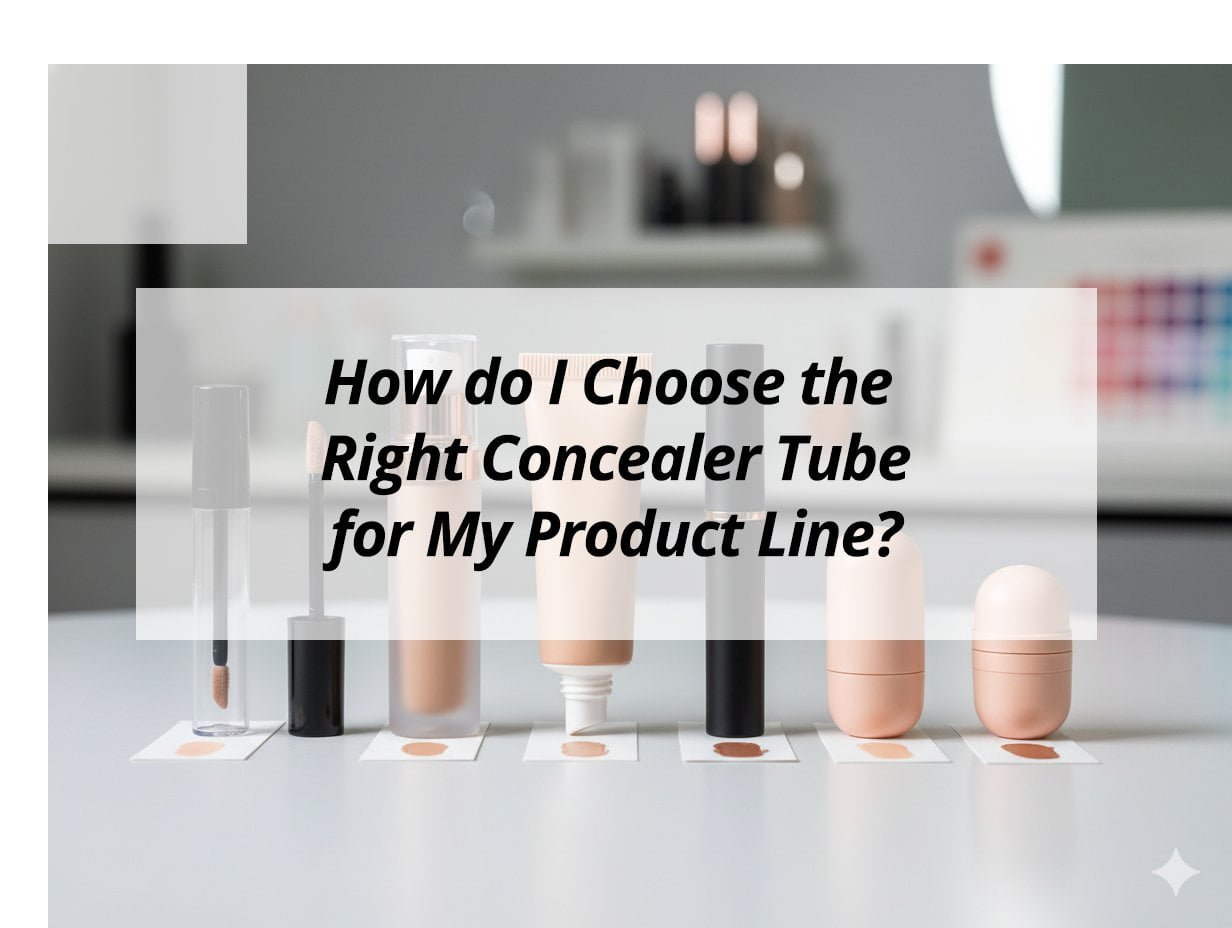
Choosing the right packaging for your concealer is very important. It affects how your product looks. It also affects how it works. I have helped many brands pick their packaging. The right tube makes a big difference.
To choose the right concealer tube for your product line, consider the formula's consistency (liquid, cream, stick), the desired applicator type (doe-foot, brush, squeeze), the brand's aesthetic, and practical factors like portability and airless technology for shelf life. Matching the packaging to the product and user experience is key for success.
The concealer market is large. Many types of concealers exist. Each type needs specific packaging. My factory makes many kinds of tubes. I know what works for different formulas.
How to Know What Kind of Concealer to Use?
Knowing what kind of concealer to use is important for consumers. For you as a brand, this means understanding market needs. I see different concealer trends. Each trend requires specific packaging solutions.
To know what kind of concealer to use, consider your skin type1 (oily, dry, combination), the coverage level needed (light, medium, full), and the specific concerns you want to address (blemishes, dark circles, redness). Different formulas, like liquid, cream, or stick, offer distinct benefits for various applications and skin conditions.
As a packaging supplier, I see how formula drives packaging choice. Liquid concealers need different tubes than stick ones. This affects the user experience.
Common Concealer Formulas and Their Uses
I work with many brands creating various concealer types. Each type has its ideal packaging.
- Liquid Concealers: These are very versatile. They offer light to full coverage. They work well for most skin types. They are good for dark circles and blemishes. My factory produces many tubes for liquid concealers2. They often come with a doe-foot applicator.
- Cream Concealers: These are thicker than liquids. They give medium to full coverage. They are good for dry skin. They work well for redness and discoloration. They can come in pots, palettes, or squeeze tubes.
- Stick Concealers: These are solid. They offer medium to full coverage. They are very convenient for on-the-go use. They are good for precise application. They are great for covering blemishes or small areas. They need a specific stick-type packaging.
- Color Correctors: These are special concealers. They neutralize specific colors on the skin. For example, green for redness, peach for dark circles. They are often liquid or cream. They also need packaging with a precise applicator.
Matching Concealer Formula to Packaging Type
The formula is always the starting point. It dictates the best tube.
| Concealer Formula | Ideal Tube Type | Key Benefit for User |
|---|---|---|
| Liquid | Doe-foot applicator tube, squeeze tube. | Easy blending, precise application, versatile coverage. |
| Cream | Squeeze tube, small pot/jar. | High coverage, good for dry skin, buildable. |
| Stick | Twist-up stick mechanism tube. | Convenient, portable, targeted application. |
| Color Corrector | Doe-foot applicator tube. | Neutralizes specific skin tones effectively. |
Understanding these connections helps you pick the right tube. It ensures your product performs as expected. This makes customers happy.
How Do I Know My Shade of Concealer?
For consumers, finding the right shade is crucial. For your brand, offering the right shades is key. Packaging can also help guide customers. I have noticed many companies use clear windows or color indicators on their tubes.
To know your shade of concealer, match it closely to your skin tone or foundation for blemishes and general coverage. For brightening under eyes, choose a shade one or two steps lighter than your skin. Always swatch shades on your face, not just your hand, and check it in natural light to find the best match.
Shade matching is often a challenge for online buyers. Good packaging can make it easier. My customers think about this a lot.
Tips for Shade Matching for Consumers
These are common tips for finding the right shade. Your packaging can support these tips.
- Match to Skin Tone: For covering blemishes or evening out skin tone, the concealer should match your natural skin color. This creates a seamless look.
- Match to Foundation: If you wear foundation, match the concealer to your foundation shade. This ensures consistency across your face.
- Lighter for Under Eyes: For brightening dark circles, a shade one or two steps lighter than your skin tone works best. This highlights the area.
- Swatch on Face: The best place to test concealer is on your jawline or near the area you will use it. Your hand color is often different.
- Check in Natural Light: Artificial light can change how colors look. Always check the shade in natural daylight. This gives the most accurate view.
Packaging Features to Aid Shade Selection
We can incorporate features into packaging to help customers.
| Packaging Feature | How it Helps Shade Selection | Example |
|---|---|---|
| Clear Window | Shows the actual product color inside the tube. | A small clear strip on the side of an opaque tube. |
| Color-Matched Cap | The cap color matches the concealer shade. | A series of tubes with different colored caps indicating shade. |
| Shade Name/Number | Clearly printed on the tube. | "Light Beige - 01" printed boldly on the label. |
| Swatch Area (on box) | A small printed swatch on the outer packaging. | A color block on the box matching the concealer inside. |
| Transparent Tube (for some formulas) | Shows the exact color of the product directly. | A clear lip gloss tube showing the shade clearly. |
These small details make a big difference for the customer. They build trust. They also reduce returns.
Is My Concealer Supposed to Be Lighter or Darker Than My Foundation?
This is a common question consumers ask. It highlights a key use of concealer. For brands, this means understanding different product functions. My clients often offer concealers for both purposes.
Your concealer's shade depends on its purpose: for spot concealing blemishes or evening out skin tone, it should match your foundation or skin tone exactly. However, for brightening under-eye areas or highlighting, choose a concealer that is one or two shades lighter than your foundation to lift and illuminate those specific areas.
This distinction is important. It guides how customers use your product. Your packaging can support this idea through marketing.
Concealer Shade for Different Purposes
I have seen many brands market their concealers for specific uses.
- For Blemishes and Spots: If you are covering pimples or dark spots, the concealer should blend seamlessly. It needs to match your skin or foundation color. If it is lighter, it will highlight the blemish. If it is darker, it will look muddy. The goal is to make the spot disappear.
- For Undereye Circles: For brightening the undereye area, a lighter shade works well. This creates a lifting effect. It makes you look more awake. Some people also use a color corrector first, then a lighter concealer.
- For Highlighting: Some people use concealer to highlight parts of their face. This means applying it to the high points, like the bridge of the nose or forehead. For this, a lighter shade is used. It draws light to those areas.
- For Contouring: While less common, some use darker concealers for subtle contouring. This creates shadows.
Packaging Design for Multi-Purpose Concealers
If your concealer is versatile, your packaging can reflect that.
| Concealer Purpose | Ideal Shade Choice | Packaging Suggestion |
|---|---|---|
| Spot Concealing | Matches skin/foundation. | Precise applicator (small doe-foot), opaque tube for light protection. |
| Undereye Brightening | 1-2 shades lighter than foundation. | Doe-foot applicator, often paired with light-reflecting formulas. |
| Highlighting | 1-2 shades lighter than foundation. | Sleek design, often with a wand applicator. |
| Color Correcting | Specific color (green, peach, purple). | Distinct packaging color or clear indicator for easy identification. |
When designing, think about how the customer will use the product. The packaging should support that use. This makes your product more appealing.
How to Know If Concealer Is Wrong Shade?
It is frustrating for a customer to buy the wrong shade. It means a bad experience. For brands, it can lead to returns. I advise my clients to help customers avoid this. Good product information, supported by packaging, is key.
You know if a concealer is the wrong shade if it leaves a noticeable cast (too light or too dark), creates an ashy or orange tint, or does not blend seamlessly into your skin. A correctly matched concealer should disappear, making the covered area look like your natural skin, without drawing attention to itself.
Identifying the wrong shade is not hard. It usually stands out. I have seen many people pick the wrong shade. The signs are usually clear.
Signs of an Incorrect Concealer Shade
These are the common problems when the shade is wrong.
- Too Light: If your concealer is too light, it will look chalky or ghostly. It will create a white circle around your eyes or a pale spot on blemishes. It draws attention to the area instead of hiding it.
- Too Dark: If your concealer is too dark, it will look muddy or dirty. It can make blemishes stand out more. It can also make undereye circles look even darker.
- Wrong Undertone: Sometimes the lightness or darkness is okay, but the undertone is wrong.
- Too Yellow/Orange: This can make fair skin look jaundiced. It might also look too obvious on cool-toned skin.
- Too Pink/Red: This can make warm-toned skin look unnatural or ashy.
- Ashy/Gray: This happens when a concealer is too cool-toned for warm skin, or too light and muted. It makes skin look dull.
- Not Blending: A wrong shade will not blend well. It will sit on top of the skin. It will create a clear line between the concealer and your natural skin.
Helping Customers Avoid Wrong Shades
As a packaging supplier, I can help brands guide their customers.
| Strategy | How Packaging Can Support It | Impact for Customer |
|---|---|---|
| Clear Shade Guides | Print a small shade guide chart on the product box. | Easy reference for selecting based on skin tone. |
| Accurate Product Photos | Use high-quality photos that show true color on website. | Better visual match, especially for online buyers. |
| Tester Availability | Design packaging that allows for easy in-store testing. | Customers can try before buying, ensuring fit. |
| Descriptive Shade Names | Use names that convey undertone and depth (e.g., "Warm Light," "Cool Medium"). | Helps customers understand the shade better. |
| Consistent Branding | Maintain consistent shade naming across product lines. | Reduces confusion, builds brand loyalty. |
Helping customers find their perfect shade is good for business. It means happy customers and fewer returns. It strengthens your brand's reputation for quality.
My Insights: Selecting the Ideal Concealer Tube for Your Product Line
Struggling with packaging choices for your concealer line? Here’s how to select a tube that enhances your product and brand.
To choose the right concealer tube, consider formula compatibility with materials, eco-friendly options, and user experience. Ensure durability and an airtight seal, and match design to brand aesthetics for a cohesive product offering.
Factors in Choosing the Right Concealer Tube
Material and Formula Compatibility:
- Ensure Stability: Share your concealer formula with suppliers for testing to avoid leaching or degradation.
- Material Selection: Use PE for flexibility or laminate tubes for better protection against air and light.
Tube Design and Functionality:
- Size and Convenience: Choose between 5-15ml mini tubes and 30ml full-size options depending on usage needs.
- Applicators: Match nozzles or pumps to formula viscosity for precise application and avoid clogging.
Sustainability and Brand Alignment:
- Eco-friendly Options: Consider PCR tubes or airless designs to reduce environmental impact.
- Customizability: Look for designs that offer branding opportunities, such as matte finishes from sustainable materials.
| Aspect | Recommendation |
|---|---|
| Material Compatibility | Ensure no chemical reactions or degradation. |
| Tube Size | Consider usage patterns and application needs. |
| Sustainability | Opt for recyclable or refillable designs. |
By considering these factors, you can choose a concealer tube that supports both product integrity and brand values.
Conclusion
Choosing the right concealer tube depends on formula, applicator, and brand style. Always match the tube to your product's purpose. Good packaging helps customers pick the right shade every time.