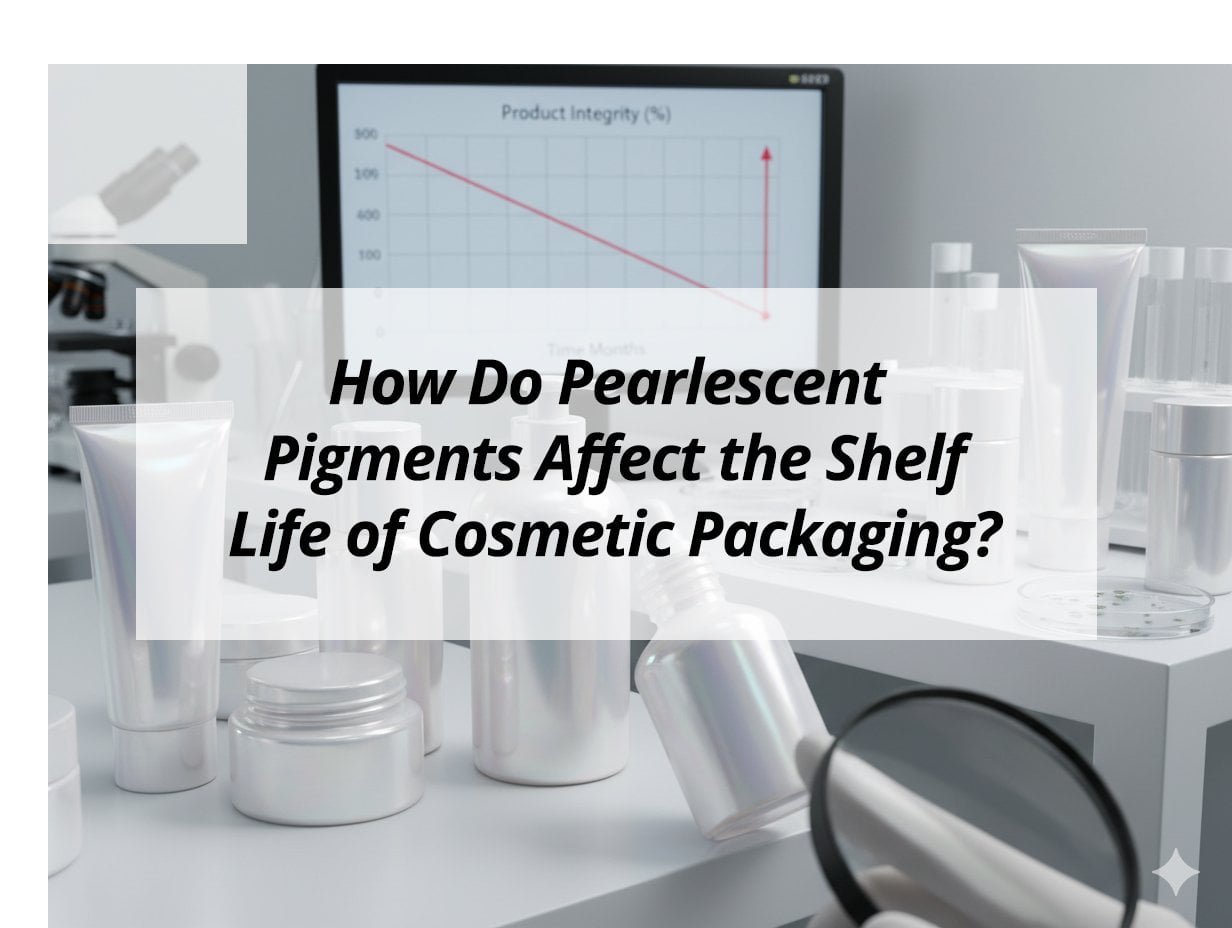
Cosmetic packaging often features a unique shimmer. This visual appeal frequently comes from pearlescent pigments. A common question among industry professionals is how these pigments influence the shelf life of the packaging material itself.
Pearlescent pigments do not inherently affect the shelf life of cosmetic packaging. Their primary function is to provide aesthetic enhancement through color and luster. The stability and protective capabilities of cosmetic packaging, which dictate the shelf life of the enclosed product, are primarily determined by the base material's chemical inertness, barrier properties, and compatibility with the cosmetic formulation.
Understanding all components of cosmetic packaging is important for material selection. The performance of packaging in preserving product integrity is a key concern for buyers and manufacturers.
Are Mica-Based Pearlescent Pigments Safe?
The safety of materials used in cosmetic packaging is a critical consideration. Ensuring that all components, including pigments, meet regulatory standards is paramount for product safety and consumer confidence.
Mica-based pearlescent pigments are widely recognized as safe for use in cosmetic packaging applications. These pigments comply with various international cosmetic regulations. Their stable physical and chemical properties mean they do not typically leach into the cosmetic product, thereby maintaining product integrity and consumer safety when correctly incorporated into packaging materials.
Compliance with safety standards is a fundamental requirement in the cosmetic packaging industry. Manufacturers prioritize the use of approved materials to ensure product quality and market acceptance.
Importance of Safety in Packaging
Safety protocols in cosmetic packaging are multi-faceted. They protect consumers and uphold brand standards.
- Regulatory Compliance: Global regulations dictate acceptable materials for cosmetic contact. Adherence to these standards, such as those from the FDA or EU, is mandatory.
- Product Purity: Packaging must not contaminate the cosmetic product. This prevents unwanted chemical interactions or microbial growth.
- Brand Integrity: Using safe and certified materials protects a brand's reputation and prevents costly product recalls.
Mechanisms Ensuring Pigment Safety
Pearlescent pigments are designed with features that contribute to their safety in packaging.
| Feature | Description | Safety Contribution |
|---|---|---|
| Chemical Inertness | Mica is a stable mineral, not prone to chemical reactions. | Prevents unwanted interactions with product. |
| Surface Coatings | Pigments are often coated with inert metal oxides. | Acts as a barrier, preventing migration. |
| Low Extractability | Pigment components are difficult to extract from the polymer matrix. | Ensures packaging material stability. |
| Global Approvals | Subjected to rigorous testing and approved by health authorities. | Validates their safety for end-use. |
Material suppliers conduct extensive testing to verify the safety profiles of pigments. This provides assurances to packaging manufacturers and, ultimately, to cosmetic brands.
What Is a Pearlescent Pigment?
The distinct shimmer seen in cosmetic packaging often stems from pearlescent pigments. Defining what these pigments are helps in understanding their function and aesthetic contribution.
A pearlescent pigment is a specialized pigment that imparts a pearl-like luster or iridescent effect. This effect is created through the optical phenomena of light interference and reflection. These pigments typically consist of translucent, flat substrates, most commonly mica, which are uniformly coated with thin layers of refractive metal oxides like titanium dioxide or iron oxides, producing a multi-dimensional sheen.
The visual appeal provided by these pigments is a key factor in cosmetic product differentiation. This aesthetic quality influences consumer perception and purchasing decisions.
Optical Principles of Pearlescence
The iridescent effect of pearlescent pigments is based on specific light interactions.
- Layered Structure: Pigments possess a multi-layered, platelet-like structure. Light interacts with these distinct layers.
- Light Interference: When light waves reflect off multiple surfaces within the pigment, they can constructively or destructively interfere. This creates selective color visibility.
- Refraction and Reflection: Light bends (refracts) as it passes through the layers and bounces off (reflects) their surfaces, contributing to the depth and shimmer.
Varieties of Pearlescent Effects
Pearlescent pigments are available in a range of effects, allowing for diverse packaging designs.
| Effect Type | Visual Characteristics | Application Examples |
|---|---|---|
| White Pearlescence | A classic, subtle white pearl sheen, often titanium dioxide-coated. | High-end skincare jars, elegant compact cases. |
| Colored Pearlescence | Exhibits interference colors such as gold, blue, or green. | Decorative makeup packaging, unique bottle designs. |
| Metallic Pearlescence | Provides a more opaque, metal-like luster. | Bold lipstick tubes, eyeliner component accents. |
| Sparkle/Crystal Effect | Delivers a brighter, more pronounced shimmering sparkle. | Limited edition packaging, premium product lines. |
The selection of a specific pearlescent effect is crucial for achieving desired brand aesthetics. It complements the overall product presentation.
Is Mica Powder Always Pearlescent?
Mica is a fundamental component of many pearlescent pigments. However, a common query is whether all mica powder inherently possesses pearlescent properties.
No, mica powder itself is not always inherently pearlescent. While its platy, lamellar structure makes it an ideal substrate for pearlescent pigments, raw mica powder typically presents as a dull, often silvery-gray or off-white material with minimal inherent shimmer. The pearlescent effect is achieved when the mica flakes are precisely coated with thin layers of high-refractive-index metal oxides, such as titanium dioxide or iron oxides, which enable light interference.
The transformation of raw mica into a pearlescent pigment is a result of advanced manufacturing processes. This distinction is important for understanding pigment composition.
The Mechanism of Mica's Transformation
Raw mica undergoes specific processing to gain its pearlescent qualities.
- Natural Mica Structure: Mica is a silicate mineral characterized by its distinctive layered, flaky crystal structure. This structure is optically transparent and provides a large surface area for coating.
- Metal Oxide Deposition: The crucial step involves applying ultra-thin, uniform layers of metal oxides onto the mica surface. These coatings, usually titanium dioxide, are engineered to specific thicknesses.
- Optical Enhancement: The interplay of light reflecting off the mica substrate and the outer metal oxide layers creates the interference colors and the characteristic pearlescent luster.
Alternative Substrates for Pearlescent Pigments
While mica is prevalent, other materials can also serve as substrates for pearlescent effects.
| Substrate Material | Characteristics | Advantages |
|---|---|---|
| Natural Mica | Naturally occurring mineral, cost-effective, good processability. | Versatile, stable, widely used. |
| Synthetic Mica | Artificially produced, higher purity, more uniform flake size. | Brighter colors, enhanced luster, lower heavy metal content. |
| Borosilicate Glass Flakes | Extremely smooth, highly transparent, uniform thickness. | Intense sparkle, high transparency, unique visual effects. |
| Bismuth Oxychloride | A heavy, soft crystal pigment, often used directly as a pigment. | Silky texture, strong pearlescent effect, good opacity. |
The choice of substrate material depends on desired aesthetic properties, performance requirements, and cost considerations for the final packaging application.
How Are Pearlescent Pigments Made?
Understanding the manufacturing process of pearlescent pigments provides insight into their quality and functional properties. The production involves precise chemical and physical controls.
Pearlescent pigments are produced through a controlled chemical deposition process. This typically begins by suspending fine, transparent substrate flakes, most commonly mica, in an aqueous solution. Subsequently, metal oxides, predominantly titanium dioxide or iron oxides, are precipitated onto the surface of these suspended flakes. The precise control over the thickness of these deposited oxide layers is critical, as it directly dictates the specific interference color and the overall intensity of the pearlescent effect.
This manufacturing intricacy ensures the consistent visual and performance attributes of the pigments. Quality control throughout the process is essential.
Key Stages in Pigment Manufacturing
The production of pearlescent pigments follows a defined sequence of steps.
- Substrate Preparation: Raw mica flakes are meticulously cleaned, delaminated, and classified by particle size. This ensures a uniform base for coating.
- Slurry Formation: The prepared mica flakes are dispersed in a liquid medium, often deionized water, to create a stable slurry. This suspension facilitates even coating.
- Metal Oxide Deposition: Soluble metal salts, such as titanium tetrachloride or ferric chloride, are introduced into the slurry. Under controlled pH and temperature conditions, these salts hydrolyze and deposit as thin, crystalline layers of metal oxides onto the mica surfaces.
- Washing and Filtration: After the coating process, the pigments are thoroughly washed to remove residual salts and impurities. They are then filtered to separate the solid pigment from the liquid.
- Drying and Milling: The filtered pigment is dried under controlled conditions. Gentle milling or pulverization follows to break up agglomerates and achieve the desired particle size distribution.
- Quality Assurance: The final product undergoes rigorous testing for color consistency, particle size, purity, and safety.
Quality Control in Pigment Production
Strict quality control measures are implemented at various stages of pigment manufacturing to ensure product excellence.
| Control Parameter | Focus of Inspection | Importance for Final Product |
|---|---|---|
| Particle Size Distribution | Uniformity and range of pigment flake sizes. | Impacts luster, opacity, and smooth application. |
| Coating Thickness Accuracy | Precision of the metal oxide layer deposition. | Determines the specific interference color and its stability. |
| Color and Luster Consistency | Batch-to-batch visual matching under standardized light. | Critical for brand consistency and aesthetic appeal. |
| Purity and Heavy Metal Content | Absence of contaminants and adherence to regulatory limits. | Ensures safety for cosmetic contact. |
| Dispersion Properties | How well the pigment disperses in various matrices. | Influences ease of use for packaging manufacturers. |
These controls guarantee that the pearlescent pigments meet demanding specifications for use in high-quality cosmetic packaging.
My Insights: How Do Pearlescent Pigments Affect Shelf Life of Cosmetic Packaging?
Curious about the impact of pearlescent pigments on cosmetic packaging? Discover how they enhance aesthetics without sacrificing durability.
Pearlescent pigments add visual appeal to packaging without significantly affecting its shelf life. They're stable, enhance branding, and with proper UV protection, don’t compromise chemical stability of the product inside.
Understanding Pearlescent Pigments’ Impact
Core Effects and Stability
-
Chemical Stability: These pigments, often coated mica, resist heat, UV, and moisture, ensuring packaging longevity of 2-10 years without accelerated degradation.
-
Light Fastness: Proper dispersion prevents UV hot spots, minimizing any photo-oxidation risk in packaging.
Challenges and Practical Insights
| Aspect | Impact | Practical Mitigation |
|---|---|---|
| Mechanical Stability | Platelets can alter plastic crystallinity | Ensure even pigment orientation |
| Hard Packing | Pigments may settle in inks or coatings | Store inks sealed, mix well before use |
| Moisture Sensitivity | Clumping in humidity affects films | Keep masterbatches sealed and dry |
Benefits and Brand Enhancement
Pearlescent pigments offer a luxury appearance and potential temperature control benefits, enhancing not just the package’s look but potentially extending product shelf life indirectly. They are chosen for their inertness and marketing appeal rather than any shelf-life reduction, with proper storage and formulation ensuring stability.
Conclusion
Pearlescent pigments enhance cosmetic packaging aesthetically. They do not impact shelf life directly. The safety and precise manufacturing of these pigments are essential for industry standards.