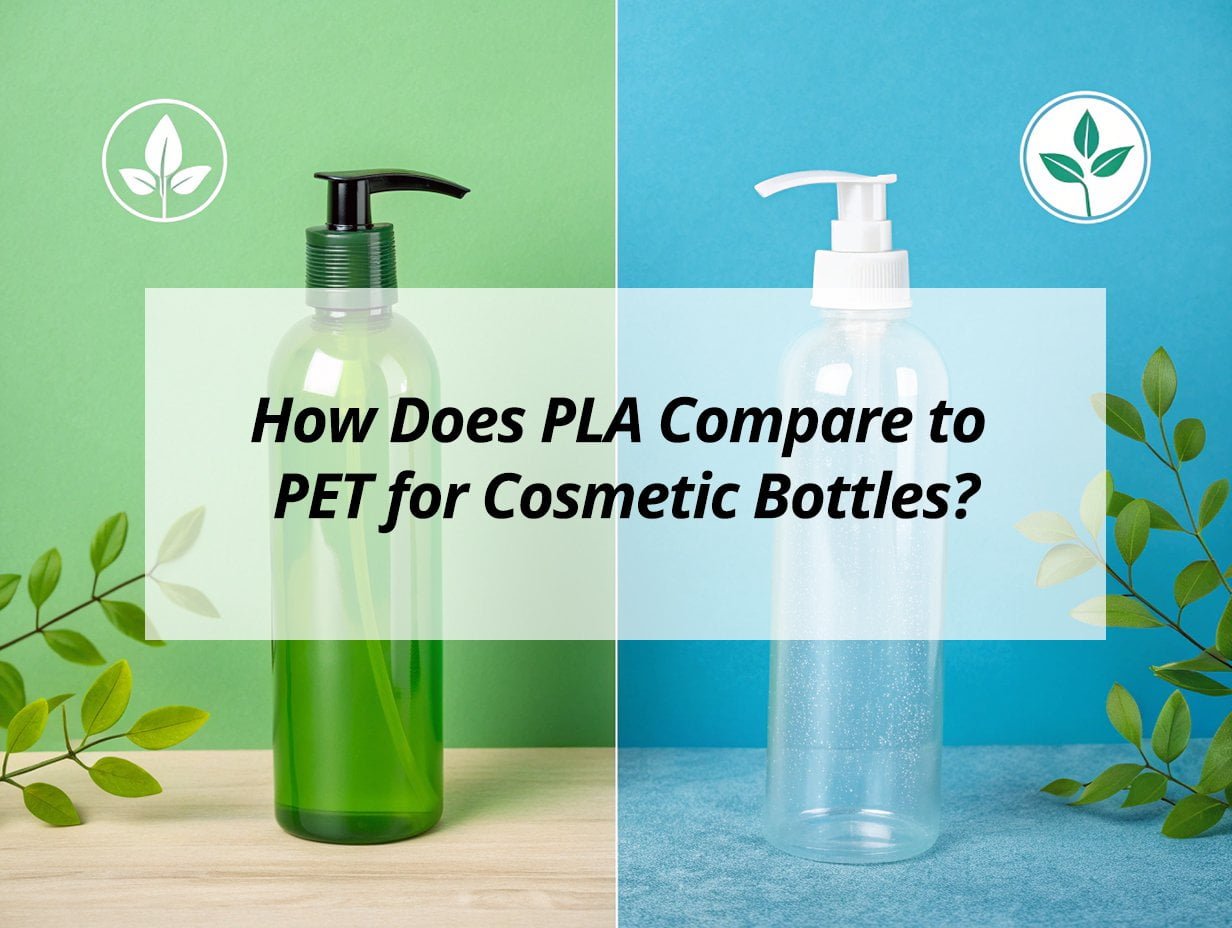
In cosmetic packaging, choose between PLA and PET. Each has benefits and challenges; align with your brand's needs.
PLA, sourced from renewable materials, offers strong environmental benefits. PET, known for its durability and recyclability, excels in functional performance. Choosing between them depends on prioritizing either sustainability or durability in your brand’s cosmetic packaging, aligning with your business values and consumer expectations.
Understanding these materials deeply can empower brands to make choices that resonate with their eco-conscious consumers.
Is PLA better than PET plastic?
Choosing between PLA and PET involves examining key differences in environmental and functional performance. What factors should guide your decision?
PLA is a biodegradable option1, ideal for brands aiming for sustainability. However, PET excels in strength and clarity2, suitable for heavy-duty applications. Each material fits different business models.
Making this choice involves assessing manufacturing capabilities3, cost implications, and alignment with brand values.
Evaluating Performance and Sustainability
Material Composition and Environmental Impact
- PLA (Polylactic Acid): Sourced from renewable resources, positioning it as a greener choice. Biodegradable under specific conditions, reducing landfill impact.
- PET (Polyethylene Terephthalate): Fossil-based, but highly recyclable. Widely accepted in recycling streams, offering an established end-of-life solution.
| Material | Environmental Basis | End-of-Life Solution |
|---|---|---|
| PLA | Renewable resources | Industrial compostable |
| PET | Petroleum-based | Widely recyclable |
Technical Benefits and Limitations
-
Durability:
- PLA: More brittle and less impact-resistant, suitable for gentle handling applications.
- PET: Robust and handles high temperatures and physical stress, perfect for dynamic environments.
-
Clarity and Aesthetics:
- PLA: Introduces a natural feel, slightly less clear than PET.
- PET: Offers perfect clarity, enhancing product presentation.
Manufacturing and Branding Implications
- Processing Ease:
- PLA: Requires controlled environments and equipment adjustments.
- PET: Adaptable to existing processes, reducing conversion costs.
Understanding these facets enables brands to tailor their decisions based on environmental goals and product functionality.
Is PLA similar to PET?
While PLA and PET are both popular for packaging, their material characteristics vary. How do these differences affect your choice?
PLA and PET share lightweight properties but differ fundamentally in composition and recyclability. PLA's biobased appeal is countered by PET's established recycling infrastructure and durability.
Examining these aspects helps align packaging materials with your brand’s identity and market needs.
Aligning Material Characteristics with Goals
Environmental and Aesthetic Profile
- Sustainability Focus:
- PLA Sustainability: Offers lower carbon production but requires industrial facilities for compostability.
- PET Recyclability: Supported by comprehensive recycling streams, allowing for closed-loop processes.
| Aspect | PLA Highlights | PET Highlights |
|---|---|---|
| Biobased Origin | Reduces fossil fuel usage | Enhances recycling efforts |
| Aesthetic Quality | Natural appeal | Crystal-clear transparency |
Market Dynamics and Consumer Perception
-
PLA in Marketing:
- Emphasizes sustainability and biobased narratives, aligns with eco-conscious branding.
-
PET in Branding:
- Capitalizes on its familiarity and proven performance4, ensuring consumer confidence.
Adapting these materials based on brand strategy can enhance consumer engagement and trust.
What is the disadvantage of PLA plastic?
While PLA offers eco-friendly benefits, it has limitations that could hinder some applications. What should brands be cautious about?
PLA's limited heat resistance and lower durability are significant concerns. Its reliance on specialized composting facilities makes end-of-life management challenging. Consider these factors in product planning.
Identifying and addressing these challenges is key for using PLA effectively in cosmetic packaging.
Overcoming PLA’s Challenges
Heat Sensitivity and Handling Issues
-
Temperature Concerns:
- PLA cannot withstand high temperatures, risking deformation during transport or storage in hot climates.
-
Stiffness and Fragility:
- Its rigidity translates to a brittle nature, complicating use in robust packaging scenarios.
| Challenge | Impact on Usage |
|---|---|
| Heat Sensitivity | Limits high-temperature uses |
| Mechanical Fragility | Requires gentle handling |
Sustainability and Recycling Constraints
-
End-of-Life Limitations:
- Requires industrial composting, not universally available, posing challenges for widespread adoption.
-
Cost Implications:
- Higher production costs due to specialized feeding materials and processes.
Brands must innovate around these issues through robust design and consumer education.
What are the disadvantages of PET bottles?
Despite widespread use, PET bottles face sustainability criticisms and technical challenges. What should be taken into account?
PET’s petroleum-based origin raises environmental concerns, despite its recyclability. Challenges in recycling and reliance on fossil fuels highlight the need for sustainable messaging.
Strategizing around these issues ensures responsible and effective use of PET in packaging solutions.
Addressing PET’s Environmental and Technical Issues
Resource and Energy Concerns
-
Fossil Dependency:
- PET production relies heavily on non-renewable petroleum, impacting its green profile compared to bioplastics.
-
Recycling Complexities:
- While recyclable, relies on consumer participation and robust municipal systems.
| Issue | Environmental Impact |
|---|---|
| Fossil Dependency | High ecological footprint |
| Recycling Reliance | System-dependent sustainability |
Enhancing PET’s Sustainable Image
-
Transparency and Clarity:
- PET bottles offer unmatched clarity, essential for premium products.
-
Recycling Advocacy:
- Highlighting recyclability in branding can mitigate some environmental concerns, fostering consumer alignment with sustainable practices.
Responsible PET use can align with eco-conscious branding, providing clarity on sustainability and recyclability narratives.
My Insights: PLA Compare to PET for Cosmetic Bottles
Deciding between PLA and PET for cosmetic bottles can impact sustainability and performance. Let’s explore their differences.
PLA offers eco-friendliness and compostability, while PET provides durability and recyclability. PET is often preferred for its strength, clarity, and established recycling systems.
Material Comparison
Sustainability and Material Origin
-
PLA
- Made from renewable resources like corn starch or sugarcane, compostable under industrial conditions.
-
PET
- Petroleum-based but fully recyclable, benefiting from established systems.
Durability and Practical Use
| Feature | PLA | PET |
|---|---|---|
| Strength | Lesser, prone to deformation | Superior strength and durability |
| Weight (500 ml) | ~11-25g | ~19-30g |
| Heat Resistance | Warps >45°C | Withstands up to 70–80°C |
Clarity and Aesthetics
- PLA is slightly opaque, which may impact product presentation.
- PET offers high transparency, often chosen for clear packaging.
PLA is ideal for brands focusing on eco-friendliness where composting exists, while PET is favored for its overall practicality, recyclability, and cost-effectiveness.
Conclusion
Choosing between PLA and PET demands a nuanced understanding of their environmental, technical, and market dynamics. Align these insights with your brand's strategic objectives for compelling and sustainable cosmetic packaging solutions.
-
Explore the advantages of PLA for sustainable packaging and its environmental benefits. ↩
-
Learn how PET's properties make it ideal for heavy-duty applications and product presentation. ↩
-
Understanding manufacturing capabilities can help in choosing the right material for your needs. ↩
-
Learn about PET's reliability and performance in various packaging scenarios. ↩