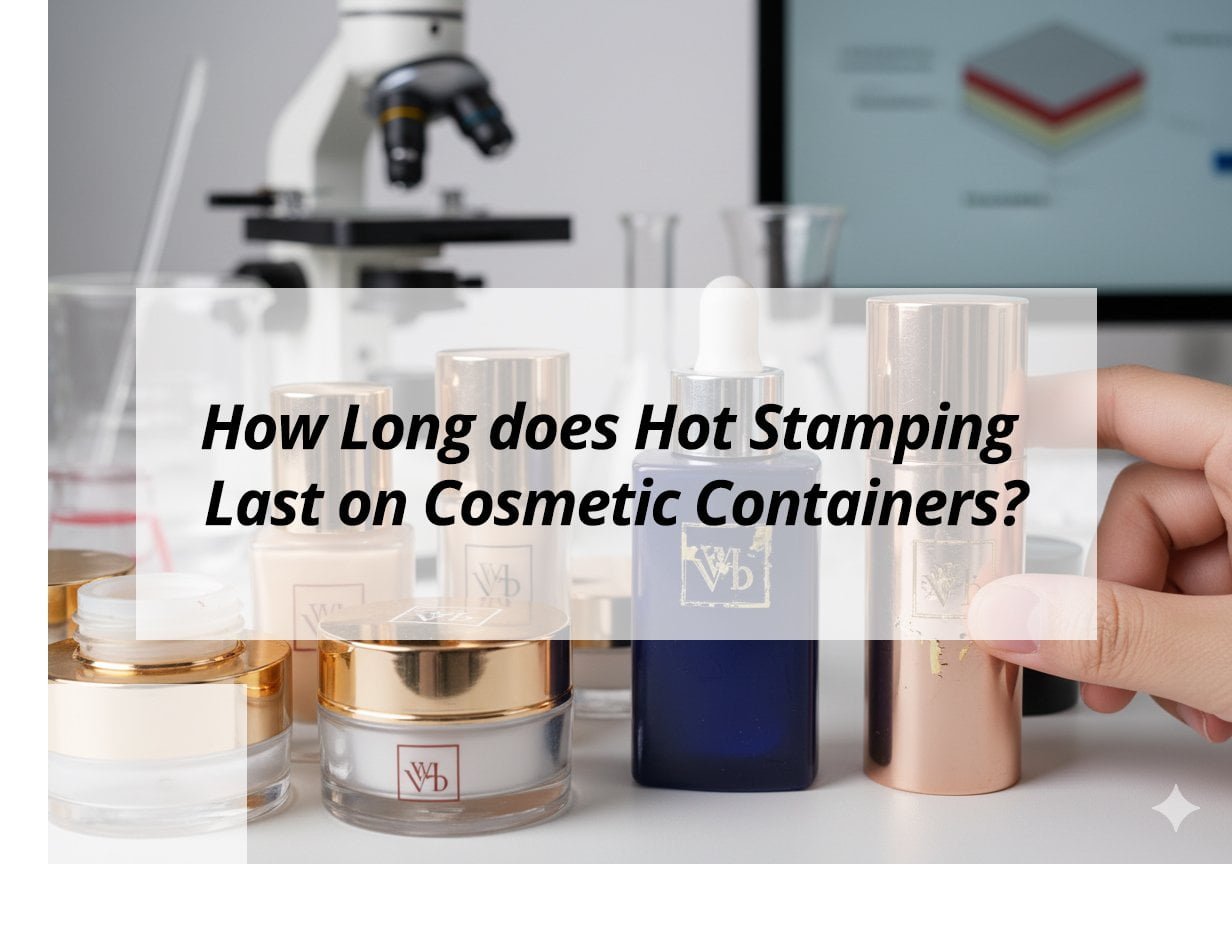
Cosmetic containers need to look appealing over time. Hot stamping offers an elegant finish, but how long does it really last?
Hot stamping on cosmetic containers lasts long when properly applied. The durability depends on factors like material quality, application technique, and environmental conditions. Typically, it maintains its appearance for several years, making it a reliable choice for branding that stays vibrant and intact.
Understanding the longevity of hot stamping helps you make informed decisions about branding and packaging. Keeping the aesthetic intact over time ensures consistent brand image and consumer confidence.
What are the disadvantages of hot stamping?
Hot stamping is popular for luxury brands. But it has drawbacks worth considering.
The disadvantages of hot stamping include higher costs1 and limited design flexibility2 compared to other methods. It's not ideal for complex designs or high-volume productions due to the required setup time and the risk of damage through mishandling. This can lead to increased production time3 and costs.
While hot stamping provides unmatched elegance, it's essential to weigh its limitations against benefits. Opting for it means appreciating its premium finish while strategically managing potential downsides.
Evaluating Hot Stamping Challenges
- Cost: More expensive due to special equipment.
- Design Constraints: Limited to simpler artwork.
- Production Time: Prolonged setup in intricate designs.
Selecting hot stamping requires careful consideration of its constraints alongside its stunning effects in luxury branding. Understanding these factors aids in making informed choices.
What is the difference between hot stamping and heat transfer?
Both techniques create eye-catching visuals. Yet they serve different needs.
Hot stamping involves pressing a pre-fabricated die into the substrate using heat and pressure, creating permanent metallic or pigment markings. Heat transfer uses printed images, which are applied to a surface with heat and pressure. While hot stamping is durable, heat transfer allows greater design complexity.
Knowing these distinctions helps determine the right method for specific branding goals. Balancing aesthetics and practicality benefits different branding strategies.
Comparison of Hot Stamping and Heat Transfer
| Feature | Hot Stamping | Heat Transfer |
|---|---|---|
| Durability | High | Moderate |
| Design Flexibility | Low | High |
| Visual Appeal | Luxury shine | Versatile |
Choosing between these techniques depends on desired outcomes. Hot stamping is best for durability, while heat transfer excels in design versatility.
Can you hot stamp plastic?
Hot stamping suits various materials. But is plastic one of them?
Yes, plastic can be hot stamped. It's a versatile technique widely used on plastic, creating high-quality, durable imprints. The process involves careful control of temperature and pressure to ensure the foil adheres properly. This makes it an excellent choice for decorative finishes on plastic packaging.
Using hot stamping on plastic opens opportunities for luxury visual effects, enhancing product appeal. It's crucial to manage process variables for optimal outcomes.
Applying Hot Stamping on Plastic
- Material Selection: Best with certain thermoplastics.
- Temperature Control: Avoids warping or melting.
- Adhesion Assurance: Ensures lasting finish.
Successfully stamping plastic requires precise management. It delivers great effects but needs attention to detail and technical proficiency.
What is the difference between UV and hot stamping?
These techniques add value and appeal. But how do they differ?
UV printing applies layers of curable ink with light-sensitive polymers, allowing rapid curing and high versatility. Hot stamping uses heat-pressed foil for a premium effect. UV offers greater flexibility in textures, while hot stamping excels in adding luxurious metallic finishes.
Understanding the differences aids decision-making for branding projects. Each method brings unique benefits tailored to diverse project needs.
Differentiating UV and Hot Stamping
- Curing Process: UV is fast, using light.
- Finish Output: Hot stamping adds metallic elegance.
- Design Flexibility: UV allows for diverse textures.
These differences dictate the approach based on project goals. UV is speedy and versatile, while hot stamping provides premium finishes.
My insights: How Long Does Hot Stamping Last on Cosmetic Containers
Concerned about how long the dazzling decorations on your cosmetic containers4 will last? Discover the durability of hot stamping and preserve your brand’s brilliance.
Hot stamping on cosmetic containers typically endures throughout the product’s lifetime, maintaining its shine and resistance to fading, even with regular handling. Longevity depends on material type, usage conditions, and storage practices, often treated as a 'permanent' decoration method.
Evaluating the Longevity of Hot Stamping on Cosmetic Containers
Typical Lifespan:
Hot stamping usually lasts as long as the cosmetic product's lifecycle under normal conditions. It remains intact from production to end-use, outlasting the container's shelf life. Its permanence is due to strong adhesion that withstands daily handling.
Reasons for Durability:
Heat and pressure in the hot stamping process ensure strong bonding, while protective lacquers enhance resistance to abrasion, chemicals, and UV exposure. Quality foils contribute to superior durability, preserving the container's aesthetic appeal over time.
Potential Conditions for Faster Wear:
Aggressive handling, exposure to solvents, or extreme temperatures can degrade hot stamping prematurely. Proper application processes involving consistent temperature and pressure are crucial to avoid issues like scratching or fading.
| Factors Affecting Longevity | Description |
|---|---|
| Material and Foil Quality | Higher-quality foils and proper bonding ensure long-lasting appearance. |
| Usage and Storage Conditions | Normal handling minimizes wear; direct sunlight and chemicals accelerate degradation. |
| Application Process | Accurate heat and pressure are vital for optimal bonding strength. |
For standard cosmetic containers, hot stamping provides a durable decoration method that lasts the course of product use. Brands can achieve lasting elegance by considering the environment and application practices when designing their packaging.
Conclusion
Hot stamping on cosmetic containers ensures lasting beauty and durability. Despite some drawbacks, it remains an elegant, reliable choice for branded finishes.
-
Understanding the cost factors can help you budget effectively for hot stamping projects. ↩
-
Exploring design limitations can guide your choice of printing methods for complex projects. ↩
-
Learn about production timelines to better plan your project schedules. ↩
-
Discover the longevity of hot stamping on cosmetic products to maintain brand aesthetics. ↩