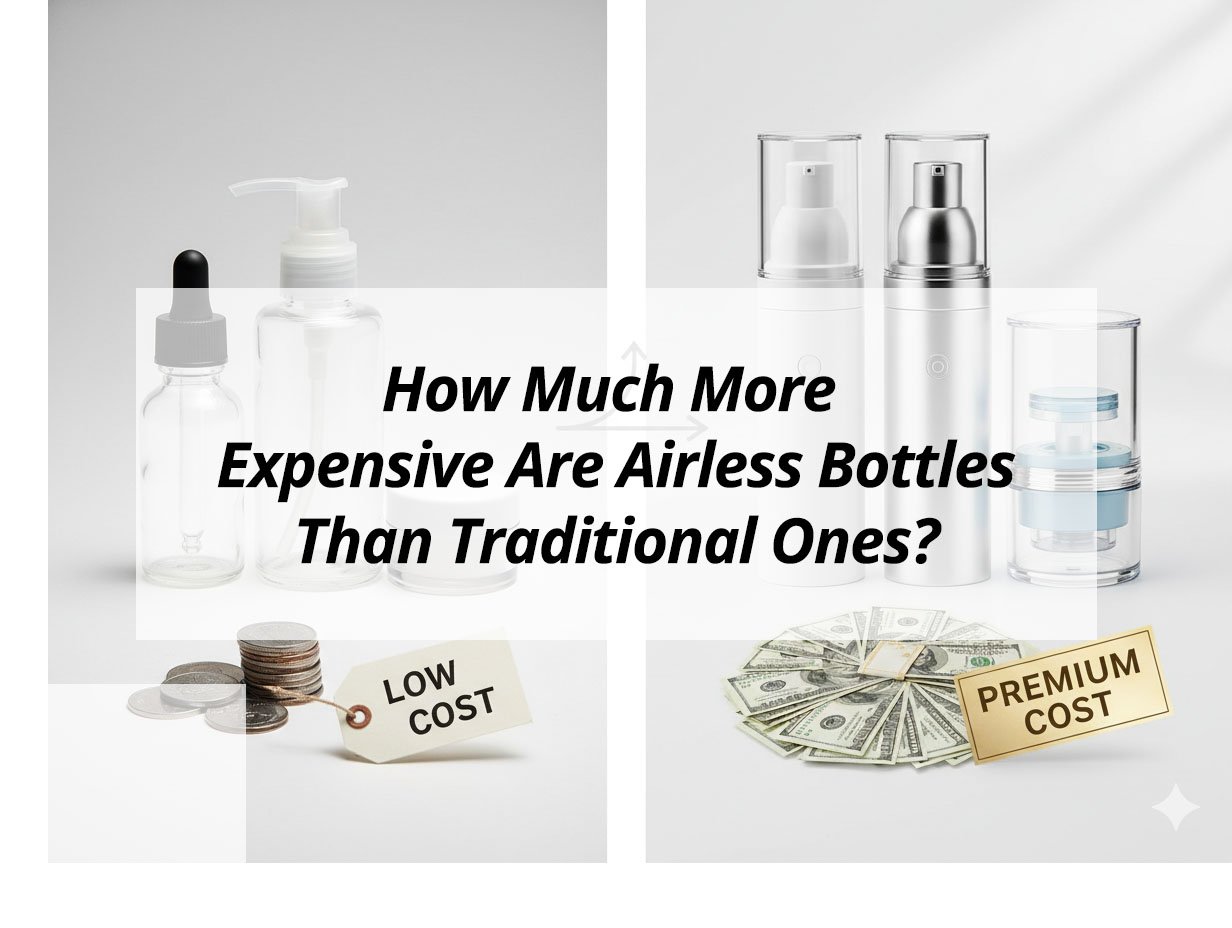
Many brands seek the best packaging for their cosmetic products. They often face a choice between standard and airless bottles. Understanding the cost difference and value of each is key for smart decisions.
Airless bottles generally have a higher unit cost compared to traditional bottles. This is due to their advanced design, superior product protection, and specialized manufacturing processes. However, their benefits, such as extended shelf life and reduced product waste, often justify the increased investment.
This article will explore the factors contributing to the cost of airless bottles. It will also compare them with traditional options. This will help clarify their value in the cosmetic packaging market.
Are Airless Pump Bottles Good?
Are airless pump bottles a good investment for cosmetic products? This question often arises when brands consider packaging options. They want to know if the benefits outweigh the costs.
Yes, airless pump bottles are highly effective for many cosmetic and skincare formulations. They provide superior protection by preventing air exposure and contamination. This design helps maintain product integrity and extends shelf life. For sensitive or high-value formulations, airless technology offers significant advantages.
Airless bottles create a vacuum seal. This means the product inside never touches outside air. This prevents oxidation of active ingredients. It also stops bacteria from entering the bottle through the pump. Many ingredients, like Vitamin C or retinoids, lose potency when exposed to air. Airless packaging protects these ingredients. This keeps the product effective for the consumer. This makes them a strong choice for premium products.
Benefits of Airless Technology
Airless packaging offers several critical benefits for cosmetic products. These benefits contribute to product quality and consumer satisfaction.
- Product Protection: The sealed system keeps air, light, and contaminants away from the formula. This is crucial for preserving sensitive ingredients.
- Extended Shelf Life: By preventing oxidation, airless bottles help products last longer. This reduces the need for harsh preservatives.
- Reduced Product Waste: The piston mechanism pushes nearly all product out of the bottle. This means consumers use almost every drop.
- Hygienic Dispensing: No dip tube means no exposure to fingers or external elements. This keeps the product sanitary.
Airless vs. Traditional Pumps: A Comparison
| Feature | Airless Pump Bottle | Traditional Pump Bottle |
|---|---|---|
| Air Exposure | None | Yes, air enters bottle |
| Product Contamination | Minimal risk | Higher risk (from air/fingers) |
| Formula Stability | High (preserves active ingredients) | Moderate (ingredients can degrade) |
| Product Evacuation Rate | Up to 99% | Leaves product in bottle |
| Preservative Requirements | Can potentially use fewer | May require more preservatives |
| Manufacturing Complexity | High | Low |
This comparison shows why airless bottles are often preferred for certain products. They offer an advanced level of protection. This translates into better product performance and greater consumer trust.
What is the Difference Between an Airless Pump and a Regular Pump?
What sets an airless pump apart from a regular pump? This is a key question for anyone evaluating cosmetic packaging. The distinction impacts product quality and user experience.
The main difference lies in their dispensing mechanisms. A regular pump uses a dip tube that pulls product from the bottle's base. Air enters the bottle to replace the dispensed product. An airless pump, however, operates without a dip tube. It employs a piston or diaphragm to push the product upwards. This creates a vacuum, preventing any air from entering the container.
This fundamental difference means the product in an airless system remains isolated from the external environment. When you press a regular pump, you might hear a small hiss as air is drawn into the bottle. This air mixes with the product. In an airless system, only the product comes out. No air goes in. This maintains the integrity of the formulation. It protects sensitive ingredients from degradation caused by oxygen.
How Each Pump System Functions
-
Regular Pump Mechanism:
- A dip tube extends from the pump head to the bottom of the bottle.
- Pressing the pump draws product up the dip tube.
- A vent allows air into the bottle to equalize pressure. This air then touches the remaining product.
-
Airless Pump Mechanism:
- There is no dip tube. Instead, a piston or a collapsible bag is at the base of the bottle.
- Pressing the pump moves the piston upwards or collapses the bag. This directly pushes the product out.
- A sealed system ensures no air enters the bottle. A vacuum is maintained as product is dispensed.
Impact on Product Formulations
The choice of pump directly affects the product inside.
- For Oxygen-Sensitive Ingredients: Airless pumps are vital. Ingredients like Vitamin C, retinol, and certain natural extracts degrade rapidly with oxygen exposure. Airless systems protect these.
- For Viscous Products: Airless pumps often handle thicker creams and gels better than dip tubes. Dip tubes can struggle with high-viscosity formulas.
- Preservative Reduction: Because airless systems reduce bacterial contamination, some formulations can use fewer preservatives. This is a benefit for "clean beauty" brands.
The advanced engineering of airless pumps provides a significant upgrade in product preservation. This makes them a preferred choice for many high-performance cosmetic items.
What is an Airless Bottle?
When discussing cosmetic packaging, what exactly defines an "airless bottle"? Understanding its structure and function is crucial for appreciating its benefits.
An airless bottle is a specialized container designed to dispense product without drawing in outside air. It uses a non-pressurized, vacuum-dispensing system. This system includes a mechanical pump and a movable piston or a collapsible bag. This design keeps the product pristine, protecting it from oxidation and contamination.
Unlike standard pump bottles that rely on a dip tube and air entry, an airless bottle maintains a consistent vacuum. As the pump is activated, the piston at the bottom of the bottle slowly rises. This pushes the product directly to the actuator. This method ensures that the product remains sealed from the moment it is filled until the last drop is dispensed. This makes it ideal for formulas that are sensitive to environmental factors.
Core Components of an Airless System
Each part of an airless bottle plays a role in its unique function.
- Outer Container: This provides structural integrity and aesthetic appeal. It can be made from various materials like PP, Acrylic, or PET.
- Inner Piston/Bag: This is the heart of the airless system. It moves upward (piston) or collapses (bag) to push the product out. It creates the airless seal.
- Pump Mechanism: This is the dispensing unit. It includes the actuator (where the product comes out) and the internal components that create the vacuum effect.
- Vacuum Seal: This crucial feature prevents any air from entering the product chamber. It protects the formula from degradation.
Common Materials Used for Airless Bottles
The materials chosen for airless bottles impact their cost, durability, and appearance.
- Polypropylene (PP): A common, durable, and cost-effective plastic. It offers good chemical resistance.
- Polyethylene (PE): Another widely used plastic. It is flexible and has good barrier properties.
- Acrylic: Used for the outer layer to give a high-end, glass-like appearance. It is heavier and more costly than PP or PE.
- PETG: Offers good clarity and chemical resistance. It is often used for transparent airless containers.
The construction of an airless bottle is more complex than a standard bottle. It requires precision engineering. This ensures the vacuum system works perfectly. This complexity is a factor in their higher cost.
Why are airless bottles more expensive?
Why do airless bottles typically cost more than traditional packaging options? This price difference is a key consideration for brands. Understanding the reasons behind it helps in making informed decisions.
Airless bottles are more expensive primarily due to their intricate design, advanced manufacturing requirements, and the specialized materials involved. Their multi-component structure and precision engineering contribute significantly to a higher unit cost compared to simpler, single-component traditional bottles. These factors reflect the enhanced value and performance they deliver.
The complexity starts with the number of parts. A simple traditional bottle might have just two parts: the bottle and the cap/pump. An airless bottle, however, often has multiple layers. It includes an outer bottle, an inner container, a piston, and a precise pump mechanism. Each of these parts needs careful manufacturing and assembly. This adds to the production time and labor costs.
Factors Contributing to Higher Costs
Several specific elements drive up the price of airless packaging.
-
Complex Design and Engineering:
- Airless systems require precise molds and tight tolerances. This ensures the piston or bag moves smoothly and creates a perfect vacuum seal.
- Developing these designs involves more research and development.
- The multi-component structure means more parts to produce and assemble.
-
Material Costs:
- Airless bottles often use high-quality plastics like PP or PETG. These materials must be consistent to ensure proper function.
- Some designs include acrylic for a premium look, which is more expensive than basic plastics.
- The pump mechanism itself contains multiple small, precision-engineered plastic or metal parts.
-
Manufacturing and Assembly Process:
- Injection Molding: Many airless components are made through injection molding. This is a precise but slower process than blow molding used for simpler bottles.
- Clean Room Production: Some sensitive products require airless bottles to be assembled in a clean room environment. This adds to overhead costs.
- Quality Control: Stringent quality checks are needed to ensure the vacuum seal and pump function correctly. Any failure can lead to product waste.
-
Tooling and Molds:
- The initial investment in molds for airless packaging is higher. This is because of the complexity and precision required for the interlocking parts.
- Customized airless designs mean even higher tooling costs.
Cost vs. Value: A Strategic View
While the upfront cost is higher, airless bottles offer significant long-term value.
- Reduced Returns: Product degradation leads to customer dissatisfaction and returns. Airless packaging minimizes this risk.
- Brand Reputation: Using advanced packaging enhances a brand's image. It shows a commitment to product quality.
- Competitive Edge: For certain product categories, airless packaging is a market expectation. It can differentiate a brand.
- Formula Longevity: Protecting expensive active ingredients means the product delivers on its promises. This builds customer loyalty.
The additional expense of airless bottles is an investment in product integrity and brand value. For brands focusing on high-quality, sensitive, or premium formulations, the benefits often outweigh the increased cost.
My Insights: Understanding the Cost Differences Between Airless and Traditional Bottles
Considering airless bottles for your products? Discover why they cost more and if their benefits justify the investment.
Airless bottles typically cost 15-30% more than traditional ones due to specialized components and technology. Despite higher production costs, their benefits in product protection and premium appearance can justify the price difference.
Analyzing the Price Gap in Packaging Options
Factors Influencing Costs
| Aspect | Details |
|---|---|
| Specialized Components | Complex mechanisms in airless systems increase manufacturing costs |
| Material and Customization | All-plastic options are cheaper; finishes add $0.05-$0.20 per unit |
| Order Volume | Bulk purchasing reduces per-unit costs |
Benefits of Airless Bottles
Airless bottles offer enhanced product preservation by minimizing contamination and waste, aligning with consumer preferences for premium packaging. As demand rises, production costs may decrease over time.
The Investment Decision
For brands targeting high-end markets, the initial investment in airless bottles is offset by the appeal and functionality they provide. Assessing specific needs against costs helps in deciding if airless packaging is a worthwhile choice.
Understanding these cost factors allows brands to make informed packaging decisions, potentially enhancing product value and customer experience.
Conclusion
Airless bottles are generally more expensive than traditional options. This is due to their complex design, multi-component structure, and advanced manufacturing. However, they offer superior product protection, extended shelf life, and enhanced hygiene. These benefits often justify the higher investment for brands committed to product integrity and quality.