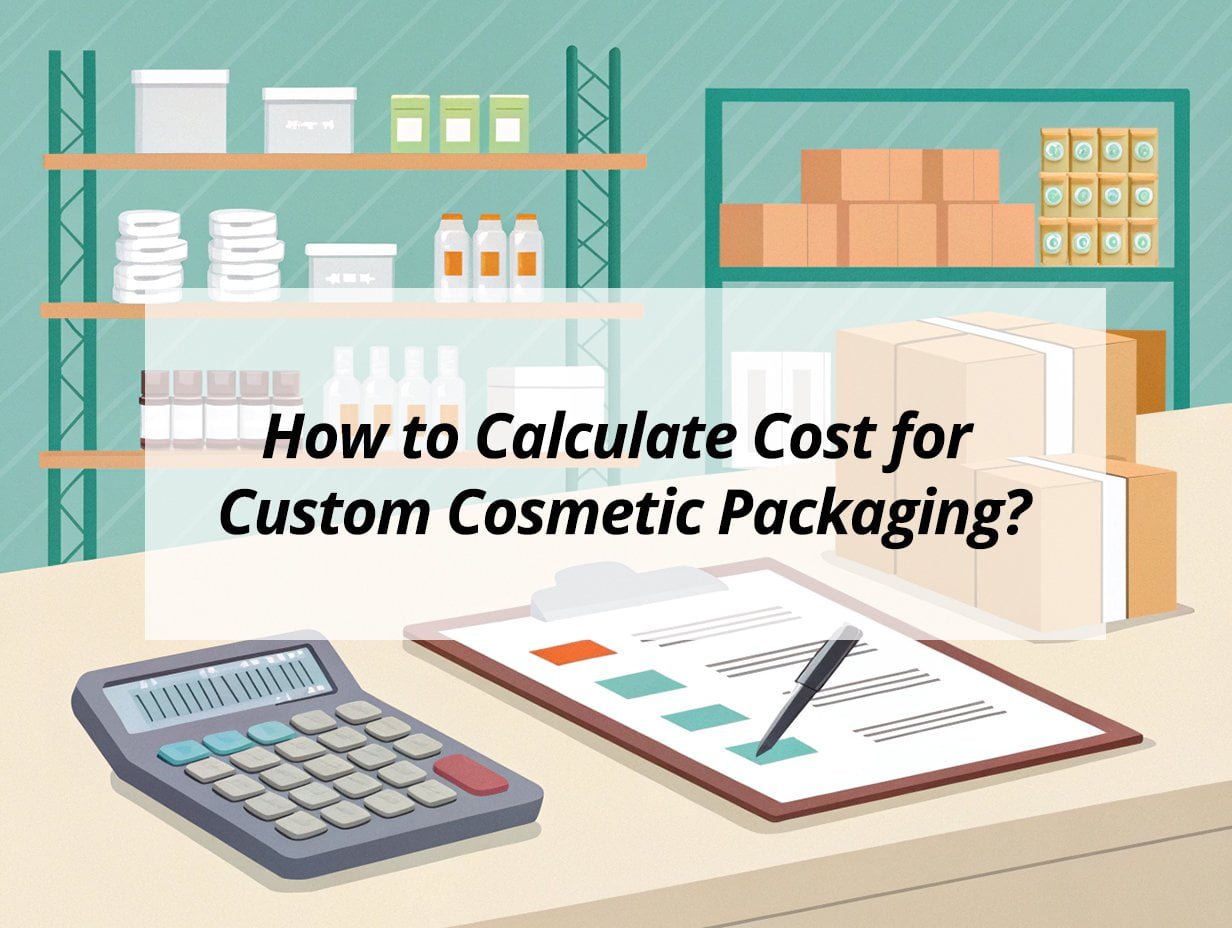
Understanding the true costs of custom cosmetic packaging is essential for maintaining profitability while meeting customer demands.
Accurately determining custom packaging costs requires a thorough assessment of materials, design expenses, production methods, logistical considerations, and order volumes. Employing a systematic approach aids in creating precise budgets and enhances effective resource management, ultimately supporting profitability and aligning with customer expectations.
It’s crucial to delve into these elements to make informed financial decisions.
How much does cosmetic packaging cost?
Unraveling the full spectrum of cosmetic packaging costs1 can be complex.
Cosmetic packaging costs hinge on material selection2, design intricacies, production scale, and logistics operations. Using a packaging cost calculator can streamline this process for better clarity.
Cost Factors
Creating a clear understanding starts with exploring primary cost drivers. Here's a breakdown:
Material Selection
The choice of materials significantly influences costs. Options include PET, PP, and glass, each offering distinct benefits. PET is popular for its clarity and recyclability, while glass imparts a premium feel.
| Material Type | Unit Cost | Benefits |
|---|---|---|
| PET | $0.20 | Clear, recyclable |
| PP | $0.15 | Durable, heat resistant |
| Glass | $0.50 | Premium look, sustainable |
Consider any specialized materials or finishes that align with brand values, such as eco-friendly or recycled components.
Design and Development
Design efforts include prototyping, mold creation, and aesthetic customization, which are pivotal in shaping product appeal but add to costs. Tooling and artwork setup are upfront investments to consider.
| Design Aspect | Cost Estimate |
|---|---|
| Tooling/Molds | $1000 |
| Prototyping | $500 |
| Artwork Setup | $300 |
Identify the design's level of complexity and how it affects overall expenses.
Order Quantities and Production
Balancing order quantities3 with production capabilities can optimize costs. Larger orders typically lower the per-unit cost due to economies of scale.
| Order Quantity | Setup Charge | Per-Unit Cost |
|---|---|---|
| 1000 units | $500 | $2.50 |
| 5000 units | $1000 | $1.75 |
Analyzing MOQ requirements helps in strategic planning.
How to estimate packaging cost?
Effective cost estimation is key to maintaining competitive advantage.
To estimate packaging costs, consider every component, including materials, tooling, customization, logistics, and order quantities, using a systematic calculation method for accuracy.
The Estimation Process
Customization and Decoration
Customization elevates the brand but usually incurs extra costs. Elements such as foil stamping, embossing, and eco-friendly options can enhance packaging's appeal.
Logistics, Storage, and Compliance
Logistics are integral, affecting costs significantly. Evaluate transportation, freight charges, storage fees, and regulatory compliance costs.
| Logistics Component | Cost Impact |
|---|---|
| Freight | $0.20/unit |
| Storage | $0.05/unit |
Managing logistics efficiently ensures cost-effectiveness and timely delivery.
Practical Formula and Budgeting
Starting with a robust formula for per-unit cost calculation4 is crucial. To achieve this, incorporate every expense, from materials to logistics, and then divide by the total number of units:
Per-Unit Cost= Total Units/(Total Materials+Total Finishes+Tooling+Prototyping+Labeling+Freight)
This method provides a comprehensive view of costs, facilitating effective budgeting and financial planning.
Creating a budgeting worksheet enables easy tracking of expenses and adjustments.
How much should I charge for a packaging design?
Pricing design services demands a strategic approach, blending creativity with financial acumen.
Set packaging design charges based on complexity, time investment, and market standards. Align with client expectations to ensure competitive and fair pricing.
Design Pricing
Complexity and Client Needs
Assess the complexity of the design project. Evaluate the time, resources, and expertise needed. Understanding client needs and expectations is imperative for setting appropriate rates.
Market Trends and Innovation
Remain informed about market trends and adopt innovations in packaging design. Strategic pricing includes reflections of emerging trends that could offer premium pricing opportunities.
How much should you charge for packaging?
Establishing a fair charge for packaging requires an understanding of multiple business aspects.
Charge is determined by material use, production scale, and added features. Detailed packaging cost per unit ensures pricing transparency and facilitates client negotiation.
Final Pricing Strategy
Bulk Discounts and Sustainable Options
Offering bulk discounts can incentivize larger orders. Integrate sustainable materials where possible, balancing environmental responsibility with cost.
Transparent Pricing Models and Tiered Pricing
Use transparent models to communicate cost drivers effectively. A tiered pricing model based on order quantities helps delineate how scale influences cost.
| Quantity Range | Per-Unit Cost |
|---|---|
| 1-1000 | $2.00 |
| 1001-5000 | $1.50 |
This clarity can improve trust and facilitate smoother client relationships.
My Insights: Navigating Cost Calculations for Custom Cosmetic Packaging
Struggling with budgeting for custom cosmetic packaging? Here's how to untangle the complexities.
To calculate costs, consider materials, design, production, and logistics. Break down each component to determine a comprehensive per-unit cost.
Understanding Cost Components
Material and Design
Start by selecting packaging materials (glass, plastic) and designs (jars, tubes). Each choice impacts cost—glass offers luxury, plastic offers economy. Consider material sustainability influences and design prototyping fees.
Production and Customization
Factor in production costs, including labor and equipment usage. Customization, such as printing or embossing, also adds to expenses. Different decoration methods and color layers affect pricing.
| Cost Component | Details | Influence on Cost |
|---|---|---|
| Materials | Type, sustainability choices | Recycled or premium materials increase cost |
| Design | Prototyping, tooling, artwork | Custom molds and complex designs are pricier |
| Production | Labor, machine time, setup | Higher for smaller production batches |
Logistics and Overheads
Logistics involve shipping, customs, and warehousing. Anticipate international tariffs and currency fluctuations. Include overheads—administration and profit margins are critical for holistic cost understanding.
By structuring costs into clear categories, you can better forecast and manage expenses, ensuring packaging aligns with brand values while staying within budget.
Conclusion
Comprehensive analysis of cost drivers in custom cosmetic packaging leads to informed budget decisions and competitive pricing strategies.
-
Understanding the factors influencing cosmetic packaging costs can help you make informed decisions for your business. ↩
-
Exploring how different materials affect costs can guide you in choosing the best options for your products. ↩
-
Understanding the relationship between order quantities and costs can optimize your purchasing strategy. ↩
-
Mastering the per-unit cost calculation formula can streamline your budgeting and financial planning. ↩