
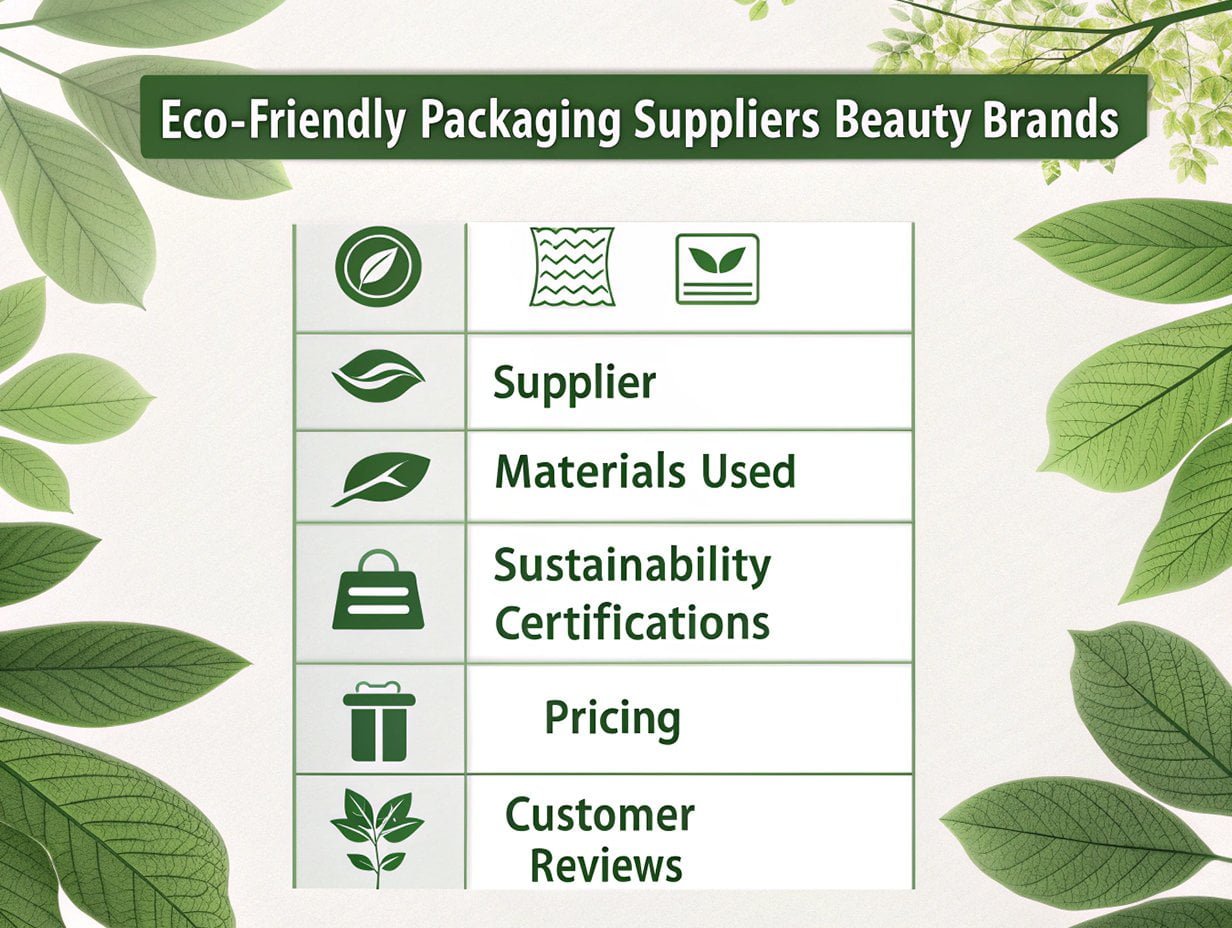
Identifying eco-friendly packaging suppliers for beauty brands can be challenging. Ensuring sustainability while maintaining performance and cost efficiency is crucial.
To effectively compare suppliers, establish criteria focused on sustainability credentials, material options, cost efficiency, and supply-chain reliability. Look for third-party certifications like FSC or cradle-to-cradle. Perform thorough due diligence by reviewing environmental policies and evaluating the supplier's track record in reducing waste and carbon footprint.
Align your criteria with material costs, regulatory compliance, and potential discounts to keep the process streamlined.
What is the best eco-friendly packaging for cosmetics?
Choosing the right packaging enhances brand reputation. Sustainable options are essential.
The best eco-friendly packaging for cosmetics incorporates recycled materials1, bioplastics, and refillable designs. These solutions reduce waste and bolster sustainable branding.
Explore materials like recycled PET, glass, and bioplastics, considering their environmental impact and visual appeal. Here's a detailed comparison:
| Material | Environmental Impact | Aesthetic Quality | Cost |
|---|---|---|---|
| Recycled PET | Low | Moderate | Moderate |
| Glass | Low | High | High |
| Bioplastics | Moderate | Moderate | High |
Tailor your selection to your brand's specific requirements and consumer expectations.
What are the 7 R's of sustainable packaging?
The 7 R's guide brands in creating eco-friendly packaging2 and supporting sustainability.
The 7 R's—Rethink, Refuse, Reduce, Reuse, Repair, Recycle, Rot—provide a sustainable framework for reducing waste and promoting a circular economy.
Implementing the 7 R's
- Rethink: Innovate in packaging design to meet eco-friendly standards.
- Refuse: Avoid unnecessary materials that increase waste.
- Reduce: Focus on minimizing resource use.
- Reuse: Promote designs that encourage consumer reuse.
- Repair: Extend product life by enabling repairs.
- Recycle: Utilize materials that are easy to recycle.
- Rot: Consider compostable options to enhance sustainability.
Applying these principles ensures brands meet sustainability goals while maintaining packaging efficiency.
What is the most environmentally friendly packaging?
Choosing eco-friendly packaging enhances brand trust and minimizes environmental impacts.
The most environmentally friendly options utilize renewable resources3, support recycling initiatives, and integrate into a circular economy4. Implementing recycled packaging effectively reduces landfill contribution.
Assessing Eco-friendliness
- Energy Efficiency: Prioritize suppliers using renewable energy.
- Carbon Footprint: Select suppliers with strategies to minimize emissions.
- Waste Reduction: Opt for designs that limit waste generation.
Key Considerations:
| Criteria | Description |
|---|---|
| Energy Source | Renewable and efficient solutions |
| Emissions | Low emission practices |
| Waste Management | Emphasis on reducing environmental impact |
Selecting packaging that meets these standards supports sustainable business growth.
How to know if packaging is eco-friendly?
Evaluating eco-friendliness requires analyzing materials and production processes in detail.
Packaging is eco-friendly if it involves renewable materials, adheres to credible certifications, and reduces lifecycle impacts. Biotechnology advancements can significantly support waste reduction efforts.
Evaluating Eco-friendly Packaging
- Material Composition: Ensure use of sustainable elements.
- Certifications: Look for recognized certifications like FSC.
- Lifecycle Analysis: Review impacts from production to disposal.
Eco-friendly Evaluation:
| Aspect | Key Factors |
|---|---|
| Material | Use of sustainable, renewable sources |
| Certification | Endorsement by trusted environmental organizations |
| Lifecycle | Comprehensive impact from start to end |
Conducting thorough evaluations ensures responsible packaging decisions that align with eco-friendly values.
My Insights: Integrating Diverse Frameworks for Eco-Friendly Success
In today’s sustainability-driven market, selecting the right packaging supplier can greatly influence your brand’s success.
Incorporating insights from a variety of frameworks allows for a comprehensive assessment of sustainability, cost, and supplier reliability. Utilizing biotechnology in skincare packaging can greatly minimize landfill waste. Aligning supplier choices with your brand’s eco-friendly image ensures sustained success and enhances market position.
Enhancing Supplier Selection
Selecting an eco-friendly supplier involves scrutinizing several critical factors:
Sustainability
- Biotechnology Use: Investigate innovative solutions for reducing environmental impact.
Cost and Reliability
- Cost Efficiency: Evaluate pricing structures to align with budgetary goals.
- Supply Chain Stability: Assess the reliability and adaptability of suppliers.
| Metric | Consideration |
|---|---|
| Sustainability | Adoption of renewable materials and technologies |
| Cost | Budget-friendly pricing strategies |
| Reliability | Proven reliability and flexibility |
A comprehensive evaluation of these elements will ensure a supplier choice that supports both sustainability and business goals.
Conclusion
Selecting the right eco-friendly packaging supplier involves assessing sustainability, cost, and reliability. By following structured criteria and evaluating potential materials, brands can make informed and responsible choices.
-
Learn about the innovative ways recycled materials are transforming the cosmetic packaging industry. ↩
-
Discover how eco-friendly packaging can enhance your brand's reputation and attract environmentally conscious consumers. ↩
-
Discover the significance of renewable resources in creating sustainable packaging solutions. ↩
-
Learn how adopting a circular economy approach can enhance sustainability in packaging practices. ↩