
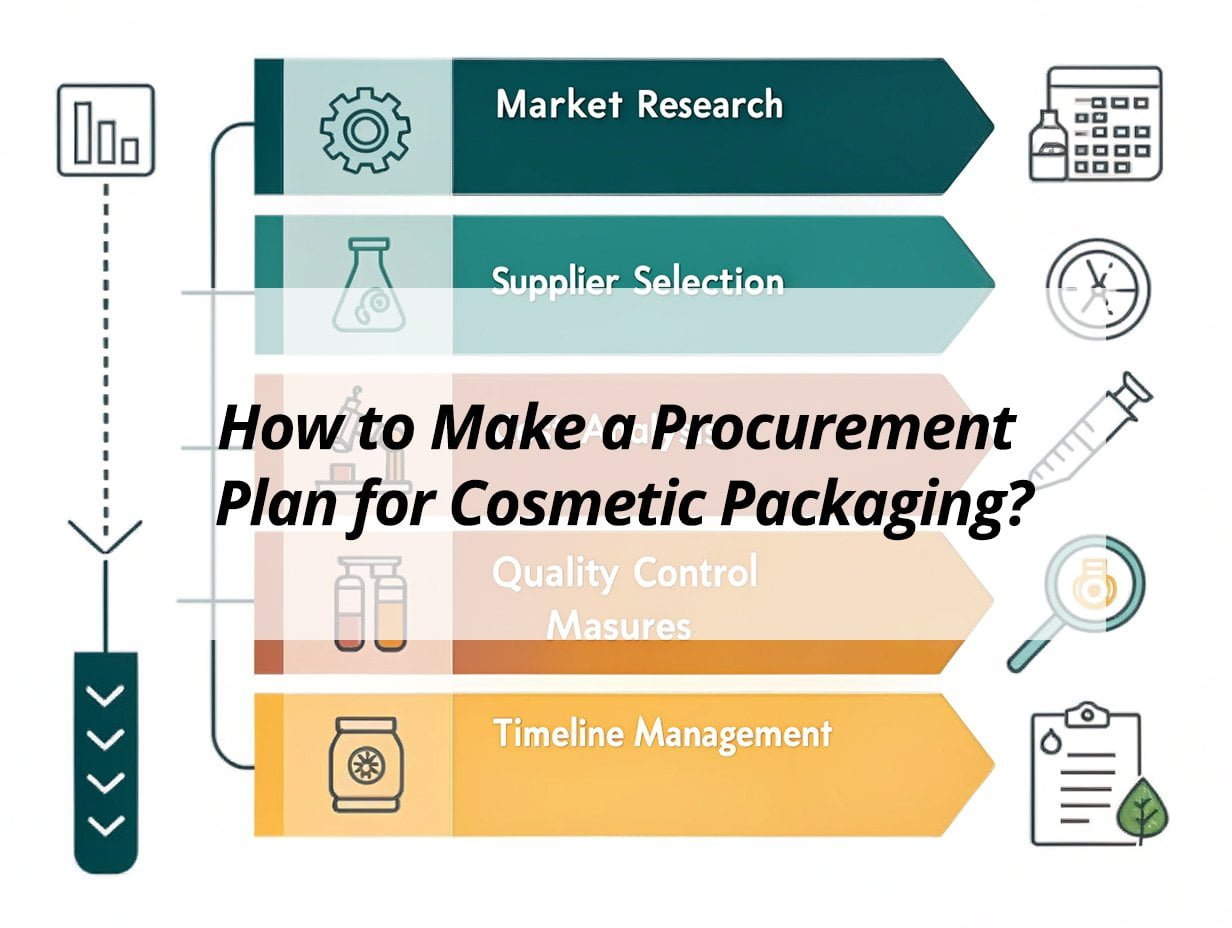
Feeling overwhelmed by the complexities of procurement planning for cosmetic packaging? You're not alone. Many businesses struggle to navigate this intricate process effectively.
Creating a strategic procurement plan for cosmetic packaging ensures efficient logistics, cost-effectiveness, and timely delivery. By understanding key elements like demand, supply, and cost factors, you can align your plan with business goals for maximum impact.
Navigating the procurement maze requires focus and precision. Let's break down the essentials for your business success.
How do you write a procurement plan?
A procurement plan1 serves as a strategic road map for acquiring goods and services, and its importance cannot be overstated.
Drafting a procurement plan involves outlining objectives, identifying needed resources, researching suppliers, and defining timelines. This structured approach helps ensure you meet business goals and streamline the procurement process effectively, minimizing risks and maximizing efficiency.
To dive deeper, consider:
Key Elements
-
Objectives: Define clear goals for what you need and why. This clarity guides decision-making.
-
Stakeholders: Identify everyone involved in the procurement process. This includes internal teams, managers, and potential partners.
-
Budget: Establish a clear budget to guide purchasing decisions, ensuring you have financial control over procurement activities.
-
Timeline: Set realistic deadlines for each stage. This keeps the process on track and avoids delays.
-
Risk Management: Anticipate potential challenges and devise contingency plans.
| Element | Details |
|---|---|
| Objectives | Define needs and goals |
| Stakeholders | Roles of involved parties |
| Budget | Set financial parameters |
| Timeline | Establish deadlines |
| Risk Mgt. | Identify and mitigate risks |
This structure ensures your plan addresses all critical elements, aligning resources and timelines effectively.
What are the 5 P's of procurement?
Understanding the core principles of procurement helps in creating a more effective plan, making it essential for strategic sourcing.
The 5 P's of procurement2—Product, Price, Place, Promotion, and People—provide a framework for strategic sourcing and operations. Focusing on these dimensions ensures comprehensive planning and successful execution by addressing critical areas that influence procurement outcomes.
Dive deeper with these insights:
Detailed Breakdown
-
Product: Identify exact specifications and quality standards. It's crucial to align product needs with production requirements.
-
Price: Balance cost efficiency with value, ensuring competitive pricing without compromising on quality.
-
Place: Plan logistics for delivery and storage, optimizing the supply chain for efficiency and reliability.
-
Promotion: Implement marketing tactics that increase supplier engagement and drive better terms.
-
People: Allocate roles and responsibilities within your team, ensuring expertise and accountability throughout the process.
By addressing these elements, you create a robust strategy that maximizes resource use and aligns with company goals.
What is the packaging procurement process?
Navigating the packaging procurement process requires careful coordination and an understanding of industry dynamics.
The packaging procurement process involves identifying needs, selecting suppliers, negotiating terms, and managing delivery. This cycle ensures continuous supply flow and helps maintain production schedules, preventing costly interruptions and ensuring products reach the market as planned.
Let's delve into specific stages:
Step-by-Step Overview
-
Needs Assessment: Define packaging requirements based on product lines. This stage involves understanding volume, materials, and design specifications.
-
Supplier Selection: Evaluate potential suppliers for reliability and quality. Consider factors like reputation, capacity, and compliance with standards.
-
Negotiation: Secure terms that balance cost with value. Effective negotiation can lead to better pricing and terms that enhance profitability.
-
Delivery Management: Coordinate logistics to meet production timelines. This includes overseeing transportation and handling customs if necessary.
By focusing on these stages, businesses maintain seamless operations and minimize disruptions, ensuring a smooth production flow.
What are the 7 steps to create a procurement management plan?
Creating a procurement management plan requires strategic foresight and detailed planning to align procurement activities with business objectives.
Developing a procurement management plan involves seven steps: conducting a needs assessment, defining specifications, analyzing the market, developing a procurement strategy, soliciting bids, negotiating contracts, and managing supplier relationships. Each step is vital in ensuring a smooth acquisition process.
Here's how each step contributes:
Comprehensive Breakdown
-
Needs Assessment: Outline requirements accurately. This step involves clear documentation of specifications and quantities needed.
-
Specification Definition: Detail technical and quality standards to ensure suppliers understand expectations and requirements.
-
Market Analysis: Understand market dynamics and supplier landscapes to make informed decisions and identify opportunities for cost savings.
-
Strategy Development: Craft sourcing tactics and decide between single or multiple suppliers, local versus international sourcing, etc.
-
Bid Solicitation: Issue requests and evaluate submissions based on established criteria. This step ensures you receive the best proposals for your needs.
-
Contract Negotiation: Finalize terms that safeguard interests, focusing on price, delivery schedules, and quality assurance measures.
-
Supplier Management: Foster robust relationships for ongoing success, emphasizing communication, performance reviews, and partnership development.
Each step plays a crucial role in forming a holistic plan that supports business objectives, providing a structured path to procurement success.
My insights: Integration of Sustainability and Efficiency in Procurement
Facing the dual challenges of sustainability and cost-efficiency in procurement? It’s a balancing act that’s crucial for modern businesses.
An effective cosmetic packaging procurement plan combines sustainability goals with reliable supplier management and cost discipline. By integrating clear requirements and risk mitigation, you align your strategy with both environmental responsibility and business needs.
Combining Insights
- Sustainability Goals: Define eco-friendly requirements and work with green suppliers.
- Supplier Reliability: Assess capabilities and ensure they meet quality and compliance standards.
- Cost Management: Set budget constraints while exploring cost-efficient solutions.
- Risk Mitigation: Implement strategies to handle supply chain disruptions.
- Ongoing Monitoring: Adjust the plan based on market trends and consumer feedback.
This approach ensures your procurement efforts are both responsible and effective, helping your business thrive.
Conclusion
Mastering procurement planning involves clear objectives, understanding core principles, and strategic execution. By focusing on these areas, businesses can optimize their packaging procurement process for success, ensuring that they meet both operational needs and strategic goals.