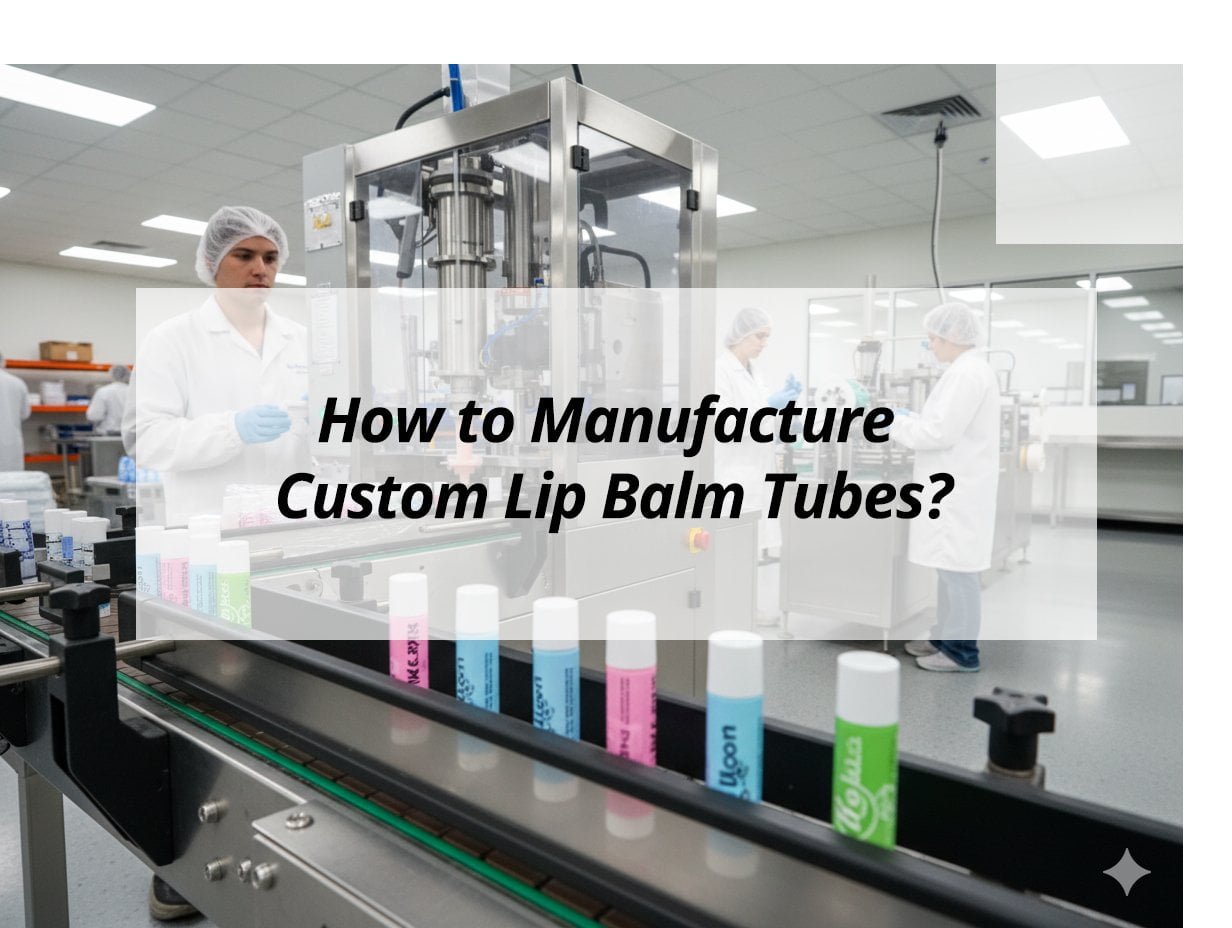
Manufacturing custom lip balm tubes can seem like a complex task. Many considerations are involved in creating suitable packaging. Understanding these details is crucial for success.
Manufacturing custom lip balm tubes requires careful attention to design and material selection. It also requires adherence to quality standards. A systematic approach ensures the creation of functional and appealing packaging solutions.
The demand for personalized packaging is growing. Many brands seek unique ways to present their products. This guide breaks down the essential aspects of custom lip balm tube manufacturing. This helps in achieving specific brand visions.
Do you need a license to sell homemade lip balm?
A common question for new cosmetic entrepreneurs is about licensing. Is a specific license required to sell lip balm made at home? Clarifying this is an important first step.
To sell homemade lip balm, compliance with various regulations is necessary. These often include obtaining a business license. Specific requirements vary based on geographic location. Adhering to local, state, and national cosmetic laws is mandatory for product safety and legal operation.
Selling any cosmetic product, even a simple item like lip balm, involves regulatory compliance. This ensures consumer protection. Businesses must often register their operations. They must also follow established manufacturing guidelines. These guidelines are known as Good Manufacturing Practices (GMP). GMP ensures consistent product quality and hygiene. This helps prevent contamination and ensures product integrity. Consulting local health departments and business licensing offices is important. They provide exact requirements for specific areas. This also includes labeling mandates. Labels must accurately list all ingredients and net quantities. This provides transparency to consumers.
What are the typical legal steps for selling cosmetics?
- Business Entity Registration: Register the business structure and name with the relevant government authorities.
- Operational Permits: Secure any required business licenses or permits specific to cosmetic manufacturing or sales.
- Regulatory Compliance: Ensure all products and processes meet the standards set by cosmetic regulatory bodies.
- Product Liability Insurance: Obtaining insurance is advisable to protect against potential claims related to product use.
Key regulatory considerations for cosmetic products
| Area | Requirement | Importance |
|---|---|---|
| Good Manufacturing Practices (GMP) | Maintain hygienic facilities and consistent production procedures. | Ensures product quality, safety, and uniformity. |
| Ingredient Disclosure | List all components using accepted nomenclature in decreasing order of weight. | Informs consumers and aids in allergen identification. |
| Net Content Statement | Clearly state the precise amount of product within the container. | Prevents misrepresentation and builds consumer trust. |
| Warning Statements | Include any necessary warnings regarding product usage or potential hazards. | Protects consumers from misuse and adverse reactions. |
What is the best material for lip balm tubes?
Selecting the optimal material for lip balm tubes is a critical decision. The chosen material affects product protection, user experience, and overall brand perception. Many material options exist in the market.
The most suitable material for lip balm tubes often depends on desired characteristics and budget. Polypropylene (PP) and High-Density Polyethylene (HDPE) are frequently used. They provide a balance of durability, chemical compatibility, and cost-effectiveness.
Material science plays a significant role in packaging design. PP is recognized for its semi-rigid nature. It also has good resistance to chemicals. This makes it suitable for various lip balm formulations. HDPE is known for its high impact resistance. It also has an effective moisture barrier. Both materials safeguard the lip balm from external elements. This includes air and moisture. This helps in maintaining product freshness. The availability of post-consumer recycled (PCR) content in PP and HDPE also supports sustainability goals. This helps brands appeal to environmentally conscious consumers. The tactile feel and visual appearance of the chosen material also contribute to the user experience. This reinforces brand identity. Ultimately, the selection balances protective qualities, aesthetic appeal, and economic considerations.
Why are PP and HDPE leading choices for lip balm tubes?
- Chemical Compatibility: Both materials exhibit excellent resistance to common lip balm ingredients. This prevents material degradation.
- Robustness: They offer good resistance to physical impacts and cracking. This ensures product safety during handling.
- Economic Viability: PP and HDPE are cost-efficient for large-scale manufacturing. This makes them attractive for brands.
- Forming Capability: These plastics are easily molded into diverse tube designs and dimensions.
- Barrier Properties: They effectively block moisture and oxygen. This helps extend the lip balm's shelf life.
Material properties comparison for lip balm tubes
| Material | Key Features | Advantages for Lip Balm | Disadvantages |
|---|---|---|---|
| Polypropylene (PP) | Semi-rigid, high chemical resistance, good heat tolerance. | Durable, effective barrier, suitable for integrated cap designs. | Can exhibit lower transparency compared to other plastics. |
| HDPE (High-Density Polyethylene) | High impact resistance, opaque, excellent moisture barrier, flexible. | Superior product protection, cost-efficient, widely recyclable. | Its opaque nature limits product visibility. |
| PET (Polyethylene Terephthalate) | Clear, strong, good barrier to gases, aesthetically pleasing. | Allows product visibility, offers a premium appearance. | Generally higher cost, less flexible than PP or HDPE. |
| Aluminum | Excellent barrier properties, premium feel, high recyclability when collected. | Provides luxury appeal, full light and air protection. | Higher unit cost, susceptible to denting, may require internal lining. |
Do I need FDA approval to sell lip gloss?
The regulatory landscape for cosmetics can be complex. A common inquiry among new brands concerns government approval for products like lip gloss. Understanding the specific requirements is essential.
No, explicit FDA approval is not required to sell lip gloss in the United States. The FDA does not pre-approve cosmetic products or their ingredients. However, manufacturers are responsible for ensuring product safety. They must also ensure proper labeling and compliance with all FDA cosmetic regulations.
The FDA's regulatory framework for cosmetics differs from that for pharmaceuticals. Pharmaceuticals undergo pre-market approval. Cosmetics do not. Despite this, manufacturers bear full responsibility for the safety and lawful labeling of their products. This includes accurately listing all ingredients. It also includes avoiding unsupported claims. For example, a cosmetic cannot claim to treat or prevent disease. Such a claim would classify it as a drug. Reviewing official FDA guidance documents for cosmetics is advisable. This ensures adherence to all legal obligations. Non-compliance can lead to product recalls or penalties. This impacts brand reputation and market access. Therefore, while "approval" is not sought, strict regulatory adherence is mandatory.
Key FDA regulations for cosmetic products
- Manufacturer Responsibility: Companies are legally accountable for ensuring their cosmetic products are safe for their intended use.
- Accurate Labeling: Labels must be truthful and not misleading. All claims made must be substantiated.
- Prohibition of Adulteration/Misbranding: Cosmetics must not contain harmful substances or be deceptively labeled.
- Color Additive Compliance: All color additives used in cosmetics must be approved by the FDA for the specific cosmetic use.
- Voluntary Registration: Manufacturers can voluntarily register their facilities and product formulations with the FDA, though it is not mandatory.
Understanding FDA's role in cosmetics oversight
| Aspect | FDA's Position | Impact on Manufacturers |
|---|---|---|
| Pre-market Review | No mandatory pre-market review or approval for cosmetic products. | Manufacturers must self-regulate for product safety. |
| Ingredient Safety Evaluation | Does not generally test or approve individual cosmetic ingredients. | Companies are responsible for verifying ingredient safety. |
| Labeling Standards | Establishes strict guidelines for ingredient disclosure and warning statements. | Requires meticulous label design and content verification. |
| Adverse Event Monitoring | Operates a voluntary reporting system for adverse reactions to cosmetics. | Encourages continuous monitoring of product safety post-market. |
How to make custom lip balm?
Creating custom lip balm involves a detailed sequence of steps. It moves from ingredient selection to final packaging. The aim is to develop a distinct and high-quality product.
To make custom lip balm, first formulate a unique recipe with specific ingredients and desired attributes. Then, design bespoke packaging, including the lip balm tubes, to align with brand identity. Finally, implement precise manufacturing processes for mixing, filling, and final assembly.
The process of crafting custom lip balm begins with conceptualizing the product. This involves defining its unique selling points. Considerations include specific natural ingredients, unique flavor profiles, or functional benefits. Following formulation, packaging design becomes paramount. Custom lip balm tubes offer extensive customization options. This includes color, shape, and decorative finishes. The chosen design should resonate with the brand's aesthetic. It should also enhance user experience. Next, the manufacturing phase involves careful ingredient melting and blending. Precision is key during the filling process. This ensures consistent product volume and appearance in each tube. The filled tubes then require proper cooling and sealing. Each stage requires meticulous attention to detail. This results in a professional and high-quality finished product.
Steps for creating custom lip balm
-
Formulate the Lip Balm Product:
- Ingredient Selection: Choose base oils (e.g., castor, sunflower), waxes (e.g., carnauba, candelilla), butters (e.g., mango, shea), and active ingredients (e.g., SPF, vitamins).
- Ratio Optimization: Determine precise ingredient proportions to achieve desired texture, firmness, and melting point.
- Pilot Batch Testing: Produce small samples to evaluate consistency, aroma, effectiveness, and stability.
-
Design Bespoke Packaging:
- Tube Material Choice: Select materials like PP, HDPE, or others based on required durability, appearance, and cost.
- Color and Finish Specification: Choose colors that complement the brand palette. Select finishes like matte, glossy, or metallic.
- Artwork and Branding Integration: Develop logos, text, and graphics for printing or labeling. Consider techniques like silk screen or hot stamping.
- Size and Form Factor: Determine the optimal dimensions and shape for the lip balm tube.
-
Manufacturing and Filling Process:
- Equipment Sanitization: Ensure all mixing vessels, filling nozzles, and work areas are thoroughly cleaned and sterilized.
- Ingredient Preparation: Carefully melt solid ingredients. Precisely measure and combine all components.
- Tube Filling: Dispense the melted lip balm into the custom tubes using appropriate filling machinery for accuracy and consistency.
- Cooling and Setting: Allow the filled tubes to cool undisturbed. This lets the lip balm solidify evenly within the packaging.
- Final Assembly: Attach caps, apply labels, and perform any secondary packaging tasks.
-
Quality Assurance and Control:
- Visual Inspection: Conduct checks for physical defects in the tubes or inconsistent filling.
- Weight Verification: Confirm that each filled tube contains the specified net weight of product.
- Leakage Testing: Perform tests to ensure the assembled tubes are sealed correctly and do not leak.
Key considerations for custom lip balm manufacturing
- Production Volume: Plan the scale of manufacturing. This impacts equipment and resource allocation.
- Specialized Equipment: Assess needs for melting tanks, high-shear mixers, and automated filling systems.
- Supplier Relationships: Establish reliable sourcing for high-quality, cosmetic-grade raw materials and packaging components.
- Stability Testing: Conduct comprehensive testing on the final product. This confirms shelf life and integrity under various conditions.
- Cost Analysis: Evaluate all expenses related to ingredients, labor, and packaging. This determines a sustainable pricing strategy.
My Insights: How to Manufacture Custom Lip Balm Tubes?
Looking to create unique lip balm tubes? Discover the manufacturing process that combines design precision and practical functionality.
To manufacture custom lip balm tubes, determine size and shape, select durable materials like polypropylene, and use injection molding for precise creation. Incorporate branding and ensure quality control while collaborating with suppliers for efficient production and testing durability before distribution.
Steps in Manufacturing Custom Lip Balm Tubes
Design and Materials
Choose your tube style, capacity, and material. Polypropylene is popular for its durability and ease of molding. Ensure your specifications align with desired functionality and aesthetics.
Manufacturing Process
Utilize injection molding for twist-up mechanisms. The process includes raw material prep, extrusion, injection molding, decoration, and assembly. Collaborate with suppliers for specialized tooling and low MOQs.
| Aspect | Explanation |
|---|---|
| Design Specification | Define size, shape, materials, and decoration |
| Injection Molding | Precision in tube creation and twist mechanism |
| Branding Implementation | Customize appearance with color, print, and logos |
| Quality Control | Test for durability, leak resistance, and accuracy |
Production and Compliance
Ensure good manufacturing practices and meet cosmetic regulations for labeling and product claims. Choose between in-house filling or outsourcing to streamline efficiency. Tailor your approach to the scale desired, whether hobby or full factory production.
Conclusion
Manufacturing custom lip balm tubes requires careful consideration of regulations, material selection like PP or HDPE, and compliance with FDA guidelines. The process involves detailed formulation, precise packaging design, and meticulous manufacturing. This ensures a safe, effective, and uniquely branded product.