
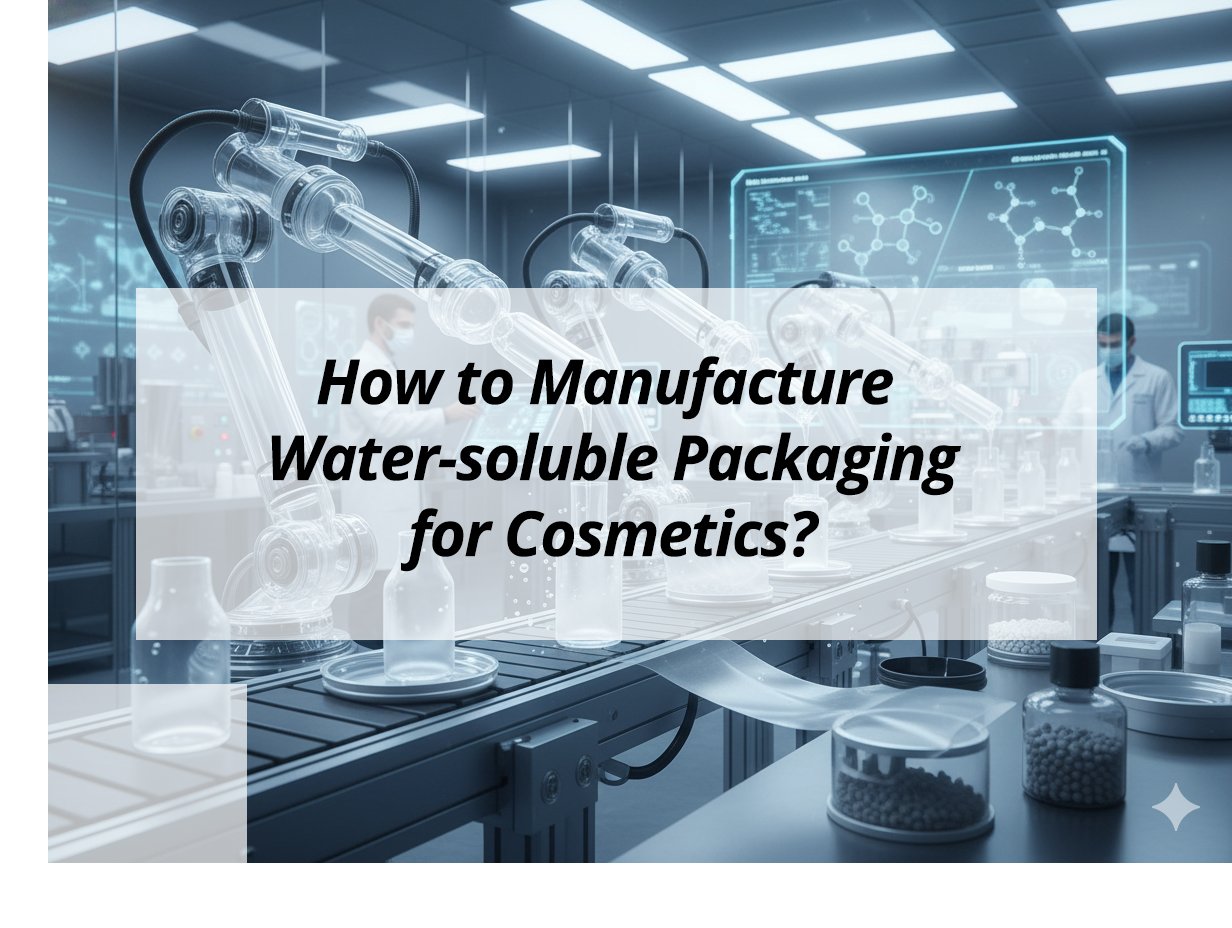
Cosmetic brands face challenges with plastic waste. This issue affects environmental health and brand perception. Water-soluble packaging offers a solution. It protects products and then dissolves, reducing pollution.
Manufacturing water-soluble packaging requires specific materials like Polyvinyl Alcohol (PVA) film. The process involves stages such as polymerization, film extrusion, and final product formation. This ensures the packaging effectively protects cosmetics and dissolves safely after use, balancing product integrity with environmental goals.
The packaging industry continuously introduces new materials. Water-soluble packaging represents a significant advancement. It enables brands to adopt greener practices. It also provides consumers with an easy way to minimize waste. Understanding its manufacturing process is therefore crucial for wider adoption.
What Is Water-soluble Packaging Made Of?
Brands seek packaging that minimizes environmental impact. This involves using specialized materials. Water-soluble packaging uses polymers that degrade upon contact with water. These polymers are safe for both products and the environment.
Water-soluble packaging is produced from polymers that dissolve in water. Polyvinyl Alcohol (PVA) is the most common material. PVA is a synthetic polymer. It is non-toxic. It is also inherently biodegradable. Other materials, such as starch-based polymers, can also be used. These materials must provide adequate protection for the cosmetic product inside. They must also dissolve completely when exposed to water.
New materials are constantly being evaluated for quality and function. PVA demonstrates a balance of both attributes. It secures products during transit. It also offers an environmentally friendly disposal method. This makes it a suitable choice for cosmetic applications. The demand for such solutions is steadily increasing.
Understanding Polyvinyl Alcohol (PVA)
PVA is a primary component. It possesses distinct characteristics.
- Solubility: PVA dissolves in water. The rate of dissolution depends on water temperature.
- Film-forming Capability: It can form thin, durable films. These films are ideal for packaging applications.
- Biodegradability: After dissolving, microorganisms naturally break down PVA. This contributes to its eco-friendly profile.
Other Materials Used
Additional polymers are sometimes incorporated with PVA. This modifies material properties.
- Starch-based Polymers: These are derived from natural sources. They can enhance biodegradability.
- Cellulose Derivatives: These originate from plant fibers. They can improve film strength.
- Plasticizers: These agents increase film flexibility. They prevent brittleness and cracking.
Key Characteristics of Soluble Packaging Materials
These materials must meet specific requirements for cosmetic use.
- Barrier Properties: They must shield cosmetics from external elements like air and moisture. This maintains product efficacy.
- Mechanical Strength: The packaging must be robust enough. It needs to withstand handling and transportation stresses.
- Safety Profile: Materials must be non-toxic. They should not react with the cosmetic formulation.
Common Soluble Materials for Cosmetic Packaging
Here are some materials and their typical applications:
| Material Type | Key Properties | Cosmetic Applications |
|---|---|---|
| Polyvinyl Alcohol (PVA) | Water-soluble, biodegradable, excellent film former | Single-dose capsules, sachets |
| Starch-based Polymers | Biodegradable, compostable, derived from renewable sources | Loose powder refills, solid bars |
| Cellulose Films | Biodegradable, plant-derived, often transparent | Small wraps, product inserts |
| Pullulan | Edible, water-soluble, strong oxygen barrier | Oral care strips, solid perfumes |
When eco-friendly options are considered, PVA is frequently a recommended material. It is a well-established material known for its quality. It supports sustainability objectives. It can also be customized with branding elements, benefiting brand visibility.
How Is PVA Film Manufactured?
The production of PVA film is a precise procedure. It ensures the film's structural integrity. It also guarantees proper dissolution. This process involves multiple distinct stages.
PVA film manufacturing begins with the polymerization of vinyl acetate monomers. This reaction yields polyvinyl acetate. Subsequently, this polymer undergoes hydrolysis. This chemical conversion transforms it into PVA. The resulting PVA resin is then dissolved to form a solution. This solution is either cast or extruded into a thin film. After drying, the film is wound onto large rolls. Quality control measures are applied at every stage. This ensures the film meets all specifications for strength and solubility.
Manufacturing facilities prioritize careful execution. Each step is critical, from raw material handling to the final film product. This meticulous attention ensures a high-quality outcome. Such precision guarantees that the film performs as expected, providing reliable packaging.
Step 1: Polymerization
This constitutes the initial chemical synthesis stage.
- Vinyl Acetate Monomers: These are the fundamental chemical units.
- Reaction Process: They are linked together. This forms the polymer polyvinyl acetate.
- Process Control: Temperature and pressure are precisely regulated. This ensures consistent product quality.
Step 2: Hydrolysis
This converts polyvinyl acetate into PVA.
- Chemical Transformation: Acetate groups are removed. This generates hydroxyl groups.
- Degree of Hydrolysis: This parameter influences PVA's final characteristics. It impacts solubility and physical strength.
- PVA Resin Formation: The outcome is PVA in a granular or powdered resin form.
Step 3: Solution Preparation
The PVA resin is prepared for the film-making process.
- Dissolving Process: The PVA resin is dissolved in water. This creates a viscous liquid solution.
- Additive Blending: Plasticizers and other agents are added. These enhance specific film properties.
- Filtration: The solution is filtered. This removes any particulate impurities.
Step 4: Film Forming
This stage is where the film acquires its physical form.
- Extrusion Method: The solution is forced through a narrow die. This creates a continuous sheet.
- Casting Method: The solution is spread thinly onto a moving surface. This forms a uniform film.
- Thickness Precision: The film's thickness is meticulously controlled. This ensures product consistency.
Step 5: Drying and Finishing
The film is dried and prepared for subsequent steps.
- Drying Equipment: The film passes through heated chambers. Water evaporates from the material.
- Roll Winding: The dried film is wound onto large master rolls.
- Slitting Operation: The large rolls are cut into narrower widths. These dimensions suit specific packaging machinery.
Key Factors in PVA Film Manufacturing
Here are critical aspects of production:
| Manufacturing Step | Critical Control Parameters | Impact on Final Product |
|---|---|---|
| Polymerization | Monomer purity, reaction temperature | Consistency of PVA polymer characteristics |
| Hydrolysis | Extent of hydrolysis, catalyst concentration | Water solubility profile, mechanical strength |
| Solution Preparation | Additive dispersion, solution viscosity | Film flexibility, optical clarity |
| Film Forming (Extrusion/Casting) | Die gap, roller speed, temperature | Film thickness uniformity, surface finish |
| Drying | Temperature gradients, airflow rate | Residual moisture content, film stability |
The manufacturing process of PVA film requires stringent quality control. This ensures that the film consistently meets performance expectations. It guarantees the integrity of the packaging for end-use applications.
What Is the Most Eco-friendly Packaging for Cosmetics?
Beauty brands prioritize environmental responsibility. This means selecting packaging that minimizes ecological harm. The most eco-friendly options reduce waste and conserve resources.
The most environmentally friendly packaging for cosmetics aims to lessen ecological impact. This typically includes materials that are recyclable, compostable, or water-soluble. Refillable packaging systems also represent a highly sustainable approach. The objective is to decrease virgin plastic consumption. It also seeks to lower carbon emissions. Brands select packaging that supports environmental health. They look for solutions that are reusable or readily degradable.
Discussions often focus on identifying the most beneficial eco-friendly choices. Providing packaging that aligns with these goals is a core function. This focus on sustainability is profoundly influencing future product development strategies within the industry.
Principles of Eco-Friendly Packaging
Several core concepts guide sustainable packaging design.
- Reduce: Minimize the quantity of material used. Design lighter and more compact packaging.
- Reuse: Create packaging suitable for multiple uses. Implement refill programs for products.
- Recycle: Utilize materials that are easily recyclable. Promote consumer participation in recycling efforts.
- Renewable: Employ materials derived from replenishable sources, such as plant-based resources.
Top Eco-Friendly Packaging Options
These options are leading sustainability efforts in cosmetics.
- Water-soluble Packaging: Dissolves completely, leaving no microplastic residue. Ideal for single-use cosmetic applications.
- Refillable Packaging: Consumers purchase a durable outer container. They then replace only the inner product component. This significantly reduces waste.
- Post-Consumer Recycled (PCR) Plastics: Manufactured from previously recycled plastic waste. This reduces the demand for new plastic production.
- Glass and Aluminum: Highly recyclable materials. They can undergo numerous recycling cycles without degradation in quality.
Factors Beyond Material
Environmental friendliness encompasses more than just the material choice.
- Supply Chain Efficiency: Sourcing materials locally reduces transportation-related emissions.
- Manufacturing Processes: Employ energy-efficient production methods. Minimize water consumption in factories.
- Consumer Engagement: Packaging design should facilitate correct disposal. Clear labeling guides consumers.
Eco-Friendly Packaging Comparison for Cosmetics
Here is a comparison of various eco-friendly packaging options:
| Packaging Type | Environmental Benefits | Considerations for Implementation |
|---|---|---|
| Water-soluble | Zero residue, fully biodegradable | Sensitivity to moisture, production costs |
| Refillable | Substantial waste reduction, promotes circularity | Initial design investment, consumer adoption rates |
| Post-Consumer Recycled (PCR) Plastics | Diverts waste from landfills, supports recycling infrastructure | Availability of material, potential aesthetic limitations |
| Glass | Infinitely recyclable, offers premium aesthetic | Weight, fragility during transport |
| Aluminum | Highly recyclable, lightweight, excellent barrier properties | Susceptibility to denting, compatibility with certain formulations |
| Compostable | Biodegradable, returns nutrients to soil | Requires specific composting conditions, barrier performance |
When eco-friendly packaging is requested, all these aspects are carefully considered. Combining superior quality with a sustainable solution is a primary objective. For example, a brand producing skincare might find soluble pods or refillable jars very attractive. This demonstrates a progressive approach to product presentation.
How to Create Makeup Packaging?
Creating makeup packaging is a combination of design and engineering. It serves to protect the product. It also enhances the product's visual appeal. The packaging must be both functional and aesthetically pleasing.
Creating makeup packaging involves several critical stages. First, a thorough understanding of the product and its target consumer is essential. Next, design concepts are developed, integrating aesthetics, brand identity, and practical functionality. Material selection is paramount, focusing on product protection and sustainability. Prototyping and rigorous testing confirm design viability. Finally, manufacturing the packaging uses processes such as injection molding or blowing.
The development of packaging for various brands requires careful execution. It begins with an initial concept. This then transitions into a tangible product. The entire process demands close attention to detail. It also relies on effective communication. Support is provided through every stage, ensuring the final packaging meets all requirements.
Step 1: Understand the Product and Brand
This foundational step guides the entire design process.
- Product Category: Is it a lipstick, foundation, or eyeshadow? This dictates specific packaging needs.
- Brand Identity: What is the brand's style? Is it luxury, natural, or minimalist? The packaging must align with this image.
- Target Demographic: Who is the intended consumer? Their age, preferences, and lifestyle significantly influence design choices.
Step 2: Design Concept and Aesthetics
This stage focuses on creative visualization and appearance.
- Shape and Form: What will the package's physical structure be? Sleek, innovative, traditional?
- Color and Finish: Which colors represent the brand effectively? Matte, glossy, metallic, or soft-touch?
- Customization Options: Can a logo be incorporated? What special printing techniques or embellishments are possible?
Step 3: Material Selection
Choosing the appropriate material is a critical decision.
- Protection Function: The material must safeguard the makeup from light, air, and physical damage.
- Durability Requirements: It needs to withstand regular use and handling.
- Sustainability Profile: Consider options like recyclable, PCR, or water-soluble materials.
Step 4: Prototyping and Testing
Prior to large-scale production, validation through testing is essential.
- 3D Mock-ups: Create physical representations of the design. This aids in visualizing the final product.
- Functionality Assessments: Verify that the product fits correctly. Test opening, closing, and dispensing mechanisms.
- Compatibility Checks: Ensure the packaging material does not interact negatively with the cosmetic formulation.
Step 5: Manufacturing Process
This stage is dedicated to the actual production of the packaging components.
- Injection Molding: Utilized for producing plastic parts such as lipstick tubes or compact cases.
- Blow Molding: Employed for forming bottles, including lotion bottles or vacuum dispensers.
- Assembly Operations: Various components are joined together to form the complete package.
- Decoration Techniques: Processes like printing, hot stamping, or labeling are applied for branding and aesthetics.
Key Considerations for Cosmetic Packaging Creation
Here are important factors in designing and producing packaging:
| Aspect | Key Decisions | Impact on Final Product |
|---|---|---|
| Material Choice | Type of plastic, glass, metal, soluble, PCR | Protection, sustainability, tactile feel |
| Design Aesthetic | Shape, color palette, branding elements | Shelf presence, brand recognition |
| Functionality and Ergonomics | Ease of use, dispensing method, portability | User experience, product preservation |
| Cost Efficiency | Material expense, manufacturing complexity | Market competitiveness, profit margins |
| Regulatory Compliance | Safety standards, labeling requirements | Market acceptance, legal adherence |
Collaboration with clients on makeup packaging aims to balance all these elements. For example, a client requiring lipstick tubes needs a design that is both practical and stylish. Options for custom logos and diverse finishes are provided. This ensures both superior quality and a strong brand presence.
My Insights: How to Manufacture Water-soluble Packaging for Cosmetics
Struggling with plastic waste in cosmetic packaging? Discover how water-soluble solutions could revolutionize sustainability in the beauty industry.
Manufacturing water-soluble packaging involves using polyvinyl alcohol (PVA) as the primary material. Techniques like film extrusion or solution casting create films that dissolve in water, providing an eco-friendly alternative for cosmetics, keeping the product intact while ensuring easy storage and use.
The Process and Challenges of Creating Soluble Packaging
Material Selection and Film Creation
PVA films, chosen for water solubility and biodegradability, are produced via solution casting or extrusion. The process requires careful adjustments in film thickness and properties to maintain strength and desired dissolution rates.
Formulation Considerations
Cosmetic formulations must have low water content (≤5%) to avoid damaging the PVA film. Ensuring compatibility with cosmetic ingredients is essential for preserving product integrity.
Packaging and Testing
Using form-fill-seal machines, PVA films are shaped into pods or sachets, filled, and then sealed. Testing for dissolution, stability, and regulatory compliance ensures performance under consumer conditions.
| Process Step | Key Considerations |
|---|---|
| Film Production | Choose film details for solubility and strength |
| Formulation Design | Create low-water content to protect film integrity |
| Conversion to Packs | Use precise machines to ensure seal integrity |
| Testing | Conduct dissolution, stability, and compliance testing |
Manufacturers must manage technical and formulation challenges to successfully produce effective, eco-friendly water-soluble packaging for the cosmetics industry.
Conclusion
Manufacturing water-soluble packaging is a detailed but beneficial endeavor. It relies on specific materials and precise production. This method helps create environmentally responsible options for cosmetic products.