
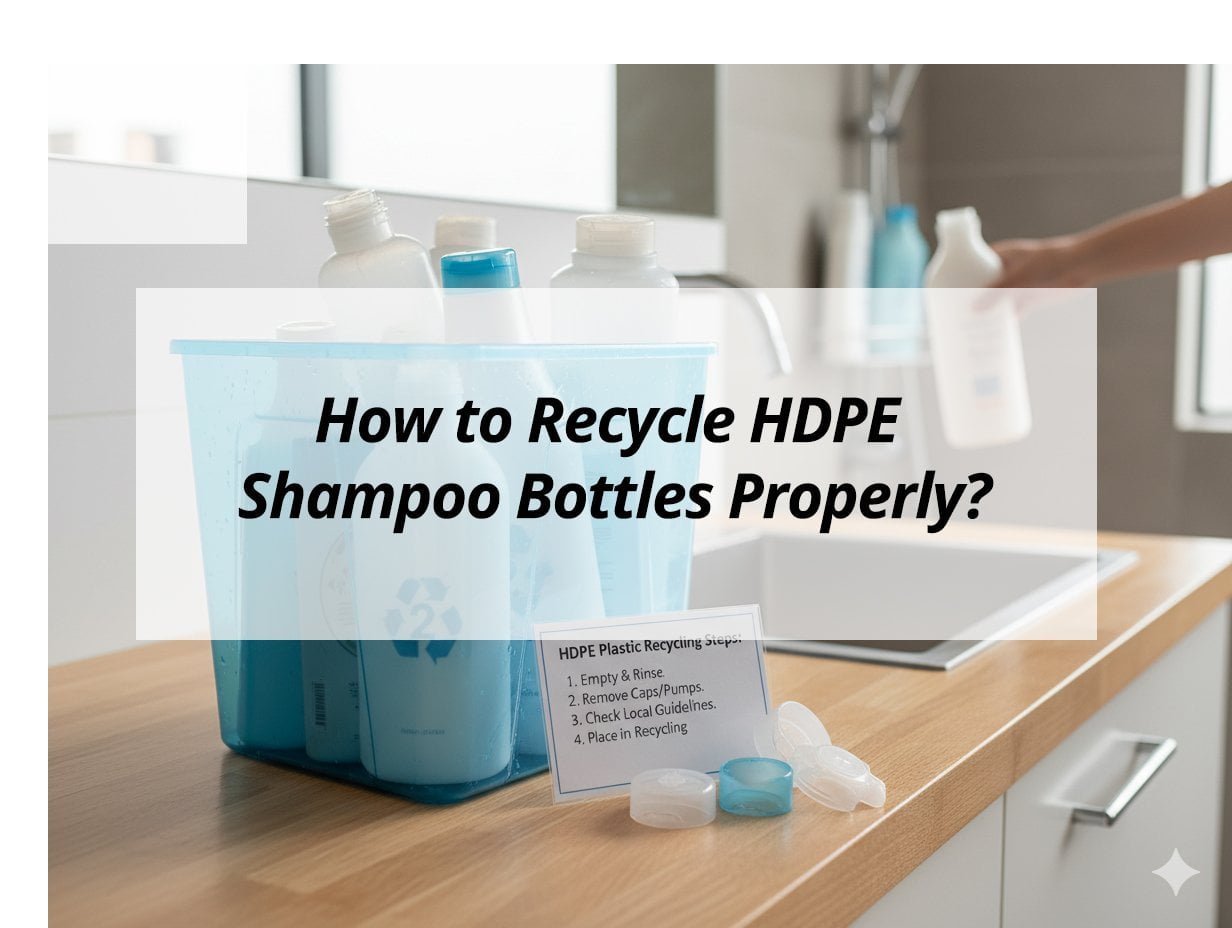
Many people often wonder if they are recycling their shampoo bottles the right way. Improper disposal can lead to recyclable materials ending up in landfills. This defeats the purpose of recycling efforts.
Properly recycling HDPE shampoo bottles is a key step in environmental care. It requires understanding specific guidelines. These include rinsing procedures and identifying the correct plastic types. Following these simple steps helps reduce plastic waste effectively.
Understanding the best practices for recycling can sometimes feel complex. However, clear instructions make the process straightforward. This guide aims to simplify the recycling of shampoo bottles. This helps everyone contribute to a cleaner environment.
Do you need to rinse out shampoo bottles before recycling?
Is rinsing shampoo bottles before recycling a necessary step? Some individuals might overlook this detail. But neglecting this action can impact the efficiency and success of recycling processes.
Yes, rinsing shampoo bottles before recycling is necessary. Product residues left inside can contaminate other materials. This makes them difficult to recycle. A quick rinse ensures the bottles are clean. Clean materials are processed more efficiently at recycling facilities.
Residue in bottles can cause several issues. It can promote mold growth. It can also create unpleasant odors. These factors make the recycling environment less desirable for workers. Contaminated items can also reduce the quality of recycled plastic. In some cases, an entire batch of recyclables might be rejected. This means it goes to a landfill instead. A simple rinse with water is usually enough. Hot water is not required. Just remove any visible shampoo. This small act greatly helps maintain the integrity of the recycling stream. It ensures that bottles are actually recycled.
Why is rinsing important for effective recycling?
- Prevents Contamination: Leftover product can spoil paper, cardboard, and other clean recyclables.
- Reduces Odors: Residues can decompose. This creates strong, unpleasant smells at sorting centers.
- Deters Pests: Organic matter attracts pests. Pests can cause damage and hygiene problems at facilities.
- Improves Processing: Clean materials are sorted and processed faster by machines. This boosts overall efficiency.
What happens if bottles are not rinsed?
| Outcome | Impact on Recycling |
|---|---|
| Contaminated Materials | Other items in the recycling stream may become unusable. |
| Increased Operational Costs | Facilities must spend more resources on cleaning or disposing of contaminated items. |
| Diversion to Landfill | Entire loads of recyclables might be sent to landfills due to widespread contamination. |
| Substandard Recycled Products | Impurities can lower the quality of new products made from recycled plastic. |
Can you recycle HDPE bottles?
Many people are uncertain about which plastic types are recyclable. It is common to encounter various plastic symbols. Identifying the correct ones is crucial for proper recycling.
Yes, HDPE bottles are widely recyclable. HDPE stands for High-Density Polyethylene. It is one of the most commonly accepted plastics in recycling programs. These bottles typically have a "2" within the universal recycling symbol. This number indicates that the plastic is HDPE.
HDPE is a highly sought-after material in the recycling industry. It is known for its durability and strength. These properties make it valuable for repurposing into new products. Recycled HDPE helps conserve natural resources. It also reduces energy consumption compared to making new plastic. After collection, HDPE plastic is cleaned and then melted down. It is reformed into pellets. These pellets serve as raw material for manufacturing various items. Such items include new packaging, pipes, and even outdoor furniture. Recognizing the "2" symbol ensures that these valuable plastics enter the recycling stream. This supports a circular economy for plastic materials.
Why is HDPE a preferred material for recycling?
- High Market Demand: Recycled HDPE is valuable. Many manufacturers use it for new products.
- Versatility: It can be reprocessed into a diverse range of items. This gives it broad utility.
- Durability: HDPE retains its strength even after recycling. This makes it suitable for many applications.
- Cost-Effective to Recycle: Its properties make it efficient to collect and reprocess.
Common items made from recycled HDPE
- New Plastic Bottles: Detergent bottles, milk jugs, and some shampoo bottles.
- Piping Systems: Agricultural pipes, drainage pipes, and conduit.
- Plastic Lumber: Decking, garden beds, and park benches.
- Outdoor Products: Playground equipment, recycling bins, and various outdoor furniture.
How to recycle plastic shampoo bottles?
Knowing the exact steps for recycling plastic shampoo bottles can sometimes be confusing. There are specific methods that ensure these items are correctly processed. Following these guidelines is essential for effective recycling.
To recycle plastic shampoo bottles, first ensure they are as empty as possible. Then, rinse them with water to remove any remaining product. After rinsing, check local recycling guidelines regarding caps. Place the clean, prepared bottle into your designated recycling bin according to local program rules.
Proper recycling involves a series of small, important actions. Each step contributes to the success of the overall process. For instance, local guidelines often vary. Some programs instruct residents to leave caps on. Others require caps to be removed. This is because small caps might be too tiny for sorting machinery. This could lead to them being filtered out as waste. Always consult your specific municipal recycling website for the most accurate information. Adhering to these local regulations ensures your shampoo bottles are genuinely recycled. This prevents them from being sent to a landfill. This focused effort contributes significantly to environmental preservation.
Step-by-step guide to recycling shampoo bottles
- Empty Contents: Remove as much of the shampoo as possible from the bottle.
- Rinse Thoroughly: Use water to flush out any remaining residue from the inside.
- Address the Cap: Refer to your local recycling program's rules for caps.
- Caps On: If permitted, reattaching the cap can help smaller caps get recycled with the bottle.
- Caps Off: If instructed, remove the cap. Small plastic caps are often not recyclable due to size limitations.
- Place in Bin: Put the clean, prepared bottle into the correct recycling container. Ensure it is mixed only with other accepted plastics.
What to avoid when recycling shampoo bottles?
- Leaving Substantial Product: This can contaminate other clean materials in the recycling bin.
- Ignoring Local Instructions: Recycling rules differ by location. Always check current guidelines.
- Mixing Incorrect Plastics: Only place plastics with the correct recycling symbol (typically #2 for HDPE) in the bin.
- Including Non-Plastic Components: Items like pumps with metal springs should be removed if possible. They often cannot be recycled with the plastic bottle.
Why is HDPE used for shampoo bottles?
The widespread use of HDPE for shampoo bottles is not accidental. There are specific material properties that make it an ideal choice. Understanding these characteristics reveals why this particular plastic dominates the personal care packaging market.
HDPE is primarily used for shampoo bottles due to its robust strength, high durability, and excellent chemical resistance. It is lightweight yet sturdy. This combination effectively protects liquid contents like shampoo. It also safeguards the product from external factors such as light and oxygen.
The material science behind packaging choices is very important. HDPE is a strong polymer. It can withstand typical impacts that occur during shipping and handling. This minimizes product damage and waste. Furthermore, its inert nature means it does not react with the chemical formulations found in most shampoos. This preserves the product's quality and shelf life. If shampoo bottles were made from a weaker or reactive material, issues like cracking or product degradation would be common. HDPE's reliable performance makes it a preferred choice for manufacturers. It provides a secure and stable container. Its widespread recyclability further enhances its appeal as a responsible packaging solution.
Key properties of HDPE for packaging
- Chemical Inertness: Does not react with most chemical ingredients in shampoo. This ensures product stability.
- Impact Strength: Highly resistant to breaking or cracking from drops or pressure. This is crucial for consumer products.
- Moisture Barrier: Effectively prevents water vapor from entering or escaping. This maintains product consistency.
- Lightweight Nature: Its low density reduces the overall weight of packaged products. This lowers transportation costs.
- Recyclability: It is one of the most widely accepted and processed plastics in recycling streams.
HDPE compared to other common packaging plastics
| Feature | HDPE (High-Density Polyethylene) | PET (Polyethylene Terephthalate) | PP (Polypropylene) |
|---|---|---|---|
| Typical Applications | Shampoo, detergent, milk, lotion bottles | Water bottles, soda, cooking oil, salad dressing | Yogurt cups, bottle caps, butter tubs |
| Transparency | Opaque to translucent | Clear and transparent | Opaque or translucent |
| Flexibility | Semi-rigid to rigid, with some give | Rigid, less flexible than HDPE | Flexible, often used for hinged parts |
| Recycling Code | #2 | #1 | #5 |
| Chemical Resistance | Excellent against many acids, bases, and general chemicals | Good against weak acids and bases, but less against strong solvents | Very good against organic solvents, fats, and oils |
My Insights: How to Recycle HDPE Shampoo Bottles Properly?
Confused about recycling shampoo bottles? Learn efficient methods to recycle HDPE bottles and support sustainability efforts.
To recycle HDPE shampoo bottles effectively, ensure they are empty, rinsed, and free from pumps. Check your local recycling rules for caps and labels. Flatten bottles if permitted to save space and avoid contamination.
Steps for Effective Recycling of HDPE Shampoo Bottles
Identification and Cleaning
Start by identifying HDPE bottles marked with #2. Use warm water to rinse them thoroughly, removing all product residue to prevent contamination.
Handling Non-HDPE Parts
Separate pumps and caps as required by local guidelines. Pumps often contain mixed materials and should be discarded or sent to specialized programs like TerraCycle.
Preparing for Recycling
Air-dry the bottles and flatten them if your local recycling program permits. This saves space in bins and helps with efficient processing.
| Aspect | Recommended Practice |
|---|---|
| Identify HDPE | Look for #2 on the bottle |
| Thorough Cleaning | Rinse with warm water |
| Caps and Pumps | Remove and check local rules for disposal |
| Flatten and Dry | Air-dry and flatten for space-saving |
Local Recycling Rules
Always check city or county recycling guidelines for specific instructions, ensuring compliance and maximizing recycling effectiveness. Consider refillable bottles or alternatives to reduce HDPE usage.
Conclusion
Recycling HDPE shampoo bottles properly involves emptying, rinsing, and following local cap guidelines. HDPE is chosen for its strength, chemical resistance, and lightweight properties. These qualities make it effective for packaging and widely recyclable. Adhering to these steps helps improve recycling outcomes and supports environmental efforts.