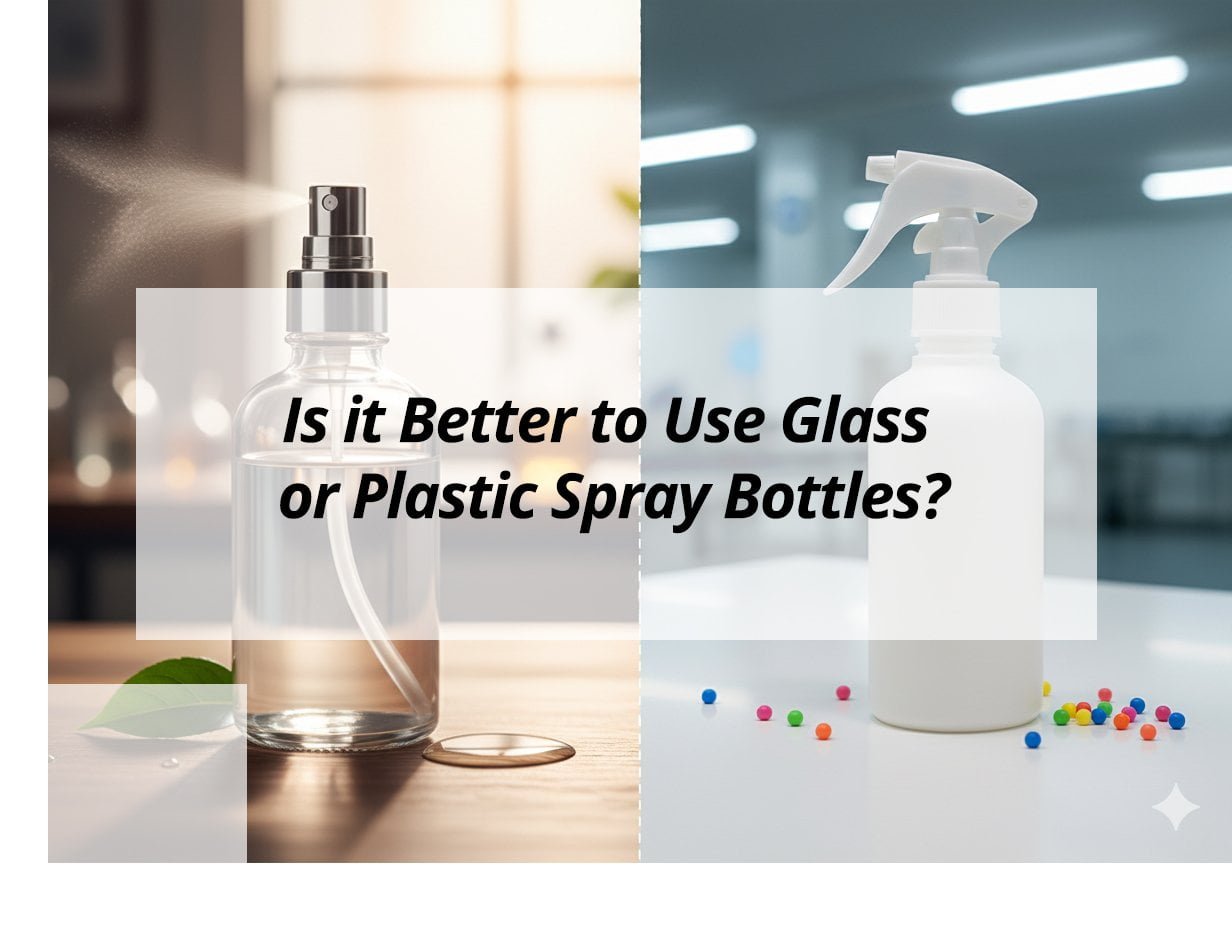
Selecting the right material for spray bottles presents challenges. Concerns include durability, cost, and product safety. The choice directly affects product integrity.**
Using plastic spray bottles is often better for products needing high durability, light weight, and lower cost. Glass spray bottles are better for products requiring chemical resistance, a premium feel, and environmental benefits. The optimal choice depends on the specific product requirements and intended use.
Material selection involves careful consideration. Each option has distinct advantages and disadvantages. These must be evaluated thoroughly.
What is the Best Material for a Spray Bottle?
Determining the ideal material for a spray bottle is a frequent challenge. It impacts product performance and consumer perception.
The best material for a spray bottle depends on the product's contents, the intended use, and brand positioning. Key options include PET plastic for versatility, HDPE for chemical resistance, and glass for inertness and aesthetic appeal. Each material offers unique advantages.
Various products have specific packaging demands. There is no single universal "best" material.
Key Factors in Material Selection
Several criteria guide material choice. These ensure the bottle meets functional and market needs.
- Chemical Compatibility: The material must not react with the product. This prevents degradation or contamination.
- Durability: The bottle needs to withstand handling. It must also survive transport.
- Cost Efficiency: Material and production costs vary. This influences the final product price.
- Aesthetics: The bottle's appearance contributes to brand image. Certain materials offer a more premium look.
- Sustainability: Recyclability and environmental impact are increasingly important factors.
Common Spray Bottle Materials
Here is a comparison of frequently used materials. These are considered for different applications.
| Material | Advantages | Disadvantages | Typical Applications |
|---|---|---|---|
| PET | Transparent, strong, lightweight, recyclable | Limited resistance to strong solvents | Cosmetics, personal care, household products |
| HDPE | Durable, chemical resistant, often opaque | Less aesthetic appeal, not always clear | Industrial cleaners, aggressive chemicals |
| PP | Good chemical resistance, heat stable | Less transparent, rigid | Sprayer components, certain chemical bottles |
| Glass | Inert, premium look, highly recyclable, clear | Fragile, heavy, higher cost | Essential oils, luxury cosmetics, food items |
Differentiating Plastic Types
For plastic options, distinguishing between types is important. PET is clear and widely used for many consumer goods. HDPE offers greater robustness and chemical resistance. PP is often chosen for caps and specific bottle types. Selection is based on the product's formulation.
Why Use Glass Spray Bottles?
Many products utilize glass for packaging. There are specific reasons for this choice.
Glass spray bottles are used because they are chemically inert, which safeguards product purity by preventing leaching. They provide a premium aesthetic, enhance brand perception, and are fully recyclable, appealing to environmentally aware consumers. Glass ensures an elegant and clean presentation.
Glass packaging can elevate a product's perceived value. It conveys a sense of quality. This is particularly relevant for high-end items.
Benefits of Glass for Product Integrity
Glass does not interact with chemical formulas. This protects sensitive ingredients. It helps maintain the product's stability and effectiveness.
- Inertness: Glass does not leach substances into the product. This avoids contamination.
- Preservation: It protects volatile compounds and active ingredients. This helps maintain product efficacy.
- Barrier Properties: Glass provides an effective barrier against external elements like oxygen. This can extend shelf life.
Aesthetic and Brand Value of Glass
The visual appeal of glass is a key advantage. It contributes significantly to brand image.
- Premium Presentation: Glass bottles often appear more sophisticated. They offer a luxurious tactile experience.
- Clarity: Clear glass allows the product to be visible. This enhances consumer appeal.
- Customization: Glass can be shaped, colored, and decorated. This allows for unique branding opportunities.
Environmental Advantages
Glass also offers environmental benefits. It is a highly sustainable material.
- Recyclability: Glass can be recycled repeatedly. It maintains its quality throughout recycling cycles.
- Resource Efficiency: Using recycled glass conserves raw materials and reduces energy consumption in manufacturing.
What are the Disadvantages of a Glass Bottle?
Despite its advantages, glass packaging has notable drawbacks. These require careful consideration by buyers.
The disadvantages of glass bottles include their inherent fragility, leading to breakage risks and increased shipping costs due to weight. They are also typically more expensive to manufacture and transport compared to plastic alternatives. These factors affect product costs and logistical complexities.
Breakage can result in product loss. It also incurs additional expenses.
Fragility and Safety Concerns
Glass is susceptible to breakage. This represents its primary vulnerability. It can pose safety risks.
- Breakage Risk: Glass bottles can shatter if dropped or impacted. This causes product damage and potential hazards.
- Shipping Vulnerability: Breakage during transit is a common issue. This necessitates robust protective packaging.
- Weight: Glass is heavier than plastic. This increases transportation costs and reduces portability.
Cost Implications
The cost associated with glass can be higher. This impacts the final pricing of the product.
- Material and Production Costs: Glass manufacturing can be more expensive. This is compared to many plastic processes.
- Shipping Expenses: The increased weight of glass contributes to higher freight costs. This is particularly true for long distances.
- Packaging Requirements: More protective packaging is often necessary. This adds to material and labor expenses.
| Disadvantage | Business Impact | Mitigation Strategies |
|---|---|---|
| Fragility | Product loss, safety issues, customer returns | Enhanced protective packaging, handling guidelines |
| Weight | Elevated shipping costs, reduced portability | Optimize bottle design, explore lighter glass formulations |
| Cost | Higher unit price, competitiveness challenges | Volume purchasing, streamlined supply chain management |
Environmental Footprint of Glass Production
While recyclable, glass manufacturing carries its own environmental impact.
- Energy Consumption: Melting glass requires high temperatures. This process demands significant energy input.
- Carbon Emissions: Energy use during production results in CO2 emissions. This is an environmental concern.
What is the Healthiest Material for a Water Bottle?
The term "healthiest" material often refers to consumer safety. This is especially true for products in contact with consumables or skin.
The healthiest material for a water bottle is generally considered to be food-grade stainless steel or glass. Both materials are non-leaching, durable, and do not transfer flavors or chemicals into liquids. They offer superior purity for products intended for consumption.
Prioritizing consumer safety is paramount. Choosing inert materials is a fundamental aspect of this commitment.
Understanding "Healthiest" Materials
"Healthiest" typically refers to materials that do not release harmful substances. These materials maintain the purity of the contents.
- Non-Leaching: The material should not transfer any chemicals to the liquid. This prevents potential contamination.
- Food-Grade Compliance: Materials must meet specific safety standards. This ensures suitability for contact with consumables.
- Odor and Taste Neutrality: The material should not affect the sensory properties of the product.
Comparison of Healthy Materials
Here is an overview of materials often deemed healthy.
| Material | Advantages | Disadvantages | Health Benefits |
|---|---|---|---|
| Glass | Inert, no leaching, taste-neutral | Fragile, heavy, potentially higher cost | Maintains purity, chemical-free |
| Stainless Steel | Durable, non-leaching, temperature retention | Opaque, can be heavy, not microwave-safe | Very safe, rust-resistant, hygienic |
| BPA-Free Plastics | Lightweight, durable, cost-effective | Some concerns regarding other potential chemicals | Safer than traditional plastics |
Considerations for Cosmetic and Personal Care Products
For spray bottles in cosmetics, health considerations are similar. The material must not react with the formula. It should also not leach substances that could cause skin irritation.
- Formula Stability: Packaging must support the long-term stability of the product. It must not degrade active ingredients.
- Consumer Safety: The material should be safe for direct skin contact. It must not cause adverse reactions.
- Regulatory Adherence: Materials must comply with health and safety regulations. This is essential for market acceptance.
My Insights: Is it Better to Use Glass or Plastic Spray Bottles?
Wondering whether to choose glass or plastic spray bottles? Understand how each material impacts safety, functionality, and sustainability.
Glass spray bottles are ideal for preserving product integrity and preventing chemical leaching, especially for essential oils. Plastic offers durability, lightweight convenience, and cost-effectiveness, making it suitable for everyday use and travel.
Evaluating the Pros and Cons of Glass vs Plastic
Health and Safety
- Glass: Non-reactive, prevents chemical leaching, and ideal for essential oils and sensitive formulations.
- Plastic: Lightweight and shatter-resistant, though may leach chemicals with certain formulations.
Durability and Practicality
- Glass: Offers upscale aesthetics, preserves product quality, but is prone to breakage.
- Plastic: Provides durability for travel and is versatile in design and usage.
Environmental Impact
- Glass: Fully recyclable and maintains quality through reuse but is heavy to produce and transport.
- Plastic: Cost-effective and can be made from recycled materials, though less frequently recycled and contributes to pollution.
| Criteria | Glass Benefits | Plastic Benefits |
|---|---|---|
| Health | Non-reactive, ideal for sensitive products | Lightweight, shatter-resistant |
| Practicality | Aesthetic, preserves quality | Versatile, durable |
| Environment | Reusable, recyclable | Cost-effective, recycled materials |
Choosing the right bottle depends on the intended use, safety concerns, and environmental priorities. For high-quality storage, glass is best; for convenience and durability, plastic may be preferable.
Conclusion
Choosing between glass and plastic spray bottles requires balancing multiple factors. Durability, cost, and product integrity are key considerations. The optimal material choice aligns with specific product needs and brand identity.