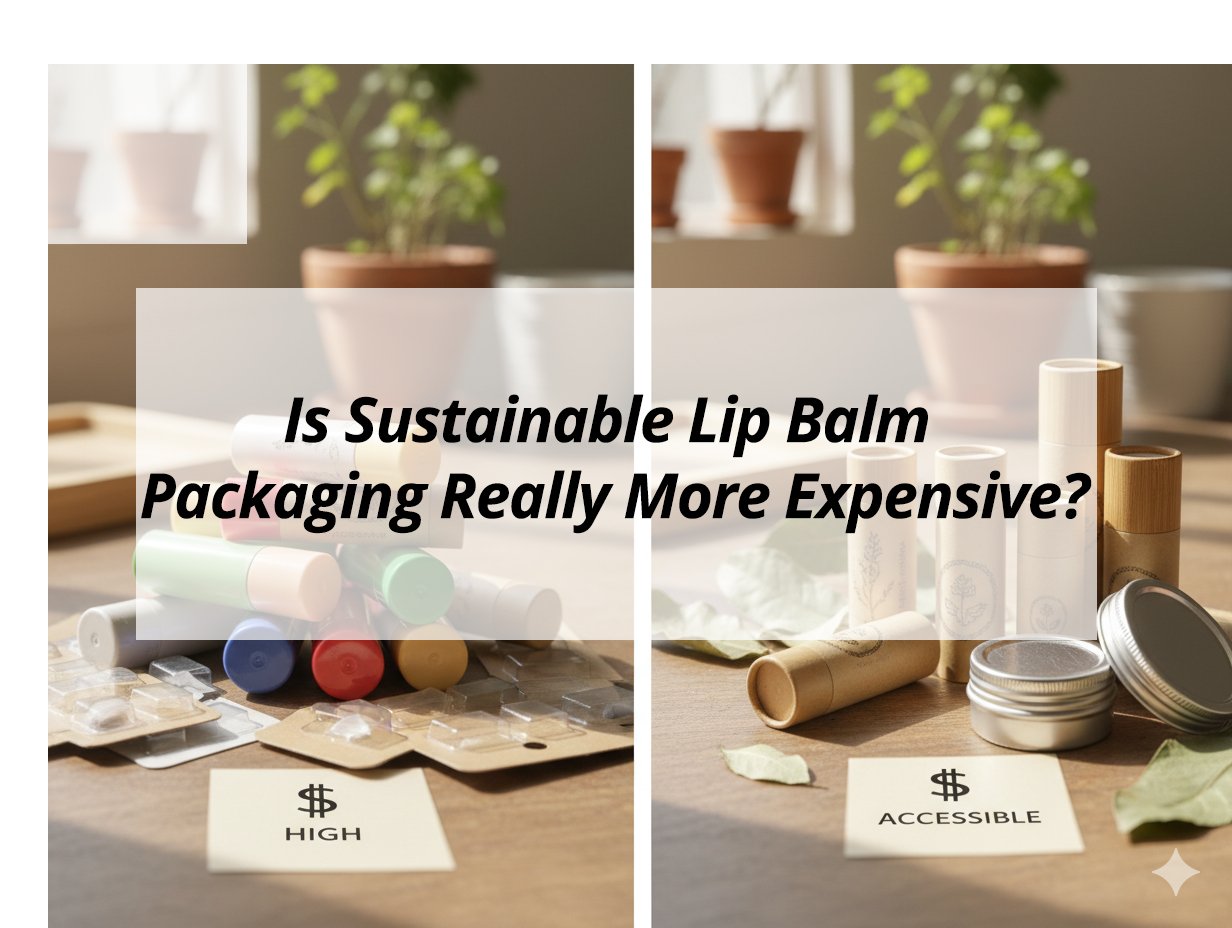
Choosing packaging for lip balm is a critical decision for businesses. With growing environmental concerns, many companies now seek sustainable options. A key question arises: does sustainable packaging inherently cost more? This article explores the pricing dynamics of eco-friendly lip balm packaging.
Sustainable lip balm packaging can present a higher initial cost in some cases. However, it often provides long-term advantages such as enhanced brand perception and increased consumer appeal. The final cost depends on factors like material type, design complexity, and supplier. Comparing various options is essential for a balanced financial decision.
Many businesses approach sustainable packaging with cost as a primary concern. They often wonder if the market will bear the potential increase in product price. Understanding the actual cost structure of these packaging solutions is vital for informed business choices.
Is Sustainable Packaging More Expensive?
The perception that sustainable packaging always costs more is not entirely accurate. The price can vary significantly based on specific choices. A detailed examination of various factors helps clarify the true cost.
Sustainable packaging may appear more expensive initially. Yet, it can offer cost savings over time and improve a brand's reputation. The overall cost is influenced by chosen materials, order volume, and supplier terms. Businesses should evaluate these elements comprehensively.
When considering sustainable packaging, it is important to analyze the full economic picture, not just the unit price. The investment can lead to benefits that outweigh the initial expenditure. For instance, selecting plastic-free lip balm tubes can attract a segment of consumers actively seeking such products, enhancing market position.
Understanding the Cost Factors
Several elements contribute to the price of sustainable packaging. Recognizing these helps in making strategic procurement decisions.
- Material Type: The base material significantly impacts cost.
- Recycled Content: Packaging made from post-consumer recycled (PCR) materials can sometimes have higher processing costs due due to the sorting and cleaning involved.
- Novel Sustainable Materials: Newer, innovative sustainable materials may have higher costs because their production is not yet scaled.
- Production Process: The method of manufacturing influences pricing.
- Specialized Equipment: Producing eco friendly lip balm tubes wholesale often requires specific machinery, which can involve considerable setup and operational expenses.
- Energy Consumption: The energy source and efficiency during production also affect costs, with renewable energy sources sometimes having different cost structures.
- Order Volume: As with most manufactured goods, higher quantities typically result in lower per-unit costs.
- Smaller Orders: Lower volumes usually incur a higher cost per item.
- Bulk Orders: Larger orders allow manufacturers to achieve economies of scale, reducing individual unit costs for items like plastic free lip balm containers.
- Design Complexity: Simpler designs are generally more economical than intricate ones.
- Custom Tooling: Unique shapes or elaborate designs often necessitate advanced molds and increased tooling expenses.
- Finishing Processes: Special printing techniques or surface finishes can add to the production cost.
Long-Term Value vs. Upfront Cost
Focusing solely on the initial purchase price can overlook the broader financial benefits of sustainable packaging.
| Factor | Upfront Cost | Long-Term Value |
|---|---|---|
| Material Price | Potentially higher for certain eco-materials | Reduced waste management expenses, potential regulatory advantages |
| Brand Perception | Indirect; may involve marketing adjustments | Attracts environmentally conscious consumers, builds brand loyalty |
| Market Differentiation | Investment in new material sourcing/marketing | Distinguishes product in competitive markets, generates positive publicity |
| Consumer Engagement | No direct upfront cost | Fosters consumer trust and repeat purchases |
| Compliance Readiness | May require research into new processes | Mitigates risks of future non-compliance, supports market leadership |
Evaluating these aspects helps businesses understand that opting for recyclable lip balm tubes is not merely an expense. It is a strategic investment in future brand strength and market relevance.
What is the Most Eco-Friendly Packaging Material?
The search for the "most" eco-friendly packaging material is complex. It requires a holistic view of the material's entire life cycle.
Identifying a single "most" eco-friendly packaging material is challenging, as suitability depends on product requirements and the material's life cycle assessment. However, glass, aluminum, post-consumer recycled (PCR) plastics, and responsibly sourced paper are leading sustainable options. Key considerations include recyclability, renewability, and the energy footprint of production.
When assessing material options, a comprehensive approach is necessary. This involves evaluating the material from its origin to its disposal. For example, while traditional plastic has a negative image, PCR plastic offers a significantly reduced environmental footprint compared to virgin plastic. Many options, such as plastic-free lip balm tubes, also provide strong sustainability credentials.
Comparing Different Eco-Friendly Materials
A comparison of common eco-friendly materials highlights their respective advantages and disadvantages.
- Glass:
- Advantages: Infinitely recyclable without degradation, offers a premium aesthetic.
- Disadvantages: Heavy, leading to higher transportation costs and emissions. It is also fragile.
- Application: Suitable for jars or specialty containers, less common for stick lip balm due to weight.
- Aluminum:
- Advantages: Highly recyclable, lightweight, and durable, providing excellent product protection.
- Disadvantages: Initial production is energy-intensive, though recycling requires substantially less energy.
- Application: An excellent choice for plastic-free lip balm tubes, appealing to modern consumer preferences.
- Post-Consumer Recycled (PCR) Plastic:
- Advantages: Reduces the demand for new plastic, lowers carbon emissions, and repurposes existing waste.
- Disadvantages: May have limitations in clarity and color depending on the source. It is not infinitely recyclable.
- Application: A viable option for eco friendly lip balm tubes wholesale where a plastic feel is desired with reduced environmental impact.
- Paper/Cardboard (Recycled or FSC-certified):
- Advantages: Renewable, biodegradable, and recyclable. Lightweight.
- Disadvantages: May lack moisture barrier properties for certain products. May not convey a luxury image.
- Application: Widely used for plastic free lip balm containers, particularly for push-up tube designs.
- Bamboo:
- Advantages: A rapidly renewable resource, biodegradable, and offers a natural, distinctive look.
- Disadvantages: Can be more costly to process into packaging. Requires careful manufacturing to ensure durability.
- Application: Effective for caps or external components of lip balm tubes, providing an organic and upscale impression.
Life Cycle Assessment (LCA)
A Life Cycle Assessment (LCA) provides a systematic evaluation of environmental impacts associated with a product or material.
| Stage | Key Activities | Primary Environmental Considerations |
|---|---|---|
| Raw Material Sourcing | Extraction of resources | Habitat degradation, resource depletion, energy usage |
| Manufacturing | Transformation of raw materials into finished packaging | Energy consumption, water footprint, atmospheric emissions, waste generation |
| Distribution | Movement of materials and products | Fuel consumption, carbon emissions |
| Product Use | Functionality of packaging with product | Minimal direct impact, focus on product protection and preservation |
| End-of-Life | Disposal methods (recycling, landfill, composting) | Waste volume, potential pollution, resource recovery potential |
This comprehensive analysis guides decisions towards truly sustainable choices, including the selection of recyclable lip balm tubes.
Does L'Oréal Use Sustainable Packaging?
The packaging practices of large corporations like L'Oréal significantly influence industry trends and consumer expectations. It is relevant to examine their stance on sustainable packaging.
L'Oréal has publicly committed to and is actively implementing sustainable packaging strategies. Their goals include using 100% recycled or bio-based plastic in packaging by 2030 and reducing overall packaging weight. Initiatives encompass the use of PCR plastics, development of refillable systems, and exploration of novel eco-friendly materials.
The actions of major brands like L'Oréal demonstrate the feasibility and importance of sustainable packaging. Such commitments impact the entire cosmetic packaging supply chain. They encourage manufacturers to innovate and expand their offerings, including eco friendly lip balm tubes wholesale.
L'Oréal's Sustainable Packaging Strategy
L'Oréal's approach to sustainable packaging is structured around several core principles within their "L'Oréal for the Future" program.
- Reduce: Efforts focus on minimizing material usage.
- Lightweighting: Designing packaging with less material while maintaining integrity.
- Eliminating Excess: Removing unnecessary layers or components from packaging.
- Replace: Shifting towards more environmentally benign materials.
- PCR (Post-Consumer Recycled) Materials: Extensive use of recycled plastics across various product lines, including packaging for lip balms.
- Bio-based Plastics: Research and application of plastics derived from renewable biological resources.
- Plastic-free Lip Balm Tubes: Integration of alternative materials like paper or aluminum where appropriate to avoid conventional plastics.
- Recycle: Ensuring packaging is designed for optimal recyclability.
- Mono-material Design: Creating packaging from a single type of material to simplify recycling processes.
- Consumer Guidance: Providing clear instructions for consumers on how to recycle products correctly.
- Refill & Reuse: Implementing systems that promote longevity of packaging.
- Refillable Systems: Introducing products where the primary container can be refilled repeatedly.
- Reusable Formats: Designing packaging that encourages consumer retention and reuse.
Impact on the Industry
L'Oréal's sustainable packaging initiatives have a ripple effect across the cosmetics industry.
| Aspect | L'Oréal's Approach | Industry Repercussion |
|---|---|---|
| Material Innovation | Investments in sustainable material development | Spurs research and development among packaging suppliers |
| Supply Chain Demands | Specifies sustainable requirements for suppliers | Drives packaging manufacturers to expand eco-friendly portfolios |
| Consumer Education | Communicates sustainable efforts to the public | Raises consumer awareness and demand for green products |
| Competitive Pressure | Sets a benchmark for industry sustainability | Encourages competitors to adopt similar practices |
| Market Evolution | Contributes to a growing market for eco friendly packaging | Accelerates the transition towards sustainable packaging norms |
These dynamics demonstrate how leading brands can significantly shape the market for packaging solutions, including recyclable lip balm tubes.
Is Lip Balm Sustainable?
Given the widespread use of lip balm, its overall sustainability is a relevant question for both producers and consumers. This encompasses both the product formulation and its packaging.
The sustainability of lip balm depends critically on both its constituent ingredients and its packaging solution. Lip balms formulated with natural, ethically sourced components and packaged in environmentally friendly materials, such as plastic-free lip balm tubes or other recyclable containers, exhibit higher sustainability. Conversely, products with synthetic ingredients and conventional plastic packaging are less sustainable.
Consumer scrutiny extends beyond the efficacy of a lip balm to its environmental credentials. For example, a product featuring beneficial natural ingredients but housed in non-recyclable plastic may be perceived as less desirable. The market trend indicates a growing preference for plastic free lip balm containers and eco friendly lip balm tubes wholesale.
Factors Affecting Lip Balm Sustainability
Multiple factors determine the sustainability profile of a lip balm.
- Ingredients:
- Natural vs. Synthetic: Natural ingredients (e.g., beeswax, plant oils) are generally more sustainable due to their renewable nature. Synthetic ingredients often derive from petrochemicals.
- Sourcing Ethics: Responsible sourcing ensures minimal environmental impact and fair labor practices.
- Palm Oil Concerns: If palm oil is present, its certification for sustainable sourcing is crucial to avoid deforestation issues.
- Packaging:
- Material Selection: The choice of material is paramount. Plastic-free options like paper, aluminum, or glass are favorable.
- Recyclability: The ease with which packaging can be recycled within existing municipal systems is important. Recyclable lip balm tubes contribute positively.
- Compostability/Biodegradability: Materials designed to break down naturally offer an advantageous end-of-life solution.
- Refillable Design: Packaging designed for refills significantly reduces material consumption over time.
- Manufacturing Processes:
- Energy Efficiency: The energy consumption during production, particularly the reliance on renewable energy, affects sustainability.
- Water Management: Efficient water usage and waste treatment in manufacturing are important.
- Waste Minimization: Reducing process waste contributes to a more sustainable production cycle.
- Transportation Logistics:
- Supply Chain Distance: Shorter supply chains for ingredients and finished products reduce transportation-related emissions.
- Shipping Methods: Utilizing more carbon-efficient transportation modes helps lower the environmental footprint.
Strategies for Enhancing Lip Balm Sustainability
Brands can implement various strategies to improve the sustainability of their lip balm offerings.
| Aspect | Sustainable Practices |
|---|---|
| Product Formulation | Incorporate organic, ethically sourced, and locally produced ingredients |
| Exclude ingredients with significant environmental concerns | |
| Packaging Choice | Prioritize plastic-free lip balm containers |
| Utilize post-consumer recycled (PCR) materials | |
| Introduce refillable or reusable packaging formats | |
| Ensure packaging is readily recyclable (e.g., mono-material designs) | |
| Production Methods | Adopt renewable energy sources in manufacturing |
| Implement water conservation technologies | |
| Streamline processes to minimize manufacturing waste | |
| Supply Chain | Partner with suppliers demonstrating strong sustainability commitments |
| Optimize transportation routes and methods to reduce emissions |
These efforts help brands meet the increasing consumer demand for truly sustainable lip balm products and packaging, including eco friendly lip balm tubes wholesale.
My Insights: Is Sustainable Lip Balm Packaging Really More Expensive?
Worried about the cost of switching to sustainable lip balm packaging? Learn how the true costs stack up over time.
Sustainable lip balm packaging generally costs more upfront, usually 15–50% higher, but long-term savings, consumer demand, and potential pricing benefits can offset this. As demand grows and production scales, the price gap is closing, making sustainability more accessible.
Understanding the Costs and Benefits
Upfront Costs
Sustainable materials like paperboard and bioplastics can be more expensive due to niche market demand and complex manufacturing processes. However, innovative designs and economies of scale are narrowing the cost gap.
Long-term Savings
Sustainable options can lead to savings through reduced waste management costs and regulatory compliance. They also support brand positioning, allowing for higher retail pricing justified by enhanced brand value and consumer willingness to invest in eco-friendly options.
Regulatory and Market Pressure
As regulations tighten around single-use plastics, sustainable packaging can shield brands from future compliance costs and boost market share. By adopting early, brands align with environmental goals and consumer expectations.
| Factor | Conventional Plastic | Sustainable Options |
|---|---|---|
| Upfront Cost | Lower unit cost | 15–50% premium |
| Long-term Savings | Higher waste and regulatory risk | Potential savings in management |
| Consumer Perception | Standard | Enhanced brand story |
Choosing sustainable packaging might initially seem costly but can provide substantial returns through branding, consumer loyalty, and long-term sustainability.
Conclusion
Sustainable lip balm packaging, while potentially incurring higher initial costs, offers substantial long-term benefits for brands and the environment. A range of eco-friendly materials, such as glass, aluminum, and PCR plastics, is available. Leading industry players like L'Oréal are demonstrating significant commitments to sustainable packaging. The overall sustainability of lip balm relies on both its ingredients and its packaging choices.