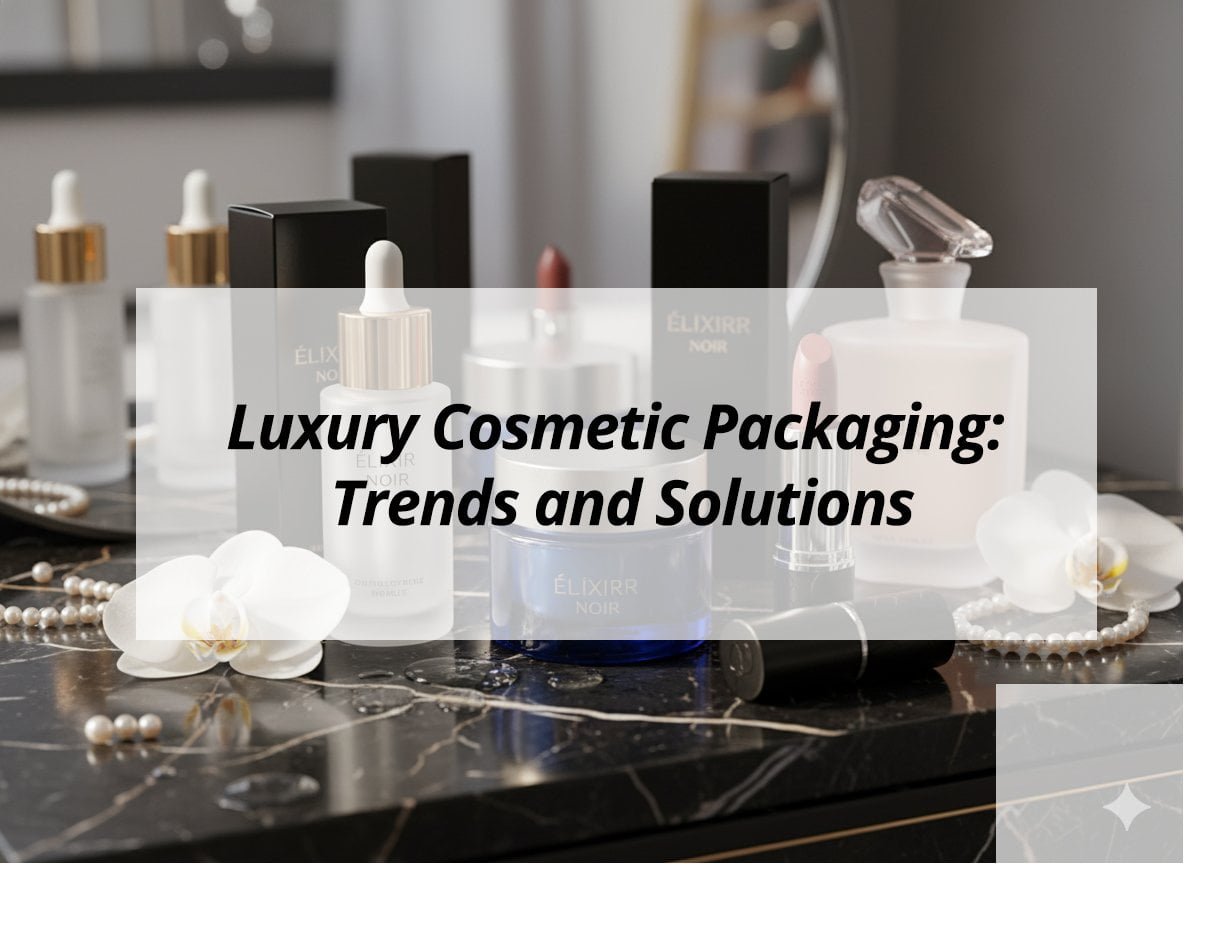
Are you a brand looking to elevate your product? Luxury cosmetic packaging is more than just a container. It is a statement. It sets your brand apart.
Luxury cosmetic packaging combines premium materials, sophisticated designs, and innovative features to create an elevated brand experience. Trends focus on sustainability, minimalist aesthetics, tactile finishes, and smart packaging solutions. These elements ensure cosmetic packaging products not only protect but also convey exclusivity and superior quality, driving consumer perception and loyalty.
I have seen the power of luxury packaging. A well-designed bottle can transform a good product into an aspirational one. This guide explores key trends and solutions for high-end cosmetic packaging products.
What Are the Beauty Packaging Trends?
Are you curious about what is new in beauty packaging? Trends change fast. Staying updated helps your brand stay relevant.
Beauty packaging trends currently emphasize sustainability, minimalist aesthetics, and personalized designs. Brands are also focusing on refillable options, tactile finishes, and advanced dispensing systems1 like airless pumps. These trends aim to meet consumer demand for eco-conscious, aesthetically pleasing, and highly functional cosmetic packaging products that enhance the overall user experience.
I constantly observe the market. I see brands moving towards simpler, cleaner designs. They also want packaging that feels good to touch. These shifts reflect evolving consumer values. It is about more than just a pretty face.
Current Dominant Trends
These trends shape the modern beauty packaging landscape.
- Sustainability Focus:
- Trend: Use of Post-Consumer Recycled (PCR) plastics2, glass, aluminum, and refillable systems. Monomaterial designs for easier recycling.
- Why: Consumers are increasingly environmentally conscious. Brands aim to reduce their carbon footprint.
- Example: Skincare bottles made from 100% PCR PET.
- Minimalist Aesthetics:
- Trend: Clean lines, simple shapes, muted color palettes, and clear, concise labeling.
- Why: Conveys sophistication, purity, and authenticity. Less is more.
- Example: White or frosted glass jars with black, sans-serif text.
- Tactile and Sensory Experience:
- Trend: Matte finishes, soft-touch coatings, embossed textures, and heavier materials.
- Why: Packaging that feels luxurious enhances the user experience. It adds perceived value.
- Example: Soft-touch cosmetic tubes or heavy glass bottles.
- Hybrid and Multifunctional Packaging:
- Trend: Packaging that serves multiple purposes or combines different materials creatively.
- Why: Offers convenience and innovation.
- Example: Compacts that include a mirror and applicator.
| Trend Category | Key Characteristics | Impact on Cosmetic Packaging Products | Example |
|---|---|---|---|
| Eco-Consciousness | PCR materials, refillable, monomaterial, biodegradable. | Reduces environmental footprint, appeals to ethical consumers. | Recyclable airless bottles, bamboo caps. |
| Elevated Simplicity | Clean lines, understated elegance, focus on material quality. | Conveys luxury and sophistication without overt extravagance. | Sleek, frosted glass serum bottles. |
| Sensory Engagement | Textured surfaces, unique finishes, ergonomic shapes. | Enhances user interaction, creates a memorable "feel." | Matte finish compacts, heavy glass jars. |
| Personalization | Customizable elements, modular designs. | Fosters customer loyalty, allows for individual expression. | Engravable lipstick tubes, mix-and-match components. |
| Transparency | Clear packaging, ingredient visibility, honest branding. | Builds trust, showcases product quality, supports "clean beauty." | Clear glass bottles revealing product. |
When you select cosmetic packaging products, consider these trends. They help your brand resonate with modern consumers.
What Is the New Packaging for 2025?
Are you planning for the future? The world of packaging is always changing. What will the new packaging for 2025 look like?
The new packaging for 2025 will heavily feature advanced sustainable solutions, including innovative refillable systems and widespread use of high-content PCR materials. Expect more monomaterial designs, smart packaging technologies, and minimalist aesthetics focused on natural textures. The emphasis will be on truly circular designs and reduced environmental impact across all cosmetic packaging products.
I predict a strong move towards "closed-loop" systems. This means packaging that can be reused or recycled endlessly. Brands will invest in solutions that truly show their commitment to the planet. It is about long-term sustainability.
Anticipated Packaging Innovations for 2025
Several key areas will see significant growth by 2025.
- Next-Generation Refillables:
- Innovation: More standardized and easily integrated refill systems. Think universal cartridges or pouches that fit various outer shells.
- Why: Higher consumer adoption for sustainability.
- Impact: Less waste, lower production for outer components of cosmetic packaging products.
- High-Performance PCR (Post-Consumer Recycled) Plastics:
- Innovation: PCR plastics with improved clarity, color consistency, and strength. This overcomes current limitations of recycled materials.
- Why: Meets both aesthetic and sustainability goals.
- Impact: Broadens the use of recycled content across all cosmetic packaging products.
- Monomaterial Dominance:
- Innovation: Packaging where all parts (bottle, pump, cap) are made from a single type of plastic (e.g., all PP or all PE).
- Why: Simplifies sorting and makes recycling much more efficient.
- Impact: Significantly boosts actual recyclability rates for cosmetic packaging products.
- Bioplastics and Compostables (Niche Growth):
- Innovation: More advanced bioplastics with better performance and clearer end-of-life instructions.
- Why: Reduces reliance on fossil fuels.
- Impact: Niche applications in specific cosmetic packaging products where industrial composting is available.
- Smart Packaging Integration:
- Innovation: NFC tags, QR codes, or sensors embedded in packaging for product authentication, usage tracking, or augmented reality experiences.
- Why: Enhances consumer engagement and provides supply chain transparency.
- Impact: Adds value and interactivity to cosmetic packaging products.
| Innovation Area | Key Features for 2025 | Environmental/Consumer Impact | Relevant Cosmetic Packaging Products |
|---|---|---|---|
| Refill Systems Standardization | Universal inner pods, widespread refill stations. | Reduces material consumption, increases convenience. | Jars, compacts, bottles. |
| Advanced PCR Materials | Clearer, stronger, more aesthetic recycled plastics. | High recycled content without aesthetic compromise. | All plastic packaging (bottles, tubes, jars). |
| Monomaterial Packaging | Entire package from one plastic type (e.g., all PP). | Simplifies recycling process, higher recycling rates. | Tubes, bottles, caps. |
| Biodegradable/Compostable | Improved performance, clearer disposal paths. | Reduces landfill burden, supports circularity. | Specific secondary packaging, some tubes. |
| Smart/Connected Packaging | NFC/QR codes for authenticity, AR experiences. | Enhances brand trust, consumer engagement, traceability. | Any cosmetic product packaging. |
When developing cosmetic packaging products for 2025, focus on these forward-thinking solutions. They will define the market.
Which Is the Most Recent New Trend in Packaging and Labeling?
Are you looking for the very latest in packaging and labeling? Trends change rapidly. The newest ideas often focus on specific values.
The most recent new trend in packaging and labeling is the strong push towards simplified, transparent, and digitally-enabled sustainability messaging. This includes minimalist design that clearly highlights recycled content (like PCR), refillability, or monomaterial composition. QR codes or NFC tags are increasingly used to provide detailed product and sustainability information. This builds trust in cosmetic packaging products.
I have seen labels shift from complex claims to clear, honest statements. Consumers want to know exactly what they are buying. They also want to know how to recycle it. This trend means less clutter and more clarity.
Latest Trends in Packaging Design
Packaging design is becoming more purposeful.
- Transparency and Honesty:
- Trend: Clearer communication of ingredients, sourcing, and environmental impact. Less jargon, more facts.
- Why: Consumers demand authenticity and are wary of "greenwashing."
- Example: Labels explicitly stating "Made with 50% PCR" rather than vague "eco-friendly" claims.
- Monomaterial Simplicity:
- Trend: Packaging made from a single type of material.
- Why: Simplifies end-of-life processing. Makes recycling easier and more effective.
- Example: A shampoo bottle and its cap both made from PP.
- Refill-Me / Reusable Design Prominence:
- Trend: Packaging prominently features its refillable nature. This includes clear instructions on how to refill.
- Why: Encourages circularity and reduces single-use waste.
- Example: Bottles with a bold "Refillable" icon.
- Tactile and Raw Textures:
- Trend: Embracing natural textures like paper, frosted glass, or uncoated surfaces.
- Why: Connects to nature and authenticity. Adds a sensory element to luxury.
- Example: Skincare product boxes with a rough, recycled paper feel.
Innovations in Labeling
Labels are becoming more functional and informative.
- Digital Interactivity (QR/NFC):
- Trend: QR codes and NFC tags on labels provide instant access to product details, brand story, sustainability reports, and recycling instructions.
- Why: Offers extensive information without cluttering the physical label. Enhances consumer engagement.
- Example: A QR code on a cosmetic tube leading to a recycling guide.
- Minimalist Labeling:
- Trend: Reduced text, clear fonts, ample white space. Focus on key product name and function.
- Why: Modern, sophisticated look. Improves readability.
- Example: A serum bottle with only the product name and brand logo on the front.
- Recycling Logos and Instructions:
- Trend: Clear, large recycling symbols and explicit instructions on how to prepare packaging for recycling.
- Why: Educates consumers and improves recycling rates.
- Example: "Remove pump, rinse bottle, recycle with plastics" on a bottle label.
| Trend Area | Latest Development for Cosmetic Packaging Products | Consumer/Brand Benefit |
|---|---|---|
| Sustainability Claims | Specific percentage of PCR, clear refill instructions. | Builds trust, demonstrates genuine eco-commitment. |
| Material Composition | Monomaterial plastic construction for entire package. | Simplifies recycling, improves recycling rates. |
| Digital Engagement | QR codes/NFC for detailed product info, recycling guides. | Enhances transparency, deeper brand connection. |
| Aesthetic Direction | Raw textures, understated luxury, minimalist design. | Conveys authenticity, sophisticated brand image. |
| Messaging Clarity | Concise, easy-to-understand labels. | Reduces confusion, empowers informed purchasing. |
When you design cosmetic packaging products, incorporate these latest trends. They help you connect with today's savvy consumers.
What Is the Next Trend in the Beauty Industry?
Are you wondering what is next for beauty? The industry is always moving forward. Predicting future trends is key for innovation.
The next major trend in the beauty industry will be hyper-personalization at scale, driven by AI and data. It also includes "phygital" experiences combining physical products with digital interaction. Furthermore, a deeper commitment to truly regenerative and circular sustainability will emerge. These trends will impact product formulations, distribution, and especially cosmetic packaging products, requiring high adaptability and innovation.
I believe personalization will go much deeper. Imagine a skincare product perfectly formulated for your unique skin data. The packaging will need to reflect this customization. Sustainability will also become much more rigorous.
Emerging Trends Defining the Future of Beauty
These trends will shape how consumers interact with beauty products.
- Hyper-Personalization (AI & Data-Driven):
- Trend: Products formulated and packaged specifically for an individual's unique needs (e.g., DNA, microbiome, environmental factors).
- Why: Consumers seek highly effective, tailored solutions. AI and data analysis make this possible.
- Impact on Packaging: Modular, customizable cosmetic packaging products. Smaller batch sizes. Labels with personalized information.
- "Phygital" Experiences:
- Trend: Blending physical and digital worlds. Packaging acts as a gateway to digital content, virtual try-ons, or interactive experiences.
- Why: Enhances engagement, provides deeper product information, offers immersive brand experiences.
- Impact on Packaging: Smart packaging with NFC/QR, AR-enabled labels. Interactive cosmetic packaging products.
- Regenerative and Circular Sustainability:
- Trend: Moving beyond "less harm" to active environmental benefit. Packaging made from upcycled waste, or designed to regenerate resources.
- Why: Addresses the climate crisis more aggressively. Consumers demand truly impactful solutions.
- Impact on Packaging: Packaging from novel, sustainable sources. Advanced closed-loop systems for all cosmetic packaging products.
- Waterless & Concentrated Formulations:
- Trend: Beauty products in solid, powder, or highly concentrated forms.
- Why: Reduces water use, lowers carbon emissions from shipping, minimizes packaging needs.
- Impact on Packaging: Smaller, lighter cosmetic packaging products. Innovative formats like tins, compacts, or unique dispenser systems for solids.
- Neuro-aesthetics and Well-being:
- Trend: Packaging designed to evoke specific emotional responses or enhance well-being through color, texture, and scent.
- Why: Focus on mental health and holistic beauty.
- Impact on Packaging: Sensory design, specific color psychology, calming aesthetics for cosmetic packaging products.
| Emerging Trend | Key Characteristics | Impact on Cosmetic Packaging Products | Brand Opportunity |
|---|---|---|---|
| Hyper-Personalization | Individualized formulas, custom blends. | Modular, customizable, smaller batch packaging. | Deep consumer loyalty, unique market position. |
| "Phygital" Interaction | QR/NFC links, AR filters, virtual try-ons. | Packaging as a gateway to digital content. | Enhanced engagement, immersive brand experience. |
| Regenerative Circularity | Upcycled materials, net-positive environmental impact. | Innovative, truly sustainable materials and closed-loop systems. | Strong ethical branding, leadership in sustainability. |
| Waterless Beauty | Solid bars, powders, highly concentrated forms. | Minimalist, lightweight packaging; new compact formats. | Reduces footprint, appeals to minimalist consumers. |
| Neuro-Aesthetics | Sensory design (texture, color, scent) for mood. | Packaging designed to evoke specific emotions or feelings. | Creates emotional connection, holistic well-being. |
When you plan for the future of cosmetic packaging products, embrace these trends. They will define success in the beauty industry.
My Insights: Exploring Luxury Cosmetic Packaging Innovations
How can luxury brands balance elegance with sustainability? Discover trends that fuse premium aesthetics with eco-friendly practices in cosmetic packaging.
Luxury cosmetic packaging now emphasizes eco-friendly materials like recycled glass and biodegradable options. Brands adopt minimalist designs, smart features, and refillable systems, ensuring both elegance and environmental responsibility, meeting modern consumer demands for luxury with a conscience.
Key Trends and Solutions in Luxury Cosmetic Packaging
Key Trends:
-
Eco-Friendly Materials3: Recycled glass and biodegradable options reduce environmental impact while maintaining luxurious appeal.
-
Design Minimalism: Clean lines, transparent elements, and bold typography convey purity and sophistication.
-
Smart Technology: Incorporating QR codes, NFC tags, and sensory features enhances user engagement and experience.
Popular Solutions:
-
Refillable Options: Brands like La Bouche Rouge use sustainable materials for long-lasting packaging, enhancing both luxury and functionality.
-
Material Innovations: Techniques like hot stamping and silk-screen printing on glass offer UV protection and premium aesthetics, while alternatives like post-consumer recycled PET maintain quality.
Future Outlook:
Expect deeper integration with smart technology, including sensors and augmented reality, transforming packaging into an immersive brand experience. Ergonomics and mono-material recyclables will evolve, offering both tactile luxury and sustainability.
Brands leading in sustainable luxury packaging design continue to innovate, meeting demands for elegance, functionality, and responsibility.
Conclusion
Luxury cosmetic packaging trends lean towards sustainability, minimalism, and sensory experiences. Future packaging will be hyper-personalized and regenerative. This shapes aesthetic and functional demands for cosmetic packaging products.
-
Understand the technology behind advanced dispensing systems and their benefits for product usability. ↩
-
Explore the advantages of PCR plastics and their role in sustainable packaging solutions. ↩
-
Explore the latest eco-friendly materials that luxury brands are using to balance elegance and sustainability. ↩