Have you ever wondered which plastic is better for your cosmetic packaging? Choosing the right material can influence both sustainability and functionality.
PETG plastic is often considered better than PET plastic due to its increased durability, flexibility, and resistance to impacts. While PET is widely used, PETG offers enhanced performance for specific cosmetic applications. Understanding these differences is key to making informed decisions.
Choosing between PETG and PET is crucial for businesses that prioritize quality and sustainability in their products. By understanding their properties, companies can select the plastic that best meets their needs and ensures customer satisfaction.
Is PETG plastic better than PET plastic?
Are you looking for a plastic with superior qualities for your packaging? The choice between PETG and PET can impact the product's performance significantly.
Yes, PETG is often considered better than PET because it offers greater flexibility, impact resistance1, and durability. These properties make it more suitable for certain cosmetic packaging needs, providing both functional and aesthetic benefits.
When comparing PETG to PET, it's important to dive into their specific properties. PETG's clear and shiny appearance maintains its aesthetic appeal2 even after processing. It’s incredibly durable, making it resistant to stress whitening, which can occur during molding or bending. Moreover, PETG offers better thermoformability, meaning it can be easily shaped into complex forms without losing its structural integrity. This is particularly advantageous for cosmetic packaging that often needs unique shapes to stand out on shelves.
Detailed Comparison
| Property | PET | PETG |
|---|---|---|
| Appearance | Clear but can crystallize | Clear and maintains clarity |
| Durability | Moderate | High |
| Flexibility | Less flexible | Highly flexible |
| Applications | General packaging | Premium cosmetics |
While PET is valued for its lightweight nature and recyclability, PETG excels when aesthetics and performance are at a higher premium. This makes PETG ideal for brands seeking a high-quality look and functionality.
What is the difference between a PET and a PETG?
Confused about the differences between PET and PETG? Understanding their unique characteristics is crucial for making the right choice.
PET and PETG differ primarily in their chemical structure, impacting their flexibility, durability, and application. PETG is glycol-modified, allowing for easier processing and greater flexibility compared to PET.
Chemical Structure
- PET: Composed of polyethylene terephthalate, known for its lightweight and clarity.
- PETG: A glycol-modified variant of polyethylene terephthalate that offers enhanced flexibility and impact resistance.
Processing Differences
PET requires lower processing temperatures than PETG, making it less expensive but also limiting design possibilities due to its rigidity. This can reduce manufacturing costs but restrict creative designs.
Applications and Uses
- PET: Typically used in water bottles, food containers, and everyday consumer goods.
- PETG: Used in more demanding applications that require durability and appealing aesthetics, such as high-end cosmetics.
The choice between the two materials should be guided by the specific needs of the project, considering both performance requirements and cost constraints.
What are the disadvantages of PET plastic?
While PET is widely used, it’s important to consider its limitations. Understanding these can guide better material choices.
PET plastic has several disadvantages, including its lower impact resistance and less flexibility compared to PETG. Additionally, PET may crystallize at higher temperatures, impacting its clarity and appearance.
Key Limitations
- Impact Resistance: PET is more prone to cracking or breaking upon impact.
- Heat Sensitivity: High temperatures can cause crystallization, resulting in an opaque appearance.
- Design Flexibility: Its rigidity makes it less suitable for complex designs that require bending.
Despite these drawbacks, PET remains a popular choice due to its affordability and recyclability. However, these limitations may guide businesses towards PETG for applications demanding higher quality and aesthetic appeal.
Why should I use PETG over PLA?
With environmental concerns in mind, how do PETG and PLA compare? Selecting the right material can affect your brand’s sustainability image.
PETG is preferred over PLA for cosmetic packaging where durability and clarity are priorities. While PLA is biodegradable, PETG offers greater structural integrity and aesthetic appeal for high-quality products.
PETG vs PLA
- Durability: PETG offers superior durability and resistance to impacts compared to PLA, which can be brittle.
- Aesthetic Appeal: PETG's transparency and glossy finish make it attractive for showcasing cosmetic products.
- Environmental Considerations: While PLA is biodegradable and derived from renewable resources, PETG's recyclability provides an alternative sustainable option.
Comparison Summary
| Characteristic | PETG | PLA |
|---|---|---|
| Durability | High | Moderate |
| Clarity | Excellent | Good |
| Environmental | Recyclable | Biodegradable |
While PLA serves eco-friendly commitments, PETG's physical attributes make it more suitable for cosmetic packaging that demands durability and a premium appearance. The decision between PETG and PLA should reflect both ecological goals and performance needs.
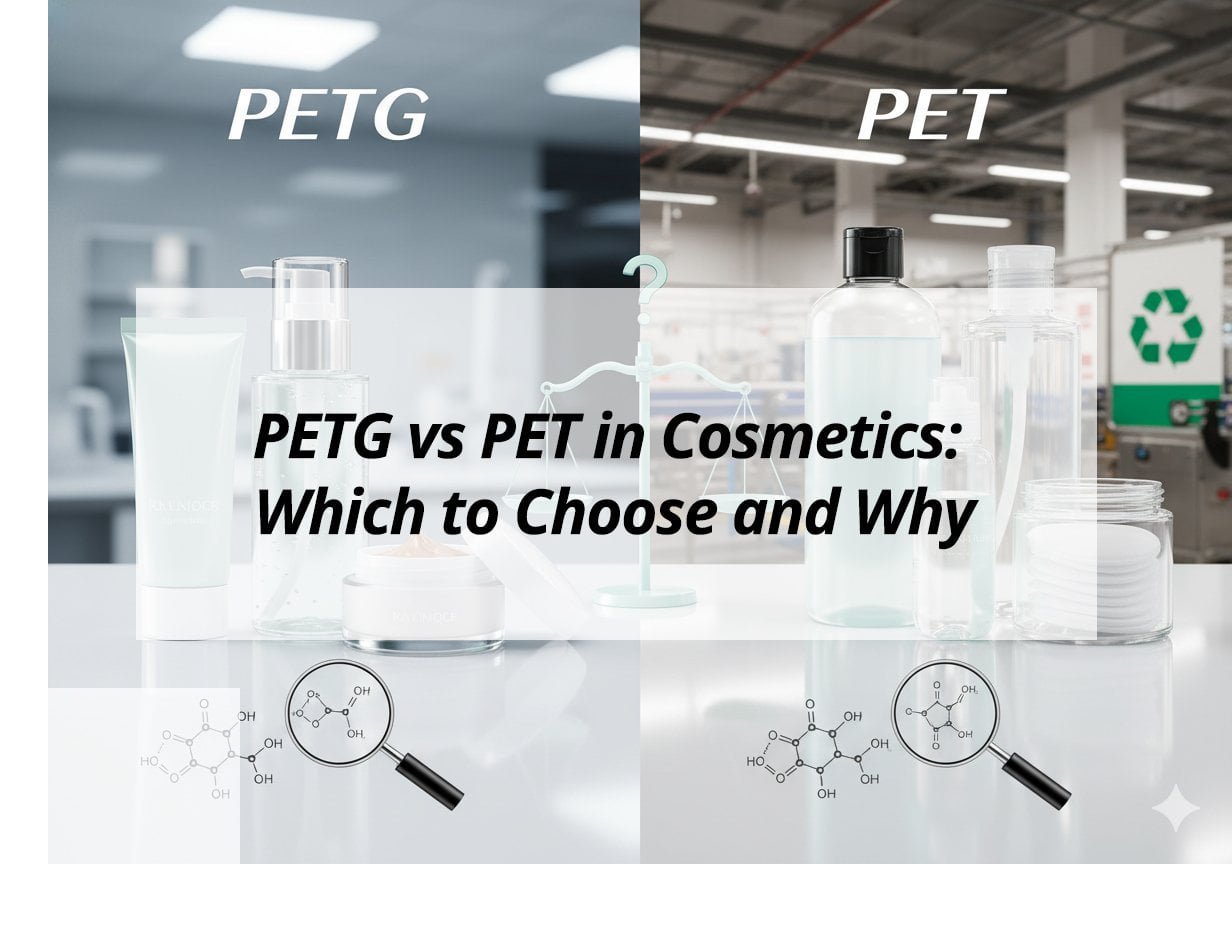
My insights: PETG vs PET in Cosmetics: Which to Choose and Why
Confused about choosing between PETG and PET for cosmetic packaging? Discover their benefits to make an informed decision.
Choose PETG for superior impact resistance, chemical compatibility with aggressive ingredients, and design flexibility. Opt for PET if you seek cost-effectiveness3, broad recyclability, and traditional cosmetic packaging advantages.
Navigating the PETG vs PET Decision
Advantages of PETG:
- Chemical Compatibility: Ideal for products with essential oils or alcohol.
- Impact Resistance & Design: Offers excellent durability and versatile design options, enhancing premium packaging aesthetics.
Advantages of PET:
- Cost & Recyclability: More cost-effective with broad recyclability.
- Market Availability: Well-suited for water-based cosmetics and established in high-volume production.
Choosing the Right Material:
- Product Formulation: Consider PETG for chemically intense formulations.
- Design Needs: PETG allows for more intricate designs.
- Recycling Goals: PET fits sustainability goals with its wide recyclability.
| Criteria | PET | PETG |
|---|---|---|
| Chemical Resistance | Suitable for mild formulations | Excellent for aggressive compounds |
| Impact & Design Flexibility | Good, standard designs | Superior, complex designs |
| Recyclability | Widely accepted | Limited acceptance |
| Cost & Transparency | Cost-effective, clear | Slightly higher, premium clarity |
For brands focusing on durability and complex designs, PETG is advantageous. In contrast, PET is more suitable for economical and environmentally conscious choices.
Conclusion
Choosing between PETG and PET depends on your specific needs in terms of durability, aesthetics, and cost. Understanding these differences helps in making informed decisions for your cosmetic packaging.
-
Discover why impact resistance is crucial for packaging materials, especially in high-demand applications. ↩
-
Explore how aesthetic appeal influences consumer choices and brand perception in the cosmetics industry. ↩
-
Discover how cost-effectiveness plays a role in choosing the right plastic for your packaging needs. ↩