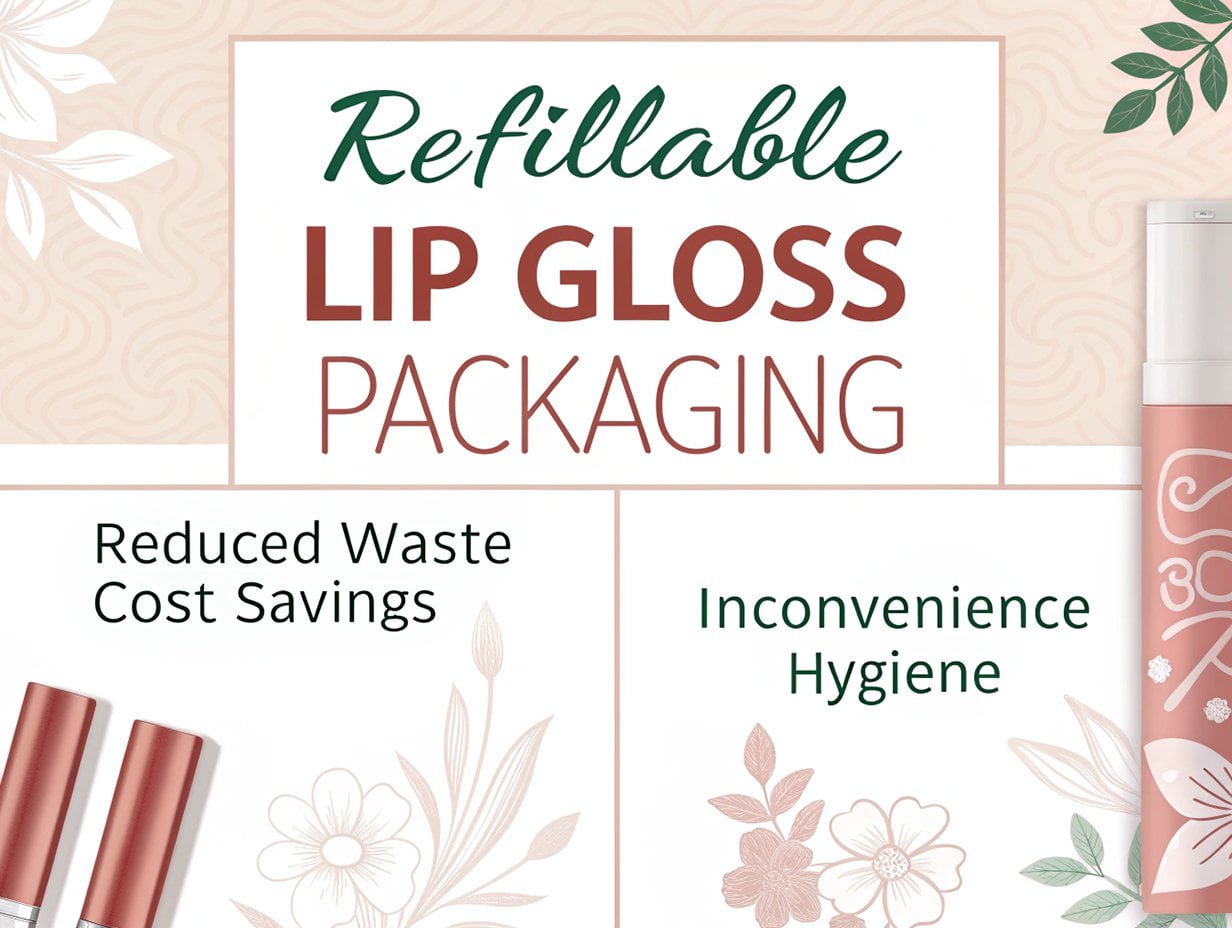
In the fast-paced world of cosmetics, sustainable choices are gaining popularity. But is refillable lip gloss packaging the right option for your brand and consumers?
Refillable lip gloss packaging offers multiple benefits like reduced waste and improved sustainability. It’s an eco-friendly solution for brands looking to lower their environmental footprint. By embracing refillable systems, brands can appeal to eco-conscious consumers and align with shifting market demands toward greener practices.
Navigating the world of refillable packaging requires understanding its true advantages and challenges. Let’s explore if this choice aligns with your brand’s goals.
What are the benefits of refillable packaging?
Sustainability is more than a trend; it's a necessity. Brands need to adopt eco-friendly practices to maintain a competitive edge.
Refillable packaging reduces waste, conserves resources, and meets eco-conscious consumer demands. It supports a circular economy by encouraging the reuse of materials, thereby minimizing landfill contributions.
Refillable packaging1 bridges the gap between luxury and responsibility, offering a premium experience with environmental consciousness.
Refillable Benefits
Refillable packaging shifts focus from single-use products to systems that encourage reuse. This approach reduces resource consumption and decreases carbon footprint associated with production and disposal.
-
Environmental Impact2: Refillable solutions cut down on the need for new resources. Reusing containers reduces manufacturing emissions and waste.
-
Consumer Loyalty3: Eco-friendly packaging attracts a loyal customer base. Consumers are more likely to support brands that align with their values, enhancing brand reputation.
-
Cost Considerations4: While initial costs may be higher, refills are generally cheaper to produce, offering long-term savings. Brands can leverage this to offset initial investments.
What are the pros and cons of plastic packaging?
Plastic packaging5 dominates due to its versatility and cost-effectiveness. Is it still the best choice in an eco-conscious market?
Plastic packaging is convenient and cost-effective but poses environmental challenges. Its durability and lightweight nature contrast with significant pollution and degradation issues.
Understanding both sides of plastic packaging helps in making informed material choices and sustainability advancements.
Plastic Packaging
Plastic’s adaptability makes it a staple in cosmetics. However, environmental costs prompt brands to rethink packaging strategies.
-
Advantages of Plastic:
- Cost Efficiency: Plastic is cheaper to produce and transport, making it a suitable option for budget-conscious brands.
- Durability: Its resilience ensures product protection during shipping and handling.
-
Disadvantages of Plastic:
- Pollution: Single-use plastics contribute significantly to environmental degradation, requiring recycling and alternative solutions.
- Perception: Growing awareness about pollution shifts consumer preference towards more sustainable options, impacting brand perception.
What are the disadvantages of lip gloss?
The allure of lip gloss is undeniable, but does it come with drawbacks?
Lip gloss can cause discomfort and frequent reapplication. Non-refillable tubes also contribute to waste, posing challenges for sustainability-focused users.
Understanding the cons of lip gloss guides improvements in product design and formulation.
Lip Gloss Disadvantages
While lip gloss offers shine and style, several factors may deter environmentally and quality-conscious consumers.
-
Comfort Issues: Some formulas may feel sticky or uncomfortable on lips over time, prompting users to seek alternatives.
-
Frequent Use: Lip gloss often requires regular reapplication, increasing usage and potentially leading to more waste.
-
Packaging Considerations: Non-recyclable tubes add waste, emphasizing the need for eco-friendly solutions like refillable or compostable materials.
What are the disadvantages of packaging materials?
Selecting the right material is key, but each choice comes with its trade-offs. Which pitfalls should brands avoid?
Packaging materials, while essential, involve trade-offs. From metal to glass or plastic, each option impacts the environment differently. Balancing functionality with sustainability is crucial.
Understanding material disadvantages enables brands to make informed decisions that align with both product needs and environmental goals.
Packaging Material Disadvantages
Choosing packaging is complex. Materials must balance practicality with eco-responsibility, considering long-term impacts.
-
Pros and Cons of Metal Packaging:
- Pros: Durable and resistant, suitable for premium products.
- Cons: Heavier and costlier to transport, impacting carbon footprint.
-
Pros of Glass Bottles:
- Pros: 100% recyclable and aesthetically pleasing.
- Cons: Fragility and weight increase shipping complications.
-
Advantages and Disadvantages of Plastic Packaging:
- Pros: Light, flexible, and low-cost.
- Cons: Environmental degradation and consumer perception issues.
-
Are Refill Pouches Better for the Environment?
- Refill pouches reduce material use and are often recyclable, appealing to eco-conscious consumers.
My Insights: Unveiling the Benefits of Refillable Lip Gloss Packaging
Achieving sustainability in cosmetics is complex but necessary. Refillable lip gloss packaging offers potential advantages but also involves challenges.
Refillable lip gloss packaging reduces plastic waste and appeals to eco-conscious consumers. While it can lead to cost savings over time, the initial investment and design complexity may deter some brands.
Refillable packaging aligns with circular economy goals by minimizing landfill waste and conserving resources. It supports brand loyalty and provides unique marketing opportunities but requires consumer education and willingness to adapt.
Diving Deeper into Refillable Packaging Benefits
Refillable lip gloss packaging can create a sustainable brand image. However, investment in design and logistics is required to ensure success. Brands must balance the initial manufacturing costs with the long-term savings on packaging materials. Consumer education is key to adoption, highlighting the environmental benefits and usage aspects.
-
Environmental Impact: The reuse of base containers minimizes plastic waste and supports sustainability initiatives, aligning with circular economy principles.
-
Economic Considerations: While initial costs are higher, long-term savings occur due to lower packaging material needs. Brands need to consider ROI when implementing such systems.
-
Consumer Appeal: Eco-conscious consumers are drawn to brands committed to sustainability. Offering refillable options enhances brand loyalty and attracts a dedicated customer base.
| Factor | Details |
|---|---|
| Environmental Impact | Reduces plastic usage, aligns with sustainability goals. |
| Economic Consideration | Higher upfront costs offset by long-term savings. |
| Consumer Appeal | Attracts eco-conscious buyers, strengthens brand loyalty. |
Conclusion
Refillable lip gloss packaging, with its blend of sustainability and style, offers a promising future for eco-conscious brands.
-
Explore how refillable packaging reduces waste and supports sustainability, appealing to eco-conscious consumers. ↩
-
Discover the positive environmental effects of refillable packaging and its role in reducing waste. ↩
-
Understand the connection between eco-friendly packaging and increased consumer loyalty for brands. ↩
-
Find out how refillable packaging can lead to long-term savings despite higher initial costs. ↩
-
Get insights into the advantages and disadvantages of plastic packaging in today's market. ↩