Are you seeking to understand the critical aspects of sustainable cosmetics packaging for your brand? Making informed choices in this area is essential. It supports environmental goals and meets growing consumer demand for responsible products.
Sustainable cosmetics packaging refers to packaging designed to lessen its environmental impact. This involves using materials that are recyclable, reusable, or biodegradable. Such an approach helps reduce waste, saves resources, and lowers carbon emissions throughout the product's entire lifecycle.
The move towards sustainable packaging is not just a trend; it is a fundamental shift in industry practice. Companies are increasingly prioritizing packaging that reflects environmental responsibility.
What is the most sustainable cosmetic packaging?
Many businesses inquire about the most sustainable cosmetic packaging1 options available today. The most sustainable cosmetic packaging balances material selection, production processes, and end-of-life solutions. It focuses on minimizing environmental harm at every stage.
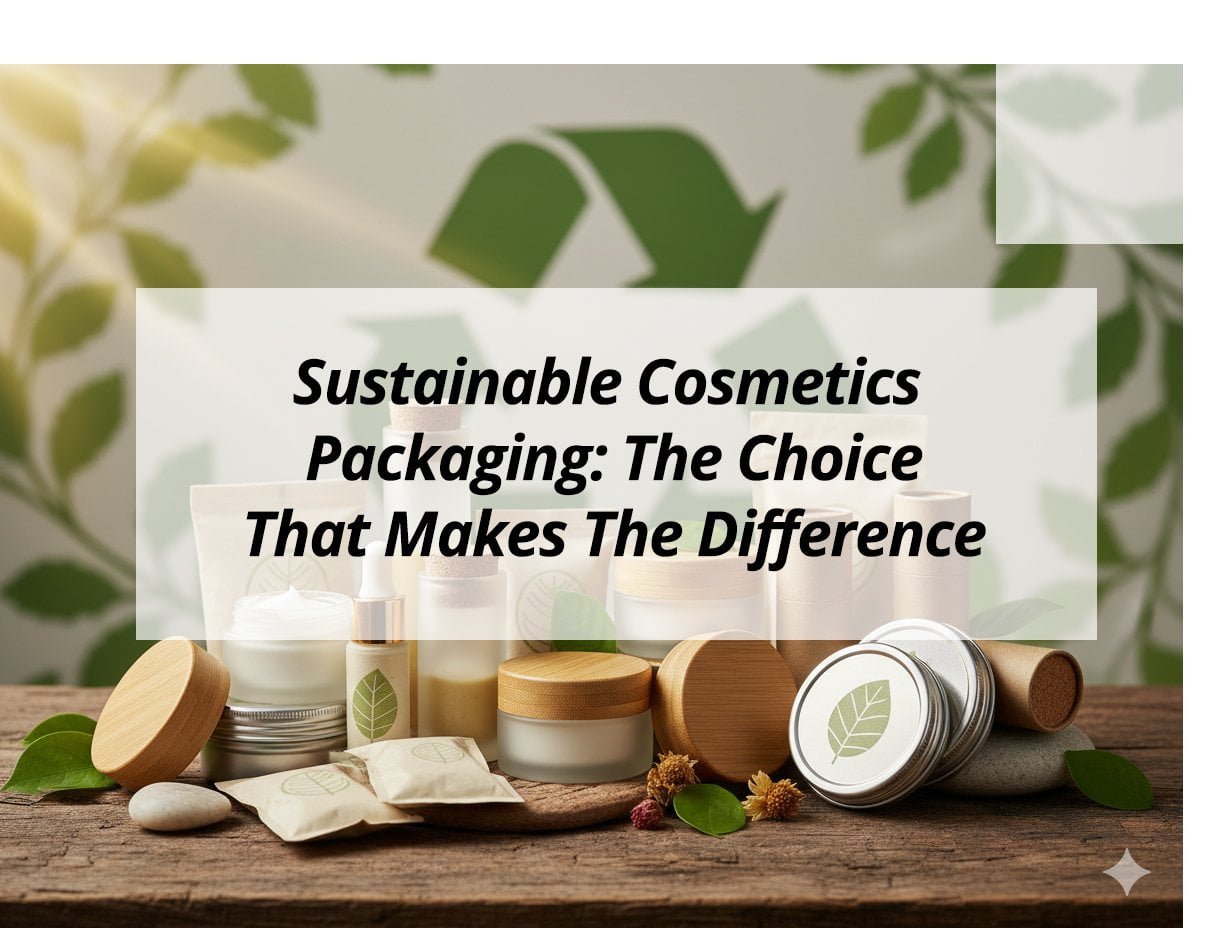
Sustainable cosmetic packaging often incorporates materials such as PCR (Post-Consumer Recycled) plastics, glass, bamboo, or aluminum. These materials generally have a lower environmental footprint compared to virgin plastics. They can often be recycled or reused. For instance, using a PCR plastic lipstick tube directly reduces the demand for new plastic production. This represents a significant step towards sustainable cosmetics packaging.
Considering a strategic and social analytics model for sustainable packaging in the cosmetic industry highlights this complexity. It involves evaluating environmental factors alongside market demands and consumer perceptions. This comprehensive view helps identify truly sustainable solutions.
Understanding Material Choices for Eco Cosmetic Packaging
Choosing the appropriate material is crucial for sustainable packaging. Each material presents unique advantages and disadvantages.
| Material | Advantages | Disadvantages | Typical Applications |
|---|---|---|---|
| PCR Plastic | Reduces virgin plastic use, often recyclable, lightweight | Recycling can be complex for certain types, not infinitely recyclable | Lotion bottles, cream jars, lipstick tubes |
| Glass | Infinitely recyclable, provides a premium feel, non-reactive | Heavy, fragile, can lead to higher transport emissions | Serum bottles, cream jars, perfume bottles |
| Aluminum | Infinitely recyclable, lightweight, durable, excellent barrier properties | Energy-intensive during initial production | Aerosol cans, tins, specific lipstick cases |
| Bamboo | Renewable resource, biodegradable, natural aesthetic | Requires specific processing, may not be recyclable when mixed with other materials | Caps, outer casings, compacts |
The Role of Design in Packaging of Cosmetics
The design of the packaging significantly influences its sustainability. A streamlined design often requires less material, which reduces waste. It also simplifies the recycling process. For example, a pump made from a single material is generally more sustainable than one made from multiple, mixed materials.
- Minimalist Design: Uses less material, resulting in less waste.
- Mono-material Construction: Facilitates easier recycling processes.
- Refillable Systems: Reduces the need for entirely new packaging components.
Lifecycle Assessment for Beauty Products Sustainable Packaging
A comprehensive lifecycle assessment evaluates the entire environmental impact. This includes raw material extraction, manufacturing, transportation, consumer use, and final disposal. Such assessments are vital for determining the true environmental cost of packaging options.
What are the 5 R's of sustainable packaging?
The 5 R's of sustainable packaging provide a fundamental framework for environmental responsibility. These principles guide both businesses and consumers in making more sustainable choices. They are instrumental in minimizing waste and maximizing resource efficiency within the packaging sector.
The 5 R's typically stand for Refuse, Reduce, Reuse, Recycle, and Rot (Compost). These actions are prioritized to reduce environmental impact. They form the basis for developing beauty products sustainable packaging options.
These principles help define the operational strategies for moving towards sustainable cosmetics packaging. They offer clear steps for companies evaluating their packaging of cosmetics.
Refuse: Eliminating Unnecessary Packaging
The "Refuse" principle advocates for avoiding packaging that serves no essential purpose. This proactive approach aims to prevent waste generation from the outset.
- Avoid Excessive Packaging: Do not use redundant boxes or wraps that are not functionally necessary.
- Select Minimalist Suppliers: Choose partners who prioritize products with reduced packaging.
- Evaluate Each Component: Assess whether every part of the packaging is genuinely essential.
Reduce: Minimizing Material Use
"Reduce" focuses on decreasing the quantity of material used in packaging. This action lowers overall resource consumption and lessens waste volume.
- Lightweight Materials: Utilize materials that are lighter in weight where feasible.
- Compact Designs: Engineer packaging to be as small and efficient as possible.
- Concentrated Formulations: Develop products that require less packaging per application.
Reuse: Extending Packaging Lifespan
"Reuse" involves designing packaging that can be used multiple times. This practice extends the product's lifecycle and prevents premature disposal.
- Refillable Containers: Create bottles or jars that consumers can easily refill.
- Durable Materials: Employ materials robust enough to withstand repeated uses.
- Encourage Repurposing: Inspire consumers to find new applications for packaging after its primary use.
Recycle: Transforming Waste into Resources
"Recycle" refers to processing used materials to create new products. This conserves natural resources, saves energy, and reduces landfill waste.
- Recyclable Material Selection: Choose materials widely accepted by recycling programs.
- Clear Labeling: Provide explicit instructions for consumers on how to recycle the packaging.
- Consider Local Infrastructure: Be aware of the recycling capabilities available in target markets.
Rot (Compost): Natural Decomposition
"Rot," or compost, signifies packaging designed to break down biologically. This process returns organic matter to the soil, benefiting the environment. It is an effective option for specific material types.
- Biodegradable Materials: Use materials that decompose naturally and harmlessly.
- Industrial Compostability: Ensure packaging meets certified standards for industrial composting.
- Provide Clear Instructions: Inform consumers about the proper methods for composting the packaging.
What are the 7 R's of sustainable packaging?
Expanding on the foundational 5 R's, some frameworks incorporate additional principles, leading to the 7 R's of sustainable packaging. These extra considerations provide a deeper perspective on achieving truly eco cosmetic packaging. The expanded R's often include Rethink and Repair, prompting a more holistic view of product and packaging longevity and systemic change.
Integrating these broader principles allows for a more comprehensive approach to sustainability. It encourages continuous innovation in beauty products sustainable packaging. This framework ensures a thorough evaluation of packaging of cosmetics.
A strategic and social analytics model for sustainable packaging in the cosmetic industry benefits from this expanded view. It allows for more detailed analysis of environmental, economic, and social impacts.
Rethink: Fundamental Strategic Reassessment
"Rethink" involves a fundamental re-evaluation of current practices and assumptions. It encourages innovative thinking about product design, delivery, and overall business models.
- Circular Economy Models: Design products and packaging for continuous use and resource circulation.
- Innovative Material Exploration: Investigate new materials with significantly lower environmental footprints.
- Systemic Supply Chain Changes: Examine the entire supply chain for opportunities to reduce impact.
Repair: Enhancing Product Longevity
While primarily applied to durable goods, "Repair" has implications for packaging design. It suggests creating packaging that supports the longevity and maintenance of the product it contains.
- Durable Packaging: Packaging designed to protect the product effectively over its lifespan.
- Modular Design: Packaging that facilitates easy replacement of product components if needed.
- Care Instructions: Packaging that provides guidance on how to maintain and care for the product.
The Interconnectedness of the R's
All principles within the R's framework are interconnected. They form a comprehensive approach to sustainability. For example, Rethinking processes can lead to the development of new materials that are easier to Recycle or Rot.
| R Principle | Primary Focus Area | Application in Cosmetic Packaging |
|---|---|---|
| Refuse | Avoiding unnecessary items | Eliminating secondary packaging where not essential |
| Reduce | Minimizing material usage | Designing lightweight plastic bottles for lotions |
| Reuse | Extending item's life | Offering refillable cream jars or dispensers |
| Recycle | Processing for new products | Using PET plastic bottles that can be widely recycled |
| Rot (Compost) | Biodegradable materials | Employing compostable lip balm tubes2 |
| Rethink | Systemic innovation | Implementing closed-loop systems for packaging collection |
| Repair | Product longevity support | Creating protective packaging for long-lasting applicators |
What is the most sustainable form of packaging?
Determining the single "most sustainable" form of packaging is complex. The optimal choice depends on various factors, including the specific product, its intended use, and the available local infrastructure for waste management. There is no universal solution that fits every scenario.
Selecting towards sustainable cosmetics packaging requires a thorough understanding of these variables. This includes assessing the entire lifecycle, from raw material sourcing to consumer disposal practices. The goal is to identify beauty products sustainable packaging options that are both innovative and practically effective.
Evaluating the packaging of cosmetics necessitates considering how different forms perform under varying conditions. For example, a glass bottle might be ideal for a luxury serum in a market with robust glass recycling, while a lightweight PCR plastic tube might be better for a high-volume product in an area with limited recycling infrastructure.
Considering the Product Type
The nature of the product itself significantly influences packaging choices. A liquid product requires different protective qualities than a solid or powdered item.
- Liquids: Often require barrier protection against light, air, or moisture. Glass or specific types of plastic are commonly used.
- Solids: Can typically be housed in simpler, lighter packaging. Options like paper-based materials or bamboo may be suitable.
- Creams/Lotions: Usually need airtight containers to prevent degradation. Airless pump systems are effective for this purpose.
Local Infrastructure and Consumer Behavior
The effectiveness of sustainable packaging is also tied to local waste management infrastructure and consumer practices. Even a theoretically sustainable material is not truly sustainable if it cannot be properly processed after use.
- Recycling Facilities: Availability of local facilities that can process the chosen packaging material.
- Composting Options: Access to industrial composting sites for biodegradable or compostable packaging.
- Consumer Education: The extent to which consumers are informed about proper disposal methods for specific packaging.
The Importance of Lightweighting
Reducing the weight of packaging contributes significantly to its sustainability. Lighter packaging translates to reduced energy consumption during transportation. This, in turn, lowers carbon emissions across the supply chain.
| Packaging Type | Typical Material | Sustainability Factor |
|---|---|---|
| Airless Bottle | PCR PP | Product protection, often refillable, reduced weight |
| Glass Jar | Glass | Infinitely recyclable, perceived as premium |
| Bamboo Compact | Bamboo | Renewable resource, natural aesthetic |
| Aluminum Tin | Aluminum | Infinitely recyclable, durable, good barrier |
My Insights: Sustainable Cosmetics Packaging – A Game Changer for the Environment
Frustrated by wasteful beauty packaging? Embrace sustainable solutions that reduce waste and enhance brand value.
Sustainable cosmetics packaging utilizes eco-friendly materials like biodegradable and recyclable options to minimize environmental impact. It includes refillable containers and minimalist designs, supporting brands and consumers in reducing waste and promoting a greener future.
Exploring the Impact of Sustainable Cosmetic Packaging Choices
Why Conventional Packaging is a Problem:
- Environmental Waste: Billions of packaging units end in landfills due to non-recyclability.
- Resource Consumption: Producing virgin materials like plastic and glass consumes significant energy and resources.
What Makes Packaging Sustainable:
- Eco-Friendly Materials: Utilize glass, aluminum, and post-consumer recycled plastics.
- Innovative Designs: Employ biodegradable materials like cellulose-based polymers.
- Recyclability and Reuse: Design for easy recycling with mono-material components and refill systems.
Key Benefits for Brands and the Planet:
| Benefit | Description |
|---|---|
| Environmental Impact | Reduces waste and emissions, supports sustainability. |
| Brand Value | Aligns with consumer demand, enhancing brand loyalty. |
| Regulatory Readiness | Prepares for stricter environmental regulations. |
Sustainable cosmetic packaging not only safeguards the environment but also enhances brand image and prepares businesses for future regulations, offering practical solutions that resonate with eco-conscious consumers.
Conclusion
Making informed choices in sustainable cosmetics packaging is paramount for modern brands. This commitment resonates with consumer values and supports global environmental efforts. By applying established principles and considering product-specific needs, companies can implement packaging solutions that are truly impactful.