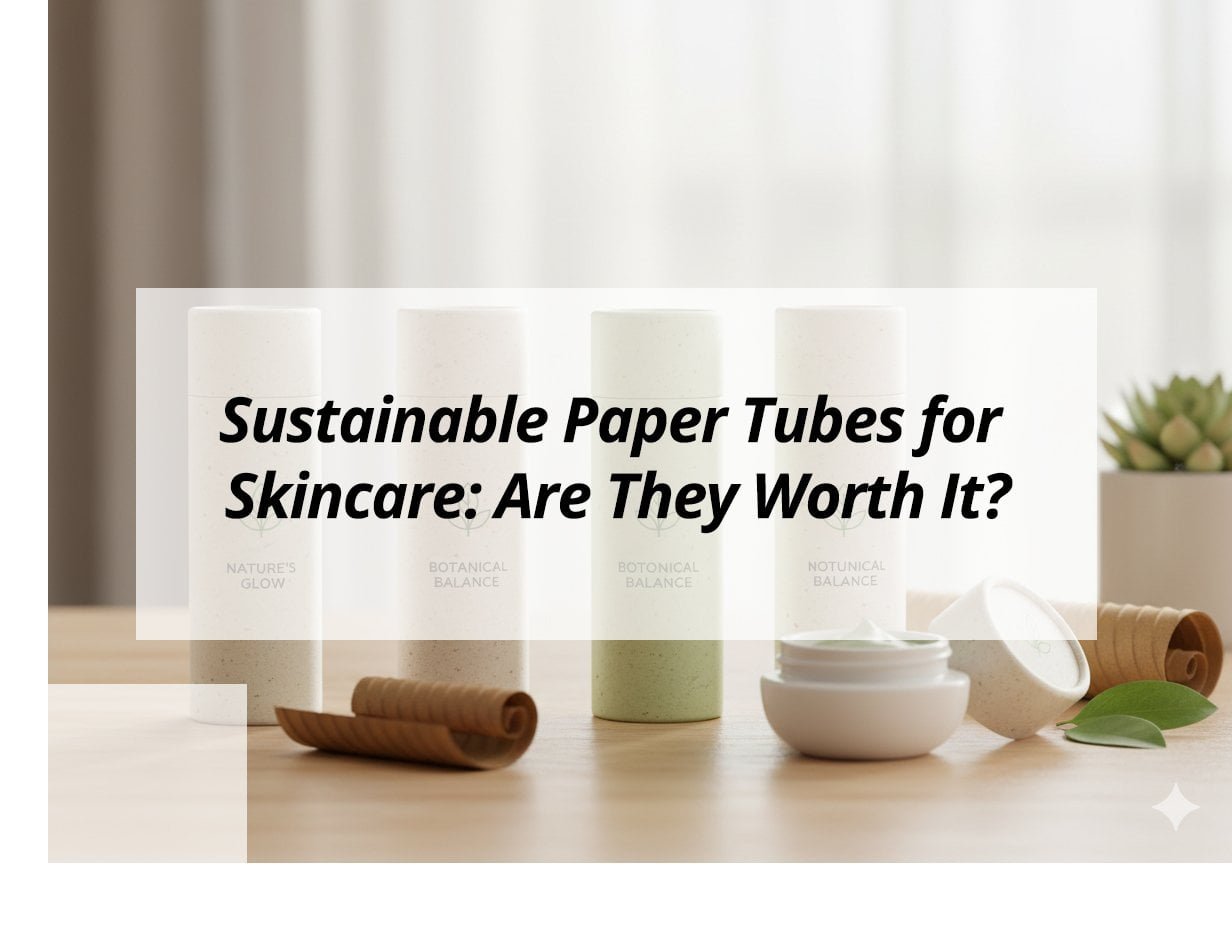
Many skincare brands are exploring sustainable packaging. Paper tubes are a popular option. It is important to understand their full scope. This includes both benefits and drawbacks.
Sustainable paper tubes offer an eco-friendly packaging solution for skincare due to their renewable sourcing and biodegradability. However, they present challenges concerning moisture resistance, barrier properties, and overall durability, which can affect product stability and consumer perception.
What Are the Disadvantages of Sustainable Paper Products?
Brands evaluate new materials for various reasons. Understanding the limitations of sustainable paper products is crucial. These limitations can impact product quality and cost.
Sustainable paper products, including tubes, often exhibit lower resistance to moisture and physical stress compared to conventional plastics. This can compromise product integrity and limit their application for certain skincare formulations, while potentially increasing overall production costs.
Paper products have specific characteristics. These characteristics differentiate them from other packaging materials. They require careful consideration.
Material Durability and Protection
Paper's structural properties differ from plastics or glass. This impacts how products are protected.
- Mechanical Strength: Paper can be less resistant to tearing, bending, and crushing. This might lead to damage during transport or handling.
- Impact Resistance: Paper offers limited protection against drops. The product inside could be vulnerable.
- Abrasion: The surface of paper can show wear more easily. This impacts the aesthetic over time.
| Factor | Paper Tube Performance | Plastic Tube Performance |
|---|---|---|
| Physical Strength | Moderate | High |
| Tear Resistance | Variable | High |
| Impact Resistance | Low | Moderate to High |
Barrier Functionality and Product Stability
Skincare products need protection from environmental factors. This affects shelf life and efficacy.
- Moisture Barrier: Paper readily absorbs moisture. This is a significant concern for water-based skincare products.
- Oxygen Barrier: Oxygen can degrade sensitive ingredients. Paper typically provides a less effective oxygen barrier than plastics.
- Light Protection: While opaque, paper might still require additional coatings to block UV light effectively for light-sensitive ingredients.
Manufacturing Complexities and Costs
Producing paper-based packaging can involve different processes and cost structures.
- Specialized Production: Manufacturing paper tubes often requires distinct machinery and techniques. This differs from plastic molding.
- Material Sourcing: Sourcing certified sustainable paper materials can sometimes incur higher costs. These costs can exceed those for conventional materials.
- Processing Efficiency: The production speed for paper tubes might be slower. This can affect manufacturing efficiency and labor costs.
What Are the Negatives of Sustainable Packaging?
Adopting sustainable packaging involves evaluating a broader set of factors. It is important to understand the potential downsides. These can influence operational and market aspects.
Sustainable packaging options can present challenges such as increased material and production costs, potential limitations in performance characteristics like barrier protection, and complexities related to end-of-life disposal and consumer recycling behavior.
The shift to sustainable packaging is a complex decision. It requires a thorough analysis of all involved elements.
Financial Implications
Cost is a primary concern for any business. Sustainable packaging often introduces new cost structures.
- Material Expenses: Raw materials for sustainable packaging, such as bio-based polymers or recycled content, can be more expensive.
- Investment in Technology: New production lines or modifications for sustainable materials require capital investment.
- Supply Chain Costs: Sourcing sustainable materials might involve new suppliers or logistics. This can alter supply chain costs.
Performance and Product Integrity
Packaging must protect the product effectively. Sustainable options sometimes have different performance profiles.
- Barrier Properties: Achieving adequate barrier protection against moisture, oxygen, and light can be more challenging with some sustainable materials.
- Durability: Certain sustainable materials may have lower physical strength or resistance to environmental stressors.
- Compatibility: Some skincare formulations may react differently with novel sustainable packaging materials. This requires extensive testing.
End-of-Life and Consumer Behavior
The "sustainable" label hinges on proper disposal. This often depends on consumer action.
- Disposal Infrastructure: Many biodegradable or compostable materials require specific industrial composting facilities. These facilities are not universally available.
- Recycling Streams: If not properly sorted, sustainable packaging can contaminate existing recycling streams. This reduces overall recycling efficiency.
- Consumer Education: Educating consumers on correct disposal methods for different sustainable materials is a continuous challenge.
Supply Chain and Regulatory Aspects
Managing a supply chain for sustainable packaging can introduce new complexities.
- Material Availability: The global supply for certain sustainable materials can be less stable or diversified.
- Quality Consistency: Ensuring consistent quality for new sustainable materials requires rigorous supplier management.
- Evolving Regulations: The regulatory landscape for sustainable packaging is dynamic. It often varies by region.
What Are the Advantages and Disadvantages of Paper Packaging?
Paper packaging is widely recognized. It offers distinct characteristics for packaging solutions. Understanding its full profile is key for informed decisions.
Paper packaging benefits from being a renewable and recyclable resource, offering a positive environmental footprint and good printability. However, its primary disadvantages include inherent vulnerability to moisture, lower barrier capabilities, and reduced physical durability compared to plastic alternatives.
Paper packaging has a long history. Its environmental attributes are often highlighted. However, its functional limitations are equally important for skincare applications.
Advantages of Paper Packaging
Paper offers several compelling advantages. These are both environmental and practical.
- Renewable Resource: Paper is derived from wood pulp. Trees are a renewable resource.
- Recyclability: Paper is widely recyclable. This contributes to a circular economy.
- Biodegradability: Paper naturally decomposes. This helps reduce landfill burden.
- Printability: Paper surfaces are excellent for printing. This allows for diverse branding and aesthetic designs.
- Lightweight: Paper can be lighter than other materials like glass. This can lead to lower transportation costs.
| Benefit | Description |
|---|---|
| Resource Renewability | Sourced from sustainably managed forests. |
| Environmental Impact | Biodegradable and widely recyclable. |
| Aesthetic Versatility | High print quality for diverse designs. |
Disadvantages of Paper Packaging
Despite its benefits, paper packaging has notable drawbacks. These are critical for skincare.
- Moisture Absorption: Paper readily absorbs water. This compromises its structural integrity and barrier function for liquid products.
- Barrier Limitations: Paper alone offers poor protection against oxygen, water vapor, and oils. Specialized coatings are often necessary.
- Physical Durability: Paper is less robust than plastic or metal. It is prone to tearing, creasing, and crushing.
- Formulation Compatibility: Direct contact with certain skincare formulations can degrade paper. It requires internal linings.
- Cost of Enhanced Performance: Achieving improved moisture or oil resistance in paper often requires additional treatments. These treatments can increase costs.
Application in Skincare
The suitability of paper packaging for skincare depends heavily on the product.
- Product Type: Solid or powder-based skincare products may be more suitable. Liquid or oil-based products pose greater challenges.
- Protective Linings: Many paper tubes for skincare incorporate internal plastic or bioplastic linings. These improve barrier function.
- Shelf Life Requirements: The required shelf life of the product influences the necessary barrier performance.
What Are the Disadvantages of Biodegradable Packaging?
Biodegradable packaging aims to reduce environmental impact. However, it is important to understand its specific limitations. These limitations affect performance and disposal.
Biodegradable packaging, while designed to decompose naturally, often faces challenges such as higher material costs, specific environmental requirements for decomposition, and potential variability in performance regarding barrier protection and product shelf life compared to conventional packaging.
The term "biodegradable" refers to a specific end-of-life process. This process has distinct requirements and implications.
Cost Implications
The production and use of biodegradable materials often involve higher costs.
- Raw Material Expense: Biodegradable polymers are typically more expensive than commodity plastics. This is due to specialized production and lower volume.
- Processing Costs: Manufacturing with biodegradable materials can require specific equipment or modified processes. These can add to production expenses.
- Research and Development: Ongoing investment in biodegradable material science contributes to higher overall costs.
Performance Characteristics
The functional performance of biodegradable packaging is a key consideration.
- Barrier Properties: Many biodegradable materials may offer different levels of barrier protection. This includes barriers against moisture, oxygen, and UV light.
- Shelf Life: The ability of biodegradable packaging to maintain product stability and extend shelf life can vary. This impacts sensitive skincare products.
- Durability and Stability: Some biodegradable materials might exhibit reduced mechanical strength or stability under certain conditions. They may degrade prematurely.
Disposal and End-of-Life Requirements
The "biodegradable" claim is specific to certain environmental conditions.
- Specific Decomposition Conditions: Most biodegradable packaging requires industrial composting facilities to break down effectively. These conditions include specific temperature, moisture, and microbial activity.
- Lack of Infrastructure: Access to industrial composting facilities is not universal. This means many biodegradable items do not reach their intended end-of-life scenario.
- Landfill Behavior: In conventional landfills, many biodegradable plastics may not decompose as intended. This is due to the anaerobic (oxygen-free) environment.
- Recycling Contamination: If biodegradable packaging enters plastic recycling streams, it can contaminate the batch. This can render the recycled material unusable.
Material Sourcing and Supply Chain
Managing the supply chain for biodegradable packaging presents unique challenges.
- Material Availability: The global supply of specific biodegradable polymers can be more limited and less stable.
- Quality Control: Ensuring consistent material quality and performance from biodegradable suppliers requires careful management.
- Environmental Impact of Sourcing: The sourcing of some biodegradable materials can raise questions. This includes land use for feedstocks.
My Insights: Sustainable Paper Tubes for Skincare: Are They Worth It?
Wondering if paper tubes can elevate your skincare brand? Explore their environmental perks and potential limitations to decide if they’re right for you.
Sustainable paper tubes reduce plastic waste, are biodegradable, and cater to eco-conscious consumers. While they enhance brand perception, they may be less durable and require moisture barriers, influencing formula compatibility and cost.
Evaluating the Value of Paper Tubes in Skincare
Environmental Advantages
- Plastic Reduction: Paper tubes can cut plastic usage by up to 45%, offering recyclable and biodegradable options, especially when made from recycled fibers.
- Brand Appeal: With customizable designs, they enhance perceived luxury and meet consumer demand for eco-friendly packaging.
Challenges and Considerations
| Issue | Impact on Skincare Products | Mitigation Strategies |
|---|---|---|
| Barrier Limitations | Risk of moisture degradation in formulas | Use bio-based coatings or mono-PE liners |
| Structural Strength | Potential crushing during shipping | Opt for higher-gsm paperboard and reinforced designs |
| Recyclability Concerns | Plastic liners may contaminate recycling | Choose mono-material constructions and clear disposal labels |
| Cost & MOQ | Higher costs at low volumes | Use standard sizes and digital printing to reduce costs |
Ideal Use Cases
Paper tubes are best for solid, low-moisture products and brands focused on sustainability storytelling. For high-active formulas, consider hybrid solutions like paper exteriors with protective liners. In most cases, investing in paper tubes offers tangible environmental and branding benefits for eco-conscious skincare brands.
Conclusion
Sustainable paper tubes and other biodegradable packaging offer environmental benefits for skincare brands. However, brands must weigh these against practical disadvantages. These include concerns about cost, durability, and performance limitations.