Developing a beauty brand demands attention to detail. Packaging is a core element. It impacts brand perception. It influences consumer choice. Generic bottles often fail to capture a brand's essence.
Custom cosmetic bottles help beauty brands create a unique identity. They ensure product protection. They attract target consumers. These bottles reflect brand values and product quality. They are essential for standing out in a competitive market. Customization builds brand recognition and consumer loyalty effectively.
Many new beauty brands overlook the strategic role of custom packaging. They miss the chance to make a strong visual statement. Smart brands use custom bottles to tell their story. This approach sets them apart.
How to create your own brand of beauty products?
Starting a beauty brand seems complex. But with clear steps, it is achievable. Product formulation is one step. Branding is another. Packaging is very important for success.
To create your own beauty brand, you need a clear vision. This includes product ideas and target audience. Research the market. Develop unique formulations. Focus on strong branding. Choose effective custom packaging. Plan your marketing and distribution. Ensure all products meet safety standards.
I have seen many brands start. Some succeed fast. Others struggle. The ones that succeed always have a strong brand identity. This identity comes from their products, their story, and their packaging. I remember a small startup. They had a great serum. But they used a standard bottle. It looked like many other brands. I advised them to invest in a custom bottle. We designed a sleek bottle with a unique pump. It changed everything. Their product looked more expensive. Sales grew because the packaging matched the quality inside.
Essential Steps to Launch a Beauty Brand
Launching a beauty brand requires careful planning. Each step contributes to the brand's overall success.
- Market Research: Understand your target audience. Identify market gaps. See what consumers want.
- Product Development: Create unique formulations. Ensure they are safe and effective. Consider ingredients and benefits.
- Branding: Define your brand's mission. Develop a brand name, logo, and visual identity. This guides all decisions.
- Packaging Design: Choose custom bottles that reflect your brand. Ensure they are functional and appealing.
- Manufacturing: Partner with a reliable manufacturer. Ensure quality control and production efficiency.
- Legal Compliance: Obtain necessary certifications. Follow all regulations for cosmetic products.
- Marketing and Sales: Develop a strategy to reach customers. Use online and offline channels.
The Role of Custom Bottles in Brand Creation
Custom bottles are not just containers. They are part of your brand's identity. They speak to your customers.
- Differentiation: A unique bottle shape or design makes your brand stand out immediately.
- Brand Storytelling: The bottle can convey your brand's values. Is it eco-friendly? Luxurious? Minimalist?
- Customer Experience: A well-designed bottle feels good to hold and use. This enhances the customer's overall experience.
- Perceived Quality: Custom, high-quality bottles suggest that the product inside is also high-quality.
Key Decisions for Custom Bottles
When creating custom bottles, several decisions shape the final product.
| Decision Point | Description | Impact on Brand |
|---|---|---|
| Bottle Material | Choosing glass, PET, PP, or acrylic. | Affects cost, durability, and perceived luxury. |
| Bottle Shape | Unique designs versus standard geometric forms. | Strong visual identity, market differentiation. |
| Closure Type | Pumps, droppers, sprays, or simple caps. | Influences functionality, user experience, and product application. |
| Decoration | Printing, hot stamping, frosting, or custom colors. | Enhances aesthetic appeal, brand recognition, and premium feel. |
| Sustainability | Use of recycled materials or refillable designs. | Appeals to environmentally conscious consumers, aligns with brand values. |
What are the 7 types of packaging?
Packaging types vary greatly. They serve different purposes. Understanding these types helps in choosing the right one for beauty products. This choice impacts product safety. It also affects market appeal.
The seven types of packaging include primary, secondary, tertiary, flexible, rigid, sustainable, and active packaging. Each type serves a specific function. Primary packaging directly holds the product. Secondary bundles primary units. Tertiary protects for shipping. Flexible packaging adapts shape. Rigid holds firm. Sustainable minimizes environmental harm. Active extends shelf life.
When I work with clients, they sometimes get confused by packaging terms. They ask, "What is the difference between primary and secondary?" I explain that for a face cream, the jar is primary. The box it comes in is secondary. The larger carton for shipping is tertiary. Each layer has its own job. A client once wanted to ship delicate glass bottles. We used strong tertiary packaging. It prevented breakage. This protected their investment. It kept customers happy by ensuring products arrived safely.
Exploring the Seven Packaging Types
Each packaging type has a distinct role in the product's journey from production to consumer.
- Primary Packaging: This is the first layer. It directly holds the product. For cosmetics, this is the bottle, jar, or tube. It protects the product inside.
- Secondary Packaging: This bundles primary packages. It often contains multiple units. For cosmetics, this might be a box holding a single bottle or a set of products. It provides extra protection and branding space.
- Tertiary Packaging: This is for shipping and logistics. It protects products during transport. Large cartons or pallets are examples. It prevents damage during bulk movement.
- Flexible Packaging: This includes pouches, sachets, and wraps. It can change shape easily. It is often lightweight and cost-effective.
- Rigid Packaging: This includes bottles, jars, and compacts. It holds a fixed shape. It offers strong protection and a premium feel.
- Sustainable Packaging: This aims to reduce environmental impact. It uses recycled, recyclable, or biodegradable materials. It is important for eco-conscious brands.
- Active Packaging: This packaging interacts with the product or its environment. It extends shelf life or monitors freshness. Examples include oxygen absorbers.
Importance in Cosmetic Packaging
For cosmetic bottles, primary and secondary packaging are especially critical for brand appeal and consumer interaction.
- Primary Packaging: The custom bottle itself. It influences user experience and product integrity.
- Secondary Packaging: The box around the bottle. It offers additional branding, information, and protection.
- Tertiary Packaging: Crucial for B2B shipping. It ensures products arrive undamaged at retailers or factories.
Packaging Types and Their Functions
Understanding how different packaging types work together is key for effective product delivery.
| Packaging Type | Main Function | Cosmetic Example |
|---|---|---|
| Primary | Direct product containment and protection. | Custom lotion bottle, lipstick tube. |
| Secondary | Bundles primary units, provides branding. | Box for a single custom perfume bottle. |
| Tertiary | Bulk handling, shipping protection. | Cardboard cartons for multiple product boxes. |
| Flexible | Adaptable shape, lightweight protection. | Sample sachets, refill pouches for liquid soap. |
| Rigid | Fixed shape, strong protection, premium feel. | Glass serum bottles, compact powder cases. |
| Sustainable | Reduces environmental impact, eco-friendly materials. | Refillable glass jars, bamboo packaging. |
| Active | Extends shelf life, interacts with product. | Packaging with UV protection coating. |
What are the 5 main categories of cosmetic products?
Cosmetic products cover a wide range of items. They serve different beauty needs. Grouping them into categories helps understand the market. This also helps in planning packaging.
The five main categories of cosmetic products are skin care, hair care, make-up, fragrances, and personal hygiene. Each category addresses specific consumer needs. They require different product formulations and packaging solutions. Understanding these categories helps brands develop targeted products. It guides effective marketing and distribution strategies.
When I consult with cosmetic brands, we always start with their product category. A brand selling skincare needs different bottles than a brand selling makeup. For example, a serum in a dropper bottle is for skincare. A foundation in a pump bottle is for make-up. A client once tried to use the same bottle for both a face toner and a hair mist. It did not work well. The toner needed a fine spray. The hair mist needed a wider, more powerful spray. Tailoring the packaging to the product category is vital. It improves user experience. It reinforces brand messaging.
Understanding Cosmetic Product Categories
Each category has its own distinct characteristics and consumer expectations.
- Skin Care: Products designed to cleanse, treat, moisturize, and protect the skin. Examples include cleansers, serums, lotions, and sunscreens. These often require precise applicators.
- Hair Care: Products for washing, conditioning, styling, and treating hair. Examples are shampoos, conditioners, hair masks, and styling gels. Packaging usually includes pumps or squeeze bottles.
- Make-up: Products used to enhance facial features or alter appearance. This includes foundation, lipstick, eyeshadow, mascara, and blush. Packaging often focuses on aesthetics and portability.
- Fragrances: Products that provide a pleasant scent. Examples are perfumes, eau de toilette, and body mists. Bottles often emphasize elegance and design.
- Personal Hygiene: Products for personal cleanliness and well-being. This includes body wash, deodorants, hand soaps, and oral care. Functionality and ease of use are key.
Packaging Needs for Each Category
Different cosmetic categories demand specific bottle features and designs.
- Skin Care Bottles: Often require pumps, droppers, or airless bottles. This protects sensitive ingredients.
- Hair Care Bottles: Typically larger, with pumps or flip-top caps. This allows for easy dispensing of larger volumes.
- Make-up Bottles: Focus on aesthetic appeal, precision applicators, and compact designs. Examples include foundation bottles with pumps or small lip gloss tubes.
- Fragrance Bottles: Emphasize unique, elegant designs. Spray nozzles are standard.
- Personal Hygiene Bottles: Prioritize functionality, durability, and bulk dispensing options.
Custom Bottle Options by Category
Custom bottle options are tailored to fit the specific needs of each cosmetic category.
| Cosmetic Category | Key Bottle Features | Common Customization |
|---|---|---|
| Skin Care | Airtight seals, precise dispensers, protective materials. | Airless pumps, glass droppers, UV-resistant coatings. |
| Hair Care | Large volume, robust pumps, easy-grip designs. | Custom bottle shapes, specific pump head designs. |
| Make-up | Aesthetic appeal, precise applicators, compact design. | Unique bottle contours, specialized brushes, decorative caps. |
| Fragrances | Elegant shapes, fine mist atomizers, luxurious materials. | Custom glass molds, intricate cap designs, unique colors. |
| Personal Hygiene | Durable, easy dispensing, often larger capacities. | Custom pump designs, ergonomic shapes, refill options. |
What are the 7 layers of packaging?
When people talk about layers of packaging, they usually refer to different levels of protection or grouping. This layering ensures product safety. It also helps with logistics. Understanding these layers is crucial for effective packaging strategy.
The "seven layers of packaging" typically refer to a conceptual framework. It includes direct product contact, primary container, secondary packaging, tertiary packaging, quaternary packaging, palletization, and finally, transport unit. This multi-layered approach ensures product integrity. It optimizes handling and shipping efficiency. Each layer provides progressive protection and facilitates distribution from manufacturer to consumer.
This concept is less about seven distinct physical layers and more about a systematic approach to product protection and distribution. It is a way to think about packaging holistically. For example, a cosmetic serum bottle is the primary container. Its individual box is secondary. The case holding many boxes is tertiary. If these cases are shrink-wrapped onto a pallet, that is another layer. Then, the container carrying many pallets is the final transport unit. Each step adds protection. It ensures safe delivery to the end user. I have seen how effective this layered approach is. It minimizes damage. It streamlines global shipping.
Deconstructing the Layers of Packaging
These layers represent stages of protection and consolidation. They ensure a product's journey from factory to consumer is secure.
- Layer 1: Direct Product Contact: The immediate material touching the product. For cosmetics, this is the inner surface of the bottle.
- Layer 2: Primary Container: The bottle, jar, or tube itself. This is the custom cosmetic bottle designed to hold the product.
- Layer 3: Secondary Packaging: The individual box or carton holding the primary container. It offers branding and extra protection.
- Layer 4: Tertiary Packaging: The shipping case or master carton. This bundles multiple secondary packages for transport.
- Layer 5: Quaternary Packaging: Further consolidation for large-scale shipping. This might involve shrink-wrapping multiple tertiary cartons.
- Layer 6: Palletization: Arranging and securing multiple quaternary units onto a pallet. This standardizes handling for forklifts.
- Layer 7: Transport Unit: The final vehicle carrying the pallets. This could be a shipping container, truck, or cargo plane.
Application in Cosmetic Bottle Distribution
For custom cosmetic bottles, understanding these layers is vital for bulk shipping and maintaining product quality.
- Primary (Bottle): Focus on material strength, seal integrity, and aesthetic design.
- Secondary (Box): Design for branding, consumer information, and cushioning.
- Tertiary (Carton): Engineer for stacking strength and protection against impact during transit.
- Palletization & Transport: Optimize for stability, space efficiency, and international shipping standards.
Strategic Considerations for Each Layer
Each layer offers a chance to add value or protection.
| Packaging Layer | Strategic Focus | Benefit for Custom Cosmetic Bottles |
|---|---|---|
| Direct Product Contact | Material compatibility, purity, stability. | Ensures product integrity and chemical safety. |
| Primary Container | Brand identity, user experience, product protection. | Differentiates product, provides unique aesthetics, precise dispensing. |
| Secondary Packaging | Marketing messaging, brand extension, minor protection. | Adds luxury feel, provides space for regulatory info. |
| Tertiary Packaging | Bulk protection, handling efficiency. | Prevents damage during warehouse storage and freight. |
| Quaternary Packaging | Consolidation, additional transit protection. | Secures larger loads, reduces shifting. |
| Palletization | Stability for heavy loads, efficient loading. | Facilitates automated handling, maximizes container space. |
| Transport Unit | Overall security, environmental control (if needed). | Protects against external elements during long journeys. |
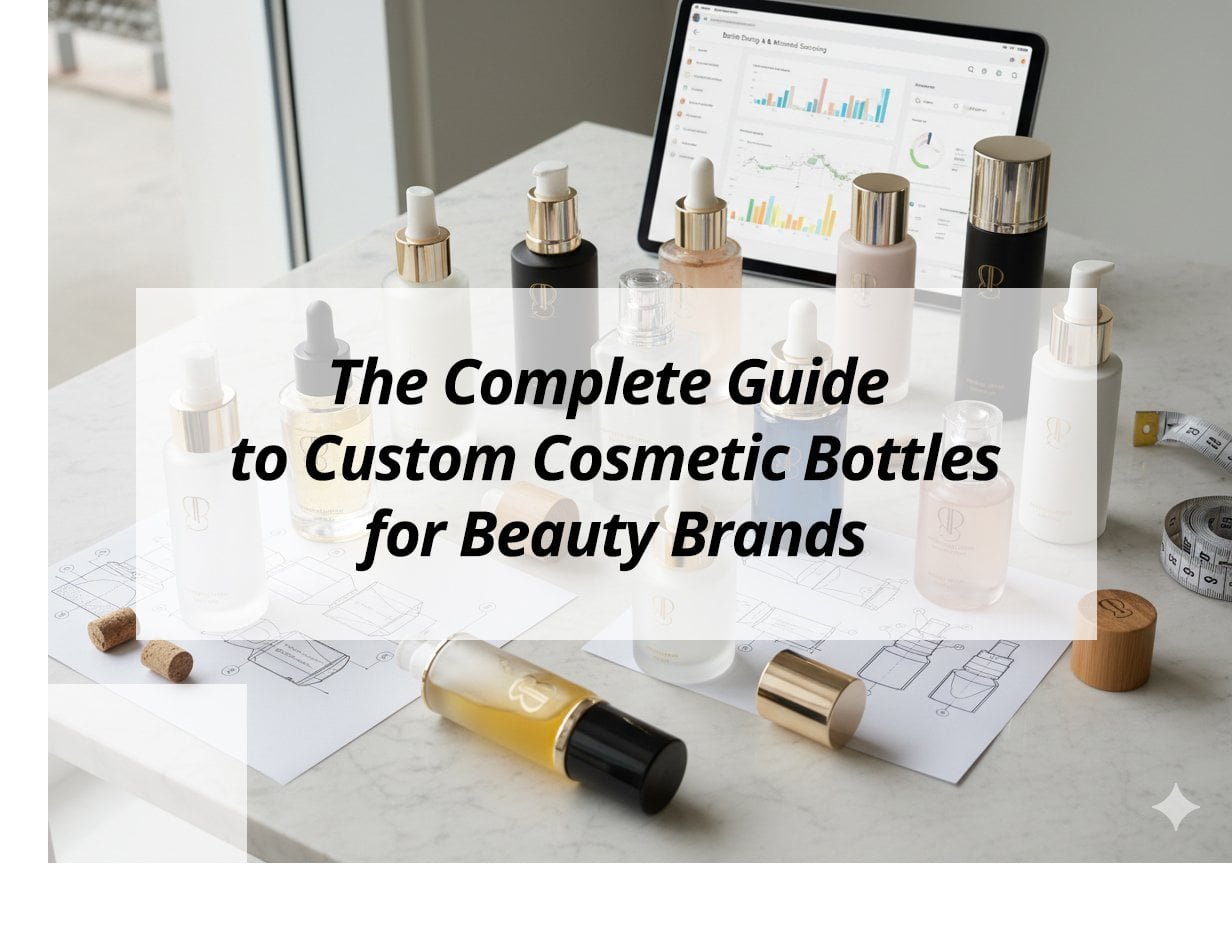
My Insights: The Complete Guide to Custom Cosmetic Bottles for Beauty Brands
Need a standout solution for your beauty branding? Custom cosmetic bottles offer design flexibility and enhanced consumer appeal.
Custom cosmetic bottles help beauty brands differentiate through unique designs, sizes, and materials. They enhance brand identity, product protection, and consumer experience while offering eco-friendly options and innovative features for better market positioning.
Designing and Sourcing Custom Cosmetic Bottles
Key Considerations
- Material Choices: Glass feels premium and protects sensitive formulas; plastics offer lightweight and cost-effective options for diverse products.
- Design and Customization: Begin with stock shapes, adding personalization like color matching, printing, and finishes as volumes grow.
Common Bottle Options
| Product Type | Format | Material |
|---|---|---|
| Serums | Dropper | Glass or PET |
| Shampoos | Pump | PET or HDPE |
| Creams | Jar | Glass or Plastic |
Sustainability and Compliance
Opt for PCR materials and mono-material designs to aid recyclability. Ensure bottles meet regulatory and safety standards to protect formulations and maintain consumer trust.
Balancing aesthetics, function, and sustainability ensures your custom bottles enhance brand value and consumer engagement, providing a strategic edge in the beauty market.
Conclusion
Custom cosmetic bottles are essential for beauty brands. They define identity. They ensure product safety. They attract consumers. A deep understanding of product categories and packaging layers is key. This strategy helps brands succeed in a competitive market.