
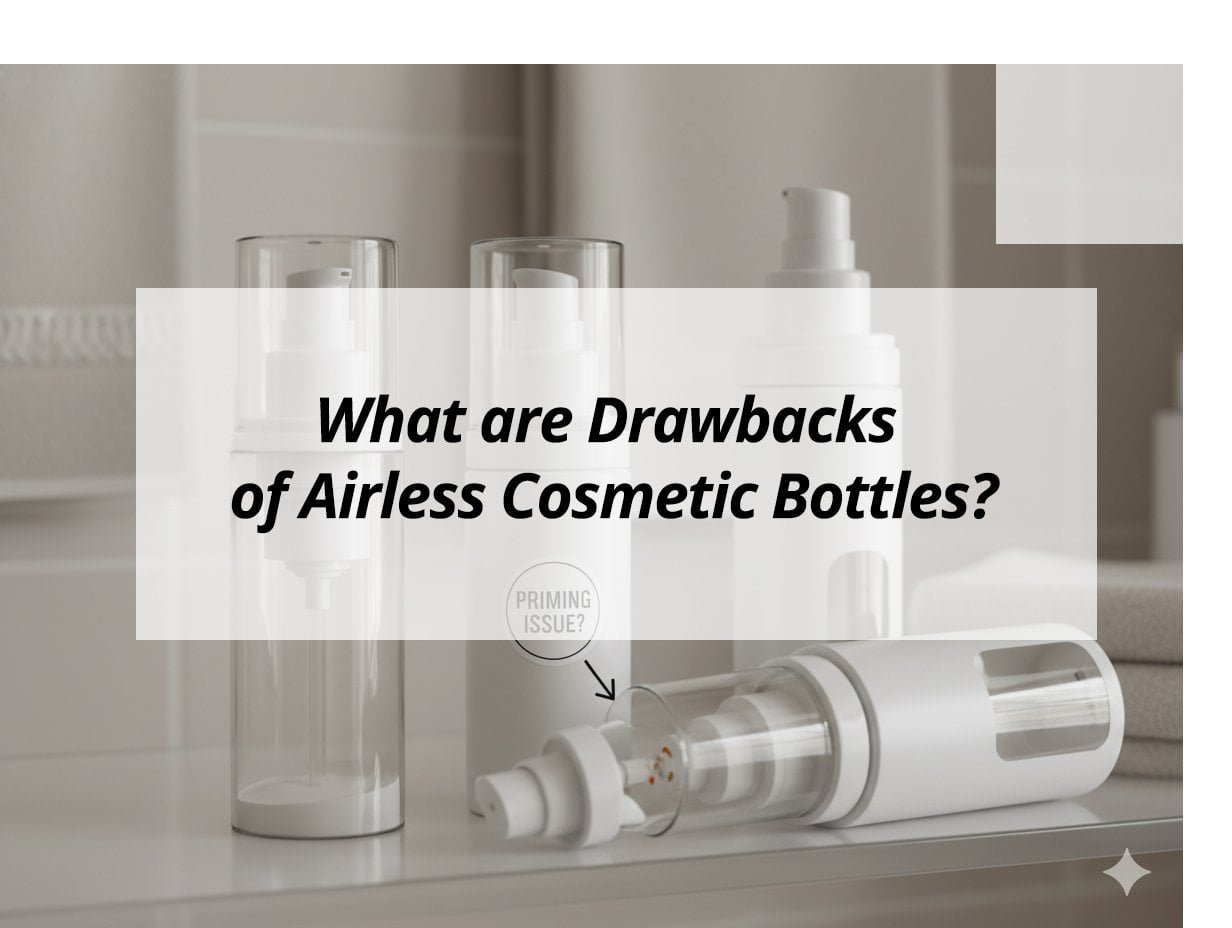
Do you rely on airless cosmetic bottles for your products? Many people do, but they have hidden problems. Understanding these issues helps you choose better packaging.
Airless cosmetic bottles use a vacuum pump system. This keeps air out of the product. This design protects sensitive formulas from oxidation and contamination. This can make the product last longer. However, they also come with specific drawbacks that users should know about.
I have worked with many types of cosmetic packaging. Airless bottles are very popular. But it is important to know their full story. Every packaging solution has its good and bad sides.
Are airless pump bottles good?
Have you ever wondered if airless pump bottles are truly the best choice? Many think they are. Airless pump bottles offer many benefits for cosmetic products. These benefits include protecting sensitive formulas from air and contaminants. This helps extend a product's shelf life. They also allow for almost complete product dispensing. This reduces waste. However, they also come with some problems. These issues can affect cost, user experience, and recyclability.
Airless pump bottles are designed to prevent air from entering the bottle. This means the product inside stays fresher longer. This is very important for natural or organic formulas. It also helps preserve active ingredients. The pump creates a vacuum. This pushes the product up. This allows users to get almost all of the product out. But this technology makes them more complex to produce. This can increase their price. They might also be harder to fill correctly. This can lead to issues if not done right.
From my experience in cosmetic packaging, airless bottles are a common request. They do offer superior product protection. Yet, their complexity needs careful thought. I have seen both the success and the challenges they present.
Benefits of Airless Pump Bottles
Airless pump bottles provide several significant advantages. These benefits often justify their use for many cosmetic brands.
- Product Protection: They shield sensitive ingredients from air exposure. This prevents oxidation, keeping the formula stable.
- Contamination Prevention: The closed system stops bacteria and other external contaminants from entering the product. This improves hygiene.
- Extended Shelf Life: By reducing air exposure, they help maintain product freshness. This can extend how long the product lasts.
- Maximized Product Usage: The pump mechanism pushes the product up from the bottom. This allows users to dispense nearly all of the contents. This reduces waste.
- No Dip Tube: They do not use a dip tube. This means thicker formulas can be dispensed more easily.
- Precise Dosing: Many airless pumps deliver a consistent amount of product with each press. This helps with controlled application.
- Enhanced User Experience: The sleek design and consistent dispensing can improve how consumers feel about the product.
Drawbacks of Airless Pump Bottles
Despite their benefits, airless pump bottles also have notable disadvantages. These should be weighed when choosing packaging.
| Drawback | Explanation |
|---|---|
| Higher Cost | The complex design and manufacturing process make airless bottles more expensive than traditional pump bottles. This adds to the overall product cost. |
| Difficulty in Filling | Special machinery and precise techniques are needed to fill airless bottles. Incorrect filling can create air pockets or damage the pump mechanism. |
| Not Refillable | Most airless systems are sealed. This makes them difficult or impossible for consumers to refill. This contributes to more single-use plastic waste. |
| Recyclability Challenges | Airless bottles often combine different types of plastics and a metal spring in the pump. This mixed material structure makes them hard to recycle effectively. |
| Product Compatibility Issues | Certain very thin or very thick formulas might not work well with some airless pump designs. This needs careful testing. |
| Pump Failure Risk | The intricate pump mechanism can sometimes fail. This leaves product trapped inside and frustrates users. This can lead to customer complaints. |
| No Visibility of Product Level | Users cannot see how much product is left. This can be inconvenient and lead to unexpected running out of product. |
| Initial Priming | Airless pumps often need several pumps to start working the first time. This can be confusing for new users. |
These points show that while airless bottles offer great protection, their drawbacks must be considered. Brands need to balance product safety with cost and sustainability.
Are airless pump bottles airtight?
Have you ever worried about air getting into your skincare products? Many people do. Airless pump bottles are designed to be airtight. This is their main benefit. They create a vacuum seal. This prevents outside air from touching the product inside. This protection is very important for formulas with sensitive ingredients. These ingredients can lose their power or spoil when exposed to oxygen. However, "airtight" does not mean completely impenetrable in all situations. While highly effective, extreme conditions or manufacturing defects can compromise the seal.
The design of an airless pump bottle uses a piston at the bottom of the container. As you press the pump, the piston moves up. This pushes the product out. It also creates a vacuum that keeps air from flowing back in. This system is much better at keeping air out than traditional bottles with dip tubes. Dip tubes pull air into the bottle with each pump. This constant air exposure can cause problems. But even with airless systems, small gaps or issues in the pump seal can happen. This means they are very good, but not absolutely perfect in every single case.
I have seen many designs for airless bottles. The goal is always to create the best seal possible. Even small details in manufacturing can affect how airtight a bottle is. We always aim for the highest standards in production.
How Airless Systems Achieve an Airtight Seal
The mechanism behind airless bottles is key to their airtight nature. It is a smart design.
- Piston Mechanism: A moving piston at the base of the bottle pushes the product up. This eliminates air from the container.
- No Dip Tube: Unlike traditional pumps, there is no tube extending into the product. This removes a path for air to enter.
- Sealed Head: The pump head itself is designed to create a tight seal. This stops air from going back down into the product once dispensed.
- Vacuum Effect: As product is dispensed, a vacuum forms. This keeps the remaining product in place and prevents air from being drawn in.
- Material Choice: The materials used for the bottle and pump are chosen for their barrier properties. They help block oxygen and moisture.
Factors Affecting an Airless Bottle's Airtightness
Several factors can influence how truly airtight an airless pump bottle remains.
| Factor | Impact on Airtightness |
|---|---|
| Manufacturing Quality | Poor production can lead to small flaws in the bottle or pump. These flaws can create tiny leaks. High-quality manufacturing is crucial. |
| Material Integrity | Cracks or damage to the bottle walls can compromise the seal. The plastic must be robust and free from defects. |
| Pump Seal Design | The specific design and fit of the pump components are vital. Any looseness can allow air to seep in over time. |
| User Handling | Dropping the bottle or exposing it to extreme temperature changes can damage the seal. This can cause it to lose its airtight quality. |
| Product Viscosity | Very thin liquids might find ways around seals more easily than thicker creams. However, most airless pumps are designed for a range of viscosities. |
| Repeated Use | Over a very long period, wear and tear on the pump mechanism could potentially reduce its sealing effectiveness. This is usually after significant use. |
While airless pump bottles are highly effective at being airtight, it is important to remember that no system is absolutely immune to failure. Proper handling and high manufacturing standards are key to maintaining their integrity.
What are airless bottles made of?
Do you ever wonder what materials go into making an airless cosmetic bottle? Many people overlook this detail. Airless bottles are made from several different plastics. These materials are chosen for their specific properties. They need to be durable, provide good barriers, and work well with the pump mechanism. The most common plastics include polypropylene (PP), PETG, acrylic, and sometimes glass for outer shells. These materials are selected to protect the product inside and to ensure the bottle functions correctly.
The main body of an airless bottle is usually made from PP or PETG. PP is lightweight, chemical-resistant, and cost-effective. PETG offers good clarity and barrier properties. The internal piston system is often PP. The pump mechanism itself is more complex. It can involve various plastics, sometimes with a metal spring for the pump action. The outer shell, if present, might be acrylic for a premium look or even glass. This combination of materials helps create a bottle that is both protective and visually appealing. Each part is chosen for its specific role.
In my work, I see a wide range of materials used for cosmetic packaging. The choice of material for airless bottles is always a balance. It balances function, cost, and aesthetics. We consider how each material performs.
Common Materials Used in Airless Bottles
Airless bottles use a combination of materials. Each part needs specific qualities.
- PP (Polypropylene):
- Properties: Lightweight, good chemical resistance, cost-effective, durable.
- Uses: Inner bottle, piston, pump components, caps.
- PETG (Polyethylene Terephthalate Glycol):
- Properties: High clarity, good barrier properties, impact resistant.
- Uses: Inner bottle, outer bottle (for a clear look).
- Acrylic (PMMA):
- Properties: High transparency, glossy finish, premium feel, rigid.
- Uses: Outer shell, caps (for luxury aesthetics).
- SAN (Styrene Acrylonitrile):
- Properties: Clear, rigid, good chemical resistance, often used as a substitute for acrylic.
- Uses: Outer shell, caps.
- Glass:
- Properties: Premium feel, excellent barrier properties, heavy.
- Uses: Outer shell (for high-end products, with plastic inner).
- POM (Polyoxymethylene) / PE (Polyethylene):
- Properties: Good for mechanical parts, low friction.
- Uses: Pump components, valves.
- Metal (Stainless Steel):
- Properties: Strong, corrosion-resistant.
- Uses: Spring in the pump mechanism (though plastic springs are becoming more common for recyclability).
Material Selection Considerations for Airless Bottles
Choosing the right materials for airless bottles involves several important factors.
| Consideration | Explanation |
|---|---|
| Product Compatibility | The materials must not react with the cosmetic formula. This prevents product degradation or changes. Testing is essential. |
| Barrier Properties | Materials need to block oxygen, light, and moisture. This protects sensitive ingredients and extends shelf life. |
| Durability | The bottle must withstand everyday use and handling. It needs to be resistant to impact and cracks. |
| Aesthetics | The appearance of the bottle is important for brand image. Transparency, color, and finish are key. |
| Cost-Effectiveness | The cost of materials directly impacts the final product price. Balancing performance with budget is necessary. |
| Recyclability | The combination of different materials can make recycling difficult. Brands increasingly look for mono-material or easily separable designs. |
| Manufacturing Process | The chosen materials must be suitable for injection molding and assembly. This ensures efficient production. |
| Market Regulations | Materials must comply with safety and environmental regulations in different regions. This includes food-grade and cosmetic-grade standards. |
The choice of materials directly impacts the performance, appearance, and environmental footprint of airless cosmetic bottles. A balanced approach is often needed.
What can you put in an airless pump bottle?
Are you unsure what types of products are best for airless pump bottles? Many wonder this. Airless pump bottles are ideal for sensitive cosmetic products. They are made to protect formulas from air and contamination. This includes creams, lotions, serums, and foundations. Products with delicate ingredients, like vitamin C or retinol, benefit greatly from this protection. Thicker formulas also work well because there is no dip tube. However, very thin liquids or products with large particles might not be suitable for all airless systems.
You can put a wide range of cosmetic and skincare products into airless pump bottles. These bottles excel at packaging products that contain active ingredients. These ingredients can degrade when exposed to oxygen. Examples include anti-aging serums, sunscreens, and brightening creams. Their ability to dispense almost all of the product also makes them good for expensive or high-value formulas. This ensures minimal waste. However, liquids with very low viscosity, like toners, might leak. Products with scrubs or glitter can clog the pump. Always test product compatibility with the specific airless pump system.
My company provides many types of cosmetic packaging. Airless bottles are a key product. I often advise customers on what products fit best. It is about matching the product needs with the packaging features.
Ideal Products for Airless Pump Bottles
Certain types of cosmetic products are especially well-suited for airless pump bottles.
- Serums: Especially anti-aging, brightening, or antioxidant serums that contain sensitive active ingredients (e.g., Vitamin C, Retinol, Peptides).
- Lotions & Creams: Face and body lotions, moisturizers, and creams benefit from protection against air. This extends their freshness.
- Foundations: Liquid foundations maintain their color and consistency better when not exposed to air.
- Sunscreens: Formulas with UV filters stay more stable and effective in an airless environment.
- Eye Creams: Delicate eye cream formulas are protected from contamination and oxidation.
- Sensitive Formulas: Products with natural or organic ingredients often have fewer preservatives. They need airless protection.
- Thick Gels: Airless pumps can handle thicker gels more easily than traditional dip tube pumps. This is because the piston pushes the product directly.
Products Not Typically Suitable for Airless Pump Bottles
Some products are not ideal for airless pump bottles. This is due to their texture or composition.
| Product Type | Reason for Unsuitability |
|---|---|
| Very Thin Liquids (e.g., Toners) | Low viscosity liquids might leak around the piston or through the pump mechanism. They may also not create enough vacuum. |
| Products with Large Particles (e.g., Scrubs) | Particles can clog the pump mechanism. This stops the pump from working correctly. It can also cause damage. |
| Foaming Products | The airless system is not designed to create foam. These products need special foaming pump dispensers. |
| Aerosols | Products that dispense as a fine mist under pressure are aerosols. They require pressurized spray cans, not airless pumps. |
| Very Volatile Liquids (e.g., Nail Polish Remover) | These liquids evaporate quickly. The airless system might not prevent all evaporation. Also, the materials might not be compatible with such strong solvents. |
| Products Requiring Air for Application (e.g., Some Mascaras) | Some products need air interaction for their specific application method. For example, mascara wands are repeatedly inserted and removed, which brings in air by design. |
Careful consideration of product characteristics is essential. This ensures the chosen packaging provides the best performance and user experience.
My Insights: What are the Drawbacks of Airless Cosmetic Bottles?
Struggling with airless cosmetic bottles for your products? Explore the pitfalls that might be affecting your packaging choices.
Airless cosmetic bottles have drawbacks such as higher production costs, limited formula compatibility, mechanical failure risks, and recyclability issues. Their complex design also increases weight and impacts storage, potentially affecting market acceptance and sustainability goals.
Challenges of Using Airless Cosmetic Bottles
Technical and Cost Challenges
- High Production Cost: The intricate mechanisms increase manufacturing expenses, impacting retail prices.
- Limited Compatibility: Thick or particulate-rich formulations may not dispense smoothly, posing compatibility issues.
- Mechanical Risks: Complex components can lead to failures like jamming or inconsistent dosing.
Consumer and Usability Concerns
- Refillability Issues: Non-refillable designs frustrate eco-conscious consumers and those who prefer reusing containers.
- User Error: Consumers unfamiliar with airless systems may misuse them, resulting in poor experiences.
| Challenge Type | Description |
|---|---|
| Technical | High cost, formula limitations, mechanical failures |
| Consumer | Non-refillable, learning curve, dose inflexibility |
Sustainability Considerations
Airless bottles often face recycling challenges due to multi-material components, undermining eco-friendly efforts. If your product contains thick creams or targets budget-conscious consumers, consider alternatives like tubes or jars for better alignment with cost and sustainability objectives.
Conclusion
Airless cosmetic bottles offer great product protection and reduced waste. However, they also come with higher costs, complex filling, and recyclability challenges. Understanding these drawbacks helps in making informed packaging decisions.