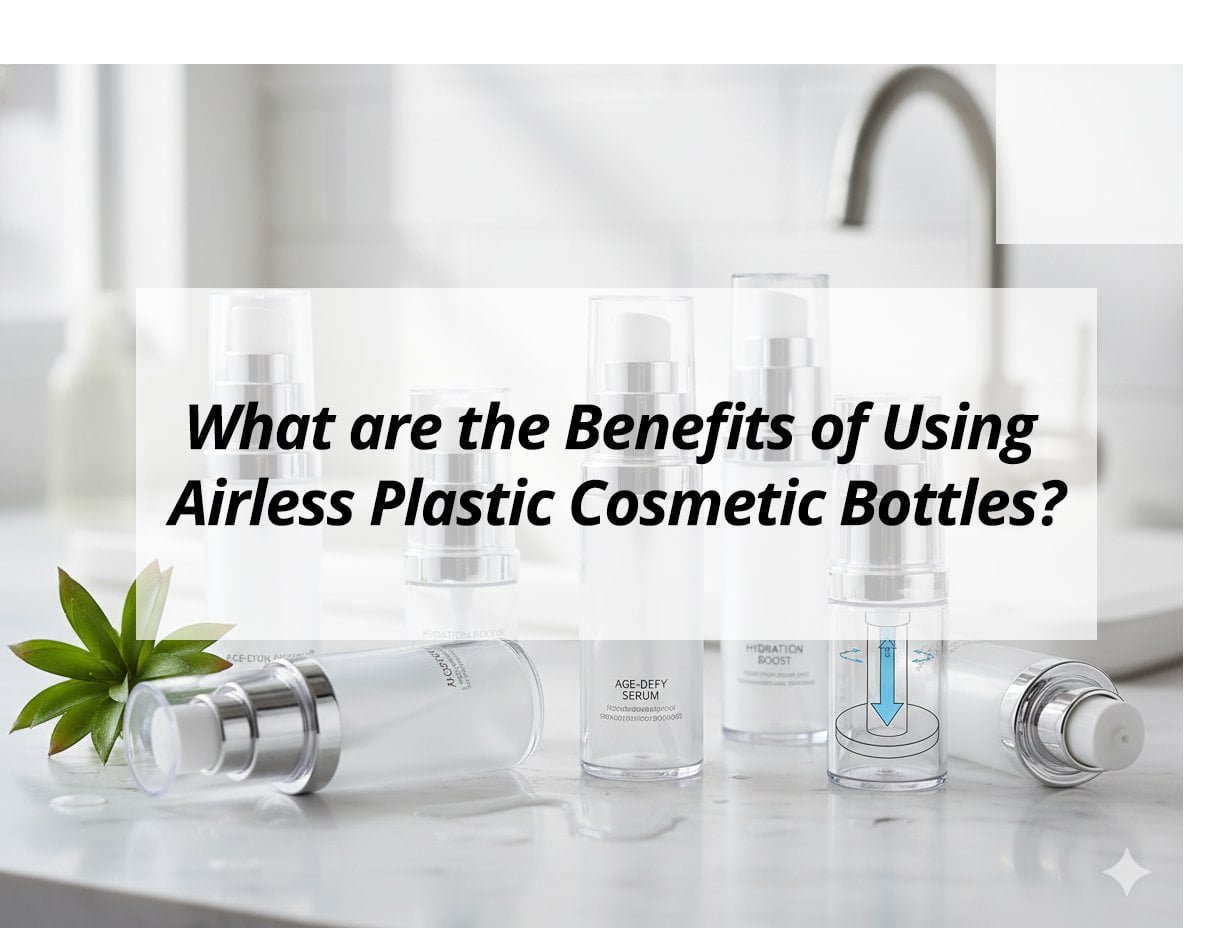
Are you seeking optimal packaging solutions for cosmetic products? Do you need to understand the advantages of airless plastic cosmetic bottles? They provide significant improvements.
Airless plastic cosmetic bottles offer several key benefits. They safeguard products from air exposure and contamination. This helps maintain the stability of active ingredients. They also facilitate nearly complete product dispensing, minimizing waste.
The right packaging significantly impacts product integrity and consumer satisfaction. Airless bottles offer a reliable solution. This article explains the benefits associated with airless plastic cosmetic bottles.
What can you put in an airless pump bottle?
Are you determining which product formulations are suitable for an airless pump bottle? Do you need to identify which specific products benefit most from this packaging technology? This is a common inquiry in product development.
Airless pump bottles are compatible with a diverse range of cosmetic and skincare products. They are particularly effective for formulations containing sensitive ingredients. These bottles prevent air ingress, which helps preserve product quality.
Product compatibility is a critical consideration for many brands. This section outlines the types of products typically suitable for airless pump bottles.
Product Categories Best Suited for Airless Systems
Airless bottles are ideal for products susceptible to degradation from air exposure. They also work well with viscous or thick formulations.
1. Skincare Products with Potent Actives
Many skincare formulations contain ingredients that diminish in efficacy when exposed to oxygen.
- Vitamin C Serums: Vitamin C rapidly oxidizes. Airless packaging helps maintain its stability.
- Retinoids: These compounds are sensitive to light and air. Airless systems provide essential protection.
- Peptides: Peptides can degrade when exposed to environmental factors. Airless packaging helps preserve their structural integrity.
- Antioxidant-Rich Products: Formulations high in antioxidants greatly benefit from the protection offered by airless containers, which shield delicate compounds.
2. Natural and Minimally Preserved Formulations
Products with fewer synthetic preservatives often have a shorter shelf life. Airless bottles can help extend it.
- Preservative-Free Products: For formulations without traditional preservatives, protection from air is vital. Airless bottles mitigate contamination risks.
- Plant-Derived Extracts: Many natural extracts are sensitive to oxidation. Airless technology helps retain their potency.
3. Viscous and Thick Formulations
Airless pumps efficiently dispense thick creams and lotions.
- Rich Creams: Moisturizers, night creams, and body balms frequently possess a thick consistency. Airless pumps manage these effectively.
- Lotions: Standard lotions also benefit from consistent and controlled dispensing.
- Gels and Serums: Denser gels or serums can be dispensed smoothly without product residue.
4. Select Makeup Products
Certain makeup items also perform better when packaged in airless containers.
- Liquid Foundations: Foundations maintain their color accuracy and consistent texture.
- Primers: Many primers contain sensitive ingredients that require protection.
- Concealers: Airless containers keep concealers fresh and prevent premature drying.
Products Less Suited for Airless Systems
Some products may not derive significant advantages from airless packaging. These include formulations with high alcohol content or those designed for rapid evaporation. Very low-viscosity liquids or aerosols may also not require airless technology. Examples include certain toners or mists. Airless bottles protect products by preventing oxidation and contamination, making them suitable for air-sensitive formulas. They also ensure smooth dispensing of viscous products.
What are the benefits of using plastic bottles?
Have you considered the widespread adoption of plastic bottles in the cosmetic industry? Do you need to understand the practical advantages they offer? Plastic remains a prevalent choice for valid reasons.
Plastic bottles provide numerous benefits for cosmetic packaging. They are lightweight, durable, and cost-efficient. These attributes contribute to their popularity across a broad spectrum of products. They also allow for extensive design flexibility.
Plastic is frequently chosen for its balance of functionality and aesthetic potential. This section outlines the primary benefits of utilizing plastic bottles in cosmetic packaging.
Key Advantages of Plastic in Packaging
Plastic packaging offers practical advantages for both manufacturers and consumers.
1. Reduced Weight
Plastic bottles are considerably lighter compared to glass alternatives.
- Lower Shipping Costs: Decreased weight translates to reduced transportation expenses. This benefits both businesses and end-users.
- Improved Handling: Lighter products are easier for consumers to carry and use.
- Logistical Efficiency: Reduced weight can contribute to more efficient logistics and transport.
2. Durability and Shatter Resistance
Plastic materials are robust and resistant to breakage.
- Enhanced Safety: Plastic is less prone to shattering. This minimizes the risk of injury from broken containers. This is particularly relevant for products used in bathrooms or by children.
- Product Protection: It effectively safeguards the internal product during transit and everyday use. This reduces product loss due to damage.
- Structural Integrity: Durable packaging helps protect the product from external impacts, contributing to overall product integrity.
3. Design Versatility
Plastic can be molded into an extensive array of shapes and sizes.
- Diverse Forms: Manufacturers can create unique bottle designs. This helps brands differentiate their products in the market.
- Color Customization: Plastic can be produced in virtually any color, offering clear, opaque, or tinted options.
- Decoration Options: Plastic surfaces readily accept various printing, labeling, and decoration techniques. This enables diverse branding strategies.
4. Economic Efficiency
Plastic is generally less expensive to manufacture than other materials.
- Lower Production Expenses: The raw materials and manufacturing processes for plastic are often more cost-effective.
- Market Accessibility: This affordability makes it easier for new or smaller brands to introduce products to the market.
- Scalable Production: Producing plastic packaging in large volumes is both efficient and economical.
5. Recyclability Considerations
Many types of plastic are designed for recycling.
- Environmental Responsibility: Consumers are increasingly prioritizing sustainable packaging. Recyclable plastic options address this demand.
- Common Plastic Types: Frequently recycled plastics include PET, HDPE, and PP.
6. Chemical Compatibility
Plastic can safely contain a wide range of cosmetic formulations without adverse reactions. This ensures product stability. It also prevents contamination.
Plastic provides a balanced combination of lightness, strength, and adaptability. These characteristics make it a preferred material for cosmetic product containers.
Are airless pump bottles good?
Are you evaluating the value proposition of airless pump bottles for your product range? Do you need to confirm if they meet their claims regarding product protection and dispensing efficiency? This is a frequent business assessment.
Airless pump bottles are widely regarded as highly effective. They offer superior product safeguarding. They also ensure nearly complete product evacuation. This contributes to reduced waste. These attributes make them a valuable choice for many cosmetic and skincare items.
The industry shows a strong preference for airless packaging. Brands often report enhanced product integrity and higher customer satisfaction. This section outlines the specific benefits of airless pump bottles.
Advantages of Airless Bottle Technology
Airless pump bottles offer distinct benefits that differentiate them from conventional pump systems or jars.
1. Superior Product Protection
The primary advantage lies in the protective qualities for the product.
- Oxidation Prevention: Airless systems prevent air from entering the container. This shields sensitive ingredients, such as vitamins and antioxidants, from degradation. Product potency is maintained for an extended period.
- Reduced Contamination Risk: The pump mechanism prevents direct contact between the product and fingers. This significantly lowers the risk of bacterial contamination. This is especially important for formulations with minimal preservatives.
- Maintained Efficacy: By isolating contents from air and external elements, active ingredients retain their effectiveness throughout the product's lifespan.
2. Optimized Product Dispensing
Airless bottles facilitate the use of almost the entire product content.
- Minimal Waste: The vacuum system pushes the product upward from the base. This ensures very little product remains in the bottle. Consumers receive maximum value.
- Precise Dosing: Each pump dispenses a consistent, measured amount of product. This helps users apply the correct quantity consistently.
- Effortless Use: Dispensing is smooth and easy, even for thick creams. There is no need for shaking or inverting the bottle.
3. Extended Product Shelf Life
By preventing air exposure, airless bottles help products remain stable for longer.
- Increased Stability: Products maintain stability over a longer duration. This can potentially reduce the need for aggressive preservative systems.
- Enhanced Freshness: Consumers experience a product that retains its original freshness and performance characteristics.
4. Versatility for Diverse Formulations
Airless systems are compatible with a broad spectrum of product viscosities.
- Range of Viscosities: Airless pumps effectively dispense both thick creams and lighter serums.
- Delicate Ingredients: They are ideal for formulations containing volatile or easily degradable ingredients.
5. User Experience and Aesthetic Appeal
Beyond their functional benefits, airless bottles also offer aesthetic and user-centric advantages.
- Premium Presentation: The sleek design often conveys a high-quality product image.
- Hygienic Application: Consumers value the clean and direct application method.
- Streamlined Design: The absence of a dip tube eliminates potential points of failure or clogging.
| Benefit | Description |
|---|---|
| Product Integrity | Protects against oxidation and contamination. |
| Waste Reduction | Dispenses nearly all product content. |
| Shelf Life Extension | Preserves active ingredients and freshness. |
| Consistent Dispensing | Delivers precise product amounts per pump. |
| Improved User Experience | Offers clean, easy, and satisfying application. |
Airless pump bottles provide significant advantages. They ensure product integrity, minimize waste, and enhance the user experience. These features position them as a strong choice for high-value cosmetic products.
How do airless bottles work?
Are you interested in the internal operation of airless bottles? Do you want to understand the scientific principles behind their efficient dispensing mechanism? Their design is ingeniously engineered.
Airless bottles function via a vacuum system rather than a traditional dip tube. When the pump is actuated, an internal piston at the bottle's base rises. This upward movement expels the product. This design prevents atmospheric air from entering the container.
The engineering behind airless systems is notable for ensuring product freshness and complete evacuation. This section provides a detailed explanation of how airless bottles operate.
Core Mechanism: Piston and Vacuum System
Unlike traditional pump bottles that use a dip tube to draw product, airless bottles employ a different principle. They rely on an upward-moving piston.
1. Key Components of an Airless Bottle
An airless bottle typically comprises three main elements.
- Outer Container: This is the primary vessel. It holds the product and provides structural integrity and branding surface.
- Airless Pump Head: Located at the top, this mechanism creates the vacuum and dispenses the product. It includes a nozzle and an actuator button.
- Internal Piston/Disc: This is a movable component at the base of the product chamber. It physically pushes the product upward.
2. The Dispensing Cycle
The dispensing process initiates when the user presses the pump.
- Actuator Depression: Pressing the pump's actuator generates pressure. This pressure draws a small amount of product from the chamber.
- Vacuum Formation: As product is dispensed, a partial vacuum is created within the bottle's inner chamber.
- Piston Ascent: The generated vacuum causes the internal piston or disc to move upward. This pushes the remaining product towards the pump mechanism.
- Air Exclusion: Critically, no external air enters the bottle. This prevents product oxidation and contamination.
3. Contrasts with Traditional Pump Systems
Understanding these distinctions highlights the functional superiority of airless systems.
- Absence of Dip Tube: Traditional pumps use a tube extending into the product. Airless pumps do not. This eliminates issues like product residue at the bottom.
- Uniform Upward Movement: The piston ensures all product is systematically pushed upward. This results in near-complete product evacuation.
- Sealed Environment: Airless bottles maintain an entirely sealed internal environment. This protects sensitive ingredients from external factors such as oxygen and bacteria.
| Feature | Airless Pump Bottle | Traditional Pump Bottle |
|---|---|---|
| Mechanism | Piston and vacuum operation | Dip tube suction |
| Air Contact | Minimized or eliminated | Air enters as product is dispensed |
| Product Waste | Extremely low (near 100% evacuation) | Can leave significant residue |
| Contamination | Low risk, high hygiene | Higher risk from air and external contact |
| Ingredient Stability | Enhanced for delicate formulations | Potentially reduced for sensitive actives |
4. Advantages of this Operating Principle
This functional design offers several distinct benefits for cosmetic applications.
- Product Integrity: It preserves the freshness and potency of ingredients. This is especially crucial for volatile or delicate formulations.
- Consumer Value: Users can utilize virtually every drop of the product. This enhances perceived value and reduces waste.
- Hygienic Dispensing: The sealed system promotes a consistently hygienic application method.
Airless bottles utilize a piston and vacuum to dispense product. This design actively prevents air entry. This mechanism ensures product freshness, minimizes waste, and provides a hygienic dispensing solution.
My Insights: What are the Benefits of Using Airless Plastic Cosmetic Bottles?
Concerned about product freshness and waste? Discover how airless plastic cosmetic bottles enhance product integrity and sustainability.
Airless plastic cosmetic bottles protect against oxidation, extend shelf life, and ensure hygienic application. By offering precise dispensing and reducing waste, these bottles maintain product freshness and enhance user experience. Ideal for sensitive and premium skincare formulas.
Exploring the Advantages of Airless Cosmetic Bottles
Technical and Safety Benefits
Airless bottles minimize air exposure, slowing oxidation and degradation. This extends product life and reduces the need for preservatives, appealing to “clean” skincare brands. The sealed system prevents bacterial contamination and maintains formula integrity.
Efficiency and Sustainability
Airless designs provide near-zero waste with up to 98% product evacuation. Controlled dispensing prevents over-application and supports eco-friendly principles by reducing product and packaging waste. Many bottles are fully recyclable, enhancing sustainability.
| Feature | Benefit |
|---|---|
| Oxidation Protection | Longer shelf life and effective ingredient preservation |
| Hygienic Dispensing | Reduced contamination and safer formulas |
| Waste Reduction | Efficient use and minimized leftover residue |
User Experience and Brand Value
Airless plastic bottles offer a sleek, modern design that enhances brand perception. They are ideal for serums, creams, and active-rich formulas, ensuring a premium user experience with travel-friendly convenience. The versatility and aesthetic appeal support high-end brand positioning and consumer satisfaction.
Conclusion
Airless plastic cosmetic bottles offer significant advantages. They protect sensitive formulations, minimize product waste, and extend shelf life. This makes them a highly effective packaging choice.