
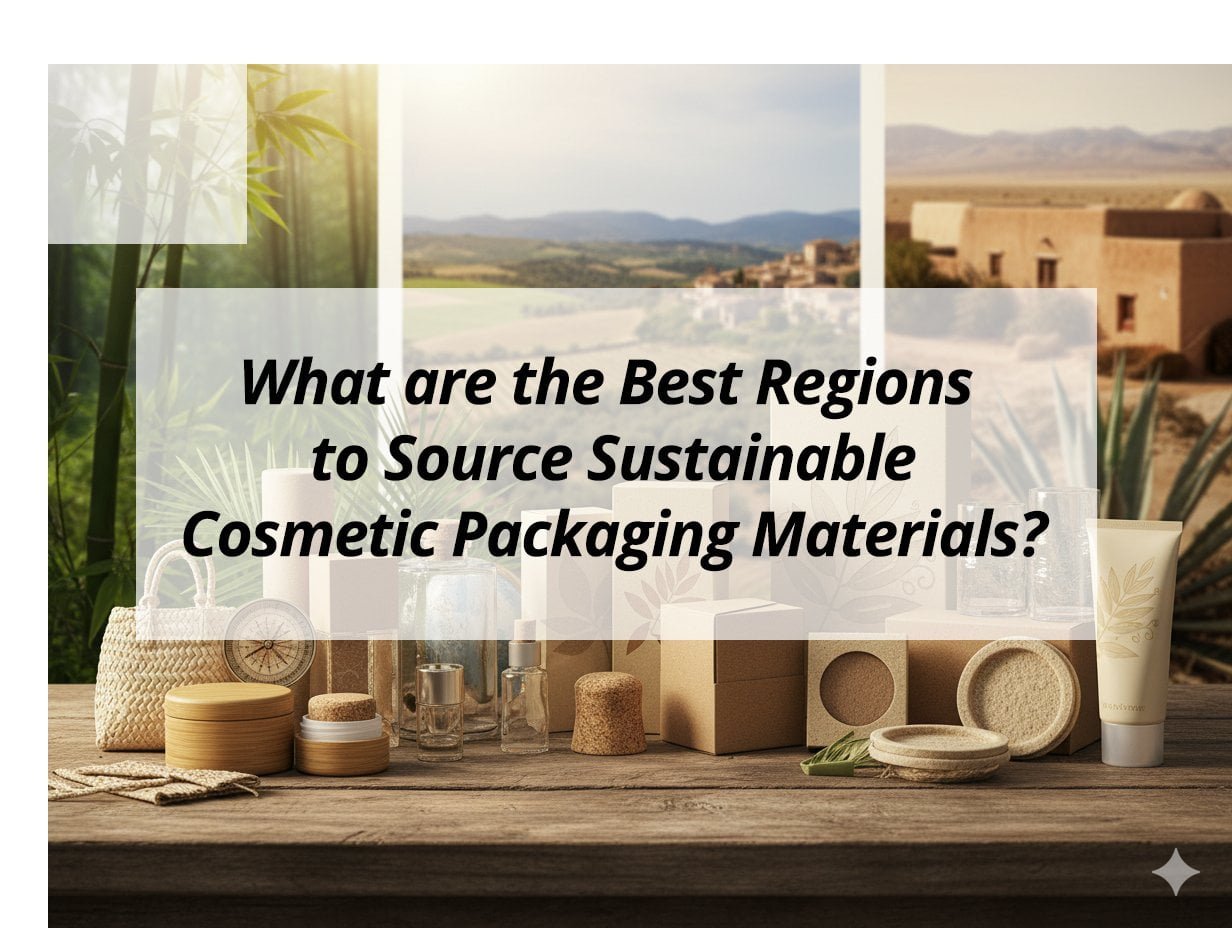
Many cosmetic brands struggle with sourcing eco-friendly packaging solutions. This often leads to increased operational complexities and potential environmental impact. Effective sourcing is a key challenge.
The best regions for sourcing sustainable cosmetic packaging materials typically combine advanced manufacturing capabilities with a strong focus on environmental innovation and established supply chains. These areas provide diverse options that ensure both product quality and ecological responsibility.
Selecting the appropriate sourcing region is critical for any brand committed to sustainability. It facilitates access to high-quality materials. It also helps achieve environmental objectives. This choice significantly influences the entire supply chain and a brand's public image.
What is the Most Sustainable Cosmetic Packaging?
Brands often find it challenging to identify truly sustainable packaging. Concerns about greenwashing and genuine environmental impact can complicate decision-making. This uncertainty is a common hurdle.
The most sustainable cosmetic packaging often consists of mono-materials, incorporates high levels of recycled content, or is specifically designed for reuse and refill systems. It should also be lightweight and produced with a minimal environmental footprint throughout its lifecycle. These attributes collectively reduce waste and conserve natural resources.
Sustainable packaging considers the entire product lifecycle, from material extraction to end-of-life management. Materials such as Post-Consumer Recycled (PCR) plastics, glass, aluminum, and bamboo are frequently highlighted. Each material offers distinct benefits: PCR plastic repurposes existing waste, while glass and aluminum are highly recyclable. Bamboo is a rapidly renewable resource. The optimal choice depends on the specific product requirements and the brand's sustainability objectives.
Lifecycle Assessment of Sustainable Materials
Sustainable materials undergo several key stages.
| Stage | Description | Environmental Impact Reduction |
|---|---|---|
| Sourcing | Acquisition of raw materials from primary or secondary sources. | Utilization of recycled content, renewable resources. |
| Production | Manufacturing of the packaging components. | Minimized energy consumption, reduced water usage, fewer harmful chemicals. |
| Transport | Distribution of packaging to filling facilities. | Selection of lighter materials, emphasis on local sourcing. |
| Use | Consumer interaction with the packaged product. | Durable designs for reuse, efficient dispensing mechanisms. |
| End-of-Life | Disposal or recovery of the packaging. | Employing recyclable, compostable, or biodegradable materials. |
Each stage presents opportunities to enhance sustainability. For example, optimizing production methods can reduce energy consumption and waste generation. This contributes to overall environmental goals.
Innovative Sustainable Material Options
The field of materials science continues to evolve.
- PCR (Post-Consumer Recycled) Plastics: Derived from recycled consumer waste, these plastics decrease reliance on virgin fossil resources.
- Bio-based Plastics: Manufactured from renewable biomass sources, such as corn starch or sugarcane.
- Bamboo: A fast-growing and versatile plant material. It is biodegradable and offers a natural aesthetic.
- Glass: A material that is infinitely recyclable without degradation in quality. It also conveys a premium perception.
- Aluminum: Highly recyclable and lightweight, providing excellent barrier protection for products.
The adoption of these materials enables brands to make tangible environmental improvements. It also demonstrates a commitment to sustainable practices, fostering consumer trust.
What are the 5 R's of Sustainable Packaging?
Businesses often struggle to internalize all sustainability principles. This can hinder their effective implementation within packaging strategies. This difficulty is a common operational challenge.
The 5 R's of sustainable packaging are generally understood as Refuse, Reduce, Reuse, Recycle, and Rot (or Repurpose). These principles guide brands in minimizing their environmental footprint by re-evalizing packaging design and influencing consumer behavior. They provide a clear framework for achieving ecological responsibility.
These 5 R's offer a structured approach for brands to make more informed packaging decisions. Each principle contributes to a comprehensive sustainability strategy.
Deconstructing Each "R"
Each "R" represents a distinct aspect of sustainable packaging.
- Refuse: This principle advocates for rejecting unnecessary packaging. It involves consciously opting out of single-use items and selecting products with minimal or no packaging when feasible. For example, a brand might refuse plastic internal components.
- Reduce: This focuses on minimizing the overall material volume used in packaging. Designing lighter and smaller packaging conserves resources and decreases waste generation.
- Reuse: This involves designing packaging to be utilized multiple times. Examples include refillable containers or jars intended for secondary uses. This approach extends the lifecycle of packaging materials.
- Recycle: This principle emphasizes the use of materials that can be processed and transformed into new products. Common recyclable materials include glass, aluminum, and certain plastics. It is crucial that these materials are compatible with existing recycling infrastructures.
- Rot (or Repurpose): "Rot" refers to compostable materials that break down naturally. "Repurpose" involves finding a new function for packaging after its primary use. Both methods divert materials from landfills.
Implementing these R's helps brands achieve genuine sustainability outcomes. It extends beyond superficial environmental claims, creating measurable positive impacts.
Applying the 5 R's in Cosmetic Packaging Design
These principles can be directly applied to cosmetic packaging.
| R Principle | Cosmetic Packaging Application | Example |
|---|---|---|
| Refuse | Eliminating secondary packaging when not functionally essential. | Omitting outer cartons for certain cosmetic items. |
| Reduce | Employing lightweight materials and minimalist design approaches. | Utilizing thin-walled jars or compact product designs. |
| Reuse | Engineering refillable systems for products like foundations or lipsticks. | Developing refillable lipstick tubes or cream containers. |
| Recycle | Selecting PCR plastic, glass, or aluminum that is widely recyclable. | Implementing aluminum lipstick casings or glass serum bottles. |
| Rot | Incorporating compostable labels or biodegradable closure components. | Utilizing plant-based plastic caps or compostable paper labels. |
These applications demonstrate that sustainability can be integrated into every phase of packaging development.
What is the Most Environmentally Friendly Packaging Material?
Businesses frequently encounter difficulty in identifying a single "most" environmentally friendly material. They face numerous claims regarding ecological benefits, which complicates informed material selection.
The most environmentally friendly packaging material is typically one characterized by a low carbon footprint throughout its entire lifecycle, high recyclability, or derivation from rapidly renewable resources. While no single material is universally superior, glass, aluminum, and bamboo are often cited for their distinct environmental advantages.
Each material presents a unique set of benefits and drawbacks. The "friendliness" of a material is highly dependent on its specific context and application. For instance, glass, despite being infinitely recyclable, is heavy, leading to higher transportation emissions. Aluminum is lightweight and recyclable, but its initial production is energy-intensive. Bamboo is renewable, yet its sourcing requires careful consideration of ethical harvesting practices. A comprehensive lifecycle perspective is essential.
Comparative Analysis of Environmentally Friendly Materials
Key materials frequently considered for sustainable packaging include:
- Glass:
- Advantages: Infinitely recyclable without quality degradation. Chemically inert, preventing product contamination. Conveys a premium brand image.
- Disadvantages: High density results in increased transportation emissions. Susceptible to breakage.
- Aluminum:
- Advantages: Infinitely recyclable. Lightweight, reducing logistical costs. Provides excellent barrier properties.
- Disadvantages: Initial production processes are energy-intensive. Prone to denting.
- Bamboo:
- Advantages: Derived from a rapidly renewable resource. Biodegradable. Offers a distinctive natural aesthetic.
- Disadvantages: Requires specific certifications for sustainable harvesting. Material durability can vary.
- PCR Plastic:
- Advantages: Reduces virgin plastic consumption. Lower carbon footprint compared to newly produced plastic.
- Disadvantages: Availability and consistency in quality can fluctuate.
The optimal material selection often depends on the specific product requirements and a brand's strategic priorities.
Supply Chain Considerations in Material Selection
The structure and management of the supply chain significantly influence material choices.
- Local Sourcing: Procuring materials closer to manufacturing sites minimizes transportation distances, thereby reducing associated emissions.
- Certifications: Verifying certifications (e.g., FSC for paper, ISCC PLUS for plastics) validates environmental claims and ensures adherence to sustainability standards.
- Manufacturing Processes: The environmental impact of manufacturing is crucial. Prioritizing factories that utilize renewable energy or implement water-saving technologies contributes to overall sustainability.
Effective supply chain management involves working with certified suppliers and optimizing production processes to enhance environmental performance.
What are the 7 R's of Sustainable Packaging?
Many are familiar with the basic 3 R's (Reduce, Reuse, Recycle). However, the scope of sustainability continues to expand. Keeping pace with these evolving principles can be challenging.
The 7 R's of sustainable packaging extend the traditional framework to include Remove, Rethink, Refuse, Reduce, Reuse, Recycle, and Rot (or Repurpose). This broader set of principles offers a more comprehensive strategy for minimizing environmental impact across the entire packaging lifecycle. These additional R's provide more detailed guidance for brands.
This expanded framework empowers brands to achieve deeper levels of sustainability. It addresses a wider array of considerations in packaging design and consumer interaction.
An In-depth Look at the 7 R's
These principles offer a holistic perspective on packaging sustainability.
- Remove: This calls for the complete elimination of superfluous packaging. It challenges the necessity of every packaging component.
- Example: Offering solid cosmetic products that do not require bottled containers.
- Rethink: This encourages fundamental innovation in packaging design. It involves exploring entirely new approaches to product containment.
- Example: Developing water-soluble or dissolvable packaging materials.
- Refuse: This principle advises against accepting or utilizing non-sustainable packaging options. It involves setting clear criteria for undesirable packaging types.
- Example: Declining the use of single-use plastic sachets from suppliers.
- Reduce: This focuses on minimizing the quantity of material employed in packaging. It aims for lighter and more compact designs.
- Example: Specifying thinner gauge glass for jars or reducing plastic wall thickness.
- Reuse: This entails designing packaging for repeated cycles of use. This prolongs the functional life of the packaging and diverts it from waste streams.
- Example: Creating refillable cosmetic compacts or serum bottles.
- Recycle: This involves selecting materials that can be efficiently collected and reprocessed into new products.
- Example: Ensuring that all packaging components are composed of a single, readily recyclable material.
- Rot (or Repurpose): "Rot" refers to choosing compostable or biodegradable materials. "Repurpose" means designing packaging with an inherent secondary function.
- Example: Utilizing compostable tubes for lip balms or designing a jar that can serve as a decorative item.
These 7 R's provide a comprehensive guide for achieving advanced sustainability goals. They also facilitate transparent communication of environmental efforts to consumers.
Practical Implementation of the 7 R's
Implementing all 7 R's requires strategic planning and execution.
| R Principle | Action Steps for Cosmetic Brands | Impact |
|---|---|---|
| Remove | Conduct an audit of existing packaging to identify and eliminate non-essential elements. | Substantially reduces material consumption and waste generation. |
| Rethink | Explore alternative product delivery systems and novel packaging formats. | Fosters innovation and leads to groundbreaking eco-friendly solutions. |
| Refuse | Establish stringent procurement policies regarding acceptable packaging materials from suppliers. | Controls the influx of unsustainable materials into the supply chain. |
| Reduce | Optimize product formulations to accommodate smaller packaging dimensions. | Decreases material usage, lowers transportation costs, and reduces carbon footprint. |
| Reuse | Invest in user-friendly refill systems and product return initiatives. | Extends packaging lifecycle and encourages consumer participation in sustainability. |
| Recycle | Select materials that are compatible with widely available municipal recycling programs. | Supports circular economy principles and minimizes landfill contributions. |
| Rot | Integrate compostable materials for suitable product categories (e.g., sheet masks). | Facilitates natural decomposition, preventing long-term waste accumulation. |
These principles offer a framework for brands to integrate sustainability deeply into their packaging strategies.
My Insights: What are the Best Regions to Source Sustainable Cosmetic Packaging Materials?
Struggling to find sustainable packaging materials for cosmetics? Identify key global regions offering eco-friendly solutions.
Europe and North America excel in sourcing sustainable cosmetic packaging materials, featuring biobased and circular options. East Asia and Latin America provide innovative designs and cost-effective solutions, using recyclable and biodegradable materials for eco-conscious brands.
Exploring Global Sources for Eco-friendly Packaging
Regional Advantages
- Europe: Leads in biobased materials due to strong regulations and innovations, ideal for compostable and recyclable packaging.
- North America: Focuses on high-quality, sustainable options like PCR plastics and FSC-certified paperboard.
Material Focus
| Region | Key Materials |
|---|---|
| Europe | PLA, bio-PET, advanced recyclates |
| North America | Aluminum, glass, FSC paperboard |
| East Asia | Cost-effective recyclable plastics and glass |
| Latin America | Paper-based, biodegradable, refillable solutions |
Strategic Considerations
Brands should leverage local suppliers for core materials to reduce emissions, while exploring European suppliers for advanced solutions. East Asia and Latin America offer competitive pricing suitable for scaling eco-friendly production.
This strategy promotes sustainable practices while maintaining quality and cost-effectiveness in cosmetic packaging.
Conclusion
Identifying the most effective regions for sourcing sustainable cosmetic packaging materials requires a thorough understanding of material science, adherence to principles like the 5 R's and 7 R's, and engagement with reliable supply chains. This strategic approach is crucial for meeting environmental goals.