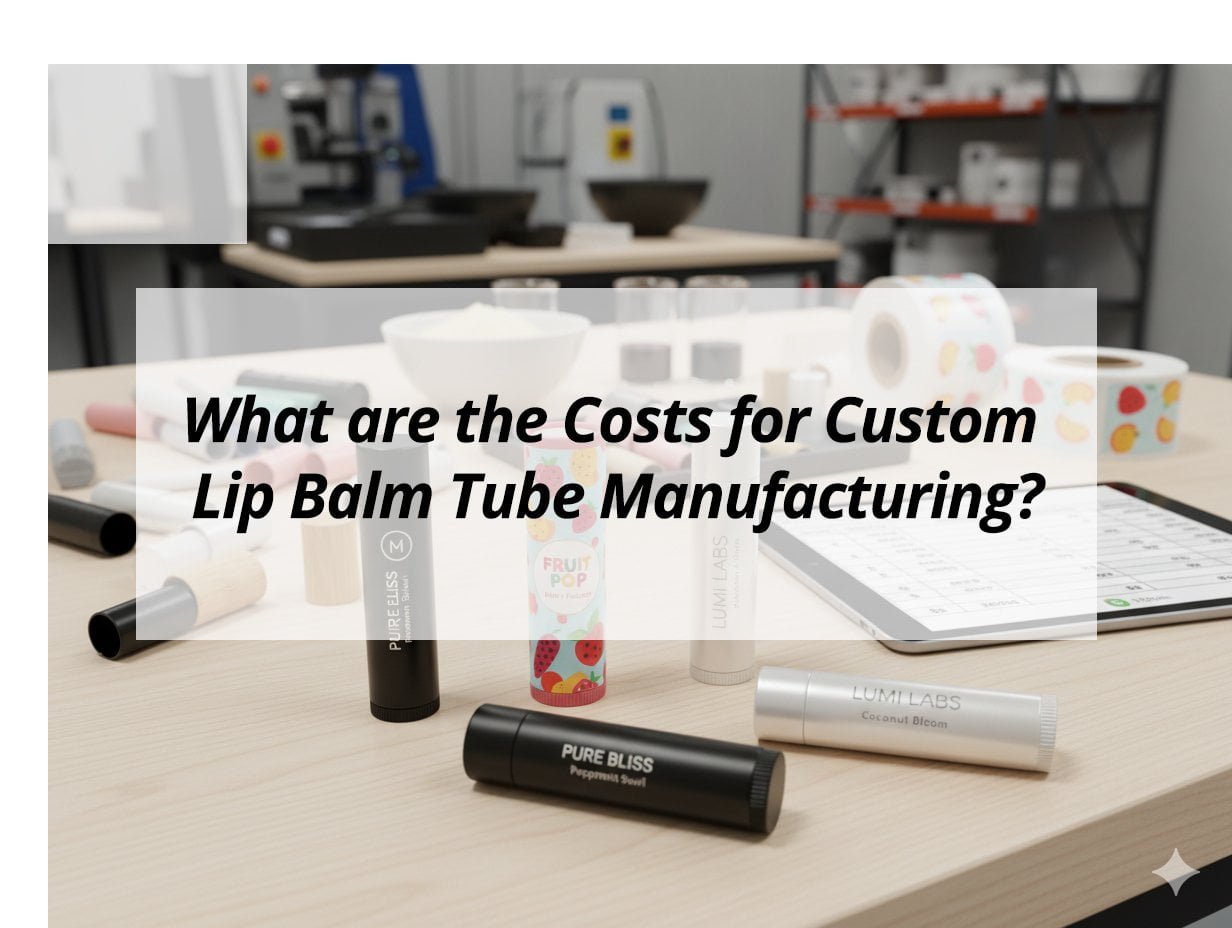
Are you considering launching a custom lip balm product? Do you need to understand the financial investment involved in custom lip balm tube manufacturing? It is a critical initial step.
The costs associated with custom lip balm tubes vary significantly. Several factors influence the final price. These include material choices, design complexity, and order volume. Understanding these elements is essential for effective budget planning.
Many businesses seek clarity on these costs early in their development. It is important to grasp these financial aspects before proceeding. This guide details the various cost components involved in custom lip balm tube manufacturing.
Do you need a license to sell homemade lip gloss?
Are you planning to sell lip gloss produced at home? Do you require specific licenses or permits for this activity? This is a frequent question for emerging businesses.
Selling homemade lip gloss typically involves adhering to certain regulations. These rules concern product safety and public health. They also cover product labeling requirements. Compliance with these regulations helps prevent future complications.
Understanding the legal framework is crucial. It ensures operations are legitimate and products meet necessary standards. Here is an overview of licensing considerations for selling homemade lip gloss.
Why Licenses and Permits are Necessary
Licenses and permits demonstrate that products meet safety standards. They confirm adherence to legal requirements. This builds consumer confidence. Operating without proper authorization can lead to penalties, including fines or business closure.
Key Regulatory Considerations
- Cosmetic Regulations: Regulatory bodies, such as the FDA in the U.S., govern cosmetic products. Lip gloss falls under this category. Products must be safe for consumer use and correctly labeled.
- Local Health Department Rules: State and local authorities may impose additional regulations. These often pertain to manufacturing environments and ingredient handling.
- Good Manufacturing Practices (GMP): These guidelines ensure product consistency and safety. Adhering to GMPs is vital for producing high-quality lip gloss.
- Labeling Requirements: Product labels must list all ingredients. They must also indicate net weight, the manufacturer's name, and address.
Common Types of Required Licenses
The specific licenses needed can depend on location and business scale.
| License Type | Purpose |
|---|---|
| Business Operating License | Authorizes legal business operation. |
| Cosmetic Manufacturing Permit | Specific authorization for cosmetic production. |
| Resale Certificate | Allows tax-exempt purchase of raw materials. |
| Employer Identification Number (EIN) | Required for tax purposes if employing staff. |
Preparing for Compliance
Consulting with local health authorities is advisable. They can provide precise requirements. Information from national regulatory bodies is also a valuable resource. Thorough preparation facilitates smooth business operation and growth.
How is lip balm made in factories?
Have you considered the industrial process of lip balm production? Do you want to understand the steps involved in large-scale manufacturing? It is a precise and controlled procedure.
Factory production of lip balm differs from small-batch methods. Factories utilize specialized machinery and adhere to strict protocols. This ensures product uniformity and safety for all consumers.
Manufacturing processes are designed for consistency and quality assurance. This section outlines the typical stages of lip balm production in a factory setting.
The Scientific Process of Lip Balm Manufacturing
Factories employ a systematic approach. Ingredients are melted and combined. The mixture is then filled into containers. Each stage is critical for the final product's integrity.
Primary Ingredients in Lip Balm Formulations
Lip balm formulations generally include waxes, oils, and butters.
- Waxes: These provide structural integrity and create a protective barrier on the lips. Common examples include beeswax, carnauba wax, and candelilla wax.
- Oils: Oils contribute moisturizing properties and a smooth texture. Jojoba oil, coconut oil, and almond oil are frequently used.
- Butters: Butters enhance softness and aid in lip moisturization. Shea butter and cocoa butter are popular choices.
- Functional Additives: These may include flavors, colors, and sun protection factors (SPF). They enhance product appeal and function.
Factory Production Steps
The factory production process is highly organized and follows distinct stages.
1. Melting and Blending Ingredients
Initially, solid ingredients like waxes and butters are melted in heated tanks. These tanks are equipped with agitators to ensure thorough mixing. Liquid oils are subsequently added. The mixture is maintained at a specific temperature to achieve a homogeneous blend.
2. Incorporation of Fragrance and Color
Once the base mixture is uniformly blended, fragrances, flavors, and colorants are introduced. These are carefully mixed to ensure even distribution throughout the batch. Quality checks are performed at this stage to confirm correct color and scent profiles.
3. Container Filling
The liquid lip balm is then transferred to a filling machine. This equipment efficiently fills multiple containers simultaneously with high precision. Containers are typically pre-sterilized and prepared for filling. This stage requires accuracy to prevent spillage and waste.
4. Cooling and Solidification
Following the filling process, the filled containers pass through a cooling tunnel. This controlled cooling process allows the lip balm to solidify. Gradual cooling helps prevent cracking and ensures a smooth product texture. This step is vital for product quality.
5. Capping and Labeling
Once the lip balm has solidified, caps are applied to the containers. Automated machinery then affixes labels. Labels display essential product information and branding. My company operates 10 injection molding machines, ensuring efficient and high-quality tube production for this stage.
6. Quality Control and Packaging
Finished lip balms undergo final quality assurance inspections. This verifies that each product meets established standards. Subsequently, products are packaged into boxes, ready for distribution.
Key Aspects of Factory Production
- Sanitation: Manufacturing facilities maintain strict hygiene standards to prevent contamination.
- Automation: Automated systems are extensively used. This increases production speed and consistency.
- Batch Production: Factories produce large volumes of lip balm. This optimizes cost per unit.
How to start your own lip balm business?
Are you considering establishing a lip balm business? Do you need guidance on the foundational steps for launch? It represents a significant entrepreneurial endeavor.
Starting a lip balm business requires meticulous planning. It involves defining product specifications and understanding the target market. Effective sales and marketing strategies are also crucial.
Many new businesses benefit from structured guidance. Understanding the startup process helps in making informed decisions. Here are the key steps involved in launching a lip balm business.
From Concept to Market: Essential Steps
A clear business concept is the starting point. For lip balm, identify your unique product offering and market differentiator.
1. Research and Strategic Planning
This initial phase is fundamental for success. It involves thorough market understanding.
- Market Analysis: Examine existing lip balm brands. Identify their offerings, unique selling propositions, and customer demographics. This helps define your market niche.
- Business Plan Development: Outline your objectives, target audience, product lines, and sales channels. Include financial projections and budget allocations.
- Legal Entity Formation: Determine your business structure, such as a sole proprietorship or LLC. This impacts legal and tax obligations.
2. Product Development and Sourcing
This stage focuses on creating the physical product.
- Formulation Design: Determine your ingredient list. Decide on product attributes like natural, scented, or tinted. Conduct thorough testing for safety and efficacy.
- Ingredient Procurement: Secure reliable suppliers for all raw materials. High-quality ingredients are crucial for superior product quality.
- Packaging Selection: Packaging is a vital component. This includes lip balm tubes, labels, and outer boxes. Custom packaging options can enhance brand differentiation. We offer a range of cosmetic packaging, including lipstick and lip gloss tubes.
| Packaging Component | Significance |
|---|---|
| Lip Balm Tubes | Protects product, conveys brand image. |
| Labels | Displays product information, branding. |
| Secondary Packaging | Ensures product protection during transit, enhances presentation. |
3. Branding and Market Outreach
Establishing brand recognition is key to attracting customers.
- Brand Identity Creation: Select a memorable brand name and design a distinctive logo. Develop a consistent brand image.
- Digital Presence: Establish an e-commerce website or utilize online retail platforms.
- Social Media Engagement: Leverage platforms like Instagram and Facebook to showcase products and interact with potential customers.
- Product Photography: Invest in high-quality visual content to highlight your lip balm. Professional images are crucial for online sales.
4. Sales and Distribution Channels
Define how products will reach consumers.
- Direct-to-Consumer Sales: Sell through your own website or online marketplaces.
- Local and Retail Sales: Participate in local markets or explore partnerships with retail outlets.
- Wholesale Operations: Supply products to other businesses for resale. This expands market reach.
- Logistics Management: Plan for efficient order fulfillment and shipping. Consider costs and delivery timelines.
5. Legal and Compliance Framework
Ensure all operations adhere to legal and regulatory requirements.
- Business Registration: Complete all necessary legal registrations for your business.
- Licenses and Permits: Obtain all required local and national licenses for cosmetic manufacturing and sales.
- Product Liability Insurance: Secure appropriate insurance coverage to mitigate potential risks.
- Intellectual Property Protection: Consider trademarking your brand name and logo.
How much does it cost to start a lipstick line?
Are you planning to establish your own lipstick product line? Do you need to determine the initial financial outlay required? It involves a series of calculated investments.
Launching a lipstick line necessitates a significant financial commitment. Funds are needed for product development, packaging, and marketing efforts. Understanding these cost categories is essential for effective financial planning.
Many businesses allocate resources based on a clear budget. A comprehensive understanding of potential expenses facilitates informed decision-making. This section details the various costs associated with initiating a lipstick line.
Dissecting the Costs: Key Expenditure Categories
The cost to launch a lipstick line varies widely. Factors such as production scale and desired product quality significantly influence expenses.
1. Product Development and Formulation Expenses
This typically represents a primary initial cost.
- Research and Development (R&D): Developing custom formulations may require hiring cosmetic chemists. These costs can range from hundreds to several thousand dollars per unique formula.
- Raw Material Sourcing: Ingredient costs depend on the specific formulation. Specialized or premium ingredients generally incur higher expenses.
- Product Testing: Essential tests include stability, microbial, and safety assessments. These ensure product efficacy and consumer safety. Each test can cost hundreds of dollars.
| Development Phase | Estimated Cost Range | Description |
|---|---|---|
| Formula Development | $500 - $5,000+ | Professional chemist fees, ingredient samples. |
| Ingredient Acquisition | Variable | Dependent on quantity, type, and source of materials. |
| Product Testing | $1,000 - $3,000+ | Ensures safety, stability, and preservation efficacy. |
2. Manufacturing and Production Costs
Determining the production method impacts financial outlay.
- Contract Manufacturing: Many startups outsource production to contract manufacturers. This eliminates the need for expensive in-house machinery. Costs are volume-dependent, and minimum order quantities (MOQs) can be substantial.
- In-House Production Setup: Establishing an in-house facility requires capital investment in equipment such as mixers, melting tanks, and filling machines. Our company operates 10 injection molding machines, reflecting the investment in production capabilities.
- Bulk Product Procurement: If purchasing pre-formulated bulk lipstick, costs are based on volume (e.g., per kilogram).
3. Packaging and Container Expenses
Packaging is a crucial element for product presentation and protection.
- Primary Packaging: This refers to the lipstick tube itself. Costs vary based on materials (e.g., plastic, metal), design complexity, and finishes. Custom designs often incur higher costs. We provide cosmetic packaging solutions, including lipstick tubes.
- Secondary Packaging: Outer cartons or boxes protect the primary packaging and offer additional branding opportunities.
- Labeling: High-quality labels are necessary for product information and brand visibility. Legal compliance requires specific information on labels.
- Minimum Order Quantities (MOQs): Packaging suppliers often have MOQs, requiring a significant initial purchase volume.
4. Branding and Marketing Investment
Effective promotion is vital for market penetration.
- Brand Identity Development: This includes logo design and brand guideline creation. Costs can range from a few hundred to several thousand dollars.
- E-commerce Platform: A functional online store is essential. Costs vary from subscription-based platforms to custom-built websites.
- Professional Photography: High-quality product visuals are indispensable for marketing materials.
- Marketing Campaigns: Expenses for social media advertising, collaborations with influencers, and public relations efforts can accumulate rapidly.
5. Legal and Administrative Overheads
These are necessary operational expenses.
- Business Registration Fees: Costs associated with legally establishing the business entity.
- Licenses and Permits: Obtaining all required operating licenses and permits.
- Business Insurance: Product liability insurance is critical for mitigating risks.
- Intellectual Property Protection: Costs for trademarking the brand name and logo.
My Insights: What are the Costs for Custom Lip Balm Tube Manufacturing?
Wondering how much it costs to create custom lip balm tubes? Discover the factors impacting manufacturing expenses and how economies of scale can work for you.
Custom lip balm tube costs range from $0.20–$1.00 per unit. Expenses vary based on materials, design complexity, branding, and order volume. Tooling, labeling, and shipping add additional costs. Larger orders reduce the per-unit cost significantly, offering economies of scale.
Understanding Custom Lip Balm Tube Costs
Material and Design Considerations
Costs start with material choice—standard plastic is more affordable, while eco-friendly or metal options increase expenses. Detailed designs with multiple colors or finishes also add to the per-unit cost.
Production and MOQ Impact
Injection molding setup and tooling can be significant upfront investments, impacting your budget. Minimum order quantities (MOQs) typically start around 5,000 units, with costs decreasing as volumes rise.
| Factor | Influence on Cost |
|---|---|
| Materials | Standard plastic vs. eco-friendly materials |
| Design Complexity | Basic labels vs. detailed multi-color prints |
| Order Volume | Higher volumes reduce per-unit cost |
| Tooling and Setup | Initial investment for molds and machinery |
Additional Expenses
Shipping, customs, and quality control are essential post-manufacturing costs. For startups, using stock components and focusing on simple designs can help manage expenses effectively until market demand justifies larger investments.
Conclusion
Establishing a custom lip balm line requires evaluating various costs. These include formulation, manufacturing, and packaging. Thorough planning is essential for a successful launch.