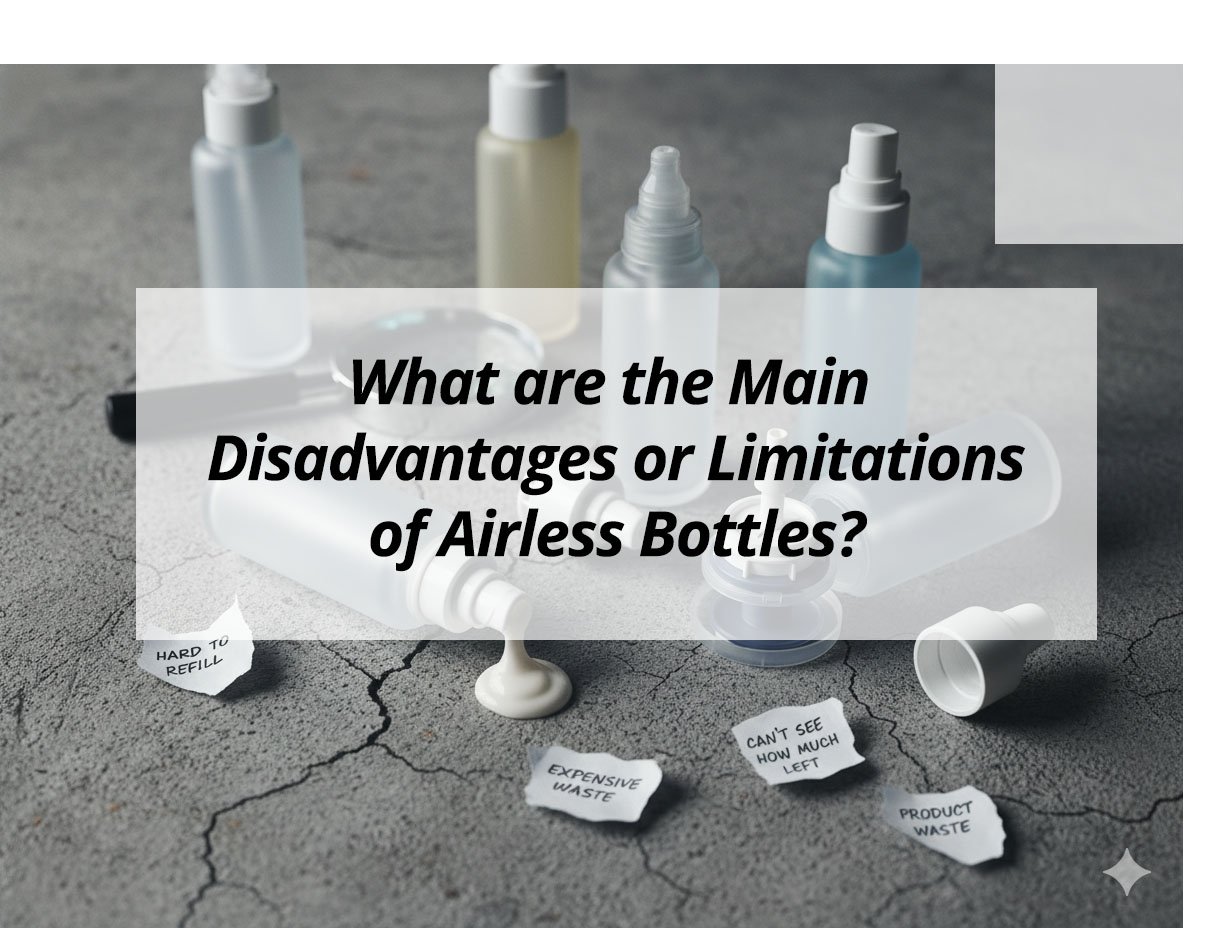
Airless bottles are popular in the cosmetic industry. However, they have specific drawbacks. Understanding these limitations is important for choosing the best packaging.
Airless pump bottles are effective for product preservation and precise dispensing. Nonetheless, their limitations often include a higher manufacturing cost, increased design complexity, and potential challenges with product recovery or refilling. These factors require careful consideration during packaging selection.
While airless bottles offer significant advantages, they also present distinct challenges. Evaluating these aspects helps in making an informed decision about cosmetic packaging solutions.
Are Airless Pump Bottles Good?
Airless pump bottles are frequently considered a premium packaging option. But, are they suitable for every product? Let's examine their benefits and drawbacks.
Airless pump bottles effectively shield sensitive formulations from air and contaminants, and they facilitate consistent product delivery. However, their production costs can be higher, and their compatibility might vary with certain product viscosities, which can restrict their application in some contexts.
Airless bottles are favored by many brands, particularly for delicate skincare formulations. They minimize oxygen exposure, which helps extend product shelf life. This is especially valuable for ingredients prone to oxidation. They also dispense nearly all the product, enhancing user satisfaction and reducing waste.
Key Benefits of Airless Pump Bottles
- Product Protection: Airless systems prevent air entry into the product chamber. This protects against oxidation and external contamination. Product integrity is maintained longer.
- Extended Shelf Life: By reducing air exposure, airless bottles help preserve the stability of active ingredients. This is crucial for sensitive compounds like vitamins and antioxidants.
- Precise Dosing: Airless pumps deliver a consistent, measured amount of product with each actuation. This ensures controlled application.
- Minimal Product Waste: The vacuum-driven piston mechanism pushes almost all the product out. Consumers can utilize nearly the entire contents.
- Versatility: These bottles can accommodate a range of product viscosities, from thin liquids to thicker creams and gels.
Common Limitations of Airless Pump Bottles
- Higher Cost: The manufacturing process for airless bottles is more intricate. This typically results in a higher unit cost compared to standard pump bottles, impacting budget considerations.
- Design Constraints: The internal components and mechanism can impose limitations on bottle shapes and aesthetic designs. This may restrict unique branding efforts.
- Initial Priming: New airless bottles sometimes require multiple pumps to initiate product dispensing. This can be an unexpected step for some users.
- Refill Difficulty: Many airless systems are designed for single use. This makes them less conducive to easy consumer refilling, which conflicts with sustainability goals for some brands.
- Formulation Compatibility: Very high-viscosity formulations or those containing large particulates may not always function optimally with all airless pump designs.
| Feature | Airless Pump Bottle Advantages | Airless Pump Bottle Disadvantages |
|---|---|---|
| Product Integrity | Excellent protection from air, light, and contaminants. | Some designs are challenging to clean for potential reuse. |
| Cost | Reduces product waste for consumers, enhancing value. | Generally more expensive to manufacture than traditional packaging. |
| User Experience | Consistent dispensing, near 100% product evacuation. | May require initial priming, which can be unfamiliar to users. |
| Sustainability | Can extend product shelf life, potentially reducing overall waste. | Often single-use, contributing to plastic waste if not recycled. |
| Formulation | Ideal for sensitive formulations, preserves active ingredients. | Not always suitable for extremely thick or particulate formulations. |
What Disadvantages Are There When You Use Plastic Bottles?
Plastic bottles are ubiquitous in the cosmetic industry due to their affordability and lightweight nature. However, they carry significant disadvantages.
Plastic bottles, while offering cost-effectiveness and low weight, present environmental concerns due to their limited biodegradability. They also have the potential for chemical migration into products over time, which can influence formula stability and product safety. Therefore, material selection is a critical decision for brands.
Plastic bottles provide benefits such as lower production and shipping costs. However, it is essential to consider their broader impact and potential risks. Certain plastics may interact with specific cosmetic ingredients, potentially altering product efficacy or safety over time.
Environmental Considerations
- Non-Biodegradable: Most plastics do not decompose naturally. They persist in the environment for extended periods, contributing to pollution.
- Plastic Pollution: Plastic waste, including bottles, frequently accumulates in natural environments such as oceans. This poses a threat to ecosystems and wildlife.
- Resource Consumption: Plastic production relies on fossil fuels, a finite resource. Its extraction and processing contribute to environmental impact.
- Recycling Limitations: Not all plastic types are easily recyclable. Even when recyclable, the process consumes energy. A significant portion of plastic bottles still becomes waste.
Product Safety and Stability Concerns
- Chemical Migration: Some plastics can release chemical compounds into the product. This can occur over time or under varying temperature conditions, potentially affecting product safety.
- Permeability: Plastics are not always impervious to gases. Certain gases or volatile compounds can permeate the plastic, which may compromise product stability and fragrance.
- UV Degradation: Exposure to ultraviolet light can degrade certain plastics. This can lead to material embrittlement, discoloration, and potential impact on the product inside.
- Chemical Compatibility: Not all plastics are compatible with all cosmetic formulations. Chemical reactions between the product and plastic can result in product degradation or container damage.
Brand and Market Perception
- Sustainability Image: Contemporary consumers are increasingly conscious of environmental issues. Exclusive reliance on virgin plastic packaging can negatively affect a brand's sustainability image.
- Perceived Value: Some consumers associate plastic with lower-cost products. This perception can diminish the perceived value of premium cosmetic lines.
- Regulatory Landscape: There is increasing global scrutiny and regulation regarding single-use plastics. Future legislative changes could influence packaging choices for brands.
| Disadvantage Area | Specific Issues with Plastic Bottles | Impact on Brand / Product |
|---|---|---|
| Environmental | Slow decomposition, environmental pollution, resource depletion. | Potential negative brand image, increased regulatory risk. |
| Product Integrity | Risk of chemical migration, gas permeability, UV degradation. | Product instability, reduced shelf life, potential safety concerns. |
| Perception | May be viewed as less premium, contributes to waste culture. | Lower perceived value, may deter eco-conscious consumers. |
| Manufacturing | Dependency on fossil fuels, requires robust recycling infrastructure. | Supply chain vulnerabilities, fluctuating material costs. |
| Durability | Can become brittle or discolor over time, affecting aesthetics. | Potential for customer dissatisfaction, inconsistent brand experience. |
Are Airless Pump Bottles Airtight?
Airtight packaging is crucial for many cosmetic formulations. Airless pump bottles are specifically designed to provide this feature. But, how effectively do they maintain an airtight seal?
Airless pump bottles are engineered to be airtight, which means they prevent ambient air from entering the product chamber. This design protects sensitive cosmetic formulations from oxidation and external contaminants, thereby significantly extending their shelf life compared to conventional packaging.
The primary objective of an airless bottle is to isolate the product from air. This is why many high-performance skincare products utilize them. For instance, a Vitamin C serum can rapidly degrade upon air exposure. An airless bottle creates a vacuum, preventing such contact and helping to maintain the product's efficacy.
How Airless Systems Achieve Airtightness
- Absence of Dip Tube: Unlike traditional pumps, airless bottles operate without a dip tube. Instead, a rising piston at the base pushes the product upward. This design inherently prevents air from being drawn back into the container.
- Vacuum Mechanism: The pump system generates a vacuum force. This pulls the piston upward, ensuring the product remains completely isolated from external air.
- Precision Components: Airless pumps consist of precisely engineered parts that fit together tightly. This design minimizes potential air leakage around the pump head and collar.
- Material Selection: The bottle body and pump components are manufactured from materials chosen for their low permeability. This characteristic limits the passage of gases into or out of the container.
Why Airtightness is Essential
- Oxidation Prevention: Air contains oxygen, which can react with and degrade many cosmetic ingredients. Airtight packaging is vital in preventing these oxidative processes.
- Contamination Control: Airtight seals act as a barrier, preventing ingress of bacteria, dust, and other environmental contaminants. This is critical for maintaining product hygiene.
- Preservative Efficacy: By reducing exposure to contaminants, brands may be able to use lower concentrations of preservatives. This can be an advantage for "clean beauty" formulations.
- Ingredient Stability: Protecting active ingredients from degradation ensures they maintain their intended efficacy throughout the product's use.
- Product Freshness: Airtight packaging helps to preserve the product's original color, texture, and fragrance over its shelf life.
Factors Potentially Affecting Airtightness
- Manufacturing Imperfections: Rarely, minor defects during manufacturing can compromise the seal. Reputable manufacturers implement rigorous quality control to minimize this.
- Physical Damage: If the bottle experiences significant impact or damage, the integrity of the seal can be compromised, allowing air entry.
- Improper Assembly: If the pump head is not securely fastened, it can create a gap, leading to air infiltration.
- Product Formulation: Extremely viscous products, or those with significant particulate matter, if not filled correctly, might create air pockets that affect the vacuum system.
| Aspect of Airtightness | Details and Importance | Impact on Product / Brand |
|---|---|---|
| Mechanism | Piston lifts product without drawing air back into the bottle. | High product integrity, minimal degradation of sensitive ingredients. |
| Seal Quality | Precisely fitted components create a strong, consistent seal. | Prevents external contaminants, extends product shelf life. |
| Material Choice | Low-permeability plastics and liners for the container. | Maintains product freshness (color, scent, texture). |
| Filling Process | Correct filling techniques avoid air bubbles or pockets. | Ensures consistent performance and full product evacuation. |
| User Handling | Proper assembly and care by the user maintains seal integrity. | Customer satisfaction, helps prevent premature product spoilage. |
Is an Airless Pump Bottle Reusable?
In the current market, sustainability is a significant consideration. The desire to reduce waste leads to questions about packaging reusability. Can airless pump bottles be reused effectively?
Most conventional airless pump bottles are not designed for easy reuse by consumers due to their intricate internal piston mechanism. While the industry is innovating with refillable airless systems, the standard design typically functions as a single-use container, limiting its inherent reusability.
The design of a standard airless bottle prioritizes product protection and complete evacuation. The rising piston mechanism makes it challenging to refill hygienically and effectively in a home setting. However, there is a clear trend toward more sustainable options. Brands are seeking solutions that support refills, driving the development of new designs.
Challenges with Reusing Standard Airless Bottles
- Hygiene Concerns: Thoroughly cleaning a standard airless bottle at home is difficult. Residual product or water can foster microbial growth, potentially contaminating new contents.
- Mechanism Vulnerability: Disassembling and reassembling the internal piston mechanism can damage its precision components. This may impair or disable the pump function.
- Compromised Airtightness: Each time a container is opened and resealed, there is a risk of compromising the seal's integrity. For airless bottles, this can undermine their primary benefit of airtight protection.
- Material Degradation: Repeated handling, opening, or harsh cleaning can cause plastic components to degrade. This reduces the bottle's aesthetic appeal and functional lifespan.
- Consumer Difficulty: The typical airless design is not user-friendly for home refilling, often requiring specific tools or detailed instructions.
Emerging Refillable Airless Solutions
- Inner Pouches/Bladders: Some designs incorporate a removable inner pouch or bladder. Once empty, users replace only this internal component, allowing the outer container to be reused.
- Cartridge Systems: Similar to pouches, certain airless bottles utilize pre-filled, replaceable cartridges that are inserted into a permanent outer shell.
- Designed for Disassembly: A select number of manufacturers are developing airless bottles that can be easily dismantled. This facilitates effective cleaning and refilling.
- Professional Refill Services: Some brands offer in-store refill stations. Customers can bring their empty bottles to a retail location for professional refilling.
Why Reusability is Increasingly Important
- Consumer Preference: A growing segment of consumers actively seeks eco-friendly products and packaging solutions. Reusable options meet this demand.
- Waste Reduction: Reusing packaging significantly reduces the volume of plastic waste generated. This has positive environmental implications.
- Brand Loyalty: Offering sustainable packaging choices can enhance brand loyalty. It signals a brand's commitment to environmental responsibility.
- Long-term Cost Savings: For consumers, purchasing refills can be more economical than continuously buying entirely new products.
- Regulatory Compliance: Governments globally are implementing stricter regulations on single-use plastics. Reusable packaging helps brands navigate these evolving legal frameworks.
| Aspect of Reusability | Challenges for Standard Airless Bottles | Solutions / Emerging Trends |
|---|---|---|
| Hygiene | Difficult to sterilize at home, risk of microbial contamination. | Removable inner pouches, designs for easy deep cleaning. |
| Mechanism | Internal piston not designed for user manipulation or reassembly. | Cartridge systems, professional refill protocols. |
| Airtightness | Risk of seal compromise with repeated opening/closing. | Robust refill mechanisms that maintain seal integrity. |
| Material | Potential for fatigue or damage from repeated handling. | Durable outer shells, easily replaceable internal components. |
| Consumer Ease | Not user-friendly for home refilling, complex process. | Intuitive refill instructions, simple drop-in cartridges. |
My Insights: Understanding the Disadvantages of Airless Bottles
Considering airless bottles for your product? It's crucial to understand their limitations before making a decision.
Airless bottles, while effective in preserving product integrity, can be more expensive, challenging to recycle, and less intuitive for users. They may also have limited customization options and face compatibility issues with thick formulas.
Identifying Airless Bottle Limitations
Key Limitations
| Limitation | Impact |
|---|---|
| Higher Cost | Increases packaging expenses compared to traditional options |
| Complex Design | Harder recycling processes and user adaptation challenges |
| Product Visibility | Difficulty in seeing remaining contents |
| Filling and Compatibility | Requires specific manufacturing processes |
Specific Challenges
- Mechanism Issues: Complex mechanisms can fail, affecting dispensing, especially if not properly engineered.
- Formula Compatibility: Thick or particulate-filled products may clog the pump, limiting use cases.
- Size and Capacity: Often available in smaller sizes, restricting the volume of product offered.
- Technological Demands: Manufacturing requires specialized technology, impacting availability and cost.
For products like sensitive skincare formulas, airless packaging is worth considering for its protective qualities. However, if budget, refillability, and volume are priorities, traditional bottles may be more practical.
Conclusion
Airless bottles excel in product protection and dispensing efficiency. However, their higher cost and limited inherent reusability are key considerations. Evaluating these factors is crucial for optimal packaging choices.