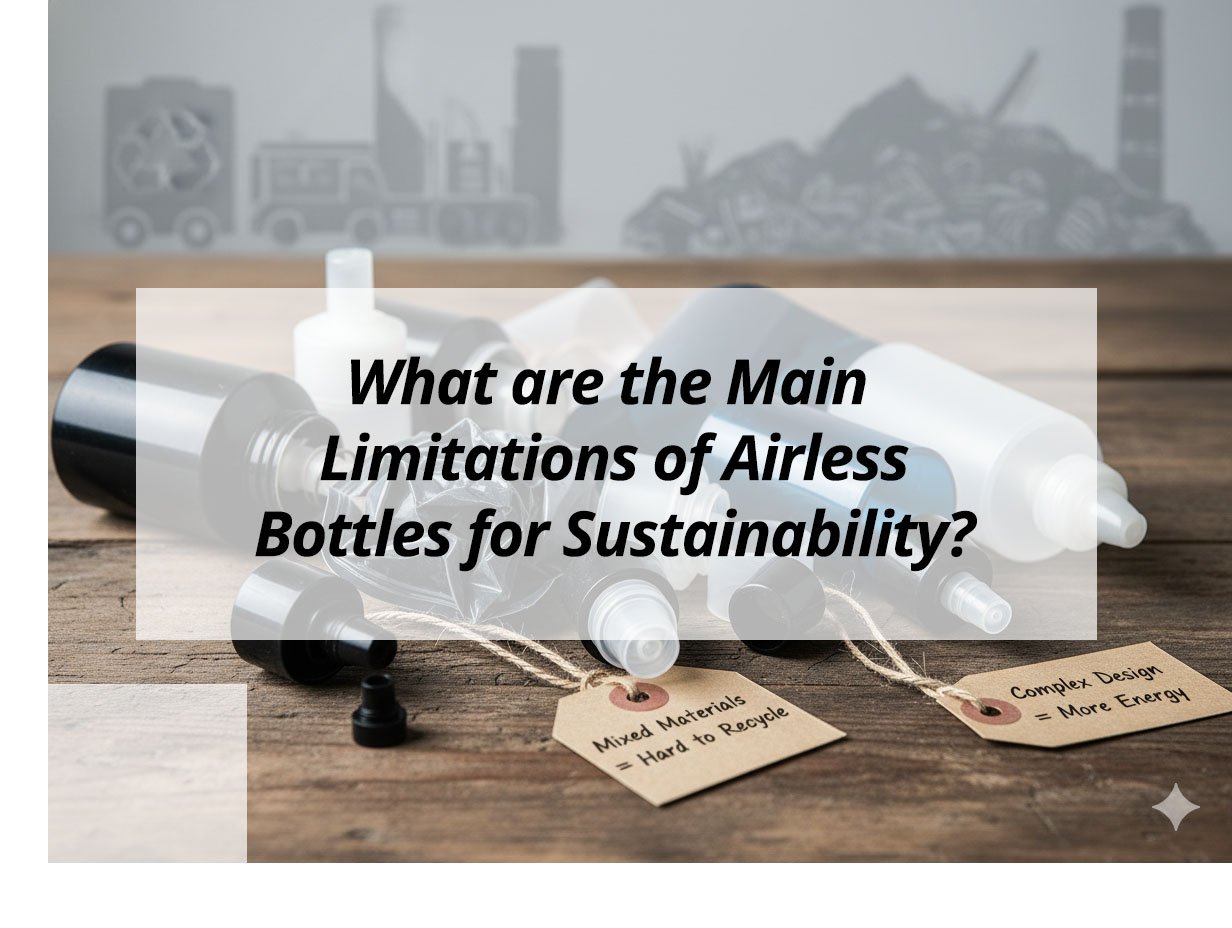
Many people are interested in sustainable packaging. Airless bottles offer some benefits for product protection. However, they also have significant sustainability challenges. It is important to understand these to make informed decisions.
Airless bottles are good for keeping products fresh and reducing waste. But, their design often uses many materials. This makes recycling difficult. They also require special facilities to be processed. This complexity limits their overall sustainability. Simpler packaging designs are often more environmentally friendly.
Companies today focus on sustainable practices. Airless bottles are a common choice. However, a deeper look reveals their environmental impact. Understanding both their advantages and disadvantages is essential. This helps in choosing truly sustainable options.
What are the benefits of airless pump bottles?
Why are airless pump bottles widely used? They provide several key advantages. These bottles maintain product integrity. They also help minimize product waste.
Airless pump bottles provide excellent product protection. They prevent air exposure. This significantly extends product shelf life. They also ensure nearly all product can be dispensed. This reduces waste for consumers and businesses. These benefits make them a preferred choice for sensitive formulations.
Airless bottles are often used for high-value products. For instance, skincare serums or lotions benefit greatly. Keeping air out stops active ingredients from breaking down. This means the product stays effective for longer. This is important for both product quality and consumer satisfaction. Manufacturers can also use fewer preservatives. This is because the sealed environment protects the product. This helps in making cleaner product formulas. These benefits highlight why airless technology is valued in the cosmetic and pharmaceutical industries.
How Airless Bottles Protect Product Integrity
Airless systems work with a piston mechanism. This prevents air from entering the bottle.
- Minimizes Oxidation: No air means less oxygen exposure. This protects sensitive ingredients from degrading.
- Prevents Contamination: The product does not touch outside elements. This reduces bacterial growth and spoilage.
- Extends Shelf Life: Products remain stable for a longer period. This improves product efficacy over time.
How Airless Bottles Reduce Product Wastage
These bottles are designed for maximum product evacuation.
| Feature | Advantage |
|---|---|
| Piston Delivery | Pushes product up, leaving minimal residue inside. |
| Consistent Dispensing | Delivers a measured dose each time. |
| Reduced Clogging | Ensures smooth flow without product drying in the pump. |
This complete dispensing means consumers use all the product they buy. It also minimizes product loss during manufacturing and filling processes.
What are the cons of reusable water bottles?
Reusable water bottles are seen as an eco-friendly choice. However, they present some challenges. Their sustainability is not always straightforward. A balanced view is necessary.
Reusable water bottles help reduce single-use plastic. Yet, they can have environmental costs in production. They also require consistent cleaning to prevent hygiene issues. If not used many times, their environmental benefit decreases. Proper maintenance and long-term use are essential for their sustainability.
The production of reusable bottles uses resources. For example, stainless steel bottles need significant energy to make. Glass bottles also have a high energy footprint. The environmental impact depends on how many times a bottle is reused. If a user buys a new reusable bottle often, the benefit lessens. Also, some reusable bottles are heavy. This increases shipping costs and emissions during transport. These factors must be considered when assessing their overall environmental performance.
Hygiene and Health Concerns
If reusable bottles are not cleaned properly, they can harbor germs.
- Bacterial Growth: Moisture inside provides a breeding ground for bacteria. This can lead to unpleasant odors or health risks.
- Mold Development: Dark and damp conditions promote mold. This can affect taste and user health.
- Cleaning Difficulty: Some designs have narrow openings or complex parts. These are hard to clean thoroughly.
Environmental Impact of Production
Manufacturing reusable bottles requires energy and raw materials.
| Material | Energy Intensity (Production) | Water Consumption (Production) | Durability |
|---|---|---|---|
| Stainless Steel | High | Moderate | Very High |
| Glass | High | Moderate | Moderate |
| Tritan Plastic | Moderate | Low | High |
The initial environmental cost must be offset by extensive reuse. If bottles are frequently replaced, their net positive impact diminishes.
How to make plastic bottles sustainable?
Plastic bottles often receive criticism. However, their sustainability can be improved. This involves rethinking their design, material, and lifecycle. The focus should be on circularity.
To make plastic bottles sustainable, use recycled content and design for recyclability. This means using simple, mono-material constructions. It also means choosing easily recyclable plastics. Educating consumers on correct recycling practices is also crucial. These steps help reduce waste and conserve resources.
The journey to sustainable plastic bottles starts at the design stage. Using Post-Consumer Recycled (PCR) plastic is a key strategy. This diverts plastic waste from landfills. It also reduces the need for new virgin plastic. This saves energy and lowers carbon emissions. Designers should create bottles with minimal components. This makes separation at recycling facilities much easier. For example, a bottle made entirely of PET is easier to recycle than one with multiple plastic types. Clear plastics are also generally more valuable for recycling.
Incorporating Recycled Content
Using PCR materials significantly enhances sustainability.
- Reduces Virgin Material Demand: Less new plastic is made from fossil fuels. This conserves natural resources.
- Lowers Energy Consumption: Producing products from PCR often uses less energy. This is compared to using virgin materials.
- Supports Circular Economy: It promotes a system where materials are reused. This lessens waste.
Designing for Recyclability
Bottle design is critical for effective recycling.
| Design Element | Impact on Recycling |
|---|---|
| Mono-Material Use | Simplifies sorting and reprocessing. |
| Compatible Labels | Labels that separate easily or are made from the same material. |
| Transparent Plastic | More desirable for recycling into new products. |
Avoiding complex shapes, non-recyclable additives, and mixed materials improves recyclability.
Consumer Engagement and Education
Proper consumer action is vital for successful recycling.
- Clear Labeling: Packaging should clearly show recycling symbols and instructions.
- Local Guidelines: Inform consumers to check specific recycling rules in their area.
- Cleanliness: Advise users to rinse bottles before recycling. This prevents contamination.
What disadvantages are there when you use plastic bottles?
Plastic bottles are common due to their low cost and light weight. However, their widespread use has significant drawbacks. These affect the environment and potentially human health.
Plastic bottles present numerous disadvantages. They contribute to environmental pollution due as they degrade slowly. They can also leach microplastics or chemicals into contents. This raises potential health concerns. A large number of plastic bottles end up as litter. This damages ecosystems and wildlife. These issues highlight the need for more sustainable alternatives.
The persistence of plastic in the environment is a major issue. Single-use plastic bottles, in particular, contribute heavily to waste streams. They often end up in landfills or pollute natural landscapes. This pollution has severe impacts on marine life. Animals can ingest plastic pieces or become entangled in them. This shows a big problem. Also, making plastic bottles uses fossil fuels. This contributes to greenhouse gas emissions. These factors underscore why moving away from excessive plastic bottle use is important for environmental health.
Environmental Pollution Concerns
Plastic bottles have a lasting presence in nature.
- Persistent Waste: They take hundreds of years to break down. This creates long-term landfill issues.
- Ocean Contamination: A significant amount of plastic enters oceans. This harms marine ecosystems and food chains.
- Microplastic Formation: Plastic breaks into tiny microparticles. These spread widely in the environment and are ingested by organisms.
Resource Consumption and Carbon Footprint
The production of plastic bottles is resource-intensive.
| Resource | Usage |
|---|---|
| Fossil Fuels | Primary raw material for virgin plastic manufacturing. |
| Energy | Required for all stages: production, transport, disposal. |
| Water | Used in manufacturing and processing steps. |
The entire lifecycle, from material extraction to disposal, contributes to carbon emissions. This exacerbates climate change.
Potential Health Risks
Some chemicals from plastic can transfer into beverages.
- Chemical Leaching: Certain plastics can release compounds like phthalates or BPA. These may impact endocrine systems.
- Temperature Effects: Heat can increase the rate at which chemicals leach from plastic into liquids.
- Microplastic Ingestion: Humans consume microplastics from various sources. The long-term health effects are still under study.
My Insights: What are the Main Limitations of Airless Bottles for Sustainability?
Worried about the environmental impact of packaging? Learn why airless bottles might not be the green solution they seem.
Airless bottles face sustainability challenges due to complex materials that hinder recycling. Their multi-part structure and mixed materials complicate disposal, increasing environmental impact. Despite benefits in product preservation, their design often relies on less eco-friendly materials.
Understanding Airless Bottles' Sustainability Challenges
Recycling Complexities
| Challenge | Impact |
|---|---|
| Mixed Materials | Difficult separation prevents standard recycling processes |
| Multi-part Design | Various components complicate recycling efforts |
Manufacturing and Material Issues
- Resource Use: Airless bottles are energy-intensive, requiring more materials and processes than conventional bottles.
- Plastic Dependence: Often made from virgin plastics, reducing the eco-benefits of product preservation.
Industry Innovations Needed
- Design Enhancements: Simplifying materials for better recyclability.
- Collaborative Efforts: Industry partnerships could drive sustainable advancements and innovative alternatives.
While airless bottles improve product longevity by reducing waste and preventing oxidation, their sustainability is severely limited by packaging recovery issues and material dependencies. Without significant industry changes, these challenges will continue to conflict with their eco-friendly promise.
Conclusion
Airless bottles offer good product protection but face recycling limits. Reusable bottles are sustainable if properly maintained. Plastic bottles can be made greener by using recycled content and smart design. However, plastic bottles generally pose environmental and health challenges.