An empty face cream jar sits on the counter after product use. Many individuals are unsure how to manage these containers. This uncertainty often leads to disposal in general waste.
Empty face cream jars can be recycled or reused effectively. To do this, clean the jar thoroughly and check its material type (glass or plastic). Many beauty retailers and local centers accept these. Alternatively, repurpose them for storage or crafts. This reduces waste and supports environmental efforts.
Finding new purposes for empty face cream jars is achievable. This guide explores both recycling methods and creative reuse ideas. It illustrates straightforward ways to adopt more sustainable practices.
Does Ulta Implement a Take-Back Program for Empty Containers?
The beauty retail sector increasingly focuses on sustainability initiatives. The question arises whether major retailers, such as Ulta, have programs for empty container returns. This is a relevant query for eco-conscious consumers.
Ulta has established a recycling program for empty beauty containers. This initiative operates in partnership with Pact Collective. The program enables customers to return a variety of empty beauty packaging to participating stores.
The program addresses the need for responsible disposal of cosmetic packaging. Customers can bring empty face cream jars and other empty cosmetic containers to designated collection bins in Ulta stores. This service is valuable, especially for items not typically accepted in municipal recycling, such as mixed-material components or very small plastic parts.
The primary goal of the program is to divert difficult-to-recycle beauty waste from landfills. It aims to process materials that standard curbside services may reject. This represents a significant step toward a more sustainable beauty industry. Details regarding participating locations and accepted items are available on Ulta's official website.
How do retail take-back programs contribute to recycling efforts?
Retail take-back programs supplement standard municipal recycling services. They often target specific waste streams that are challenging to recycle locally. This expands the scope of materials that can be reclaimed.
| Program Characteristic | Consumer Benefit | Environmental Impact |
|---|---|---|
| Material Diversity | Offers a solution for complex or mixed materials | Reduces landfill burden, enhances material recovery |
| Accessibility | Provides convenient drop-off points at retail locations | Promotes higher consumer participation rates |
| Specialized Processing | Ensures proper handling by dedicated recycling partners | Supports a circular economy within specific industries |
These programs simplify the process for consumers to engage in responsible waste management. They offer a viable option for empty skincare bottles recycle when conventional methods are insufficient. This fosters greater environmental stewardship within the consumer product lifecycle.
How Are Face Cream Containers Recycled?
Effective recycling of face cream containers is important for environmental protection. However, the process requires specific preparation to be successful. Adhering to these steps is necessary.
Most face cream containers are recyclable. The first step involves identifying the container's material, typically glass or plastic. Subsequent thorough cleaning is critical for all materials.
All product residue must be completely removed from the jars. Clean the container with soap and water. Ensure it is completely dry afterward. Residual product can contaminate an entire recycling batch, leading to its diversion to a landfill. This negates the environmental benefit of recycling. This principle applies to all empty cosmetic containers recycle.
For plastic jars, locate the recycling symbol—a triangle containing a number. Plastics numbered 1 (PET) and 2 (HDPE) are broadly accepted. Numbers 5 (PP) and 6 (PS) are accepted less frequently but are becoming more common. For glass jars, most colors are recyclable. Remove any plastic lids or caps, as they may be made of different plastic types requiring separate recycling or disposal.
What factors present challenges in recycling face cream containers?
A primary challenge in recycling is the presence of mixed materials within a single container. For instance, a jar might consist of a plastic body, a metal lid, and a silicone liner. These diverse materials are difficult for automated sorting systems to separate efficiently.
| Material Type | Recycling Criteria | Common Obstacles |
|---|---|---|
| Plastic Jars | Verify recycling code, ensure thorough cleanliness | Small size, varied plastic types in closures/liners |
| Glass Jars | Clean completely, detach non-glass components | Fragility during transport, small dimensions |
| Composite Materials | Attempt component separation if feasible | Inefficient separation at processing facilities |
| Small Items | May bypass sorting machinery due to size | Can fall through screens, ending up as waste |
The small size of some containers also poses a problem. Small jars can pass through sorting equipment at recycling plants, leading to their disposal as waste despite being made from recyclable material. This issue sometimes prompts brands to establish specific collection programs for smaller items.
What Are Practical Methods for Reusing Empty Jars?
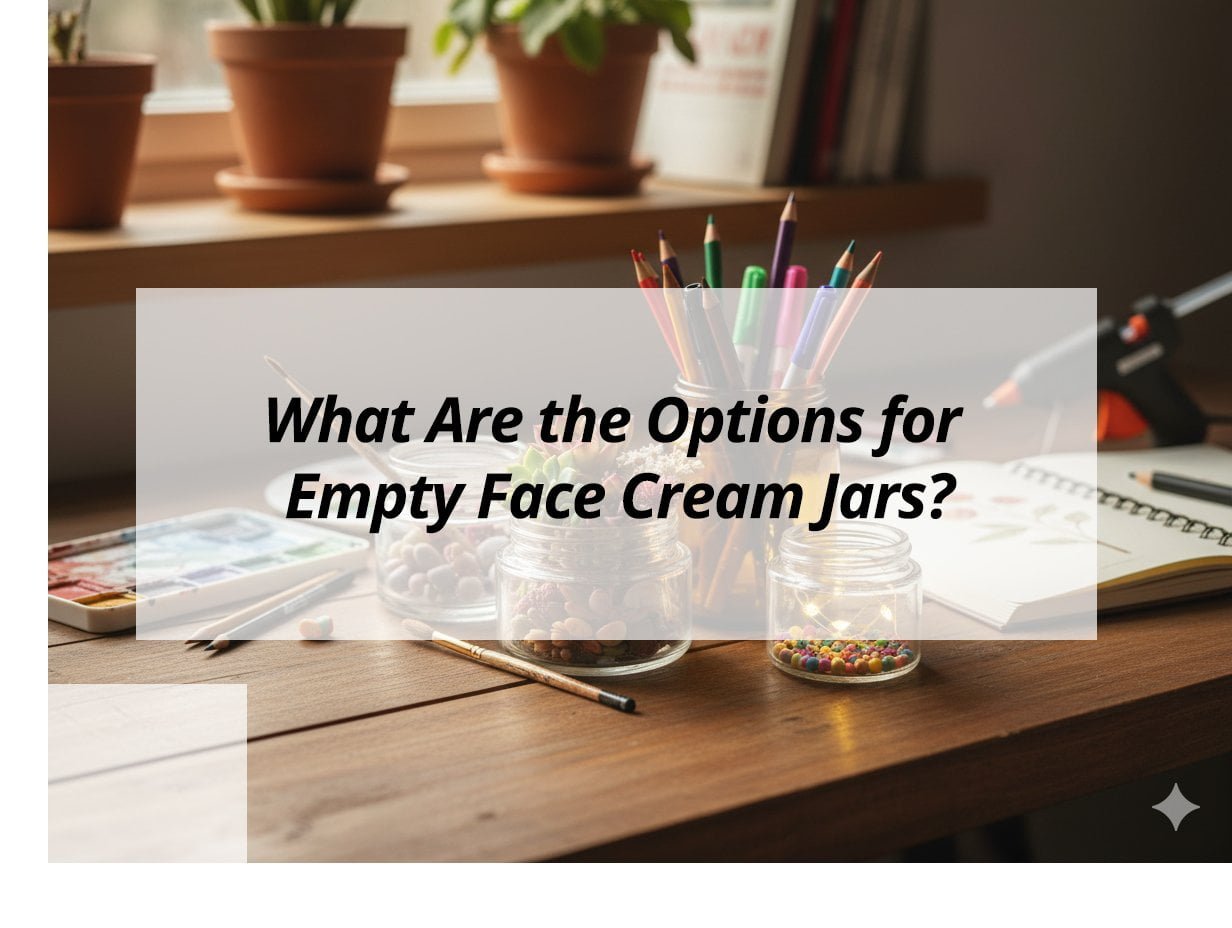
While recycling is beneficial, reusing items extends their lifespan even further. This practice reduces the demand for new resources. Numerous creative ways exist to repurpose empty face cream jars.
Empty face cream jars can serve various practical functions. Their compact size and robust construction make them suitable for organizing small items or for use in DIY projects.
These jars are ideal for storing small household items. A small glass face cream jar can hold hair ties, cotton swabs, paper clips, or thumbtacks. This helps maintain an organized space. These small jars offer a solution for what to do with empty cosmetic containers.
Empty jars can also be utilized in bathroom settings. They are suitable for storing homemade scrubs, lotions, or travel-sized portions of personal care products. Ensure the jar is thoroughly cleaned and dried before introducing new contents. Jars can also be decorated. Painting or adding ribbons can transform them into appealing storage or decorative pieces.
How can empty jars be enhanced for aesthetic reuse?
Decorating jars improves their suitability for reuse. It also enables personalization. Simple techniques can convert a standard jar into a decorative or functional item.
| Decoration Technique | Description and Required Materials | Example Application |
|---|---|---|
| Painting | Apply acrylic or spray paint in selected colors | Storage for makeup brushes, decorative display |
| Fabric Wrapping | Encase with cloth, ribbon, or twine, secured with adhesive | Small item holder, gift packaging |
| Custom Labeling | Design and apply personalized labels for contents | Organization of craft supplies, spice jars |
| Decoupage | Adhere decorative paper or fabric with a clear adhesive | Bathroom accessory, desk organizer |
Creative reuse of jars offers a sustainable alternative to disposal. It allows for the transformation of waste into functional and visually appealing items. This approach contributes to the broader effort of empty skincare bottles recycle through direct repurposing.
What Actions Are Recommended for an Empty Lotion Bottle?
Empty lotion bottles are a common household item. Like face cream jars, they present opportunities for either recycling or reuse. The appropriate method depends on the bottle's material and local recycling regulations.
An empty lotion bottle should be cleaned. It can then be prepared for recycling or repurposed. These bottles are frequently made from plastic. They often feature a pump or a flip-top cap.
Lotion bottles require thorough cleaning. Remove any pump mechanism if present. Rinse the bottle with warm water to remove all lotion residue. Soap can aid in cleaning if the lotion is oil-based. Ensure the bottle is completely dry before proceeding. This prepares it for its next application. For plastic lotion bottles, check the recycling symbol. Most are composed of PET (number 1) or HDPE (number 2). These plastics are generally accepted in municipal curbside recycling programs.
If the bottle has a pump, it may need to be discarded. Pump mechanisms often contain a combination of materials, including metal springs and various plastics. This complexity makes them challenging for standard recycling facilities to process. Unless specific specialty programs exist, pumps are typically directed to general waste. If the bottle features a simple flip-top cap, and it is made of the same plastic type as the bottle, it can often be recycled along with the bottle.
Is it possible to repurpose an empty lotion bottle?
Yes, empty lotion bottles can be effectively repurposed. They are suitable for use as travel containers. They can hold smaller quantities of products. This is practical for travel.
| Reuse Application | Description of Use | Ideal for Bottles with... |
|---|---|---|
| Travel Containers | Store small amounts of shampoo, conditioner, or body wash for trips | Pumps or flip-top caps |
| DIY Product Storage | Hold homemade cleaning solutions or hair treatments | Any clean, empty plastic bottle |
| Craft Material Dispenser | Use for dispensing paints, glues, or glitter in craft projects | Smaller bottles, easy to squeeze |
| Delicate Plant Watering | Function as a gentle watering tool for small or sensitive plants | Bottles with narrow spouts |
Repurposing lotion bottles is a practical way to extend their utility. It helps minimize waste destined for landfills. It also offers a cost-effective alternative to purchasing new travel-sized containers. This represents another effective strategy for what to do with empty cosmetic containers.
My Insights: What Can I Do With Empty Face Cream Jars?
Wondering what to do with those empty face cream jars? Transform them into useful and creative solutions instead of discarding them.
Empty face cream jars can be repurposed for homemade cosmetics, storage for small items like jewelry or spices, as plant pots for succulents, or for organizing drawers. Clean thoroughly before reuse to ensure safety and hygiene.
Exploring Creative Uses for Empty Jars
Cleaning and Preparation
- Safe Cleaning: Use warm water and soap, followed by alcohol sanitization for glass or robust plastic jars.
Creative Reuses
| Application | Description |
|---|---|
| DIY Projects | Use jars for homemade balms or candles. |
| Storage Solutions | Organize jewelry, craft supplies, or kitchen ingredients. |
Practical Uses
- Home Organization: Store bobby pins, cotton swabs, or office supplies.
- Creative Decor: Convert jars into vases or gift containers filled with treats.
By reimagining their purpose, empty jars can contribute to a less wasteful lifestyle, enhancing your home with a touch of creativity.
Conclusion
Empty face cream jars offer multiple sustainable options. Recycling through official channels or retail programs is one path. Creative reuse for household organization or DIY projects is another.