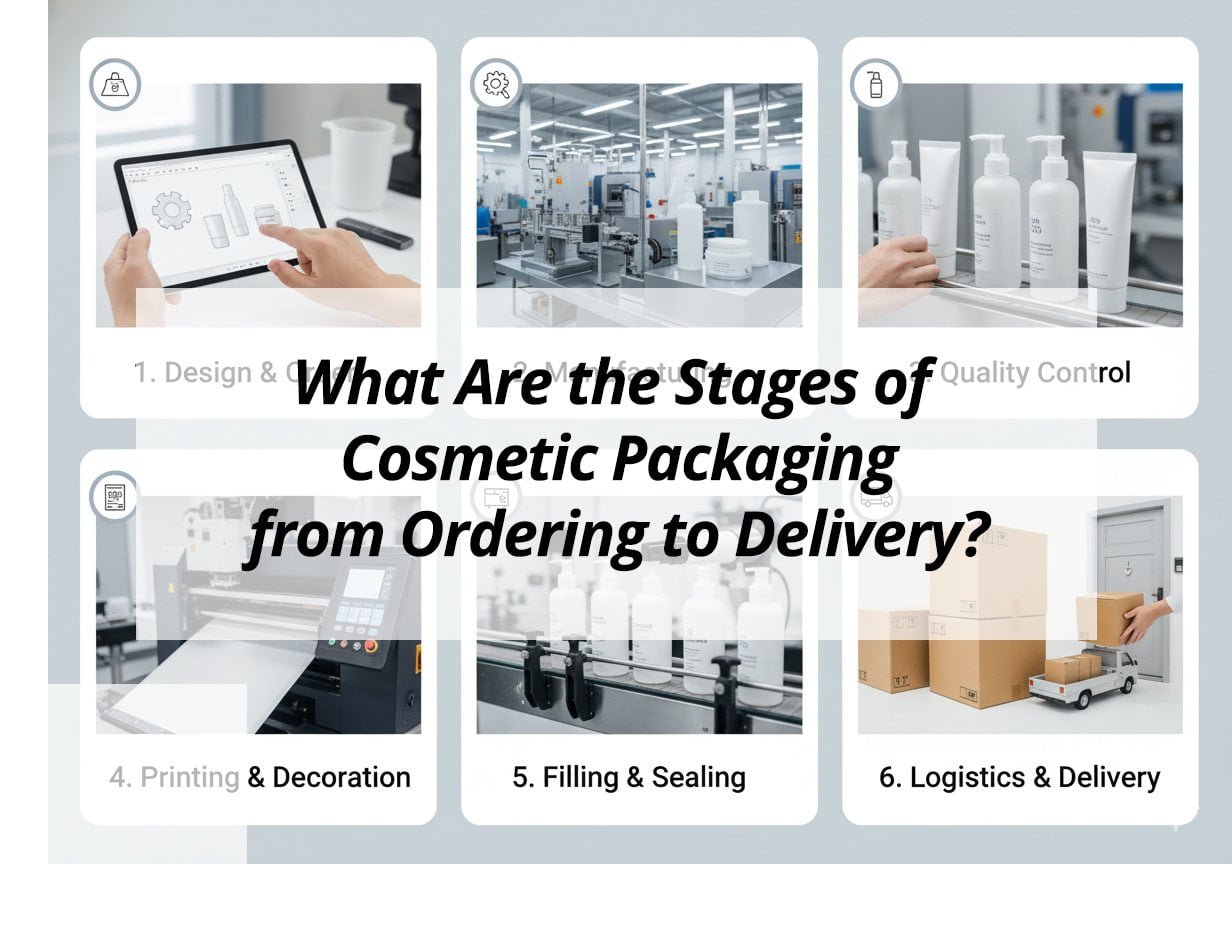
In the competitive world of cosmetics, efficient packaging processes are crucial. How do these stages unfold from ordering to delivery?
Cosmetic packaging's journey from ordering to delivery involves design, material sourcing, production, quality control, and logistics. Each step is crucial to ensure the final product's efficiency, safety, and attractiveness, ultimately reaching consumers intact and on time, thus maintaining brand reputation and customer satisfaction.
Understanding these stages helps you optimize the whole process, ensuring timely and effective delivery to customers.
What are the 4 levels of packaging?
Packaging isn’t just about putting products in boxes. What are the four crucial levels?
The four levels of packaging include primary, secondary, tertiary, and quaternary packaging. Each level serves a distinct purpose, from protecting the product to enabling efficient transportation and shelf display.
To delve deeper, let’s understand each level of packaging:
Levels of Packaging
-
Primary Packaging1: This is the product’s first layer of protection, directly enclosing the item, like a lipstick tube or foundation bottle.
-
Secondary Packaging2: Groups primary units together. This often appears as a branded box or carton, offering additional protection and retail display appeal.
-
Tertiary Packaging3: This stage adds another layer for bulk handling and warehouse storage. Commonly, it's the palletization of secondary packages.
-
Quaternary Packaging4: Often involves the use of larger containers or crates for international shipping, providing mass protection and easy transport.
| Level | Purpose | Example |
|---|---|---|
| Primary | Direct product protection | Lipstick tube |
| Secondary | Retail display, brand visibility | Branded box |
| Tertiary | Bulk handling, transit protection | Palletization |
| Quaternary | International shipping, large volume | Shipping crates |
Each level is integral to maintaining product integrity and enhancing customer experience from production to purchase.
What are the steps of package delivery?
Once packaged, how do cosmetics travel from factory to consumer?
Package delivery steps begin with order processing, followed by picking and packing, shipping, and finally, delivery confirmation to the customer. Each stage is crucial for the seamless flow of goods to their final destination.
These steps must flow together smoothly:
Steps of Package Delivery
-
Order Processing: Receive and confirm the order details, preparing the warehouse for the next steps.
-
Picking and Packing: Select the required products and pack them according to their delivery requirements.
-
Shipping: Hand over packages to logistic partners, ensuring tracking details are available.
-
Delivery Confirmation: Confirm the package has reached the customer, gathering feedback if necessary.
Efficient fulfillment centers utilize software systems for tracking and optimizing these steps, ensuring speed and accuracy in delivery. Each step ensures that the products reach customers as promised, with tracking offering transparency and reassurance.
What are the stages of packages?
How do package stages transform a simple product into a consumable item for the market?
Package stages encompass design, material selection, production, quality assurance, and logistics. Each stage plays a crucial role in the package's journey from concept to consumer delivery.
To ensure a seamless process, each stage must be carefully coordinated:
Key Stages of Packaging
-
Design: Develop an aesthetically pleasing package that aligns with the brand image and product needs.
-
Material Selection: Choose materials that provide adequate protection and sustainability, reflecting eco-friendly practices.
-
Production: Manufacture packages using efficient and precise methods to maintain quality standards.
-
Quality Assurance: Implement thorough quality checks to ensure each package meets regulatory and company standards.
-
Logistics: Plan and execute transportation strategies that assure timely delivery with minimal risk of damage.
| Stage | Focus |
|---|---|
| Design | Brand alignment, aesthetic appeal |
| Materials | Protection, sustainability |
| Production | Efficiency, precision |
| Quality Assurance | Standards compliance, defect prevention |
| Logistics | Timely delivery, risk management |
The synergy of these stages transforms raw materials into a final product, ready for market consumption.
How to package cosmetics for shipping?
What steps should be taken to ensure cosmetics are packaged effectively for shipping?
To package cosmetics effectively for shipping, utilize secure primary containers, protective secondary packaging, and sturdy shipping boxes. Add cushioning materials and use tamper-evident features to protect against damage during transit.
Ensuring these steps helps maintain product integrity:
Essential Steps for Cosmetic Packaging
-
Primary Containers: Utilize leak-proof, air-tight containers for sensitive products like creams and liquids.
-
Protective Packaging: Use bubble wrap or air pockets to cushion products against impact.
-
Sturdy Boxes: Choose durable shipping boxes, appropriately sized to prevent movement.
-
Tamper-Evident Features: Include seals or locks on packages, ensuring the package has not been altered during transit.
-
Cushioning: Ensures contents remain undamaged.
-
Labels: Clearly marked to assist in handling and delivery.
Proper packaging for shipping is vital for maintaining product quality, reflecting a brand's commitment to delivering excellence and customer satisfaction.
My insights: Navigating the Journey of Cosmetic Packaging from Concept to Delivery
Wondering how your cosmetic packaging order becomes a finished product? Let's explore the essential steps from design to delivery.
The cosmetic packaging process includes design, material sourcing, manufacturing, quality control, and logistics. Stages span prototype creation, production, packaging, and shipping, ensuring your product meets aesthetic and functional standards.
Unpacking the Stages of Cosmetic Packaging
1. Design and Prototyping:
Initial inquiry outlines requirements, leading to structural and graphic design. Prototypes are then tested for fit and aesthetics, setting a standard for mass production.
2. Manufacturing and Quality Control:
Approved designs move to production with a focus on replicating prototypes. Quality control ensures consistency in color, texture, and functionality, verifying mechanical performance through tests.
3. Logistics and Delivery:
| Stage | Description | Outcome |
|---|---|---|
| Design & Prototyping | Creation of initial samples based on design specs | Sets production standards |
| Manufacturing & QC | Mass production and rigorous quality checks | Ensures product consistency and reliability |
| Logistics & Shipping | Coordination of transport and delivery services | Safe arrival at destination, ready for retail or use |
Understanding these stages ensures a streamlined process, aligning your packaging with brand goals and meeting consumer expectations.
Conclusion
From designing to logistics, the stages of cosmetic packaging ensure quality and efficiency. Each step is crucial to delivering superior products to consumers seamlessly.
-
Explore the significance of primary packaging in protecting cosmetic products and enhancing user experience. ↩
-
Learn how secondary packaging boosts brand visibility and provides additional protection for products. ↩
-
Discover how tertiary packaging facilitates bulk handling and storage in the supply chain. ↩
-
Understand the role of quaternary packaging in international shipping and mass product protection. ↩