
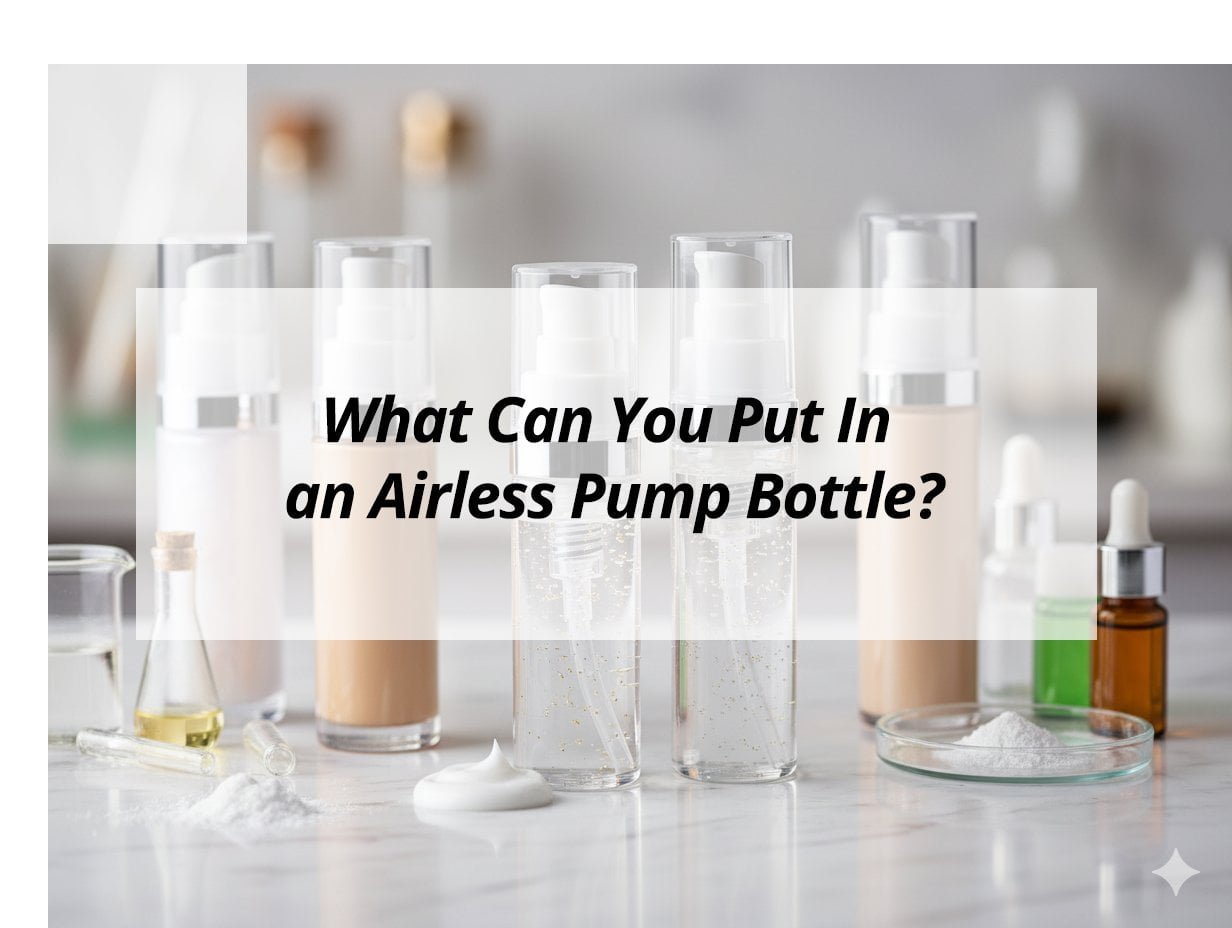
Many skincare and cosmetic products contain sensitive ingredients. These can degrade when exposed to air and contaminants. This reduces their effectiveness and shelf life.
An airless pump bottle is ideal for products sensitive to air, like serums and creams. It protects formulations from oxidation and contamination, preserving their efficacy and extending shelf life. This design also ensures nearly all product is dispensed, offering a hygienic and efficient solution for various cosmetic and skincare needs.
The choice of packaging significantly impacts product integrity. Using appropriate containers helps maintain the stability and efficacy of sensitive cosmetic and skincare formulas. This makes product performance more reliable.
What to put in an airless pump?
Are you wondering which products are best suited for an airless pump bottle? Certain product types benefit greatly from enhanced protection. Traditional packaging may not offer sufficient defense against environmental factors.
Airless pump bottles1 are ideal for a wide range of products. These include serums, lotions, liquid foundations, and creams. The airless system maintains product stability and hygiene. This extends shelf life and preserves active ingredients effectively.
When selecting packaging, it is crucial to match the container to the product's needs. Airless technology is particularly beneficial for preserving delicate formulations. The design creates a vacuum. This pushes the product upwards without drawing air back into the bottle. This process minimizes contamination and supports a longer product lifespan.
Why Airless is Better for Certain Formulations
Airless packaging offers distinct advantages for specific product compositions.
- Ingredient Preservation: Active ingredients, such as Vitamin C and retinoids, are prone to degradation from air exposure. Airless bottles prevent this oxidation.
- Enhanced Hygiene: The absence of a dip tube and direct finger contact reduces the risk of bacterial contamination.
- Maximized Product Use: The piston mechanism ensures nearly 100% of the product is dispensed. This results in minimal product waste for the consumer.
| Product Type | Why Airless is Ideal |
|---|---|
| Serums | Protects high concentrations of active ingredients. |
| Lotions | Prevents drying and maintains consistent texture. |
| Foundations | Keeps color stable and prevents product separation. |
| Creams | Safeguards emollients and potent compounds. |
| Eye Creams | Ensures delicate and often expensive formulas remain potent. |
How do Airless Pump Bottles Work?
Airless pump bottles operate on a distinct principle compared to standard pump dispensers.
- Absence of Dip Tube: Unlike conventional pumps, airless bottles do not use a dip tube.
- Piston Mechanism: A disc-shaped piston is located at the base of the bottle. This piston moves upward.
- Vacuum Activation: Pressing the pump creates a vacuum inside the bottle. This vacuum pulls the piston upward.
- Product Dispensing: As the piston rises, the product is pushed directly out through the nozzle.
- Air Exclusion: No air is allowed to re-enter the bottle. This keeps the product sealed and protected from external elements.
This innovative design ensures that the product maintains its integrity throughout its use.
Can you refill an airless pump bottle?
Are you considering the sustainability of your packaging choices? Many consumers and businesses prioritize reducing waste. This makes the option of refilling a product container highly appealing.
Yes, some airless pump bottles are designed for refilling. The possibility of refilling depends on the specific bottle's construction. Some bottles feature a design that allows for easy opening and replenishment. Others are factory-sealed for single-use applications. Always consult the manufacturer's guidelines for refill instructions.
Many airless pump bottle designs accommodate refilling. These often feature screw-off bases or caps. Such designs enable simple refilling. This option helps brands align with growing environmental concerns and consumer preferences for sustainable practices. It also addresses practical considerations for end-users.
Refilling Tips for Your Airless Pump
If an airless pump bottle is designed to be refillable, proper handling is essential. Following these steps ensures both hygiene and continued functionality.
- Thorough Cleaning: Wash all parts of the bottle and pump mechanism with warm, soapy water. Rinse them completely.
- Sanitization: Use a suitable sanitizing agent, such as rubbing alcohol, on all components. Allow them to air dry fully.
- Prevent Spills: Employ a small funnel to facilitate clean and efficient refilling, minimizing product waste.
- Optimal Filling Level: Avoid overfilling the bottle. Leaving a small air gap at the top is crucial for the pump to operate correctly.
- Pump Priming: After refilling, it may be necessary to press the pump several times. This action helps to draw the product up and restore full function.
Considerations for Refillable vs. Single-Use
The decision between refillable and single-use packaging involves various factors.
- Product Sensitivity: Highly sensitive formulations might be better preserved in sealed, single-use containers to prevent contamination.
- Consumer Preference: Refillable options can be more attractive to consumers focused on sustainability and cost-effectiveness.
- Brand Messaging: Offering refillable packaging can significantly enhance a brand's commitment to eco-friendliness.
| Feature | Refillable Airless Pump Bottle | Single-Use Airless Pump Bottle |
|---|---|---|
| Environmental | Contributes to reduced plastic waste and greater sustainability. | Generates more waste, though recycling is possible for some materials. |
| Cost | Higher initial investment, but lower long-term cost for consumers. | Lower initial cost, with recurring expenses for product repurchase. |
| Hygiene | Requires diligent cleaning and sanitizing by the user. | Factory-sealed design ensures optimal hygiene and product integrity. |
| Flexibility | Allows for product changes or scent variations by the user. | Typically designed for a single, specific product. |
| Materials | Often constructed from durable materials, including Glass Airless pump bottles. | Can utilize a broader range of plastics for cost-effective production. |
Can you put body oil in a pump bottle?
Do you enjoy the enriching benefits of body oils for skin hydration? Dispensing these often-viscous products efficiently can be a challenge with standard packaging.
Yes, you can dispense body oil using a pump bottle. However, selecting the correct type of pump is essential. Oils typically have a higher viscosity than water-based lotions. A standard lotion pump might not be sufficient for proper dispensing. It is advisable to choose pumps specifically engineered for oils or those featuring wider dip tubes.
Effective packaging for body oils depends on the pump's compatibility with the oil's viscosity. An airless pump can be an excellent choice for oils if designed appropriately. The internal piston system in an airless bottle is highly effective. It consistently pushes the product upwards, regardless of its thickness. This helps overcome issues where a "Airless pump bottle not working" might occur with unsuitable pumps.
Choosing the Right Pump for Oils
Pump selection is critical, especially when dealing with oils.
- Viscosity Matching: Oils vary in thickness. Thicker oils require more robust pumps or wider dispensing mechanisms.
- Pump Mechanism Design: Some pumps are specifically engineered to handle higher viscosity liquids more effectively.
- Material Compatibility: Verify that the pump materials are compatible with the oil formulation. Certain oils can cause degradation in specific plastic types.
Key Considerations for Oil Pumps
- Orifice Size: The opening through which the product is dispensed. A slightly larger orifice is often beneficial for oils.
- Actuator Design: The part that is pressed to dispense the product. A smooth and easy-to-press actuator enhances user experience.
- Spring Strength: A stronger spring within the pump mechanism can improve dispensing efficiency for thicker oils.
Airless Pump Bottles for Oils
Airless pump bottles offer distinct advantages for packaging body oils.
- Clog Prevention: The airless design minimizes product exposure to air. This significantly reduces the likelihood of oil solidifying and clogging the pump mechanism.
- Consistent Dispensing: The piston ensures a steady and even flow of oil with each activation. This provides a reliable user experience.
- Product Protection: Oils, particularly those with natural or delicate ingredients, are susceptible to degradation from light and air. Airless bottles offer superior protection against these elements.
What to put in a pump bottle?
Are you evaluating packaging options for various liquid products? The wide array of available containers can make the selection process complex.
Pump bottles are suitable for a broad spectrum of liquid products. These include hand soaps, sanitizers, shampoos, conditioners, and facial cleansers. Pump bottles provide both convenience and controlled dispensing. They are widely used for daily personal care and household items.
Selecting the right pump bottle is crucial for product efficacy and user satisfaction. A well-chosen pump enhances the user experience by ensuring easy and consistent product delivery. Customization options, such as different dosages and designs, allow the pump to match the product's viscosity and brand aesthetics. This addresses the question of "What to put in a pump bottle?" by offering tailored solutions for diverse product lines.
Versatility of Pump Bottles
Pump bottles are exceptionally versatile. They find application across numerous industries and product categories.
- Personal Care: Commonly used for shampoos, conditioners, body washes, hand soaps, and lotions.
- Household Products: Suitable for dish soap and various cleaning solutions (often with specialized spray pump heads).
- Beauty Products: Frequently utilized for serums, toners, and liquid foundations.
Benefits of Using Pump Bottles
- Convenience: Designed for easy, one-handed operation.
- Hygiene: Reduces direct product contact, minimizing contamination compared to open jars.
- Controlled Dispensing: Delivers a consistent and measured amount of product with each pump.
- Reduced Waste: Facilitates the use of nearly the entire product content, minimizing residue.
Choosing the Right Pump for Your Product
The nature of the product significantly influences the appropriate pump design.
- Viscosity Considerations: Thicker products necessitate pumps with stronger mechanisms or wider orifices to ensure smooth dispensing.
- Dosage Control: Pumps are available with varying output capacities per press. This is important for precise application, especially for concentrated products.
- Neck Size Compatibility: The pump's neck size must accurately match the bottle's opening to ensure a secure fit.
- Aesthetic Integration: The pump's design should visually complement the overall brand image and packaging.
| Product Application | Ideal Pump Type | Key Feature |
|---|---|---|
| Thick Lotions | High viscosity lotion pump | Robust spring mechanism, wider dip tube for dense formulas. |
| Thin Serums | Treatment pump or fine mist pump | Small, precise dosage for delicate and concentrated liquids. |
| Foaming Cleansers | Foamer pump | Converts liquid into foam upon dispensing, eliminating the need for propellants. |
| Hand Soaps | Standard soap pump | Durable and provides consistent dispensing for frequent use. |
| Hair Conditioners | Lotion pump with larger head | Designed to handle thicker consistency, offering an easy press action. |
My Insights: What You Can Put in an Airless Pump Bottle
Wondering what products work best in airless pump bottles? Discover the ideal formulations for preserving freshness and ensuring hygiene.
Airless pump bottles are perfect for lotions, serums, creams, gels, and sunscreens. They protect against air exposure and contamination, making them ideal for skincare and cosmetics that benefit from airtight packaging.
Ideal Uses for Airless Pump Bottles
Ideal Products:
Airless pump bottles are designed for products that require protection from air exposure and oxidation. They work best with medium to thick viscosities suited for vacuum dispensing. Suitable products include lotions, creams, and moisturizers that hydrate or offer anti-aging benefits. Serums with active ingredients like Vitamin C, retinol, or peptides, and gels for acne treatment or cooling effects are also well-suited.
Product Considerations:
Not all formulations are ideal for airless pumps. Very thin, watery liquids such as toners or micellar water may not dispense effectively. Similarly, powders and oil-based formulas may require additional mixing to work properly.
Practical Tips:
When choosing an airless pump bottle, match the size and material to the product type. For luxury serums, opt for acrylic bottles (15-30ml), and for lotions, PET bottles (50-100ml) are recommended. Airless bottles reduce product waste and can be refilled up to 2-3 times with proper cleaning.
| Product Type | Suitability | Comments |
|---|---|---|
| Lotions & Creams | Ideal | Protects hydration and anti-aging formulas |
| Serums | Ideal | Preserves actives like Vitamin C, retinol |
| Gels | Ideal | Suitable for acne or cooling treatments |
| Sunscreens | Ideal | Maintains protective ingredients |
| Toners & Micellar | Unsuitable | Too thin, may not dispense properly |
Understanding these factors ensures effective use of airless pump bottles, enhancing both the product's longevity and user experience.
Conclusion
Airless pump bottles effectively protect sensitive product formulations. Some designs allow for refilling, depending on their construction. Pump bottles are suitable for a variety of liquid products, including oils, provided the correct pump mechanism is selected.