
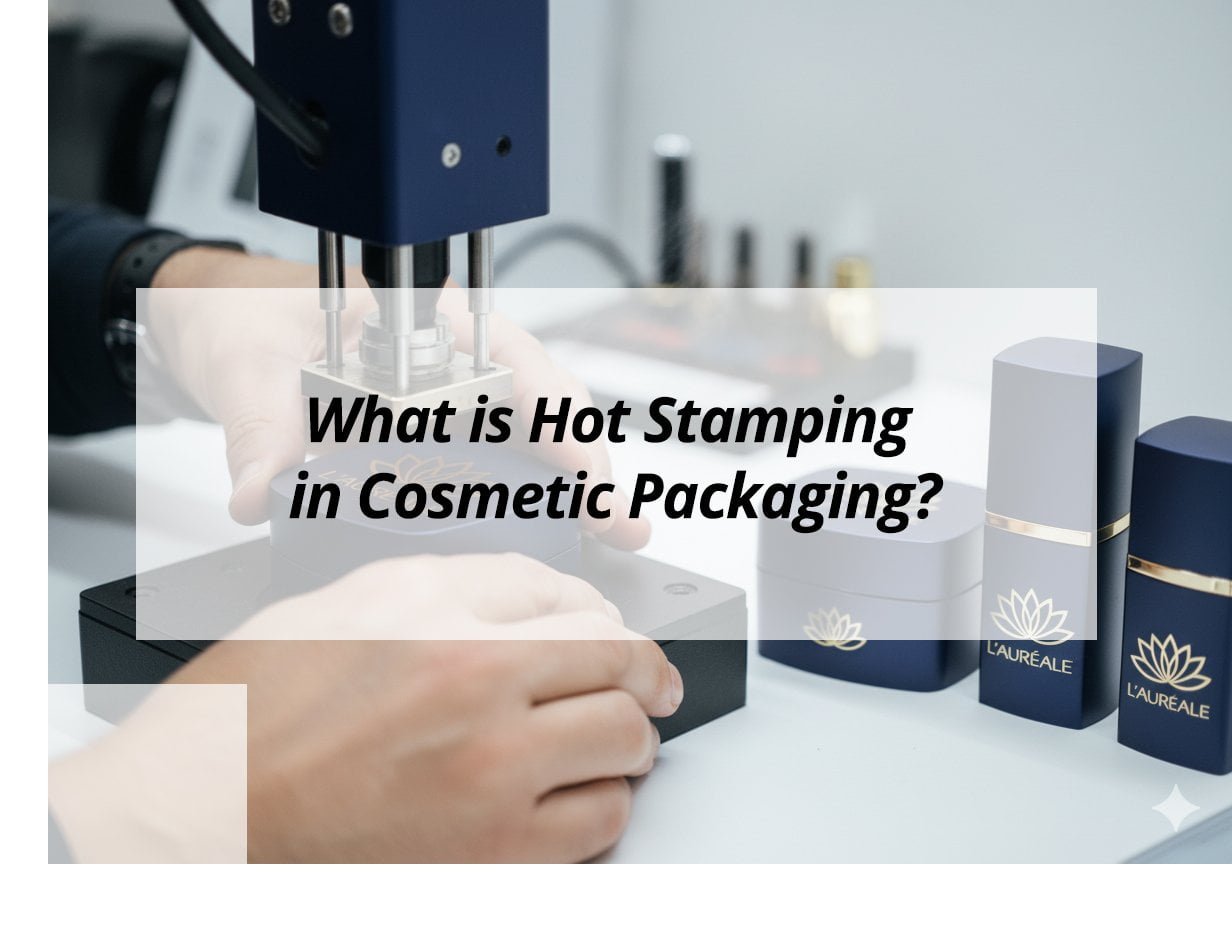
Hot stamping transforms cosmetic packaging into eye-catching designs. But what exactly does this process entail?
Hot stamping involves using heat and pressure to apply metallic foil or pigment onto a surface, creating luxurious and durable designs. This technique enhances the visual appeal and differentiates cosmetic packaging, offering brands a high-end, eye-catching look that stands out on shelves.
Understanding hot stamping can enhance packaging strategies. Let’s dive into its specifics, processes, and differences to see how it can benefit your brand.
What does hot stamping mean?
Hot stamping is a decoration technique admired for its glossy finish and precision. But what does it actually involve?
Hot stamping involves transferring foil or pigment onto a surface using a heated die. This technique creates vibrant, long-lasting designs that stand out, making it a popular choice for luxury cosmetic packaging.
Hot stamping offers unique advantages. It combines aesthetics with functionality, ensuring your packaging captures attention and conveys a premium brand image.
Key Aspects of Hot Stamping
- Durability: Provides long-lasting effects that resist fading.
- Aesthetic Appeal1: Offers a high-end finish enhancing product attractiveness.
- Versatility: Suitable for various materials like plastic, paper, and fabric.
- Brand Differentiation2: Elevates packaging sophistication, making products stand out.
What are the disadvantages of hot stamping?
While hot stamping shines in packaging, what potential drawbacks should be considered?
Hot stamping can be more expensive than other printing methods. It requires specialized equipment and materials, and some design limitations may exist, influencing the choice of colors and textures.
Despite these challenges, the visual impact it delivers often justifies the investment, making it worthwhile for brands looking to stand out.
Drawbacks of Hot Stamping
- Cost: Higher initial investment compared to other methods.
- Design Limitations3: Some restrictions in color and texture choices.
- Specialized Equipment4: Requires specific, often costly machinery.
What is the process of hot stamping plastic?
Hot stamping on plastic involves specific steps to ensure a flawless finish. But what does the process entail?
The process starts by preparing the plastic surface, followed by positioning the foil between the plastic and the heated die. When pressed together, the heat and pressure transfer the design onto the plastic surface.
Understanding this process is crucial for achieving superior results and maximizing the appeal of your cosmetic packaging.
Steps in Hot Stamping Plastic
- Surface Preparation: Clean and pre-treat the plastic.
- Foil Application: Place the foil between the die and plastic.
- Heat and Pressure: Activate the heated die to transfer the design.
- Cooling and Inspection: Allow to cool and check for precision.
| Benefit | Description |
|---|---|
| Consistency | Ensures uniform design application. |
| Efficiency | Suitable for high-volume production. |
| Quality | Produces sharp, vibrant designs. |
What is the difference between hot and cold stamping?
Both hot and cold stamping have their merits. How do they differ, and which is better suited for your needs?
Hot stamping uses heat to transfer designs, whereas cold stamping uses adhesive without heat. Hot stamping offers superior durability and aesthetic value, while cold stamping is faster and more cost-effective for certain applications.
Choosing between these methods depends on your specific requirements and desired outcomes for cosmetic packaging.
Comparing Hot and Cold Stamping
- Method:
- Hot Stamping: Requires heat and pressure.
- Cold Stamping: Utilizes adhesive, no heat needed.
- Quality:
- Hot Stamping: Offers a premium finish.
- Cold Stamping: Faster with lower initial costs.
- Applications:
- Hot Stamping: Ideal for luxury and high-detail designs.
- Cold Stamping: Suitable for quick, large-scale runs.
My insights: Understanding Hot Stamping in Cosmetic Packaging
Want your cosmetic packaging to stand out with a luxurious finish? Hot stamping offers a shiny, eye-catching appeal that enhances brand prestige.
Hot stamping is a dry printing method using heat and pressure to apply metallic or colored foils to cosmetic packaging. It creates a durable, eye-catching finish, ideal for logos and decorative accents on various materials.
The Essentials of Hot Stamping in Cosmetics
1. How It Works:
- Process: Involves a heated die pressing a foil onto packaging, transferring the design precisely.
- Finish Options: Offers metallic, holographic, or solid colors for diverse visual effects.
2. Material Compatibility:
- Versatile Use: Suitable for plastics, glass, and some metals, making it adaptable across product lines.
- Common Applications: Seen on bottles, tubes, jars, and lipstick cases.
3. Key Benefits:
| Benefit | Description | Impact |
|---|---|---|
| Luxurious Appeal5 | Creates a premium look with shiny accents | Enhances brand perception and shelf appeal |
| Durability | Resistant to smudging and fading | Ensures long-lasting quality |
4. Design Flexibility:
- Consistent Quality: Ensures precise and clean applications for branding elements.
- Customization: Foil color changes offer branding flexibility.
Hot stamping adds elegance and durability to cosmetic packaging, making it an essential technique for brands seeking to impress with high-end aesthetics and lasting quality.
Conclusion
Hot stamping is a powerful tool for cosmetic packaging. Its ability to elevate brand image through premium aesthetics and durability makes it an invaluable technique for showcasing your products.
-
Discover how hot stamping elevates the visual appeal of products, making them more attractive to consumers. ↩
-
Understand how hot stamping can set your brand apart in a competitive market through unique packaging. ↩
-
Explore the potential constraints of hot stamping to make informed decisions about your packaging design. ↩
-
Learn about the machinery required for hot stamping and how it impacts production processes. ↩
-
Discover how hot stamping adds a premium look to products, enhancing their marketability. ↩