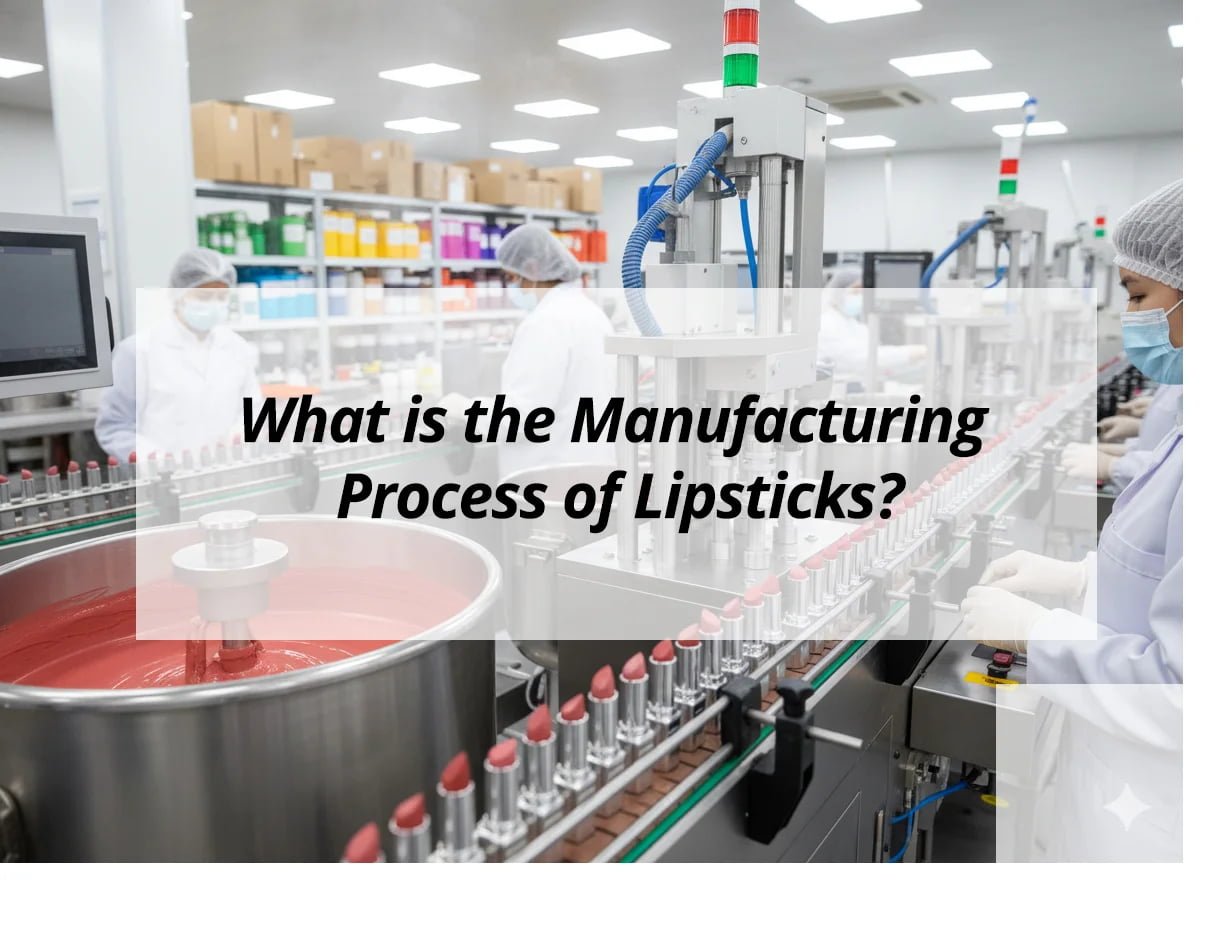
Have you ever wondered how lipstick is made? The process might seem complex, but understanding it helps appreciate the product. This article outlines the key steps in manufacturing lipsticks.
Lipstick manufacturing involves several stages: melting and mixing ingredients, milling to ensure smoothness, molding into shape, and then packaging. Each step requires precision to create a high-quality product. The ingredients typically include waxes, oils, pigments, and emollients.
The creation of lipstick combines both art and science. From raw materials to the final stick, each stage is controlled to ensure consistency and quality. Let's explore this detailed journey.
How do they manufacture lipstick?
Are you curious about the steps involved in making lipstick? Many people use lipstick daily without thinking about its creation. Understanding the manufacturing process reveals its complexity.
Lipstick manufacturing begins with melting and mixing various ingredients like waxes, oils, and pigments. This mixture is then milled to ensure a smooth consistency before being poured into molds and cooled. Finally, the molded lipstick is packaged for distribution.
The process is more involved than just mixing colors. Each step is carefully controlled to ensure the lipstick has the right texture, color, and stability. This attention to detail is crucial for a quality product.
What are the main ingredients in lipstick?
Lipsticks are made from several key components. Each component plays an important role.
- Waxes: These provide structure and shape to the lipstick. Common waxes include carnauba wax, candelilla wax, and beeswax. They help the lipstick stay solid and prevent melting.
- Oils: These add moisture and shine. Castor oil, mineral oil, and lanolin are frequently used. Oils also help spread the color smoothly on the lips.
- Pigments: These give the lipstick its color. Pigments can be organic or inorganic. They are finely ground to ensure even color distribution.
- Emollients: These make the lipstick feel smooth and soft on the lips. They also help keep the lips moisturized.
- Fragrances and Preservatives: Small amounts are added for scent and to prevent microbial growth, ensuring product safety and shelf life.
What are the steps in manufacturing?
The manufacturing process involves several distinct stages.
- Melting and Mixing: All solid ingredients like waxes and oils are melted together in large heated tanks. Pigments are then added and mixed thoroughly. This step ensures an even blend.
- Milling: The mixture is passed through a roller mill. This process grinds the pigments into very fine particles. Milling prevents grittiness and ensures a smooth application. It also helps achieve uniform color.
- De-aeration: Air bubbles can get trapped during mixing and milling. The mixture is placed in a vacuum chamber to remove these bubbles. This step makes the lipstick look smooth and prevents imperfections.
- Molding: The liquid lipstick mixture is poured into metal molds. These molds are specially designed to create the desired lipstick shape. The molds are then cooled, often by refrigeration, to solidify the lipstick.
- Flaming (Optional): After molding, some lipsticks go through a quick flaming process. This involves briefly passing the lipstick tip through a flame. It creates a smooth, glossy finish and removes any minor imperfections on the surface.
- Packaging: The solidified lipsticks are inserted into their cases. They are then inspected for quality. Finally, they are capped and placed into secondary packaging, ready for shipping.
How is quality control maintained?
Quality control is present at every stage.
- Raw Material Inspection: All incoming ingredients are checked for purity and quality.
- In-Process Checks: Samples are taken during mixing and milling to check color, texture, and consistency.
- Final Product Testing: Finished lipsticks are tested for stability, melting point, breaking strength, and application performance.
This rigorous testing ensures that each lipstick meets specific standards.
Do all lipsticks contain fish scales?
Are you concerned about the ingredients in your lipstick, especially regarding animal products? The idea of fish scales in lipstick is a common question. It is important to clarify this.
Not all lipsticks contain fish scales. Some lipsticks, particularly those with a shimmery or iridescent finish, may use guanine, a crystalline substance derived from fish scales, to create a pearlescent effect. However, many brands use synthetic alternatives to achieve similar effects.
The presence of guanine depends on the desired finish and the brand's formulation choices. Many modern formulations use mica or other synthetic pearls instead.
What is guanine?
Guanine is a natural crystalline substance. It is extracted from fish scales. When processed, it creates a shiny, iridescent, or pearlescent effect. This makes it a popular ingredient for shimmer in cosmetics. It is also used in nail polishes and eyeshadows.
Why is guanine used in lipstick?
Guanine provides a unique shimmer. It gives a luminous quality that is hard to replicate with other natural ingredients. For lipsticks designed to have a metallic or glittering finish, guanine can be a very effective ingredient.
Are there alternatives to guanine?
Yes, many alternatives exist.
- Mica: This is a natural mineral. When ground into a fine powder, it creates a subtle shimmer. It is widely used in cosmetics.
- Bismuth Oxychloride: This synthetic pigment can also create a pearlescent effect.
- Synthetic Fluorophlogopite: Also known as synthetic mica. It is a synthetic alternative that provides intense shimmer and can be made in various colors.
- Titanium Dioxide: Often used for its white pigment and ability to add brightness and opacity. It can also contribute to a subtle shimmer when combined with other ingredients.
These alternatives are very common in modern lipstick formulations. Many brands choose these options to cater to vegan consumers or those avoiding animal-derived ingredients.
How can one know if lipstick contains fish scales?
Consumers can check the ingredient list. Look for "Guanine," "CI 75170," or "Pearl Essence." If these are listed, the lipstick contains fish scales. If a brand states its product is "vegan" or "cruelty-free," it generally means it does not contain animal-derived ingredients like guanine. However, it is always best to verify the specific ingredients.
What is the forbidden lipstick?
Are you intrigued by the term "forbidden lipstick"? This phrase often carries a sense of mystery or controversy. It refers to specific types or shades of lipstick that were historically restricted or deemed inappropriate.
The concept of "forbidden lipstick" typically refers to colors or formulations that were socially unacceptable or even legally banned in past eras. These restrictions often stemmed from moral, religious, or political reasons, rather than the ingredients themselves. Today, this term is mostly historical or metaphorical.
Historically, certain colors, like deep red or black, were associated with rebellion or specific social groups, making them "forbidden" in polite society. The context is usually cultural rather than a specific product.
What historical context led to "forbidden" lipsticks?
In many historical periods, lipstick was a symbol of rebellion or low social status.
- Ancient Egypt: Both men and women used lipstick, often made from crushed insects. It was a sign of wealth and status.
- Ancient Greece and Rome: Red lips could indicate prostitution or lower class. Respectable women avoided it.
- Victorian Era: Queen Victoria considered makeup improper. Lipstick was associated with actors and prostitutes. It was seen as vulgar.
- Early 20th Century: Suffragettes adopted red lipstick as a symbol of liberation and defiance. This act of wearing "forbidden" lipstick challenged societal norms.
These examples show how social rules dictated what was acceptable.
Were certain ingredients ever forbidden?
While specific ingredients were not usually "forbidden" in the sense of a moral ban, some ingredients have faced scrutiny for safety reasons. For example, lead was once a common ingredient in cosmetics. However, it was later banned due to health concerns. This led to its replacement with safer pigments.
What about today?
Today, no lipstick is officially "forbidden" in most parts of the world based on color or typical ingredients. Cosmetic regulations focus on safety and labeling rather than social acceptability. However, cultural or religious norms in some regions might still influence personal choices regarding lipstick use.
Is "forbidden lipstick" a marketing term?
Sometimes, brands use the term "forbidden" in marketing to create a sense of exclusivity or allure. For example, a very dark, unconventional shade might be marketed as "forbidden" to appeal to consumers seeking unique or edgy products. This is often a creative way to describe bold colors.
Which lipstick has no pig fat?
Are you looking for lipsticks free from animal-derived ingredients, specifically pig fat? Many consumers today prioritize vegan or halal-certified products. Identifying such lipsticks is a common concern.
Many modern lipsticks are formulated without pig fat or other animal by-products. Most manufacturers use plant-based waxes and oils, or synthetic alternatives, to create their lipsticks. Consumers can check the ingredient list for terms like "vegan," "plant-based," or specific animal-derived ingredients to avoid.
The move towards more ethical and inclusive beauty practices means many brands now offer options free from animal fats. This makes it easier for consumers to find suitable products.
What ingredients should be avoided for pig fat?
Pig fat is a type of animal fat. It might appear on an ingredient list under various names.
- Lard: This is the direct term for rendered pig fat.
- Tallow: This is rendered animal fat, often from beef or mutton, but sometimes can include pig fat.
- Glycerin (animal-derived): Glycerin can be plant-based or animal-derived. If it is animal-derived, it might come from pig fat.
- Stearic Acid (animal-derived): Like glycerin, stearic acid can be plant-based or animal-derived.
- Collagen: This is an animal protein.
- Gelatin: This is derived from animal collagen.
When checking ingredient lists, it is important to look for these terms.
What are common plant-based alternatives?
Many plant-based ingredients replace animal fats and waxes in lipsticks.
- Plant Waxes: Carnauba wax, candelilla wax, and sunflower wax are common plant-based waxes that provide structure.
- Plant Oils: Castor oil, jojoba oil, shea butter, and coconut oil are widely used for moisture and shine.
- Plant-based Glycerin and Stearic Acid: Many manufacturers specify "vegetable glycerin" or "plant-derived stearic acid."
- Synthetic Ingredients: Synthetic alternatives for waxes and emollients are also available and widely used.
How to identify "no pig fat" lipsticks?
- Look for "Vegan" certification: This label confirms the product contains no animal-derived ingredients, including pig fat.
- Check "Halal" certification: Halal cosmetics adhere to Islamic dietary laws, which forbid pig products. This certification guarantees no pig fat.
- Read the ingredient list carefully: Look for the specific terms mentioned above (lard, tallow, animal-derived glycerin/stearic acid).
- Contact the manufacturer: If unsure, reaching out to the brand directly is the most reliable way to confirm.
Many cosmetic brands clearly state their commitment to animal-free ingredients. This makes finding suitable lipsticks much easier for consumers today.
My Insights: Unveiling the Lipstick Manufacturing Process
Curious about how lipsticks are crafted to perfection? Discover the intricate process that ensures quality and vibrant colors.
The lipstick manufacturing process involves melting and mixing oils, waxes, and pigments, followed by molding and cooling. The sticks are then polished for a glossy finish and packaged, ensuring consistent color and quality.
Understanding Lipstick Manufacturing Techniques
Ingredients and Initial Mixing:
- Waxes and Oils: Waxes like beeswax provide structure, while oils such as castor oil ensure a smooth application.
- Pigments: Finely dispersed pigments supply vibrant color, preventing a grainy texture.
Manufacturing Steps:
- Melting and Mixing: Waxes and oils are carefully heated to form a homogeneous base, maintaining consistent viscosity.
- Pigment Dispersion: Using equipment like three-roll mills, pigments are ground to achieve smooth color distribution.
- Deaeration: The mixture is placed under vacuum to remove air bubbles, ensuring stick integrity.
Molding and Finalizing:
- Molding: Automated machines fill molds, which are then cooled to solidify the lipstick.
- Finishing: Surfaces are heated to create a glossy finish and correct imperfections. Lipsticks undergo quality tests before packaging.
| Step | Description |
|---|---|
| Melting and Mixing | Achieving homogeneous base for smooth blending |
| Pigment Dispersion | Ensuring uniform color and texture |
| Deaeration | Removing air bubbles for integrity |
| Molding and Cooling | Automated filling and solidification |
| Finishing | Glossy surface correction and quality testing |
Understanding these steps highlights the precision and care involved in crafting lipsticks, ensuring they meet aesthetic and functional standards.
Conclusion
Lipstick is crafted from raw materials using precise processes, with modern, vegan ingredients replacing historical, animal-derived ones.