
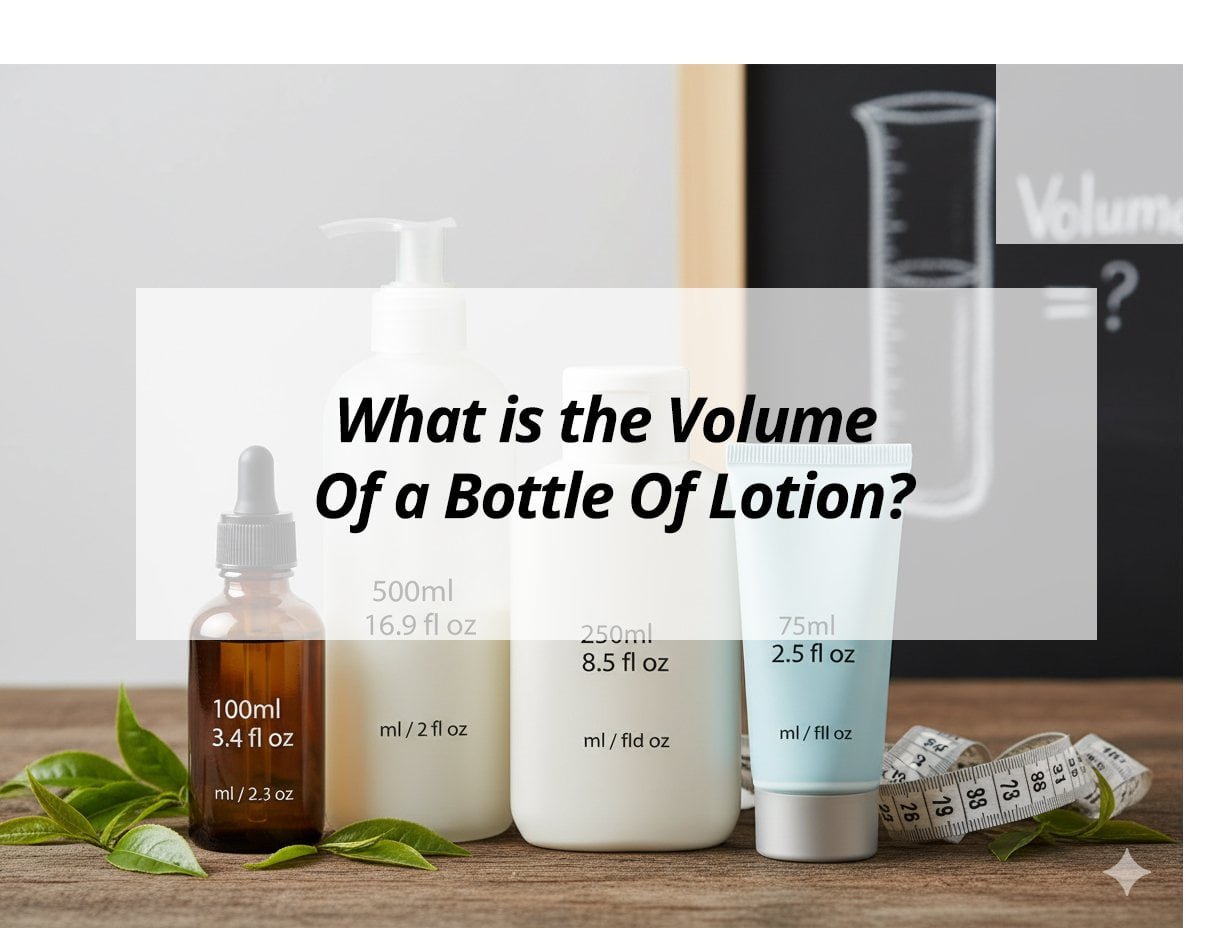
Understanding the volume of lotion bottles is important. It helps both consumers and businesses. Knowing these measurements aids in product selection and packaging design.
The volume of a bottle of lotion indicates the liquid quantity it contains. This is commonly expressed in fluid ounces (fl oz) or milliliters (ml). Bottle sizes vary from small travel-friendly containers of 2 fl oz to larger 16 fl oz or 750 ml options. This information is crucial for comparing product value and ensuring appropriate packaging.
Volume is a fundamental characteristic of liquid products. It guides manufacturing specifications and consumer expectations. Accurate volume representation is key for product integrity.
Which is a better estimate for the volume of a bottle of lotion?
When discussing lotion bottle volume, fluid ounces and milliliters are the primary units. Determining which provides a clearer estimate depends on regional standards.
The most suitable unit for estimating lotion bottle volume depends on the intended market. Fluid ounces (fl oz) are the customary unit in the United States for consumer liquid products. Conversely, milliliters (ml) serve as the international standard. Both units accurately quantify volume, but market familiarity often dictates preference.
Regional measurement preferences significantly influence product labeling. Adapting to these standards ensures consumer clarity and market acceptance.
Fluid Ounces (fl oz)
Fluid ounces are a specific unit of volume used primarily in certain countries.
- Regional Use: Widely adopted in the United States for liquids, especially for consumer goods like lotions, beverages, and personal care items.
- Metric Conversion: One US fluid ounce is approximately equivalent to 29.57 milliliters. This conversion is necessary for international comparisons.
- Consumer Recognition: In the U.S. market, consumers readily understand and interpret volumes presented in fluid ounces.
Milliliters (ml)
Milliliters are a component of the metric system, used globally for volume measurement.
- International Standard: The predominant unit for liquid volume measurement across most countries outside the United States. It is part of the International System of Units (SI).
- Metric Conversion: One liter is exactly 1000 milliliters. This provides a straightforward conversion within the metric system.
- Universal Applicability: Using milliliters facilitates global trade and ensures consistent product information across diverse markets.
Comparative Factors for Volume Units
The choice between fluid ounces and milliliters involves considering various market-specific factors.
| Factor | Fluid Ounces (fl oz) | Milliliters (ml) |
|---|---|---|
| Primary Market Focus | United States | Global markets (excluding U.S.) |
| Local Familiarity | High for U.S. consumers | High for international consumers |
| System Compatibility | Imperial/US customary system | Metric system (SI) |
| Conversion Complexity | Requires conversion for metric users | Simple conversions within metric units |
Brands often include both measurements on packaging to accommodate a broader consumer base. This dual labeling strategy enhances transparency.
What is the volume of a 16 oz bottle?
A 16 oz bottle is a common capacity for numerous lotion products. Understanding its volume in metric units provides a comprehensive perspective.
A 16 oz bottle, when referring to US fluid ounces, contains approximately 473 milliliters (ml). This capacity is generally considered a medium to large size. It is frequently utilized for products such as family-sized lotions, body washes, or hair care items. This volume offers a substantial quantity for regular household use.
The 16 fl oz capacity balances sufficient product volume with practical handling. It represents a popular choice for daily-use liquid cosmetics.
Conversion of 16 fl oz to Milliliters
Precise conversion from fluid ounces to milliliters is essential for accurate labeling.
- Standard Conversion Rate: One US fluid ounce equals 29.5735 milliliters.
- Calculation: To convert 16 fl oz, multiply 16 by the conversion factor.
- 16 fl oz * 29.5735 ml/fl oz = 473.176 ml.
- Practical Rounding: For labeling purposes, this value is commonly rounded to 473 ml.
Typical Applications for 16 fl oz Bottles
This specific volume is widely adopted across several product categories.
- Body Lotions: Many daily moisturizing lotions are packaged in 16 fl oz bottles, offering extended use.
- Hair Care: Shampoos and conditioners are often sold in this size for household consumption.
- Shower Gels: Body washes frequently appear in 16 fl oz containers, catering to regular bathing routines.
Packaging Considerations for 16 fl oz Volume
Designing bottles for 16 fl oz requires attention to specific functional aspects.
- Stability: A bottle of this volume requires a broad and stable base to prevent accidental tipping.
- Dispensing Mechanism: Pump dispensers are a standard choice for 16 fl oz bottles. They ensure convenient and controlled product delivery.
- Material Integrity: The chosen packaging material must be robust enough to hold the liquid securely and withstand shipping stresses.
- User Ergonomics: The bottle's design should ensure it is comfortable for consumers to hold and use, despite its volume.
Optimal packaging for 16 fl oz volumes prioritizes both product safety and user convenience. This enhances the overall consumer experience.
How big is a 2 oz bottle of lotion?
A 2 oz bottle of lotion represents a smaller volume. It fulfills specific niche market demands.
A 2 oz bottle of lotion contains 2 US fluid ounces, which equates to approximately 59 milliliters (ml). This size is primarily suited for travel, product samples, or convenient portability in small bags. Its compact nature complies with airline carry-on liquid restrictions. This volume is ideal for short-term use or initial product trials.
The 2 fl oz bottle is a strategic size for marketing new products or serving highly mobile consumers. Its small footprint is a key feature.
Conversion of 2 fl oz to Milliliters
The conversion of 2 fluid ounces to milliliters offers a precise metric equivalent.
- Standard Conversion Rate: One US fluid ounce is 29.5735 milliliters.
- Calculation: For 2 fl oz, multiply 2 by the conversion factor.
- 2 fl oz * 29.5735 ml/fl oz = 59.147 ml.
- Practical Rounding: This value is often rounded to 59 ml for packaging labels.
Typical Applications for 2 fl oz Bottles
This compact size is versatile and widely used across various scenarios.
- Travel Use: Perfectly sized for air travel, aligning with the common 3.4 oz (100 ml) limit for carry-on liquids.
- Product Sampling: Brands frequently use 2 fl oz bottles to distribute samples, allowing consumers to test products.
- Trial Sizes: Consumers can purchase this small size to evaluate a new lotion before committing to a larger purchase.
- Gift and Amenity Kits: Often included in hotel amenity kits or curated gift sets, offering variety and convenience.
Design Elements for 2 fl oz Volume
Small bottles require specific design considerations to optimize their function.
- Compact Form Factor: Designs prioritize a slender and space-efficient shape, making them easy to pack and carry.
- Secure Sealing: A reliable cap or closure is essential to prevent leaks, especially crucial for travel applications.
- Material Selection: Durable, lightweight plastics are often chosen to balance portability and product protection.
- Controlled Dispensing: Small orifices or flip-top caps are common, enabling precise and mess-free application of the lotion.
The design of 2 fl oz bottles emphasizes leak prevention and ease of use in portable contexts. This ensures functionality for consumers on the go.
What is the volume of a 750ml bottle?
A 750 ml bottle is a significant volume commonly encountered in metric-standard regions. It signifies a large product quantity.
A 750 ml bottle contains 750 milliliters of liquid. This volume is approximately equivalent to 25.36 US fluid ounces. It represents a large capacity often used for bulk-sized or family-sized consumer products. This size typically provides economic value for high-usage items like lotions, body washes, and various hair care formulations.
The 750 ml volume is a standard in metric-system countries for products intended for frequent or shared use. It delivers substantial product volume.
Conversion of 750 ml to Fluid Ounces
Converting 750 milliliters to fluid ounces clarifies its volume for non-metric users.
- Standard Conversion Rate: One milliliter is approximately 0.033814 US fluid ounces.
- Calculation: To convert 750 ml, multiply 750 by the conversion factor.
- 750 ml * 0.033814 fl oz/ml = 25.3605 fl oz.
- Practical Rounding: This is generally rounded to 25.36 fl oz for practical labeling.
Typical Applications for 750 ml Bottles
This large volume is suitable for a range of liquid cosmetic products.
- Family-Size Lotions: Large format lotions for general body moisturizing are frequently offered in 750 ml bottles.
- Hair Care Products: Shampoos and conditioners for household use are often found in this capacity.
- Shower Gels: Many body cleansing gels are packaged in 750 ml bottles, intended for daily use by multiple individuals.
- Professional Supplies: Larger formats like 750 ml may also be used in professional settings, such as salons.
Design Considerations for 750 ml Volume
Packaging design for 750 ml bottles must address challenges related to size and weight.
- Base Stability: Given the weight of a full bottle, a wide and stable base is crucial to prevent toppling.
- Dispensing System: A robust pump dispenser is almost universally employed for this volume. It ensures reliable product access over its lifespan.
- Structural Integrity: The bottle material must possess sufficient strength to contain the substantial liquid volume without deforming.
- Aesthetic Appeal: Even for large formats, the design should maintain brand aesthetics and fit well within its intended environment.
Effective design for 750 ml bottles prioritizes structural stability and user-friendly dispensing. This ensures long-term functionality and customer satisfaction.
My Insights: What is the Volume of a Bottle of Lotion?
Confused about the right lotion size for your needs? Discover the variety of lotion bottle volumes to choose the perfect fit.
Lotion bottles typically range from 30 ml to 500 ml, with common volumes including 100 ml for retail, 250 ml for personal use, and up to 500 ml for family-sized products. Travel sizes often start at 30 ml, while larger bulk options can exceed 1 liter.
Understanding Lotion Bottle Volumes
Volume Categories
- Travel and Miniatures: Typically 10–50 ml, ideal for sampled sizes or travel.
- Standard Personal Use: Commonly 100–250 ml, fitting for everyday lotions.
- Family and Bulk Sizes: Ranging from 300–500 ml, suitable for household use.
| Bottle Type | Volume Range | Common Use |
|---|---|---|
| Travel/Mini | 10–50 ml | Samples, travel |
| Standard Personal | 100–250 ml | Daily use |
| Family/Bulk | 300–500 ml (or 1 liter+) | Household, frequent use |
Considerations for Selection
- Function and Frequency: Choose based on usage needs—travel, personal, or family.
- Design Influence: Packaging design may impact perceived volume, so check labeling for actual size.
Understanding these options ensures that you select the appropriate volume for convenience and practicality, aligning with your specific needs.
Conclusion
Lotion bottle volume is measured in fl oz or ml. Common sizes include 2 fl oz for travel and 16 fl oz or 750 ml for larger needs. These units are crucial for product clarity and packaging decisions.